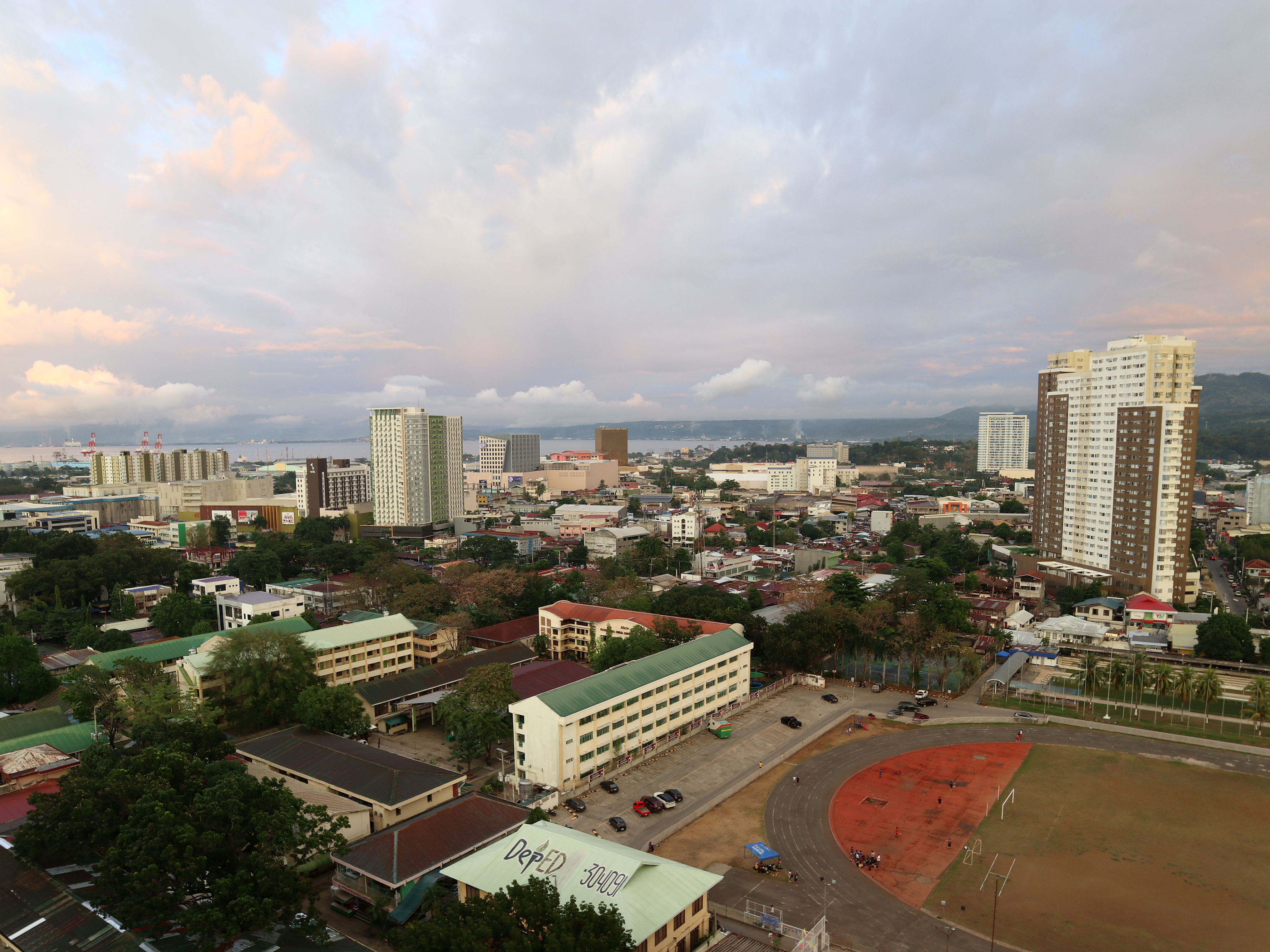
Northern Mindanao's commercial engine runs through CDO, where logistics, wholesale trade, retail, and regional distribution dominate the economy. Major employers include SM and Robinsons malls, BPO companies that have expanded here from Cebu and Manila, and the port sector handling cargo for the broader Mindanao interior. Agriculture processing — pineapple, rubber, and palm oil from surrounding provinces — also feeds local industry. Remote workers and digital nomads can function here, but the job market for foreigners is thin; most expats either run their own businesses or work online.
A one-bedroom in the city center runs around $400/month, dropping to $200–$280 in outer barangays. Grab operates reliably, and jeepneys and tricycles cover gaps cheaply. Healthcare is serviceable — Capitol University Medical Center and Northern Mindanao Medical Center handle serious cases, though anything complex may push you toward Cebu. English fluency is genuinely high here, so the language barrier is minimal compared to most Southeast Asian cities. Bureaucracy for long-stay visas means dealing with the Bureau of Immigration in Manila or Cebu; CDO has no dedicated BI office, which is a real inconvenience.
Expect heat and humidity year-round, with no true dry season — rainfall is distributed fairly evenly, though typhoons are less frequent than in the Visayas. The food scene is solid regional Filipino, with Kagay-anon dishes like sinuglaw worth seeking out, and a growing café culture around Divisoria and Limketkai. The expat community is small — a few hundred foreigners at most, mostly missionaries, retirees, and a handful of remote workers. Weekends mean white water rafting, beach day trips to Camiguin island, or hiking in Bukidnon. This city suits budget-conscious retirees or remote workers who want a real Philippine city without Manila's chaos or Cebu's tourist markup.
Estimate the cost of moving to Cagayan de Oro City, Philippines
Get a free moving cost estimate for moving to Cagayan de Oro City, Philippines. Takes 10 seconds.
How much are you shipping?
When are you moving?
Powered by Sirelo. Free quotes from international movers.
🏚️ Cost of Living
💰 Budgets and Costs
$334/mo, one person, rent included
Selected: budget lifestyle
Cagayan de Oro City on a budget budget comes to about $334 a month for one adult, with $49.00 of that going to rent. Beyond rent the estimate covers $75.00 on groceries, $16.00 on dining out, $20.00 on entertainment and lifestyle and $174 on utilities and connectivity.
Rent
$49.00/mo
1BR outside the centre
Groceries
$75.00/mo
75% of mid-range grocery spend
Dining out
$16.00/mo
4 inexpensive meals
Entertainment & lifestyle
$20.00/mo
1 cinema trip, 8 cappuccinos
Utilities & connectivity
$174/mo
utilities, mobile, internet
Budgets (excl. rent)
Single person$285/mo
Excludes rent. The total above is all-in, rent included.
$420/mo, one person, rent included
Selected: mid-range lifestyle
Cagayan de Oro City on a mid-range budget comes to about $420 a month for one adult, with $49.00 of that going to rent. Beyond rent the estimate covers $100 on groceries, $40.00 on dining out, $57.00 on entertainment and lifestyle and $174 on utilities and connectivity.
Rent
$49.00/mo
1BR outside the centre
Groceries
$100/mo
Staples basket scaled to a full month
Dining out
$40.00/mo
10 inexpensive meals
Entertainment & lifestyle
$57.00/mo
gym, 2 cinema trips, 12 cappuccinos
Utilities & connectivity
$174/mo
utilities, mobile, internet
Budgets (excl. rent)
Single person$371/mo
Excludes rent. The total above is all-in, rent included.
$551/mo, one person, rent included
Selected: comfortable lifestyle
Cagayan de Oro City on a comfortable budget comes to about $551 a month for one adult, with $81.00 of that going to rent. Beyond rent the estimate covers $140 on groceries, $74.00 on dining out, $82.00 on entertainment and lifestyle and $174 on utilities and connectivity.
Rent
$81.00/mo
1BR in the centre
Groceries
$140/mo
140% of mid-range grocery spend
Dining out
$74.00/mo
6 inexpensive meals + 6 mid-range meals
Entertainment & lifestyle
$82.00/mo
gym, 4 cinema trips, 20 cappuccinos
Utilities & connectivity
$174/mo
utilities, mobile, internet
Budgets (excl. rent)
Single person$470/mo
Excludes rent. The total above is all-in, rent included.
Estimates for one adult, built from this city's average prices and the usage shown for each tier. Your spending will differ with how often you eat out and where you live.
A 1BR in the center runs about $81.37/mo. If your income is in another currency, bank FX fees add up. A multi-currency account can cut that cost.
Cagayan de Oro is moderately safe for expats and feels reasonably secure during daylight hours. The city has a developed downtown and commercial areas where foot traffic is normal. Night walking is possible in well-lit, populated zones like the business district, but solo nighttime exploration is not advisable. The overall vibe is safer than many Philippine cities, though petty crime remains a concern—locals and expats alike exercise standard urban caution.
Petty theft, pickpocketing, and bag snatching are the primary risks, especially in crowded markets and public transport. Scams targeting foreigners (overcharging, fake tours, ATM skimming) occur but are avoidable with awareness. Violent crime against expats is rare. Solo female travelers should avoid isolated areas after dark and use registered taxis or ride-sharing apps. The port area and some peripheral neighborhoods are best avoided, particularly at night.
The Philippines has a stable democratic system, and Cagayan de Oro is not a hotspot for political unrest. Police presence is visible but corruption exists—avoid confrontations and keep documentation handy. The city benefits from being a major commercial hub with relatively strong governance. For an American considering relocation, CDO is a reasonable choice: safer than Manila, with lower cost of living and a growing expat community. Exercise normal urban precautions and you'll find it livable and welcoming.
🏥 Healthcare
Fair
Public Hospitals
Yes
Private Clinics
Yes
English-Speaking Doctors
Available
See how Cagayan de Oro City's healthcare compares with Cebu
🌤️ Climate
Summer Temp
32°C
Winter Temp
23°C
Humidity
80%
Air Quality Index
55
Annual Rainfall
3148 mm
Best Months
MayJunJulAug
Climate Notes
Tropical rainforest climate; warm year-round with frequent rainfall.
💻 Digital Nomad
Avg Internet Speed
25 Mbps
Internet (monthly)
$23/mo
Coworking Availability
Limited
Coworking Spaces Nearby
3
Digital Nomad Score
63/100
Community Notes
Cagayan de Oro City is a gateway to adventure tourism in Northern Mindanao.
Located in the Centrio Tower, this Regus location offers a professional environment with serviced offices and coworking spaces. It's a reliable option with standard amenities and is conveniently situated in a central business district.
A popular spot for students and young professionals, Workplace Cafe offers a more casual and social coworking experience. They have unlimited coffee and Wi-Fi, making it a budget-friendly option in the city center.
Nomad's Hub is a coworking space that caters to digital nomads and freelancers. It offers a comfortable working environment with reliable internet, printing services, and a collaborative atmosphere.
See how Cagayan de Oro City's digital nomad life compares with Cebu
🧳 Expat Life
English Proficiency
Common in Tourist Areas
Expat Community
Medium
Top Neighborhoods
Nazareth, Uptown CDO
Banks Nearby
97
ATMs Nearby
23
Expat Life Notes
A friendly and rapidly developing city in Mindanao known for its high quality of life and safety.
Pros
✓ High English proficiency
✓ Lower costs than Manila
✓ Safe and welcoming atmosphere
Cons
✗ Limited high-end nightlife
✗ Humidity
✗ Distance from international travel hubs
🏘️ Neighborhoods in Cagayan de Oro City
Areas of Cagayan de Oro City that expats often consider.
Conditions can change from one block to the next, and these descriptions are general guides, not safety assessments. Before choosing where to stay or live, check current travel advisories, talk to people who live there, and visit in person if you can.
Downtown (Divisoria)
Bustling commercial and historic center
The heart of Cagayan de Oro, Divisoria is a vibrant mix of markets, shops, and historical landmarks. While convenient for access to amenities and transportation, it can be noisy and crowded. English is widely spoken, but expect a fast-paced, local atmosphere.
Carmen
Residential, convenient, slightly upscale
Carmen is a large, primarily residential area with a mix of housing options, from apartments to houses. It's considered relatively safe and has good access to schools, hospitals, and shopping centers. While not as bustling as downtown, it offers a more relaxed pace of life, and many locals speak English.
Patag
Quiet residential, suburban feel
Patag is a more suburban area located further from the city center. It's known for being quieter and more residential, making it suitable for retirees or those seeking a peaceful environment. Transportation relies more on jeepneys or taxis, and English proficiency may be lower than in more central areas.
Bulua
Budget-friendly, growing residential area
Bulua is a developing area on the outskirts of the city, offering more affordable housing options. It's a good choice for budget-conscious expats, but it's further from the city center and requires reliance on public transportation. English is less commonly spoken here.
Macasandig
Upscale residential, gated communities
Macasandig is known for its upscale residential areas, including gated communities and larger homes. It's a safer and more exclusive area, popular with wealthier Filipinos and some expats. Expect higher prices and a more car-dependent lifestyle, but good English proficiency.
Lumbia
Rural, peaceful, airport adjacent
Lumbia, formerly the location of the Cagayan de Oro airport, is now a developing residential area with a more rural feel. It's quiet and peaceful, but further from the city center and amenities. Transportation can be challenging, and English is not as widely spoken.
Puerto
Industrial, port area, developing
Puerto is primarily an industrial and port area, undergoing some residential development. While it offers some affordable housing, it's not generally considered a desirable location for expats due to its industrial nature and distance from the city center. English proficiency may be limited.
Page 1 of 2
Could living/working in Cagayan de Oro City cut years off your work life?
With a 1-bedroom in the center at $81/mo, your FIRE number here might be much lower than you think.
Frequently Asked Questions about Cagayan de Oro City
Click any question to expand the answer.
Cagayan de Oro City has a population of approximately 741,617 people.
A single person can expect to spend around $203 per month in Cagayan de Oro City, including rent. A 1-bedroom apartment in the city center costs approximately $81/month.
The nearest airport to Cagayan de Oro City is CGY, approximately 26.5km away.
Cagayan de Oro City is considered relatively safe, with a safety index of 65.0. As with any city abroad, expats should research specific neighborhoods before committing to a location.
Yes, but CDO has no Bureau of Immigration office, so you'll handle visa extensions and SRRV (Special Resident Retiree's Visa) applications through Cebu or Manila. Most expats do visa runs or use a local fixer to manage paperwork. The SRRV is the most practical long-stay option for retirees, requiring a $10,000–$20,000 deposit depending on age. Budget time and frustration for any immigration process — it rarely moves quickly.
Internet is workable but not exceptional. PLDT and Converge are the main providers; fiber connections in city-center condos typically deliver 50–100 Mbps, though reliability dips during storms. Coworking spaces exist but are limited compared to Cebu or Davao. Power outages happen, especially during heavy rain, so a UPS or backup battery is worth having. If your work demands rock-solid connectivity, test your specific address before committing to a long lease.
CDO is very affordable. Expect to pay around $500-$800 USD per month for rent, groceries, and dining out if you live modestly. You can find apartments for rent in areas like Kauswagan or Macasandig for around $300-$500 USD, and local food is incredibly cheap.
Many retirees use the Special Resident Retiree's Visa (SRRV) which requires a deposit with a Philippine bank. Another option is extending tourist visas, but this requires frequent renewals. Consult with a local immigration lawyer for the most up-to-date information.
CDO has several hospitals, including Polymedic Medical Plaza and Maria Reyna Xavier University Hospital, which offer decent care. Many doctors speak English, especially those trained in larger cities or abroad. Private healthcare is recommended for better facilities and shorter wait times.
Generally, uptown areas like Gran Europa and some parts of Macasandig are considered safer and more upscale. Downtown areas can be busy and crowded, so be mindful of your belongings. Always practice common-sense safety precautions, regardless of the neighborhood.
English is widely spoken, especially in business and tourist areas. While the local language is Cebuano, you'll find most people understand and can communicate in English. Learning a few basic Cebuano phrases will definitely enhance your experience, though.
Major Philippine banks like BDO, BPI, and Metrobank have branches and ATMs throughout CDO. Expect to pay fees for international ATM withdrawals, usually around $3-$5 USD per transaction, plus any fees your home bank charges. Consider opening a local bank account for easier transactions.
While CDO doesn't have a ton of dedicated coworking spaces, some cafes offer decent Wi-Fi and a comfortable work environment. Check out places near Centrio Mall or along Corrales Avenue. Internet cafes are also available but may not be ideal for long work sessions.
CDO has a tropical climate, meaning it's hot and humid year-round. Expect temperatures in the 80s and 90s Fahrenheit. The rainy season is generally from June to November, but even then, it doesn't rain all day, every day.
Jeepneys are the most common and cheapest form of transportation, but they can be crowded. Taxis and ride-hailing apps like Grab are readily available and more comfortable. Tricycles are useful for short distances within neighborhoods.
CDO has a smaller expat community compared to Manila or Cebu, but it's growing. You can connect with other expats through online forums and social media groups. Don't expect a huge social scene, but there are opportunities to meet people.
Yes, $2000 USD per month is very comfortable in CDO. You could afford a nice apartment, eat out regularly, and still have money left over for travel and leisure. It's definitely a viable option for early retirement and FIRE principles.
As a US citizen, you're still required to file US taxes even when living abroad. The Foreign Earned Income Exclusion (FEIE) can help you exclude a certain amount of your income from US taxes. Consult with a tax professional specializing in expat taxes to ensure compliance and understand FBAR reporting requirements.
Life in CDO is generally relaxed and friendly. While there can be cultural differences to adjust to, the high level of English proficiency makes it easy to navigate daily life. Expect a slower pace than you might be used to, which can be a welcome change.
While not as developed as Manila, CDO offers some investment opportunities, particularly in real estate and small businesses. However, due diligence is crucial. Consult with local financial advisors and lawyers before making any significant investments.
Services like Wise (formerly TransferWise), Remitly, and Xoom are popular for sending money to the Philippines. Compare fees and exchange rates, as they can vary. Banks also offer international transfers, but these are often more expensive.
Cagayan de Oro City won't stay this cheap forever.
Cost-of-living and visa updates for Cagayan de Oro City and the rest of Philippines. Free with RA Postcards.
By submitting your email address, you will receive a free subscription to RA Postcards and special offers from Rewire Abroad and our affiliates. You can unsubscribe at any time, and we encourage you to read more about our Privacy Policy.