From Tech Layoff to Early Retirement: The 18-Month Abroad Acceleration Plan

What if getting laid off from your tech job wasn't a career setback, but the catalyst that launched you toward financial independence five years faster than you ever imagined?
With over 95,000 tech workers laid off in 2024 and another 62,832 already cut in 2025, thousands of skilled professionals are facing an unexpected crossroads. But here's what most career counselors won't tell you: this moment of forced transition might be the perfect opportunity to execute an aggressive geographic arbitrage strategy that could slash years off your FIRE timeline.

I'm talking about a complete lifestyle pivot that leverages your tech skills, severance package, and the current remote work landscape to accelerate your path to early retirement. Not through traditional job hunting, but by strategically relocating abroad where your dollars stretch 3-5x further and your runway to financial independence becomes dramatically shorter.
In this guide, you'll discover how to transform an 18-month "gap year" abroad into a FIRE acceleration program that positions you for early retirement rather than just another corporate role.
The Tech Layoff Reality: Why Traditional Recovery Strategies Fall Short 💼
The tech industry's approach to layoffs has fundamentally shifted. After the brutal restructuring waves that saw 542 companies cut 151,484 employees in 2024, we're no longer dealing with temporary downturns but structural changes driven by AI automation and economic recalibration.
Traditional advice focuses on immediate re-employment: update your LinkedIn, network aggressively, and land another six-figure role as quickly as possible. But this approach misses a critical opportunity window.
The Hidden Costs of Quick Re-Employment
When you rush back into another tech role, you're likely:
- Accepting 10-20% salary cuts in the current market
- Relocating to expensive tech hubs where housing costs consume 40-50% of income
- Restarting the corporate grind without addressing the fundamental lifestyle questions that got you here
- Missing the chance to test-drive early retirement while you have financial cushion
The 18-Month Advantage Window
Most severance packages provide 3-6 months of runway. Combined with unemployment benefits, savings, and reduced living costs abroad, you can realistically extend this to 18 months. This isn't just surviving unemployment—it's creating the perfect laboratory to test and refine your early retirement strategy.
Geographic Arbitrage: Your FIRE Acceleration Engine 🌍
Geographic arbitrage means moving to a place where the cost of living is lower than your current home, but for tech workers, it offers something even more powerful: the ability to maintain high earning potential while dramatically reducing expenses.
The Tech Worker Advantage
Unlike most professions, tech skills are genuinely location-independent. Your Python expertise is equally valuable whether you're in San Francisco or Lisbon. This creates unprecedented arbitrage opportunities:
Traditional Geographic Arbitrage:
- Nurse earning $70K in NYC moves to rural Texas, earns $65K, saves on housing
- Net benefit: Modest cost savings, limited income potential
Tech Geographic Arbitrage:
- Software engineer with $120K severance moves to Portugal, maintains $100K+ freelance income
- Net benefit: 60-70% cost reduction + maintained earning potential
The FIRE Timeline Impact
Let's run the numbers using our FIRE Calculator:
Scenario | Annual Expenses | Annual Income | Savings Rate | Years to FIRE |
|---|---|---|---|---|
San Francisco Tech Worker | $85,000 | $140,000 | 39% | 22 years |
Same Worker in Portugal | $35,000 | $100,000 | 65% | 11 years |
Time Saved | - | - | - | 11 years |
Use our Geo-Arbitrage Savings Calculator to run your own scenario
For more inspiration on how real people have used geographic arbitrage to slash their FIRE timelines, check out our detailed analysis of 5 countries where you can retire 11 years earlier.
The 18-Month Abroad Acceleration Plan: Month-by-Month Blueprint 📅
Phase 1: Foundation Building (Months 1-3)
Month 1: Strategic Planning & Destination Selection
Week 1-2: Financial Assessment
- Calculate total runway (severance + savings + unemployment)
- Determine monthly burn rate in current location
- Set 18-month budget targets
Week 3-4: Destination Research Use our Country Search tool to identify destinations based on:
- Cost of living targets (aim for 40-60% reduction)
- Internet infrastructure for remote work
- Visa requirements and length of stay
- Healthcare quality and availability
- Time zone compatibility with potential clients
Top 5 Destinations for Tech Workers:
Country | Monthly Budget | Internet Speed | Visa Length | Healthcare Rank |
|---|---|---|---|---|
$2,200 | 200+ Mbps | 90 days + extensions | #12 globally | |
$2,400 | 300+ Mbps | 90 days + digital nomad | #18 globally | |
$1,800 | 100+ Mbps | 180 days tourist | #61 globally | |
$1,400 | 150+ Mbps | 365 days visa-free | #45 globally | |
$1,600 | 200+ Mbps | 90 days + extensions | #49 globally |
Explore detailed breakdowns in our Country Directory
Month 2: Legal & Logistical Setup
- Research visa requirements using our Visa Pathways guide
- Explore digital nomad visa options for longer-term stays
- Set up international banking and tax planning
- Establish remote work infrastructure
- Begin freelance/consulting pipeline development
For countries like Slovenia, Croatia, or Argentina, consider our detailed country guides to understand specific visa pathways and requirements.
Month 3: Skills Monetization Strategy
- Audit your technical skills for freelance marketability
- Create service packages for different client types
- Set up business infrastructure (LLC, contracts, invoicing)
- Launch initial outreach for remote opportunities
Learn more about building sustainable remote income streams for FIRE and discover 7 proven steps to achieve FIRE faster.
Phase 2: Market Testing (Months 4-9)
Months 4-6: Soft Landing
Destination: Choose your primary test location
Housing: Short-term rentals (1-3 months) to test neighborhoods
Income Goal: $3,000-5,000/month to cover expenses + modest savings
Focus: Establishing routines, testing lifestyle fit, building local networks
Key Metrics to Track:
- Monthly living costs vs. projections
- Income stability and growth potential
- Lifestyle satisfaction (social connections, activities, healthcare access)
- Visa/legal compliance issues
Months 7-9: Optimization Phase
Housing: Transition to longer-term rentals (6-12 months)
Income Goal: $6,000-8,000/month as skills and network develop
Focus: Refining business model, exploring additional locations, building emergency fund
Phase 3: FIRE Strategy Refinement (Months 10-18)
Months 10-12: Investment & Tax Optimization
- Optimize tax situation with expat-focused CPA
- Develop location-independent investment strategy
- Calculate optimal savings rate based on real expense data
- Plan for potential visa changes or location pivots
Months 13-18: Scaling & Decision Point
The Big Question: Do you return to traditional employment or continue the FIRE abroad path?
Key Decision Factors:
- Can you maintain $80K+ income remotely?
- Are you satisfied with lifestyle and cost structure?
- How much has your FIRE timeline accelerated?
- What are the long-term visa/residency options?
Real-World Success Stories: Tech Workers Who Made the Leap 🏆
Drawing from research in our FIRE Abroad Real Stories article
Case Study 1: Sarah, Senior Frontend Developer
Before: $130K/year in Seattle, $4,500/month rent, struggling to save Layoff Situation: 4 months severance from major tech company 18-Month Plan: Moved to Lisbon, developed freelance consulting practice
Results:
- Monthly expenses dropped from $7,200 to $2,800
- Built remote consulting income to $95K annually
- Savings rate increased from 15% to 68%
- FIRE timeline accelerated by 12 years
Ready to Rewire your Life?
Sign up to receive updates and insights.
By submitting your email address, you will receive a free subscription to RA Postcards and special offers from Rewire Abroad and our affiliates. You can unsubscribe at any time, and we encourage you to read more about our Privacy Policy.
Case Study 2: Marcus, DevOps Engineer
Before: $115K in Austin, rising costs cutting into savings Layoff Situation: 6 months severance, wife also in tech 18-Month Plan: Tested multiple locations (Mexico, Portugal, Estonia)
Results:
- Settled in Valencia, Spain
- Combined freelance income: $140K
- Monthly expenses: $3,200 (vs. $6,800 in Austin)
- On track for FIRE by age 38 instead of 52
For more detailed success stories and real-world examples, explore our comprehensive guide to real geoarbitrage stories.
Financial Planning: Making Your Money Last (and Grow) 💰
Emergency Fund Strategy Abroad
Traditional advice suggests 6-12 months of expenses in an emergency fund. When living abroad as a digital nomad or temp resident, consider:
Minimum Recommendations:
- 6 months living expenses in destination country
- 3 months living expenses for potential return home
- $5,000-10,000 "visa run" fund for travel/relocation needs
- Separate healthcare emergency fund ($5,000-15,000)
Investment Considerations for Expats
Tax-Advantaged Accounts:
- Maintain US retirement accounts (401k, IRA) but understand contribution limitations
- Consider Roth IRA conversions during lower-income years
- Research tax treaty benefits in destination country
- Learn about automatically sending your paycheck to your brokerage account for maximum automation
Geographic Diversification:
- Avoid concentrating investments in destination country currency
- Maintain USD-denominated portfolio for stability
- Consider international index funds for broader exposure
- Explore global retirement tax havens for long-term planning
Use our FIRE Procrastination Calculator to see how delays in investment affect your timeline—every month counts when you're accelerating toward early retirement.
Potential Challenges & How to Navigate Them ⚠️
Challenge 1: Visa Limitations and Legal Complexity
The Problem: Tourist visas typically limit stays to 90 days, and working on tourist visas is often illegal.
Solutions:
- Visa shopping: Rotate between countries every 3 months
- Digital nomad visas: Estonia, Portugal, Spain offer 1-year remote work visas
- Student visas: Language schools or master's programs provide legal residence
- Investment visas: Some countries offer residency for modest business investments
For comprehensive visa guidance, check our detailed digital nomad visa guide and country-specific resources like living in Slovenia or affordable living in Georgia.
Challenge 2: Healthcare Access and Insurance
The Problem: US health insurance doesn't cover international care, and foreign systems may have waiting periods.
Solutions:
- International health insurance ($2,000-4,000/year)
- Healthcare tourism for planned procedures
- EU countries offer good public healthcare with private supplements
- Maintain US catastrophic coverage for emergencies
Learn more about overseas health coverage options and compare healthcare abroad vs US systems to make informed decisions.
Challenge 3: Client Acquisition and Income Stability
The Problem: Building a consistent freelance income takes time, and income fluctuations can derail FIRE plans.
Solutions:
- Start building client relationships before leaving
- Diversify income streams (consulting, products, courses)
- Maintain part-time remote employment when possible
- Target higher-value contracts ($100-150/hour) vs. many small projects
Challenge 4: Social Isolation and Lifestyle Adjustment
The Problem: Living abroad without strong social networks can lead to depression and poor decision-making.
Solutions:
- Join expat communities and co-working spaces
- Learn local language basics for daily interactions
- Maintain US relationships through regular video calls
- Plan visits home every 6-12 months during early phases
Tax Implications: Keeping More of What You Earn 📊
The Foreign Earned Income Exclusion (FEIE)
If you qualify as a bona fide resident or meet the physical presence test, you can exclude up to $120,000 (2023) of foreign earned income from US taxes. This creates massive tax advantages:
Example Calculation:
- $100K freelance income earned while abroad
- Excluded from US income tax (save ~$22,000)
- Pay local taxes in low-tax jurisdiction like Portugal (~$8,000)
- Net tax savings: $14,000/year
State Tax Considerations
Establish tax residence in no-tax states (Texas, Florida, Nevada) before leaving to avoid state income tax on global income.
Professional Tax Planning
Budget $2,000-3,000 annually for expat-specialized tax preparation. The complexity increases significantly, but the savings potential makes it worthwhile.
Building Your Remote Income Streams 💻
High-Value Consulting Niches for Tech Workers
Cloud Migration Specialists: $120-180/hour
- Help companies migrate to AWS/Azure/GCP
- Remote-friendly, project-based work
- High demand, especially among mid-size companies
DevOps/Site Reliability: $100-150/hour
- Infrastructure automation and monitoring
- Critical for remote-first companies
- Often requires minimal time zone overlap
Data Engineering: $110-160/hour
- Pipeline development and optimization
- Growing field with excellent remote opportunities
- Can work asynchronously with proper documentation
Technical Writing/Documentation: $75-120/hour
- API documentation, technical guides, training materials
- Undervalued skill with high demand
- Perfect for location independence
Building Passive Income Streams
While abroad, you have unique opportunities to create content around your experience:
Digital Products:
- "FIRE Abroad" courses and guides
- Country-specific relocation resources
- Remote work productivity systems
- Investment strategies for expats
Content Creation:
- YouTube channel documenting your journey
- Blog about FIRE + international living
- Newsletter with expat financial tips
- Consulting on international FIRE strategies
Alternative Scenarios: When the 18-Month Plan Needs Adjusting 🔄
Scenario 1: Early Success (6-12 months)
If your remote income scales quickly and you love your chosen location:
Accelerated Timeline:
- Commit to longer-term visa (1-2 years)
- Increase investment rate to 70-80% of income
- Explore permanent residency options
- Consider purchasing property for additional savings
Scenario 2: Location Mismatch (3-6 months)
If your first destination doesn't work out:
Pivot Strategy:
- Budget for location changes every 3-4 months initially
- Test 2-3 different regions (Europe, Asia, Latin America)
- Track detailed expenses and lifestyle satisfaction metrics
- Don't settle until you find the right fit
Consider destinations like Argentina (living on $800-1200/month), Croatia, or explore our comprehensive comparison of hidden gem countries for FIRE acceleration.
Scenario 3: Income Challenges (9-12 months)
If remote income isn't meeting targets:
Recovery Options:
- Consider remote employment while maintaining lower living costs
- Explore high-demand skills training (AI/ML, cybersecurity)
- Partner with other digital nomads for collaborative projects
- Evaluate return to US market with newfound clarity
The Return Strategy: Coming Home Ahead of the Game 🏠
When 18 Months Becomes Permanent
Many tech workers find that their abroad experiment becomes their new lifestyle. If this happens:
Long-term Considerations:
- Secure stable visa/residency status
- Develop location-independent business systems
- Build local social and professional networks
- Plan for potential family or health needs
Consider the Slowmad approach to FIRE living abroad for sustainable long-term international living, and explore our complete roadmap for thriving overseas.
Strategic Return to the US
If you choose to return after 18 months:
Your Competitive Advantages:
- Demonstrated adaptability and self-direction
- Unique perspective on global markets and remote work
- Significantly improved financial position
- Clarity about lifestyle preferences and career priorities
- Potential business opportunities bridging US and international markets
Financial Position:
- 18 months of aggressive savings (50-70% rates)
- Reduced debt and improved cash flow habits
- Clear FIRE strategy with tested assumptions
- Potential passive income streams established
Making the Decision: Is This Strategy Right for You? 🤔
Ideal Candidates for the 18-Month Abroad Plan
Strong Fit:
- Tech skills that translate well to freelance/consulting
- Minimal location ties (no kids, flexible lease, portable belongings)
- 6+ months financial runway
- High risk tolerance and adaptability
- Strong desire for lifestyle design over traditional career progression
Potential Challenges:
- Significant family obligations or ties
- Highly specialized skills that require in-person collaboration
- Low risk tolerance or strong need for routine/stability
- Health conditions requiring specific medical care
- Legal restrictions (visa issues, court obligations, etc.)
The Real Test: Your FIRE Why
Before making this leap, get crystal clear on your FIRE motivation:
- Freedom to pursue passion projects? ✅ Perfect fit
- Escape corporate stress and politics? ✅ Excellent match
- Travel and experience different cultures? ✅ Ideal opportunity
- Spend more time with family? ⚠️ Consider logistics carefully
- Start your own business? ✅ Great testing ground
- Early retirement for leisure only? ⚠️ May need more structure
Your Next Steps: From Layoff to Launch 🚀
Week 1: Assessment and Goal Setting
- Calculate your exact financial runway using our FIRE Calculator
- Audit your skills for remote work potential
- Research initial destination options with our Country Search
- Set specific goals for the 18-month period
Week 2: Research and Planning
- Deep dive into 2-3 potential destinations
- Connect with expat communities online
- Research visa requirements and tax implications
- Start building remote work pipeline
Week 3: Foundation Building
- Set up international banking options
- Organize important documents (passport, birth certificate, etc.)
- Begin skill monetization strategy
- Create initial budget projections
Week 4: Commitment Decision
- Choose your first destination and timeline
- Book initial accommodation and flights
- Notify relevant parties of your plans
- Set up systems for tracking progress and adjustments
Final Thoughts: From Crisis to Catalyst 💫
Getting laid off from your tech job doesn't have to be a career crisis—it can be the catalyst that launches you toward financial independence faster than you ever thought possible. The combination of your technical skills, current remote work trends, and strategic geographic arbitrage creates an unprecedented opportunity to test-drive early retirement while building the systems and income streams that will sustain it long-term.
The traditional path tells you to get back on the corporate hamster wheel as quickly as possible. The FIRE abroad path invites you to step off the wheel entirely and design a lifestyle that supports your values, goals, and vision for the future.
As the Mad Scientist notes, "The idea behind geographic arbitrage is that you earn money in a strong currency (like the US Dollar) and then spend money in a weaker currency"—but for tech workers, it's about earning smart money in strong currencies while living richly in affordable locations.
Your layoff might have felt like a door closing, but with the right strategy, it's actually a window opening to possibilities you never considered. The question isn't whether you can afford to take 18 months to test this approach—it's whether you can afford not to explore what might be the fastest path to the financial freedom you've been working toward all along.
Don't let analysis paralysis hold you back—our research shows that delaying investment decisions can cost far more than any lifestyle adjustments. For those ready to explore low-cost destinations immediately, check out our guide to retiring abroad early in low-cost destinations.
The tools, strategies, and roadmap are all here. The only question left is: are you ready to turn your tech layoff into your early retirement acceleration plan?
Ready to dive deeper? Use our Geo-Arbitrage Savings Calculator to see exactly how much time and money you could save, and explore detailed country guides in our Country Directory. Your path to FIRE abroad starts with a single calculation.
Adonis Villanueva
Adonis Villanueva is the founder of RewireAbroad, where technology, financial optimization, and international living intersect. With over 15 years in cloud architecture and enterprise systems, he combines analytical thinking with practical relocation research to help readers evaluate countries, visas, healthcare systems, taxes, and long-term opportunities for building a better life abroad.
Rewire Abroad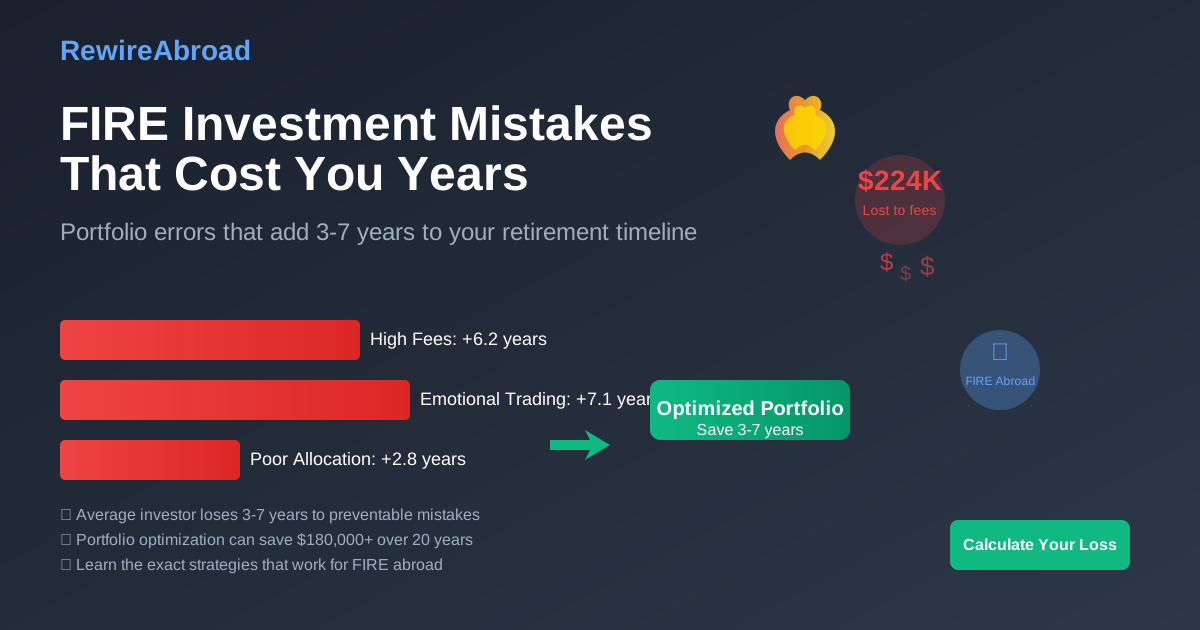
FIRE Investment Mistakes That Cost You Years of Work - Portfolio Errors to Avoid
Discover the costly FIRE investment mistakes that add years to your early retirement timeline. Learn how to optimize your portfolio.

How to Move to Slovenia in 2026: Costs, Visas & What No One Tells You
Slovenia costs 40-50% less than Austria or Italy next door. Here's the actual route Americans use, what it costs, and where to live. Updated 2026.
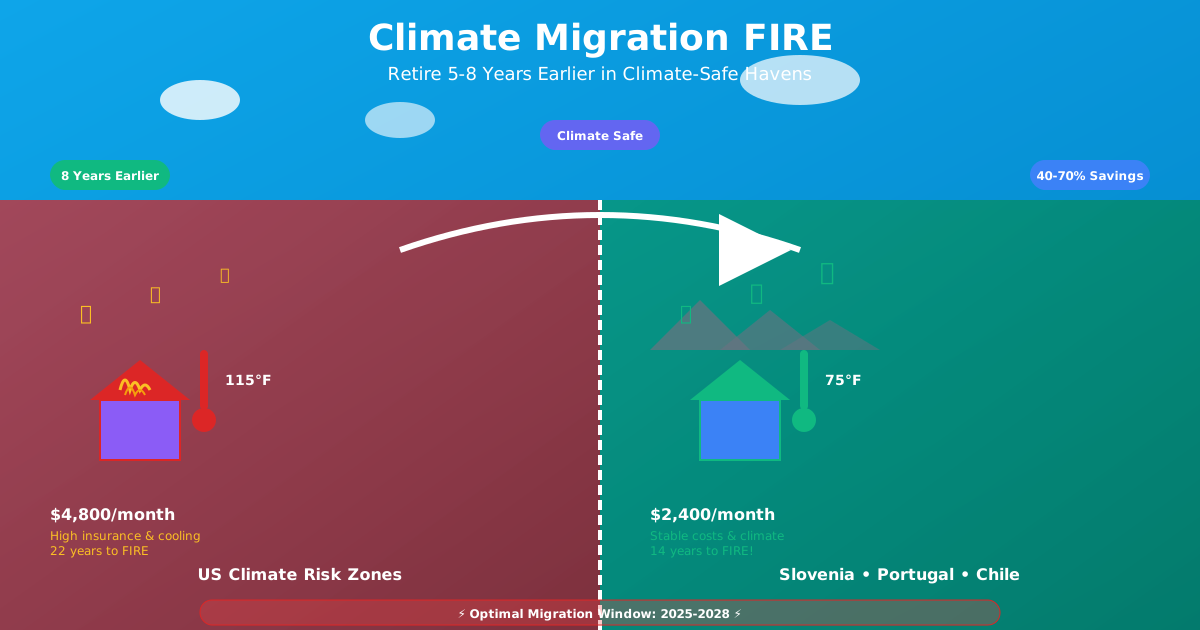
The Climate Migration FIRE Guide: Retire Early While Escaping Extreme Weather
Combine climate safety with FIRE. Discover climate-resilient countries where you can retire early while escaping extreme weather events.
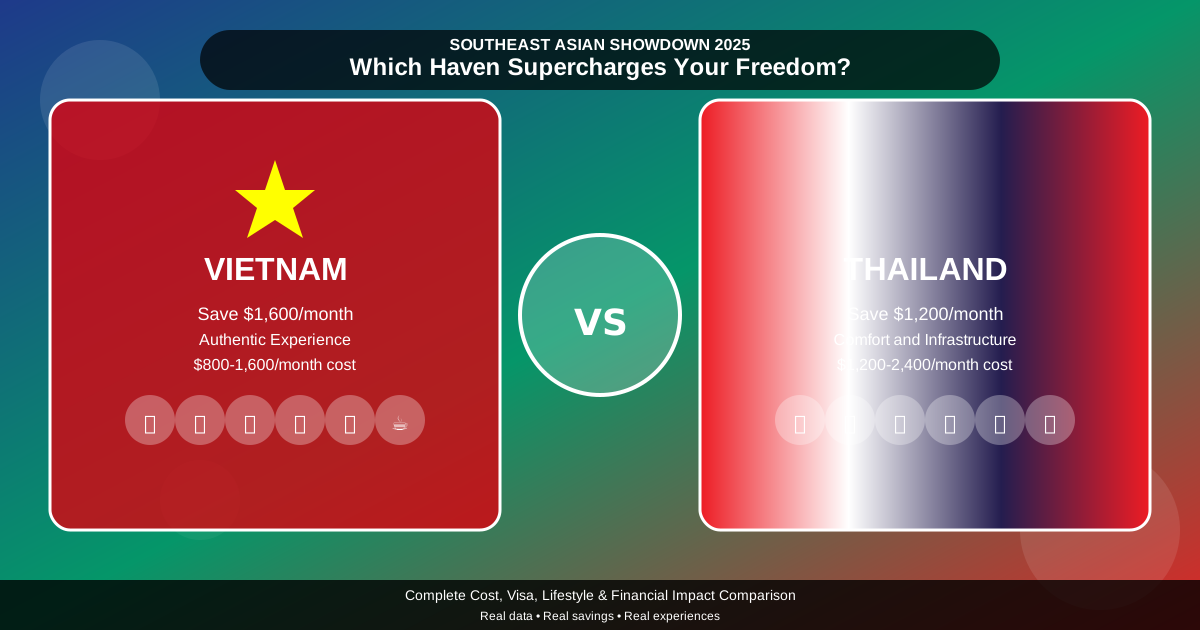
Vietnam vs Thailand: Which Southeast Asian Haven Supercharges Your Freedom, Finances, and Lifestyle?
Vietnam vs Thailand head-to-head: costs, visas, internet, healthcare, and lifestyle. Which Southeast Asian country fits your FIRE goals best?