FIRE & Retire Abroad: Early Retirement in Low-Cost Destinations

The dream of retiring early isn't just for the ultra-wealthy anymore. Thanks to the FIRE movement (Financial Independence, Retire Early), thousands of Americans are reimagining their career timelines and retirement plans. But what if you could accelerate this journey even further by looking beyond U.S. borders?
When you combine the disciplined saving principles of FIRE with the dramatically lower costs of living abroad, something magical happens: your timeline to freedom can shrink from decades to just years.
The Financial Synergy Between FIRE & Life Abroad
The FIRE movement is built on a simple formula: save aggressively (often 50-70% of income), invest wisely, and retire decades before traditional retirement age. While this approach works stateside, it typically requires extreme frugality and a high income.
Enter international living. In many countries around the world, your dollar stretches two, three, or even four times further than in the U.S. This means:
- Your savings rate can accelerate dramatically
- Your FIRE number (the amount needed to retire) drops significantly
- Your quality of life can actually improve while spending less
As Jack Wilson, a 43-year-old former software engineer who FIREd his way to Ecuador in 2022, puts it: "I was looking at another 7-10 years of grinding in the U.S. Then I realized I could live my ideal life abroad for less than $2,000 a month. The math was undeniable—I was already there."

How Lower Costs Abroad Accelerate Financial Independence
The math is simple: If you can live comfortably on $2,000 a month abroad instead of $5,000 in the U.S., your FIRE number shrinks by more than half.
Expense Category | U.S. Monthly Average | International Alternative | Savings |
|---|---|---|---|
Rent (2BR apartment) | $2,100 (urban centers) | $500-800 (most FIRE destinations) | 60-75% |
Healthcare | $450 for individual insurance | $75-200 for private international insurance | 55-85% |
Utilities | $250 | $80-150 | 40-70% |
Dining out (8× monthly) | $400 | $120-200 | 50-70% |
Total major expenses | $3,200+ | $775-1,350 | 58-75% |
These aren't theoretical numbers—they reflect real experiences of FIRE practitioners living in places like Medellín, Colombia, Penang, Malaysia, and Cuenca, Ecuador.
That’s more than a 60% reduction in monthly expenses—without sacrificing quality of life. In fact, in many of these countries, you’ll enjoy better weather, fresh food, a slower pace, and arguably a higher quality of life.
Tax Perks and Exchange Rate Benefits
Beyond the day-to-day cost savings, the U.S. tax code offers remarkable benefits for Americans living abroad:
Foreign Earned Income Exclusion (FEIE): For 2024, you can exclude up to $126,500 per person of foreign earned income from U.S. taxes. For a couple, that's $253,000 potentially tax-free if you meet the requirements.
According to international tax expert Olivier Wagner, author of "U.S. Taxes for Worldly Americans": "The FEIE is perhaps the most powerful tax advantage available to Americans pursuing FIRE abroad. It's especially valuable during the accumulation phase if you're working remotely or running a business while living internationally."
Tax Treaties: Many countries have favorable tax treaties with the U.S. that prevent double taxation and sometimes offer reduced rates on investment income.
Currency Advantages: While exchange rates fluctuate, the U.S. dollar historically maintains strong purchasing power in many emerging economies. This creates a built-in hedge against inflation for dollar-denominated investments.
Capital Gains Considerations: Several countries impose no capital gains tax on foreign-source investment income, which can significantly benefit your withdrawal strategy.
Healthcare Abroad: A FIRE Superpower
Healthcare costs are the Achilles' heel of early retirement planning in the U.S. A couple retiring at 45 might need $500,000 or more just for healthcare before Medicare eligibility.
The international alternative is transformative:
- Private international insurance: Comprehensive policies typically range from $100-300 monthly for healthy individuals in their 40s and 50s - check out SafetyWing for comprenhensive coverage.
- Local private insurance: Often available for $50-150 monthly with excellent coverage
- Out-of-pocket costs: Even without insurance, procedures cost a fraction of U.S. prices
Top Alternative FIRE-Friendly Destinations
While our previous article covered popular destinations like Portugal, Panama, Mexico, Costa Rica, and Thailand, several other countries offer exceptional value for early retirees:

Ecuador
With its stable U.S. dollar economy and varied climates from coastal to mountain highlands, Ecuador has become a FIRE favorite.
Cost highlights:
- $500-700 monthly rent for a nice 2BR apartment
- $1,500-1,800 total monthly budget for a comfortable lifestyle
- Public healthcare system available to residents for about $70/month
- Pensioner discount program (even for early retirees) offering 50% off entertainment, utilities, and transportation

Colombia
Once overlooked due to safety concerns, cities like Medellín have transformed into innovation hubs with perfect year-round spring weather, modern infrastructure, and a vibrant expat community.
Cost highlights:
- $400-600 monthly rent for a modern apartment in desirable areas
- $1,700-2,000 total monthly budget for an upper-middle-class lifestyle
- High-quality private healthcare for $100-150 monthly
- Exceptional public transportation and walkable neighborhoods
According to the annual InterNations Expat Survey, Colombia ranks in the top 10 for both quality of life and affordability.

Malaysia
For those seeking a mix of modern amenities, cultural diversity, and exceptional food, Malaysia offers perhaps the best value in Asia.
Cost highlights:
- $450-700 monthly rent for a modern apartment, potentially with amenities like pools
- $1,800-2,200 total monthly budget including frequent dining out
- World-class healthcare at a fraction of Western costs
- Excellent infrastructure and English widely spokens.

Georgia (the country)
This Caucasus nation has emerged as perhaps the most welcoming destination for digital nomads and early retirees.
Cost highlights:
- $400-600 monthly rent in the beautiful capital of Tbilisi
- $1,400-1,800 total monthly budget for a European lifestyle
- Extremely affordable private healthcare
- Picturesque locations between mountains and Black Sea

Romania
For those who desire European living without Western European prices, Romania offers an exceptional value proposition.
Cost highlights:
- $350-550 monthly rent in historic cities like Cluj or Brasov
- $1,500-1,900 total monthly expenses for a comfortable lifestyle
- EU access and excellent transportation connections
- Rich cultural heritage and stunning natural landscapes

Bulgaria
Another excellent EU option, Bulgaria offers perhaps the lowest cost of living in the European Union while providing significant tax advantages.
Cost highlights:
- $300-450 monthly rent for a comfortable apartment in Sofia or coastal cities
- $1,400-1,800 total monthly budget for a European lifestyle
- 10% flat tax rate—one of the lowest in Europe
- Stunning Black Sea coastline and mountain ranges
Personal Anecdote about Bulgaria: I had multiple Dental Implants and surgeries done in Sofia. What would cost upwards 50-100k is only a 10th of that in Bulgaria. Medical tourism is a big thing because the doctors/dentists are trained with modern methods in the west and charge eastern prices!
Country | Monthly Budget | Healthcare Quality (1-10) | Visa Ease (1-10) | Expat Community | Climate |
|---|---|---|---|---|---|
Ecuador | $1,500-1,800 | 7 | 9 | Medium | Varied (coastal to highland) |
Colombia | $1,700-2,000 | 8 | 7 | Large | Spring-like (Medellín) to tropical |
Malaysia | $1,800-2,200 | 9 | 6 | Large | Tropical |
Georgia | $1,400-1,800 | 7 | 10 | Growing | Four seasons |
Romania | $1,500-1,900 | 7 | 6 | Small but growing | Four seasons |
Bulgaria | $1,000–$1,400 | 7 | 7 | Small but growing | Four seasons |
MORE DETAILS FOUND HERE 👉 COUNTRY SEARCH
Visa Pathways & Residency Strategies
Securing legal long-term residency is crucial for your international FIRE journey. Here's a practical breakdown of options for our featured destinations:
Ecuador Retirement Visa
Requirements:
- Proof of minimum $400 monthly income from pension or investments
- Clean background check
- Basic health insurance coverage
Process:
- Gather documentation (including apostilled birth certificate and police clearance)
- Apply at Ecuadorian consulate or in-country
- Initial 2-year temporary residency
- Permanent residency available after 21 months
Official Government Links:
- Ministry of Foreign Affairs (Visa Information): https://www.cancilleria.gob.ec/2022/visa-de-residencia-temporal/
- National Social Security Institute (Healthcare): https://www.iess.gob.ec/
- Migration Office: https://www.ministeriodegobierno.gob.ec/migracion/
Timeline: 3-5 months from application to approval Cost: Approximately $500-700 in government fees plus legal assistance
Colombia Rentista Visa
Requirements:
- Proof of approximately $800 monthly passive income
- Health insurance valid in Colombia
- Clean background check
Process:
- Apply online through Colombian Ministry of Foreign Affairs
- Schedule biometrics appointment
- Initial visa valid for 3 years, renewable
- Path to permanent residency after 5 years
Official Government Links:
- Ministry of Foreign Affairs (Visa Application): https://www.cancilleria.gov.co/en/procedures_services/visa
- Migración Colombia: https://www.migracioncolombia.gov.co/
- Colombia Tax Authority (DIAN): https://www.dian.gov.co/
Timeline: 2-4 weeks for approval Cost: Approximately $300 in government fees
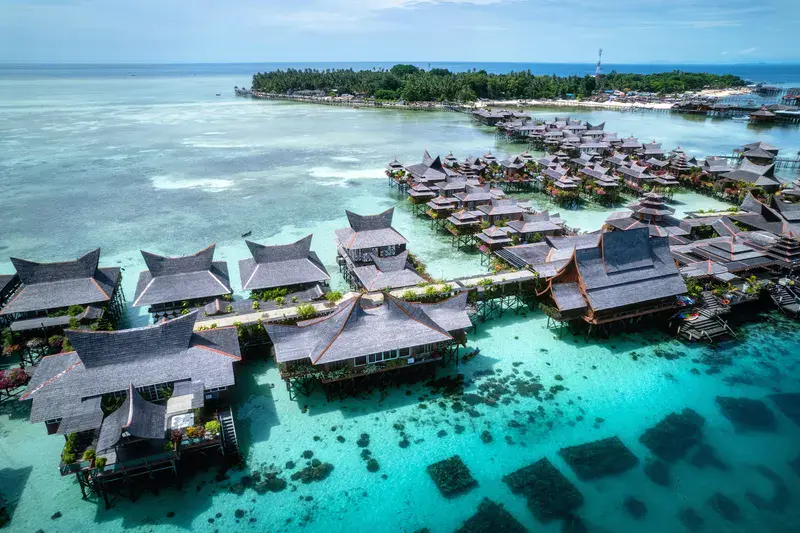
Malaysia MM2H Visa
Requirements (updated program):
- Fixed deposit of RM1,000,000 (approximately $225,000) for main applicant
- Liquid assets of approximately $100,000
- Monthly offshore income of at least $3,000
Process:
- Apply through authorized agent
- Initial approval letter
- In-country visa processing
- 5-year visa, renewable
Official Government Links:
- Malaysia My Second Home Program: https://www.mm2h.com/official-malaysia-my-second-home-website/
- Immigration Department of Malaysia: https://www.imi.gov.my/
- Ministry of Health Malaysia: https://www.moh.gov.my/
Timeline: 3-6 months Cost: Approximately $400-500 in government fees plus agency costs

Georgia Remote Worker/Investor Visa
Requirements (Remote Worker):
- Proof of $2,000+ monthly income
- Health insurance valid in Georgia
Requirements (Investor):
- Purchase of real estate worth $100,000+
- Or investment in Georgian business
Process:
- Apply online through Georgian government portal
- Submit documentation electronically
- Initial 1-year visa, renewable
- Permanent residency possible after 6 years
Official Government Links:
- Public Service Hall (Residence Permits): https://psh.gov.ge/
- Georgian e-Visa Portal: https://www.evisa.gov.ge/
- Revenue Service (Tax Information): https://www.rs.ge/
Timeline: 2-3 weeks Cost: Approximately $150-300
Romania Passive Income Visa
Requirements:
- Proof of approximately €1,200 monthly passive income
- Health insurance valid in Romania/EU
- Rental contract or property ownership
Process:
- Apply at Romanian consulate in home country
- Enter Romania on initial visa
- Apply for residence permit within 90 days
- Annual renewals required, permanent residency possible after 5 years
Official Government Links:
- Ministry of Foreign Affairs (Visa Information): https://www.mae.ro/en/node/2035
- Immigration General Inspectorate: https://igi.mai.gov.ro/
- National Health Insurance House: http://www.cnas.ro/
Timeline: 2-3 months Cost: Approximately €350-500

Bulgaria Retirement Visa
Requirements:
- Proof of approximately €700 monthly pension/retirement income
- Comprehensive health insurance
- Proof of accommodation (rental or ownership)
- Clean criminal record
Process:
- Apply for Type D visa at Bulgarian consulate
- Enter Bulgaria and apply for residence permit
- Initial permit valid for 1 year, renewable
- Permanent residence possible after 5 years
Official Government Links:
- Ministry of Foreign Affairs (Visa Information): https://www.mfa.bg/en/services-travel/consular-services/travel-bulgaria/visa-bulgaria
- National Revenue Agency (Tax Information): https://nra.bg/
- National Health Insurance Fund: https://www.nhif.bg/
Timeline: 1-2 months for initial approval Cost: Approximately €250-400 in government fees
Additional Resources:
- European Union Immigration Portal: https://ec.europa.eu/immigration/
- U.S. State Department Country Information: https://travel.state.gov/content/travel/en/international-travel/International-Travel-Country-Information-Pages.html
- U.S. Foreign Earned Income Exclusion Information (IRS): https://www.irs.gov/individuals/international-taxpayers/foreign-earned-income-exclusion
Pro Tip: Many successful FIRE expats recommend starting with a reconnaissance trip of 1-3 months (typically on a tourist visa) before committing to residency applications. This allows you to validate your research and explore neighborhoods firsthand.
Smart FIRE Withdrawal Strategies for Expats
Traditional FIRE withdrawal strategies need adaptation for international living. Here's how to optimize your approach:
Rethinking the 4% Rule
While the traditional 4% rule suggests withdrawing 4% of your portfolio in year one and adjusting for inflation thereafter, international FIRE practitioners often use more conservative withdrawal rates:
- 3-3.5% for maximum safety and currency hedge
- Geographic diversification to enable variable spending based on exchange rates
- Maintaining 1-2 years of expenses in cash, ideally in both USD and local currency
According to Michael Kitces, a financial planning researcher: "The 4% rule assumes U.S.-based expenses and inflation. For international FIRE, a more conservative initial withdrawal rate creates buffer against currency volatility, particularly in countries with less stable currencies."
We have included the 4% withdrawl rule with our comprehensive 👉 FIRE Calculator
Banking Infrastructure
Setting up the right banking structure is crucial:
- Maintain a U.S. base account with a bank offering free international ATM withdrawals (Charles Schwab or Capital One)
- Establish local bank accounts in your residence country
- Use low-fee transfer services like Wise (formerly TransferWise) rather than traditional bank wires
- Consider multi-currency accounts if you plan to move between countries
Currency Management Strategies
Currency fluctuations can dramatically impact your purchasing power abroad:
- Consider keeping 50-70% of investments in dollar-denominated assets
- Gradually convert to local currency when dollar is historically strong
- For countries with volatile currencies, keep only 1-3 months of expenses in local currency
- In dollarized economies like Ecuador, this concern is minimized
Investment Considerations
Your investment approach may need adjustment:
- Focus on total return rather than dividend investing (for tax efficiency)
- Maintain U.S. brokerage accounts where possible (Interactive Brokers is popular for its international accessibility)
- Consider your asset location for tax efficiency (which investments are held in which types of accounts)
- Simplify your investment approach for easier management across borders
Pro tip: Have multiple income streams—rental income, dividends, remote consulting—to avoid reliance on a single withdrawal strategy.

Daily Life, Lifestyle Fit & Avoiding Isolation
The financial benefits of international FIRE are clear, but the lifestyle transition requires careful consideration:
Building Community Abroad
Contrary to common fears, building a social circle abroad is often easier than at home:
- Expat groups: Platforms like InterNations and Facebook groups connect you with established expat communities
- Language exchanges: Even if you speak the local language, these events attract internationally-minded locals
- Co-working spaces: Hubs for location-independent professionals and great networking opportunities
- Volunteer opportunities: Meaningful ways to connect with both expats and locals
Sarah Johnson, who FIREd to Medellín at 39, shares: "I actually have a more active social life here than I did in Chicago. The expat community is incredibly welcoming, and because many of us are in similar situations, friendships form quickly."
Cultural Integration Strategies
- Commit to learning at least conversational local language
- Adopt local routines and customs (like afternoon siestas or evening paseos)
- Shop at local markets rather than expat-focused stores
- Participate in community events and festivals
- Find the right balance between expat and local community engagement
Digital Connection Maintenance
- Schedule regular video calls with family and friends back home
- Consider a semi-annual or annual trip back for important events
- Use a VPN for accessing U.S. streaming and banking services
- Join online communities that match your interests beyond expat status
Risks & Contingency Planning
Every plan needs a Plan B.
Financial Safety Nets
- Maintain an emergency fund covering 6-12 months of expenses
- Keep a "return fund" sufficient for relocation if needed
- Consider catastrophic insurance coverage beyond regular health insurance
- Maintain a U.S. credit card to preserve your credit history
Healthcare Contingencies
- Research specific coverage for pre-existing conditions
- Understand medical evacuation options and insurance - SafetyWing
- Identify the nearest high-quality medical facilities
- Build relationships with English-speaking doctors before emergencies
Ready to Rewire your Life?
Sign up to receive updates and insights.
By submitting your email address, you will receive a free subscription to RA Postcards and special offers from Rewire Abroad and our affiliates. You can unsubscribe at any time, and we encourage you to read more about our Privacy Policy.
Legal and Political Considerations
- Monitor visa requirement changes (they can shift with political winds)
- Understand property ownership restrictions for foreigners
- Consider working with an immigration attorney for complex situations
- Stay informed about local political developments
According to a 2023 survey by International Living, 62% of American expats maintain enough liquid savings to return to the U.S. if necessary, though only 4% reported needing to do so for non-family-related reasons.

Tools, Resources & Next Steps
- Cost of Living Comparison Tool: Customize monthly budget scenarios.
- Visa Finder Tool: Match countries to your income and passport.
- Community: Check out Reddit's r/expatFIRE or RewireAbroad’s insider newsletter.
Pre-Departure Checklist
- Conduct a 1-2 week reconnaissance trip to top destination choices - book your stay at popular sites like Vrbo and find cheap flights at Kiwi.com
- Research tax implications with an international tax specialist
- Set up mail forwarding and virtual address services
- Establish the right banking and investment accounts
- Secure appropriate international health insurance - if your staying temporarily to scout the location, a per trip health insurance will cover you: Travelex
- Digitize important documents and establish secure cloud storage
- Create a communication plan for staying connected with family
- Research visa requirements and gather necessary documentation
First 90 Days Checklist
- Secure temporary housing before committing to a long-term lease - you'll need a medical only health insurance
- Open local bank account
- Obtain local phone number and internet connection - use Drimsim to find a sim card you can use anywhere
- Identify nearest quality healthcare providers
- Connect with expat communities and attend meetups
- Establish daily routines that blend local customs with personal preferences
- Begin language learning if needed
Retiring Abroad & FIRE: Frequently Asked Questions ❓
Click any question to expand the answer.
Final Thoughts
FIRE doesn’t end at age 35 with a house in the suburbs. It could begin on a mountaintop in Colombia, a beach in Malaysia, or a wine-soaked terrace in Bulgaria.
If you’ve done the hard work of achieving financial independence, why settle for ordinary? Retire abroad, stretch your savings, and rewrite your story in a place where life costs less—but gives you more.
👉Don’t forget to explore the countries we previously covered for even more FIRE-friendly havens.

Adonis Villanueva
Adonis Villanueva is the founder of RewireAbroad, where he combines technology, analytics, and global mobility research to help readers make smarter decisions about living abroad. His work centers on geoarbitrage, financial independence, visas, taxes, and long-term relocation planning.
Rewire Abroad