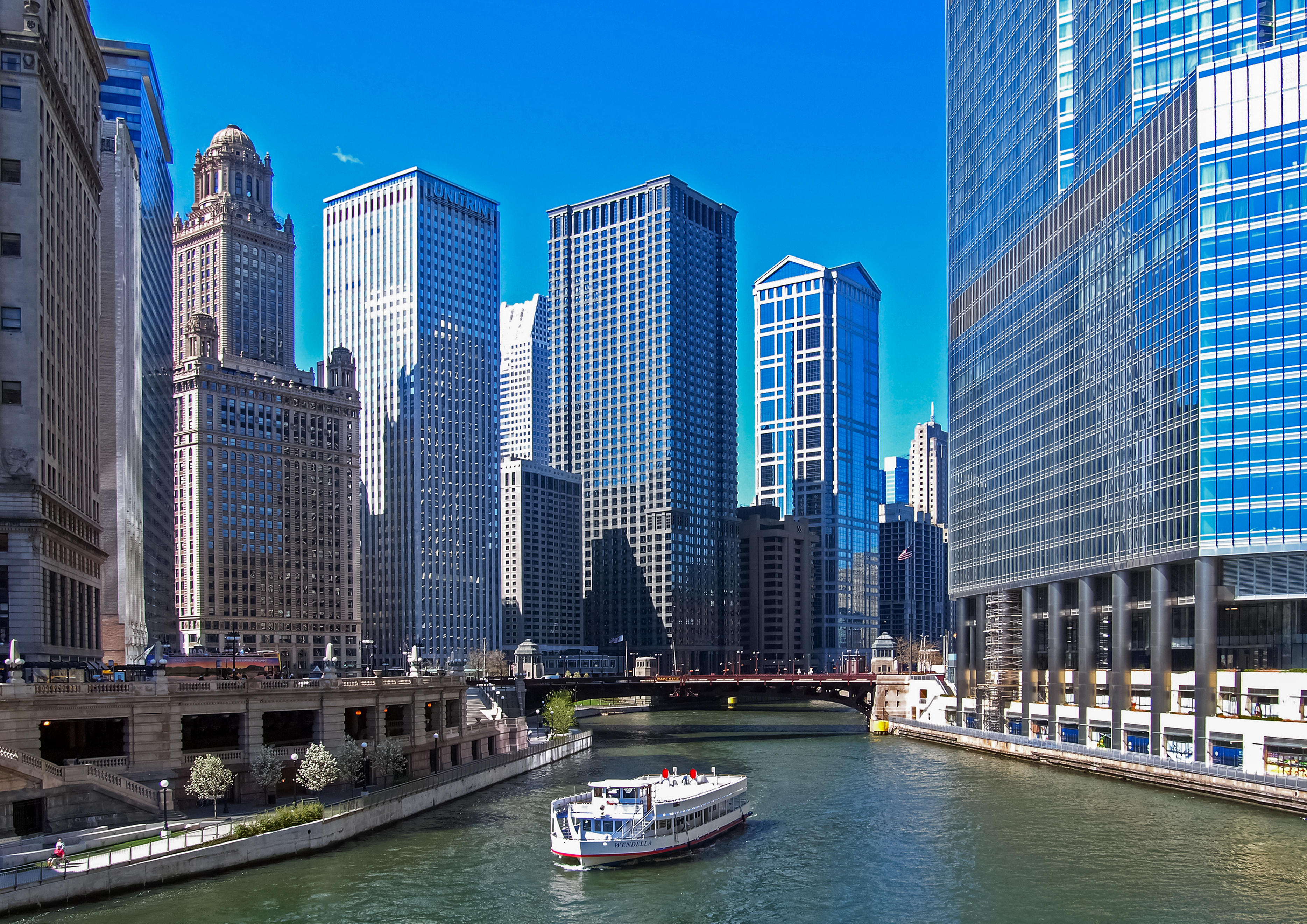
With a $919 billion GDP ranking sixth globally, this is one of the most economically complex cities on the planet — and that complexity is the point. Finance dominates through the CME Group and CBOE, which together handle 20% of global commodities and financial futures volume. Major employers span Boeing, United Airlines, Morningstar, and a deep bench of law firms, consulting houses, and tech companies. Remote workers and digital nomads exist here, but the city genuinely rewards people who want to plug into a real, dense professional ecosystem.
A one-bedroom in the city center runs around $2,650/month — steep, but meaningfully cheaper than New York or San Francisco equivalents. The 'L' train covers most neighborhoods for $2.50 a ride, and Metra connects the broader metro. Healthcare access is excellent, with Northwestern Memorial and Rush among top-tier systems, though costs follow standard U.S. norms — meaning insurance is non-negotiable. Language barrier is zero. Bureaucracy is standard American municipal friction: parking tickets are aggressive, city stickers are mandatory, and property taxes are genuinely high.
Winters are the honest tradeoff: January averages 30°F with wind off Lake Michigan that makes it feel worse. Summers compensate hard — 75°F, lakefront beaches, outdoor festivals nearly every weekend from June through September. The food scene is serious, from deep-dish to a James Beard Award count that rivals any U.S. city. The expat community is modest compared to global hubs, but 55 million annual visitors keep the cultural calendar relentless. Chicago suits ambitious professionals who want major-city infrastructure and culture without paying coastal prices for it.
Estimate the cost of moving to Chicago, IL, United States
Get a free moving cost estimate for moving to Chicago, IL, United States. Takes 10 seconds.
How much are you shipping?
When are you moving?
Powered by Sirelo. Free quotes from international movers.
🏚️ Cost of Living
A 1BR in the center runs about $2650/mo. If your income is in another currency, bank FX fees add up. A multi-currency account can cut that cost.
Chicago's safety profile is mixed but improving. Downtown and North Shore neighborhoods feel relatively safe during the day with good foot traffic and police presence. Nighttime walkability varies significantly by area—some neighborhoods are fine, others require caution. The city's reputation for crime is partly outdated; violent crime has declined, though it remains higher than national averages. Most expats and remote workers settle in safer enclaves like Lincoln Park, Lakeview, or River North.
Property crime (car theft, package theft) is more common than violent crime affecting residents. Petty theft and pickpocketing occur in crowded transit areas and tourist zones. Avoid isolated streets late at night, particularly on the South and West Sides where gang activity persists. Solo female travelers should use standard urban precautions—stay aware on public transit, avoid displaying valuables, and use rideshare after dark. Scams are typical urban fare: overpriced taxis, street cons.
Chicago has stable governance, reliable police, and no political instability affecting daily life. Protests occur occasionally but rarely turn violent or disrupt residential areas. The city is fundamentally safe for American expats—it's a major U.S. city with normal urban crime patterns, not a high-risk destination. Choose your neighborhood carefully (research crime maps by block), and you'll have a secure, vibrant lifestyle. The risk profile is comparable to other major U.S. cities like Boston or Philadelphia.
🏥 Healthcare
Excellent
Public Hospitals
Yes
Private Clinics
Yes
English-Speaking Doctors
Widely Available
See how Chicago, IL's healthcare compares with Medellín
🌤️ Climate
Climate Zones
Continental
Summer Temp
28°C
Winter Temp
-6°C
Humidity
70%
Air Quality Index
42
Annual Rainfall
1245 mm
Best Months
JunAugSep
Climate Notes
Humid continental climate with hot, humid summers and cold, snowy winters.
💻 Digital Nomad
Avg Internet Speed
200 Mbps
Coworking Availability
Abundant
Coworking Spaces Nearby
12
Digital Nomad Score
77/100
Community Notes
Chicago is a vibrant city with a rich cultural scene and extensive coworking spaces.
Located in the vibrant Fulton Market district, WeWork Kinzie offers a modern and collaborative environment with a strong community. It's well-suited for digital nomads due to its central location, ample amenities, and networking opportunities.
A women-focused coworking space in Fulton Market, The Wing offers a supportive and stylish environment. It's a great option for female digital nomads seeking community and a productive workspace.
Industrious River North provides a premium coworking experience with a focus on professionalism and productivity. Its central location and upscale amenities make it a good choice for established remote workers.
Located in the West Loop, Coalition Impact focuses on social impact and offers a collaborative environment for entrepreneurs and remote workers. It's a good option for those seeking a mission-driven community.
See how Chicago, IL's digital nomad life compares with Medellín
🧳 Expat Life
English Proficiency
Widely Spoken
Expat Community
Large & Active
Top Neighborhoods
Lincoln Park, Wicker Park, Lakeview
Banks Nearby
207
ATMs Nearby
41
Expat Life Notes
A world-class metropolis with global corporate hubs and a massive, diverse expat population.
Pros
✓ World-class dining and culture
✓ Major career hub
✓ Excellent public transport in center
Cons
✗ Cold and windy winters
✗ High taxes
✗ Safety concerns in specific zones
🏘️ Neighborhoods in Chicago, IL
Areas of Chicago, IL that expats often consider.
Conditions can change from one block to the next, and these descriptions are general guides, not safety assessments. Before choosing where to stay or live, check current travel advisories, talk to people who live there, and visit in person if you can.
Lincoln Park
Green, upscale, family-friendly
Lincoln Park is known for its beautiful park of the same name, excellent schools, and proximity to the lakefront. It's popular with families and young professionals, offering a mix of residential streets and commercial areas. While very walkable and with good public transit, it can be expensive and crowded, especially during summer.
Lakeview
Lively, diverse, LGBTQ+-friendly
Lakeview is a vibrant neighborhood with a strong sense of community, known for its diverse population and thriving nightlife. It's home to Wrigleyville and offers easy access to the lakefront. While generally safe and walkable, some areas can be noisy, especially around Wrigley Field, and parking can be challenging.
River North
Trendy, upscale, urban living
River North is a bustling neighborhood with a mix of high-rise apartments, art galleries, and upscale restaurants. It's a popular choice for young professionals and those seeking a vibrant urban lifestyle. While centrally located and well-connected by public transit, it can be expensive and experience high levels of tourist traffic.
Wicker Park
Hip, artsy, independent businesses
Wicker Park is known for its independent boutiques, vintage shops, and live music venues. It attracts a younger, more creative crowd. It's very walkable and has good public transit, but can be noisy and experience some petty crime.
Andersonville
Quaint, Swedish, LGBTQ+-friendly
Andersonville has a charming, small-town feel with a strong Swedish heritage. It's known for its independent shops, restaurants, and LGBTQ+ community. It's a walkable and welcoming neighborhood, but further from downtown than other options, requiring longer commutes.
Hyde Park
Academic, historic, intellectual
Home to the University of Chicago, Hyde Park offers a rich cultural and intellectual environment. It's known for its historic architecture and museums. While generally safe and walkable, it's somewhat isolated from the rest of the city and can feel less vibrant than other neighborhoods.
Pilsen
Artistic, Mexican, vibrant culture
Pilsen is a historically Mexican neighborhood with a thriving arts scene and colorful murals. It offers a more affordable option compared to other neighborhoods. While culturally rich and increasingly popular, it's further from the lakefront and some may find the language barrier challenging.
Page 1 of 2
Could living/working in Chicago, IL cut years off your work life?
With a 1-bedroom in the center at $2650/mo, your FIRE number here might be much lower than you think.
Chicago, IL has a population of approximately 2,746,388 people.
A single person can expect to spend around $6,625 per month in Chicago, IL, including rent. A 1-bedroom apartment in the city center costs approximately $2650/month.
The nearest airport to Chicago, IL is GYY, approximately 19.5km away.
Chicago, IL is considered relatively safe, with a safety index of 70.0. As with any city abroad, expats should research specific neighborhoods before committing to a location.
Chicago, IL has an average internet speed of 200 Mbps. It is considered a well-established digital nomad destination.
Chicago's safety index of 70 reflects a city with significant neighborhood variation. Downtown, Lincoln Park, Lakeview, and the North Side are generally safe for daily life. The South and West Sides have higher crime rates that make headlines. Most expats live on the North Side or in the Loop and experience little personal safety issues, but it's worth researching specific neighborhoods before signing a lease rather than treating the city as uniformly safe or unsafe.
Chicago is meaningfully cheaper than New York, San Francisco, or Los Angeles. A city-center one-bedroom runs around $2,650/month, while neighborhoods like Logan Square or Pilsen can come in under $1,800. Groceries and dining are moderate. The real hidden cost is Illinois state income tax at 4.95% flat, high property taxes if you buy, and a city sticker requirement (~$145/year) if you own a car. Overall, budget $4,500–$6,000/month for a comfortable single-person lifestyle.
Chicago has a continental climate with cold winters, but the city remains functional as shown by its walkability score of 80.
For budget-conscious expats, consider neighborhoods like Rogers Park, Edgewater, or Albany Park. These areas offer more affordable rent than downtown or Lincoln Park, while still providing good access to public transportation and amenities. You'll find a mix of cultures and a more local, less touristy vibe.
Chicago has an excellent public transportation system, including the 'L' train and bus network, making it easy to get around without a car. Many expats find it convenient and cost-effective to rely on public transit, biking, and ride-sharing services. Parking can be expensive and traffic can be heavy, especially downtown.
Chicago has a sizable and diverse expat community, with various groups and organizations catering to different nationalities and interests. You can find social events, language exchange meetups, and support networks to connect with other expats. Check online platforms like InterNations or Meetup to find relevant groups.
Chicago offers strong internet connectivity for digital nomads, with an average speed of 200 Mbps. This is well above the 100 Mbps threshold mentioned in older guides and is reliable for remote work and video calls.
Yes, Chicago has numerous English-speaking doctors and world-class hospitals, including Northwestern Memorial Hospital and the University of Chicago Medical Center. Finding healthcare providers who speak English is not a problem. Many hospitals also have international patient services to assist expats.
As a US citizen or green card holder, you're still subject to US taxes even if you live in Chicago. However, you may be able to exclude a portion of your foreign-earned income using the Foreign Earned Income Exclusion (FEIE) or claim the Foreign Tax Credit. Consult with a tax professional specializing in expat taxes to ensure compliance.
Chicago's cost of living index is 88.1 (NYC=100), with monthly expenses for a single person around $1450 excluding rent. A 1-bedroom in the city center averages $2650, so FIRE requires careful budgeting and choosing an affordable neighborhood. The city offers many free cultural attractions and good public transit to help manage costs.
While Chicago has a reputation for crime, much of it is concentrated in specific areas. Expats should exercise caution in certain neighborhoods on the South and West Sides, especially at night. Stick to well-lit areas, be aware of your surroundings, and research neighborhoods before moving.
Chicago offers a vibrant but manageable pace of life for retirees. While it's a bustling city, there are plenty of opportunities for relaxation and leisure, including parks, museums, and cultural events. The city also has a strong sense of community, making it easy to connect with others.
Opening a bank account in Chicago is relatively straightforward with proper identification and proof of address. Many banks offer international money transfer services, but it's wise to compare fees and exchange rates. Consider using online platforms like Wise or Remitly for potentially better rates when sending money abroad.
Chicago experiences four distinct seasons, with hot and humid summers and cold, snowy winters. Be prepared for extreme temperatures in both summer and winter. Spring and fall are generally mild and pleasant. Invest in appropriate clothing for all types of weather.
To stretch your pension or Social Security income in Chicago, consider living in a more affordable neighborhood, utilizing public transportation, and taking advantage of free activities. Cooking at home and shopping at local markets can also save money. Look for senior discounts and explore community resources.
Cost-of-living and visa updates for Chicago, IL and the rest of United States. Free with RA Postcards.
By submitting your email address, you will receive a free subscription to RA Postcards and special offers from Rewire Abroad and our affiliates. You can unsubscribe at any time, and we encourage you to read more about our Privacy Policy.