Difficulty
Difficult
Duration
24 months
Overview
EB-5 is a U.S. immigrant investor route that trades a large upfront investment for a green card, not a temporary stay. The minimum qualifying outlay is 1,050,000 USD as of 2026 into a U.S. commercial enterprise, in the form of business or capital investment, and it must be at risk rather than a secured loan. There is no stated minimum monthly income or savings requirement, and Social Security or pension income do not count toward eligibility because the program looks at capital invested and its job-creation potential, not retirement cash flow. Local work is permitted, but the status is tied to your role as an owner, not as an employee-for-hire.
Unlike classic retirement visas that quote a fixed duration, this route leads directly into the U.S. permanent residence system, so no separate renewal is listed and the visa itself is marked non‑renewable. You use the EB-5 classification to obtain a conditional green card first, then remove conditions to receive standard permanent residency. Years to permanent residence and to citizenship vary by case, but in practice the bottleneck is visa issuance and USCIS adjudication, not any fixed EB-5 clock. The maximum consecutive absence is capped at 180 days as of 2026, so once you hold a green card you are dealing with general U.S. permanent resident rules on abandonment, not EB‑5‑specific day counts.
Friction comes from qualitative scrutiny rather than from a long list of formalities. Health insurance is required, but a local U.S. bank account, apostille, FBI background check, medical exam, and interview are all marked as not required at the EB‑5 classification stage, even though consular processing and adjustment of status have their own standard U.S. immigrant requirements. The real difficulty lies in documenting lawful source and path of the 1,050,000 USD, proving job creation, and navigating a process whose overall processing time and application fee vary by case.
Dependents are allowed: a qualifying investor aged at least 18 can include a spouse and children under 21, though costs can vary for each extra adult or child. For a FIRE household with, say, 2,000,000 USD in liquid brokerage assets and a clear audit trail, this route makes sense if the primary goal is relocating the entire family to the U.S. with full work rights and a path to a U.S. passport. It is a poor fit if your net worth is tied up in illiquid assets or you are seeking a flexible, low‑presence “flag” with a sub‑500,000 USD price tag rather than a committed move into the U.S. tax and regulatory system.
Eligibility Requirements
Any nationality can apply for the US EB‑5 Investor Visa in principle, as the nationality restrictions field is set to “all.” In practice, investors from sanctioned or tightly controlled jurisdictions such as Iran, North Korea, Syria, Cuba, and in some cases Russia can run into severe banking, source‑of‑funds, and consular processing obstacles that make approval or even funding the 1,050,000 USD investment extremely difficult. Before assembling a full EB‑5 document package, verify current eligibility and consular processing options directly with U.S. Citizenship and Immigration Services (USCIS) and the U.S. Department of State’s consular posts serving your country of residence.
Min Age
18 yrs
Duration
24 months
Max Absence
180 days
Business Owner
Requirements Checklist
0 of 36 documents in hand
0%These take the longest, so start them first.
Request these while the slow items are in progress.
You only need these on the day you submit.
How and where to apply
Apply online via USCIS portal (uscis.gov) by filing I-526 petition from anywhere; no consulate initially required. After approval, use consular processing (DS-260 at US embassy/consulate in home country) if outside US, or adjust status in-country via I-485 if eligible. No switch from tourist visa specified for EB-5.
Tax Information
Local tax regime and what gets taxed
For anyone using EB‑5 to become a U.S. resident, the relevant tax regime is the standard U.S. worldwide system; no special investor or non‑dom regime is noted for this visa, and the tax regime type is the standard resident-based worldwide system as of 2026. Once you hold a green card and are resident, the IRS expects you to report global income: remote salary from non‑U.S. clients, ETF dividends from foreign brokerages, pension distributions from foreign or domestic plans, and rental income from property abroad all fall into the U.S. tax net. Social Security and foreign pensions are not part of EB‑5 eligibility (both are marked as not recognized for qualification), but they are part of your taxable base once you are in the system.
Capital gains on foreign investments, such as selling index funds or ETFs in a non‑U.S. brokerage account, are taxed under standard U.S. capital gains rules, with long-term gains taxed at 0%, 15%, or 20% depending on income, and no special regime for EB‑5 investors. In the absence of a listed territorial or remittance system, you should assume that capital gains are treated under normal U.S. rules for residents and green card holders, not exempt, and not subject to a special flat rate tied to this visa.
There is no separate tax residency trigger or tax status deadline specific to this visa. In practice, however, EB‑5 is designed to lead to a green card, and permanent residents are treated as U.S. tax residents from the date their status becomes effective, regardless of day counts in a particular year. There is no separate EB‑5 tax registration regime mentioned; local bank accounts are not required by the program, and there is no listed obligation to obtain a separate tax ID beyond what U.S. residents normally hold.
The United States has income tax treaties with many countries, but treaty terms vary by country, so you cannot rely on a specific treaty article for relief on Social Security, dividends, or pensions between the U.S. and your home country. In practice this means your planning has to start from a conservative position: global income reported in the U.S., with any treaty-based reduction or exemption analyzed separately, not assumed from the EB‑5 classification itself.
For US Citizens and Green Card Holders
U.S. citizens and existing green card holders investigating EB‑5 are already in the U.S. tax net, so this visa does not create a new filing obligation but can change your profile if you shift work or investment structures. The Foreign Earned Income Exclusion (FEIE) via Form 2555 allows exclusion of up to 132,900 USD of earned income as of 2026, but this only applies if you are living abroad and can meet either the Physical Presence Test (330 full days outside the U.S. in any 12‑month period) or the Bona Fide Residence Test. EB‑5 is explicitly a route into the U.S., not out, so once you are using it to live in the United States, FEIE is generally irrelevant; your consulting income, remote salary, or self‑employment income is fully taxable in the U.S.
The Foreign Tax Credit on Form 1116 remains relevant only if you keep significant foreign‑source income that is also taxed by another country, for example rental income from a condo in Canada or Italy that withholds tax locally. A credit can offset U.S. tax on that same income stream when the foreign effective rate exceeds the U.S. rate; there is no EB‑5‑specific twist here, and if your new life is primarily U.S.‑based, the FTC’s value tends to shrink as your foreign‑taxed income shrinks.
FBAR (FinCEN 114) and FATCA Form 8938 continue to apply without change. You must file FBAR when the aggregate value of foreign financial accounts exceeds 10,000 USD at any point in the year; non‑willful penalties start at the statutory 10,000 USD per violation, adjusted to approximately 16,700 USD as of 2026. EB‑5 does not require a foreign or U.S. bank account in the program facts, but most investors will maintain foreign accounts for at least a transition period, triggering FBAR and possibly Form 8938. The safe play is to build a team early: a U.S. CPA focused on expat and cross‑border taxation to manage FEIE/FTC/FBAR/FATCA as you move funds into the U.S., and a qualified tax advisor in any non‑U.S. country where you retain assets and tax residency exposure. The 1,500–3,000 USD spent in year one on that combined advice is small relative to a 1,050,000 USD investment and often recoups itself through optimized structuring and avoided penalties.
Living in United States
COL Index vs NYC
100.0
Monthly Cost (excl. rent)
$1,176
1BR Rent (City Center)
$1,669
Safety Index
50.8
Healthcare Index
67.8
Quality of Life Index
188.8
Time Zone
UTC-12:00
Capital
Washington, D.C.
Population
329.5M
Official Languages
English
Avg Internet Speed
390 Mbps
Public Transit Quality
Good
With a budget covering rent and living costs, you'd need roughly $2,845/mo for a comfortable single-person lifestyle in United States.See how far your money goes →
🏙️ Best Cities in United States for Investors & FIRE Seekers
 ✦ 84
✦ 84 ✦ 87
✦ 87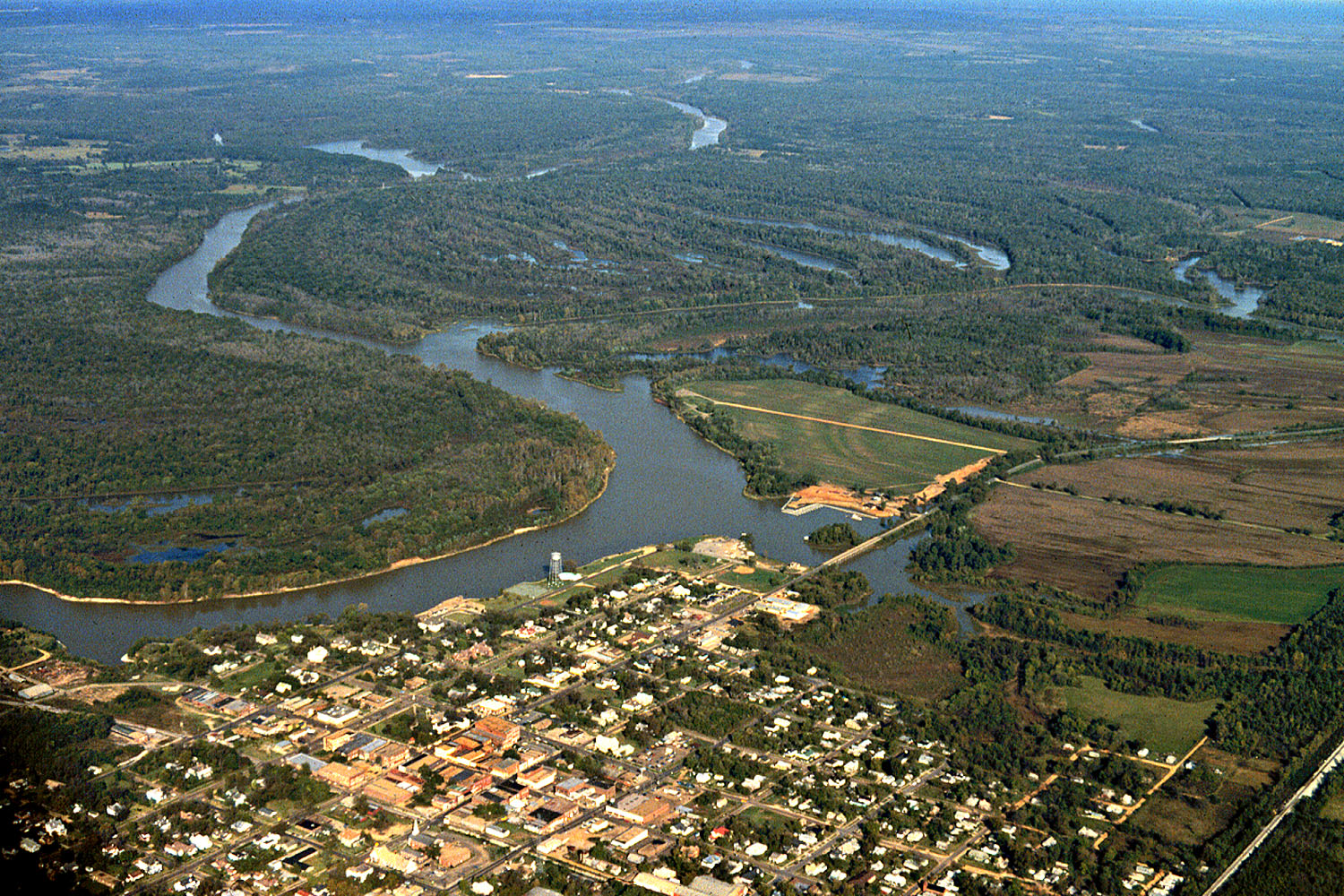 ✦ 85
✦ 85 ✦ 84
✦ 84 ✦ 89
✦ 89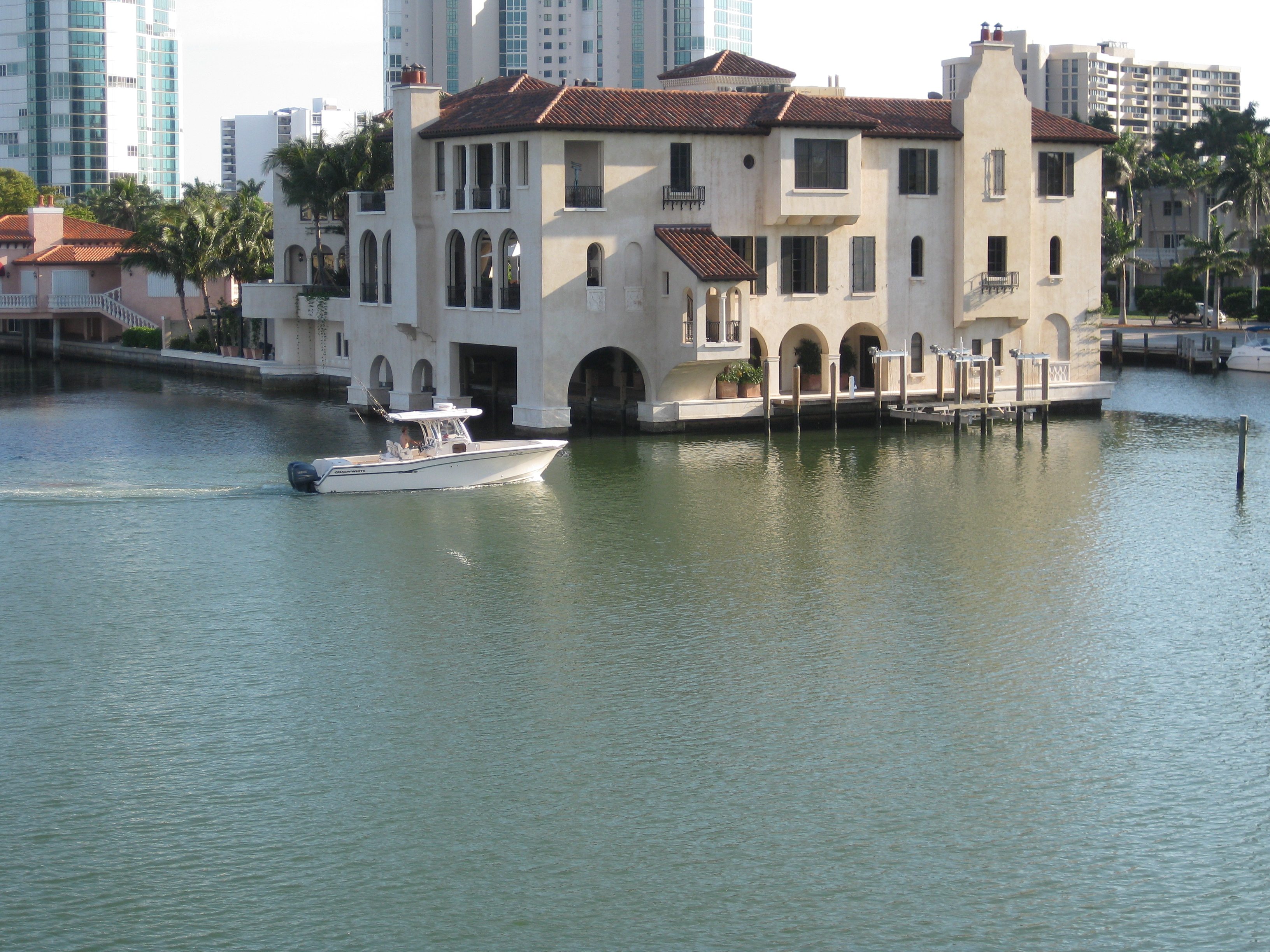 ✦ 85
✦ 85The investment itself, and the mistake people make with it
The single most common misunderstanding in this visa category has nothing to do with money and everything to do with what the money is allowed to buy. Applicants sometimes assume that purchasing US real estate, a house to live in, a condo, even a small rental property, satisfies the investment requirement. It does not. The capital has to go into a new commercial enterprise that creates jobs, whether that's a direct investment in an operating business you control or a passive stake through a regional center project. A personal residence is not a qualifying investment under any structure, no matter how much it costs or how it's financed.
This confusion tends to surface with people who are used to golden-visa style programs abroad, where a straightforward property purchase can be the entire qualifying act. EB-5 asks for something structurally different: a subscription agreement, an operating or partnership agreement for the enterprise, evidence that the entity is truly new or has been substantially restructured, and if it's TEA-linked, a designation letter tying the investment to a qualifying area. None of that overlaps with a home purchase contract.
Where accommodation does matter is more mundane. There's no requirement to prove a lease or own property to file, but once conditional residency starts, you'll want an address history that holds up, particularly since extended time outside the country can complicate both the conditions-removal filing and the residency clock that eventually matters for citizenship eligibility. Investors who split time between the US and a home country sometimes treat their actual physical presence as an afterthought while they focus entirely on the investment paperwork, then find themselves reconstructing travel history under pressure later. Keep it as you go.
What happens after approval isn't what most people picture
Filing the I-526 or I-526E petition through USCIS is the first real gate, and it can be filed from anywhere, no consulate required at that stage. Approval of that petition doesn't hand you a green card. It hands you eligibility to pursue one, either through consular processing with the DS-260 if you're outside the US, or through an I-485 adjustment of status if you already have standing to file from within the country. That distinction changes your entire timeline and where you need to be physically present during the process, and it's worth deciding early which route applies rather than assuming the more familiar one does.
What you get at the end of that second stage is conditional permanent residency, not the unconditional version. The conditional period runs for a set window, during which the enterprise has to actually do what the business plan said it would: hire people, generate the documented activity that eventually gets proven through payroll records, tax filings, and I-9 forms. Near the end of that window, there's a further filing, the I-829, to remove the conditions and convert to standard permanent residence. This is the stage where the job-creation evidence gets tested for real, against the plan submitted years earlier, and it's also where investors who treated the business plan as a formality during I-526 sometimes discover the enterprise didn't track its hiring the way the filing promised it would.
The gap between "visa approved" and "holding a real, unconditional permit" is measured in years, and it runs through an operating business the whole time, not through a waiting room.
The long-term path looks cleaner on the checklist than it runs in reality
Removing conditions and becoming a full permanent resident sits a couple of years past the conditional start, on paper a fixed and predictable step. In practice, the I-829 filing depends entirely on the health of the underlying investment, and that's the part applicants have the least control over once the money is committed. If the enterprise underperforms, if the regional center project stalls, if job creation falls short of the plan, the conditions-removal stage becomes a negotiation over evidence rather than a formality. This is the part of EB-5 that most resembles running a business you don't fully control, because for most regional center investors, you don't.
The other place theory and practice diverge is continuous presence. There's a cap on how long you can be away at a stretch without it undermining your residency status, and investors who kept a life and business interests abroad sometimes treat the US side as a paperwork exercise rather than an actual place they need to be. That approach tends to catch up with people right around the point where residency needs to convert into something more permanent, when absence patterns get scrutinized more closely than they were during the conditional years.
None of this is as risk anywhere in the marketing materials regional centers put out, understandably, since their incentive is to close the investment, not to walk investors through what happens if the job numbers come in soft three years later.
EB-5 versus the treaty-investor route, and why the choice usually isn't close
The alternative that comes up constantly is the E-2 treaty investor visa, and the comparison is almost always framed as EB-5's cost against E-2's speed, which understates what's actually being traded. E-2 requires a treaty relationship between the US and your country of citizenship, so it's simply unavailable to a large share of would-be investors regardless of how much capital they have. Where it is available, the entry cost is meaningfully lower and the process moves faster, but it's a renewable non-immigrant status tied to the ongoing operation of the business, not a route to permanent residency on its own. Walk away from the business, and the visa basis walks away with it.
EB-5 asks for far more capital and far more patience, but it's structured from the outset as an immigrant petition. Approval sets you on a path toward unconditional permanent residence and eventually citizenship, without needing to keep running the underlying business yourself for the rest of your life once the job-creation period closes out. For someone whose priority is a US passport for their family, not an ongoing US business they intend to operate personally, that structural difference matters more than the entry ticket price.
The decision usually comes down to whether you're trying to build or operate a business in the US, in which case E-2, where citizenship makes it available, deserves a serious look, or whether you're trying to secure permanent status with the least operational entanglement possible, in which case a passive regional center investment under EB-5 fits the goal even though it costs more and takes longer to fully resolve. Trying to use EB-5 as a vehicle for hands-on entrepreneurship, or E-2 as a shortcut to a green card, is where the mismatch usually starts.
Work Permissions
Application Steps
- 1
📋 Research EB-5 projects
2-4 weeks
- 2
📄 Gather source of funds proof
4-8 weeks
- 3
📬 File I-526 petition
- 4
⏳ Await I-526 approval
not specified
- 5
📬 Apply for adjustment of status or consular processing
not specified
- 6
⏳ Receive conditional Green Card
not specified
- 7
📬 File I-829 to remove conditions
not specified
- 8
🏛️ Register for SSN and local ID
1-2 weeks
Compare this visa
Curated comparisons that include this route.
Frequently Asked Questions
Click any question to expand the answer.
Ready to Apply?
Work with trusted visa specialists who handle the paperwork so you can focus on your move.
Get help with this visa →* We may earn a commission if you apply through our link
At a Glance
Last verified: October 9, 2026