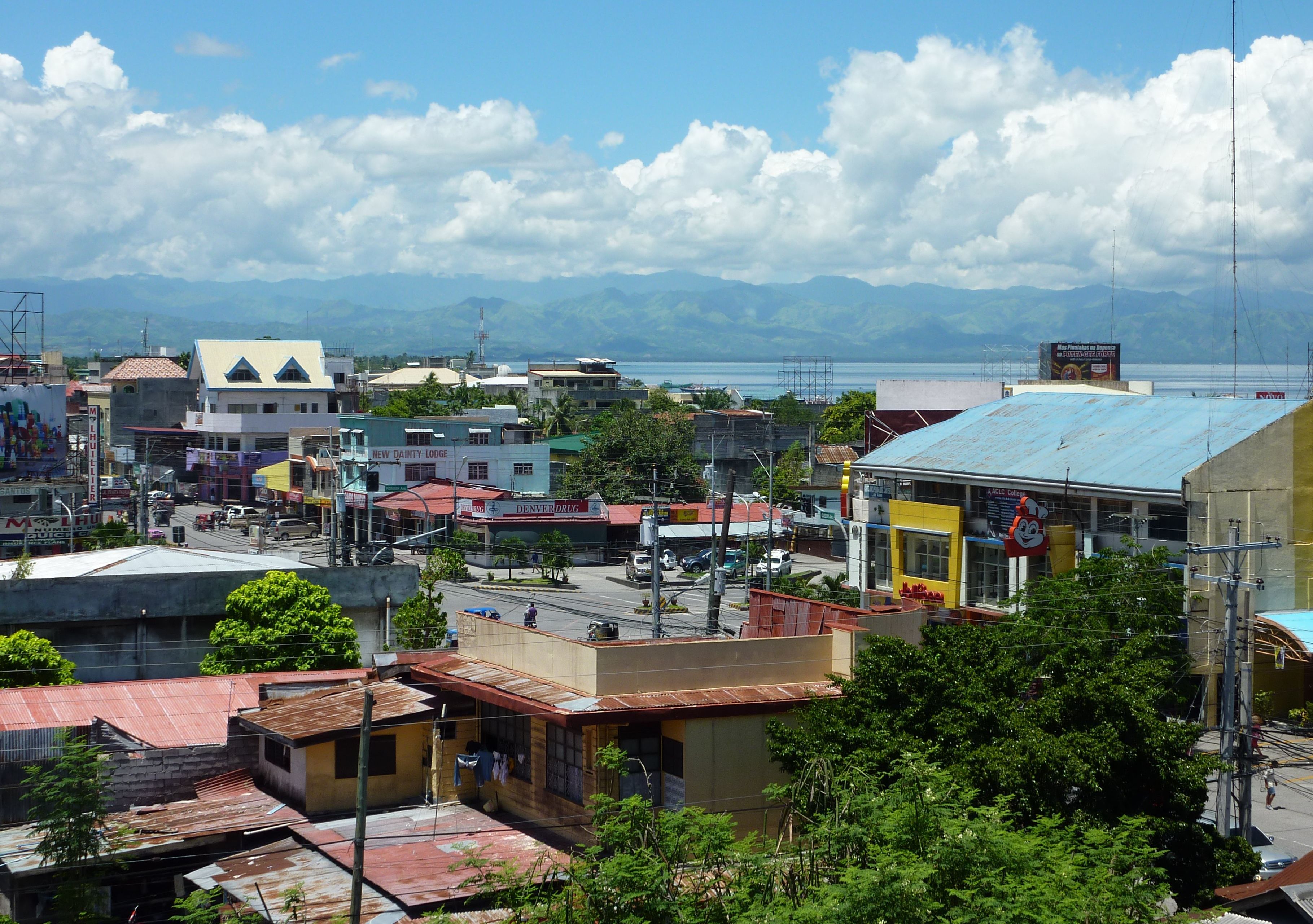
General Santos sits on the southern coast of Mindanao in the Philippines, a city of 722 thousand people built just 15 m above sea level and set to Asia/Manila time. The climate is tropical savanna: consistently hot with high humidity, so days rarely offer a cool reprieve and air conditioning or good cross ventilation matters more than a heavy winter wardrobe. Expats who settle here tend to cluster in City Heights and Lagao, two neighborhoods that balance access to the urban core with a quieter residential feel. The city is compact enough that getting across town never becomes a daily ordeal, and the surrounding region mixes coastal scenery with the farmland and fishing economy that built General Santos in the first place.
Housing is where the numbers get genuinely striking. A one-bedroom apartment in the city center runs about $175/mo, while the same outside the center drops to $111/mo. Three-bedroom units follow the same pattern: $357/mo in the center and $238/mo outside it. Utilities add roughly $75/mo, internet about $31/mo, and a mobile phone plan around $6/mo. A monthly public transport pass costs about $8/mo. Everyday food is cheap too, with an inexpensive restaurant meal at $3 per person, a cappuccino at $3, and a mid-range three-course dinner for two at $27. Numbeo puts monthly costs for a single person at $450/mo excluding rent and $1,350/mo for a family of four excluding rent. Add rent and the tiers land at $314/mo for budget, $399/mo for mid-range, and $513/mo for comfortable. The overall cost of living index is 35/100 against New York City at 100, which explains why so many long-stayers find their money stretches further here than almost anywhere else in the region.
Safety is one of the city's stronger selling points. The safety index sits at 70/100 and the crime index at 28/100, where lower is safer, so day-to-day life tends to feel calm rather than guarded. Air quality is moderate, with an index of 52 where lower is better, and healthcare quality is rated fair, which means routine care is manageable but complex or specialist treatment may call for a trip to a larger Philippine city. English proficiency is common in tourist areas, so daily errands, restaurant orders, and basic appointments rarely require a translator. The expat community is small, which cuts both ways: fewer ready-made social circles, but also less of the transient, revolving-door feel that defines bigger hubs.
For longer stays, the Philippines SRRV Retirement Visa is the main route, and it requires a minimum monthly income of $1,500/mo. Remote workers can look at the Philippines SEZ Remote Work Visa (PEZA Zone). General Santos International Airport (GES) is just 7 km from the city, so arrivals are quick and cheap by taxi or ride-hailing. With an overall expat score of 78/100, a FIRE score of 80/100, a digital nomad score of 65/100, and a retiree score of 58/100, the city suits budget-focused savers, early retirees chasing low fixed costs, and remote workers who value quiet over nightlife. It is less suited to anyone who needs a large expat network, top-tier hospitals, or a fast, always-on internet connection, since average speeds run around 33 Mbps.