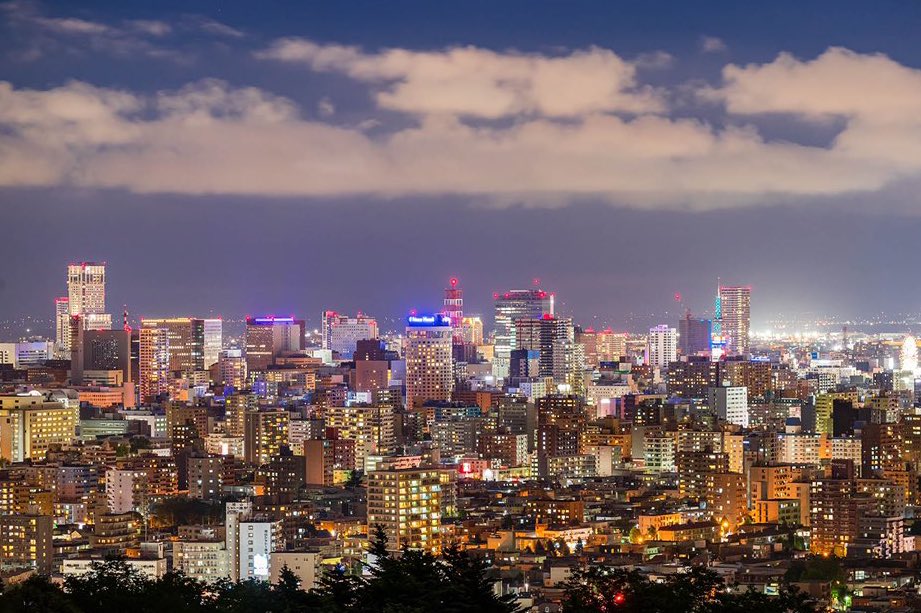
Hokkaido's economic engine runs through this city, concentrated in food processing, dairy, brewing, and regional manufacturing — Sapporo Beer is the most famous export, but agriculture logistics and cold-chain distribution quietly employ thousands. Tourism is a genuine pillar: the Snow Festival alone pulls 2 million visitors annually, sustaining hospitality and retail year-round. Remote workers and digital nomads exist here but in smaller numbers than Tokyo or Osaka. The job market is regional in character — salaries run 10–20% below Tokyo averages, and English-language professional roles are scarce outside academia and international tourism.
A one-bedroom in the city center runs around $850/month, dropping noticeably in outer wards. Public transit is reliable and grid-based, making navigation straightforward even without Japanese literacy. Healthcare is accessible and affordable by Western standards, though finding English-speaking doctors requires effort — Hokkaido University Hospital is your best bet for complex care. The language barrier is real and persistent: Sapporo is not internationalized the way Tokyo is, and daily life — city hall paperwork, lease agreements, medical forms — will require Japanese or a patient bilingual helper. Bureaucracy follows standard Japanese patterns: thorough, slow, and paper-heavy.
Winters are long, heavy, and genuinely demanding — expect four to five months of serious snow management in your daily life. That said, ski resorts like Niseko and Furano are within two hours, and the city itself handles snow infrastructure better than almost anywhere on earth. Food is a legitimate draw: Hokkaido dairy, fresh seafood, ramen, and lamb barbecue (jingisukan) are all exceptional and cheap. The expat community is small and skews toward English teachers and academics. Weekends mean mountains, farmers markets, and izakayas — this city suits people who want a quieter, outdoors-oriented Japanese life without Tokyo's cost or chaos.
Estimate the cost of moving to Sapporo, Japan
Get a free moving cost estimate for moving to Sapporo, Japan. Takes 10 seconds.
How much are you shipping?
When are you moving?
Powered by Sirelo. Free quotes from international movers.
🏚️ Cost of Living
💰 Budgets and Costs
$931/mo, one person, rent included
Selected: budget lifestyle
Sapporo on a budget budget comes to about $931 a month for one adult, with $278 of that going to rent. Beyond rent the estimate covers $121 on groceries, $25.00 on dining out, $51.00 on entertainment and lifestyle, $409 on utilities and connectivity and $47.00 on transport.
Rent
$278/mo
1BR outside the centre
Groceries
$121/mo
75% of mid-range grocery spend
Dining out
$25.00/mo
4 inexpensive meals
Entertainment & lifestyle
$51.00/mo
1 cinema trip, 8 cappuccinos
Utilities & connectivity
$409/mo
utilities, mobile, internet
Transport
$47.00/mo
Monthly pass
Budgets (excl. rent)
Single person$653/mo
Excludes rent. The total above is all-in, rent included.
$1,091/mo, one person, rent included
Selected: mid-range lifestyle
Sapporo on a mid-range budget comes to about $1,091 a month for one adult, with $278 of that going to rent. Beyond rent the estimate covers $162 on groceries, $63.00 on dining out, $132 on entertainment and lifestyle, $409 on utilities and connectivity and $47.00 on transport.
Rent
$278/mo
1BR outside the centre
Groceries
$162/mo
Staples basket scaled to a full month
Dining out
$63.00/mo
10 inexpensive meals
Entertainment & lifestyle
$132/mo
gym, 2 cinema trips, 12 cappuccinos
Utilities & connectivity
$409/mo
utilities, mobile, internet
Transport
$47.00/mo
Monthly pass
Budgets (excl. rent)
Single person$813/mo
Excludes rent. The total above is all-in, rent included.
$1,456/mo, one person, rent included
Selected: comfortable lifestyle
Sapporo on a comfortable budget comes to about $1,456 a month for one adult, with $456 of that going to rent. Beyond rent the estimate covers $227 on groceries, $123 on dining out, $194 on entertainment and lifestyle, $409 on utilities and connectivity and $47.00 on transport.
Rent
$456/mo
1BR in the centre
Groceries
$227/mo
140% of mid-range grocery spend
Dining out
$123/mo
6 inexpensive meals + 6 mid-range meals
Entertainment & lifestyle
$194/mo
gym, 4 cinema trips, 20 cappuccinos
Utilities & connectivity
$409/mo
utilities, mobile, internet
Transport
$47.00/mo
Monthly pass
Budgets (excl. rent)
Single person$1,000/mo
Excludes rent. The total above is all-in, rent included.
Estimates for one adult, built from this city's average prices and the usage shown for each tier. Your spending will differ with how often you eat out and where you live.
A 1BR in the center runs about $455.51/mo. If your income is in another currency, bank FX fees add up. A multi-currency account can cut that cost.
Sapporo is genuinely one of Japan's safest major cities, with violent crime extremely rare and petty theft uncommon. The main concerns for expats are minor: occasional package theft, bicycle theft in residential areas, and the standard scams (overly friendly strangers offering drinks, rare rental housing fraud). Avoid the entertainment districts late at night more for rowdy drunks than danger. Winter weather poses greater practical risk than crime. For Americans accustomed to major U.S. cities, Sapporo feels remarkably secure—you can walk alone at night without concern, and police presence is visible and responsive.
Located near Odori Park, Basis Point offers a stylish and professional environment. It's a good option for those seeking a more upscale coworking experience with reliable internet and meeting rooms.
WeWork Sapporo is located in Sapporo Eki-mae Plaza Building, offering a central location and a global community. It provides a range of amenities and is well-suited for those who value networking opportunities.
Garage Creative Sapporo offers a more community-focused and creative atmosphere. Located in Chuo-ku, it's a good option for those seeking a collaborative environment and a more local vibe.
While primarily a conference center, TKP Sapporo Ekimae offers coworking spaces and day passes. Its proximity to Sapporo Station makes it a convenient option for those needing easy access to transportation.
See how Sapporo's digital nomad life compares with Tokyo
🧳 Expat Life
English Proficiency
Common in Tourist Areas
Expat Community
Medium
Top Neighborhoods
Chuo-ku, Maruyama
Banks Nearby
196
ATMs Nearby
156
Expat Life Notes
Sapporo offers a spacious, laid-back lifestyle with world-class winter sports but a significant winter burden.
Pros
✓ Excellent food and beer scene
✓ Beautiful summers
✓ Safe and organized
Cons
✗ Severe winter snowfall
✗ Higher heating costs
✗ Fewer international jobs than Tokyo
🏘️ Neighborhoods in Sapporo
Areas of Sapporo that expats often consider.
Conditions can change from one block to the next, and these descriptions are general guides, not safety assessments. Before choosing where to stay or live, check current travel advisories, talk to people who live there, and visit in person if you can.
Chuo-ku (Central)
Central, convenient, upscale living
Chuo-ku is the heart of Sapporo, offering easy access to shopping, dining, and entertainment. It's popular with professionals and families, and has a good selection of modern apartments. Expect higher rents and some tourist crowds, but excellent public transit.
Susukino
Vibrant nightlife, entertainment district
Susukino is Sapporo's entertainment district, known for its nightlife, restaurants, and bars. While convenient and lively, it can be noisy and crowded, especially at night. Suitable for those who enjoy an active social life and don't mind the hustle and bustle.
Maruyama
Quiet, residential, green spaces
Maruyama is a peaceful residential area with Maruyama Park and the Hokkaido Shrine nearby. It's popular with families and retirees seeking a quieter lifestyle. Expect higher rents than some other areas, but enjoy a more relaxed atmosphere and easy access to nature.
Odori
Parkside, central, event hub
Centered around Odori Park, this area is a hub for events and festivals throughout the year. It's very central and convenient, but can be crowded during peak seasons. Expect higher rents due to its prime location and popularity with tourists.
Shiroi Koibito Park Area
Quaint, suburban, family-friendly
Located near the famous Shiroi Koibito Park, this area offers a more suburban feel with a mix of houses and apartments. It's a good option for families seeking a quieter environment away from the city center. Requires reliance on public transport or a car.
Toyohira-ku
Residential, affordable, convenient transit
Toyohira-ku is a more affordable residential area with good access to the city center via the subway. It's a good option for those on a budget who still want convenient transportation. Less English spoken here, so some Japanese language skills are helpful.
Hassamu
Suburban, family-oriented, quieter
Hassamu is located further from the city center, offering a more suburban and family-oriented environment. It's a good option for those seeking a quieter lifestyle and lower rents. Requires more reliance on public transport or a car, and less English is spoken.
Page 1 of 2
Could living/working in Sapporo cut years off your work life?
With a 1-bedroom in the center at $456/mo, your FIRE number here might be much lower than you think.
Sapporo has a population of approximately 1,240,613 people.
A single person can expect to spend around $1,139 per month in Sapporo, including rent. A 1-bedroom apartment in the city center costs approximately $456/month.
The nearest airport to Sapporo is OKD, approximately 6.4km away.
Sapporo is considered relatively safe, with a safety index of 85.0. As with any city abroad, expats should research specific neighborhoods before committing to a location.
Sapporo has an average internet speed of 75 Mbps. It is considered a well-established digital nomad destination.
Survival is possible, but daily life will be genuinely frustrating. Transit signage has English, and tourist areas accommodate non-Japanese speakers, but bureaucratic tasks — registering your address, signing a lease, visiting a clinic — almost always require Japanese or someone who speaks it. Learning at least basic Japanese before arriving is strongly recommended.
Yes, meaningfully so. City-center one-bedrooms average around $850/month versus $1,400–$1,800 in central Tokyo. Groceries, dining out, and transport are all lower. The tradeoff is that salaries are also lower if you're working locally, so the affordability advantage matters most for remote workers or retirees bringing income from outside Japan.
Japan doesn't have a dedicated digital nomad or retirement visa as of 2024. Common long-term options include the Highly Skilled Professional visa, Spouse visa, or the Specified Skilled Worker visa for certain industries. The Japan Digital Nomad visa launched in 2024 allows stays up to six months for qualifying remote workers earning over ¥10 million annually from foreign sources.
Sapporo has four distinct seasons. Expect cold, snowy winters (December-February) with average temperatures below freezing, pleasant springs and autumns, and mild summers (July-August) with temperatures rarely exceeding 80°F. Pack accordingly for all types of weather.
Sapporo is considered a very safe city with low crime rates. Petty theft is rare, but it's always wise to be aware of your surroundings, especially in crowded areas. Violent crime is extremely uncommon.
For a more international vibe, consider areas like Maruyama or Odori. Susukino is known for its nightlife but might be too busy for some. For quieter residential areas, look into the suburbs along the Tozai subway line.
Sapporo is famous for its ramen, seafood, and Jingisukan (grilled mutton). Eating out can be quite affordable; a casual meal might cost around ¥800-¥1500, while a nicer restaurant could be ¥3000 or more per person.
Sapporo boasts excellent internet infrastructure with fast and reliable connections. You can expect speeds of 100 Mbps or higher in most apartments and co-working spaces, making it ideal for remote work.
Yes, Sapporo has a growing number of coworking spaces catering to digital nomads and freelancers. Spaces like Sapporo Incubation Hub DRIVE and co-ba sapporo offer various membership options and networking opportunities.
Sapporo has a high-quality healthcare system. While not all doctors speak English fluently, some clinics and hospitals have English-speaking staff or offer translation services. It's advisable to research beforehand or use a translation app.
Opening a bank account can be challenging without a long-term visa and residence card. Some banks may require Japanese language proficiency. Consider using international money transfer services like Wise for easier transactions.
As a US citizen, you're still required to file US taxes even while living abroad. You may be eligible for the Foreign Earned Income Exclusion (FEIE) or Foreign Tax Credit. Consult a tax professional specializing in expat taxes.
Sapporo has an excellent public transportation system, including subways, buses, and trams. The subway is efficient for getting around the city center, while buses cover a wider area. Consider purchasing a Sapporo Subway Pass for cost savings.
Sapporo can be a viable option for retirees on a fixed income, especially compared to Tokyo. With careful budgeting and lifestyle adjustments, you can enjoy a comfortable retirement with access to excellent healthcare and a safe environment. A monthly budget of $2000-$3000 USD could be sufficient, depending on your lifestyle.
While not as large as in Tokyo or Osaka, Sapporo has a growing expat community. Online groups and social events provide opportunities to connect with other foreigners and share experiences. Look for groups on Facebook or Meetup.
Japanese culture emphasizes politeness, respect, and indirect communication. Learning basic Japanese phrases and understanding local customs, such as removing shoes indoors and avoiding loud conversations in public, will help you integrate more smoothly.
Services like Wise (formerly TransferWise) and Remitly often offer better exchange rates and lower fees compared to traditional bank transfers. Compare options and choose the one that best suits your needs. Be mindful of any reporting requirements for large transfers.
Cost-of-living and visa updates for Sapporo and the rest of Japan. Free with RA Postcards.
By submitting your email address, you will receive a free subscription to RA Postcards and special offers from Rewire Abroad and our affiliates. You can unsubscribe at any time, and we encourage you to read more about our Privacy Policy.