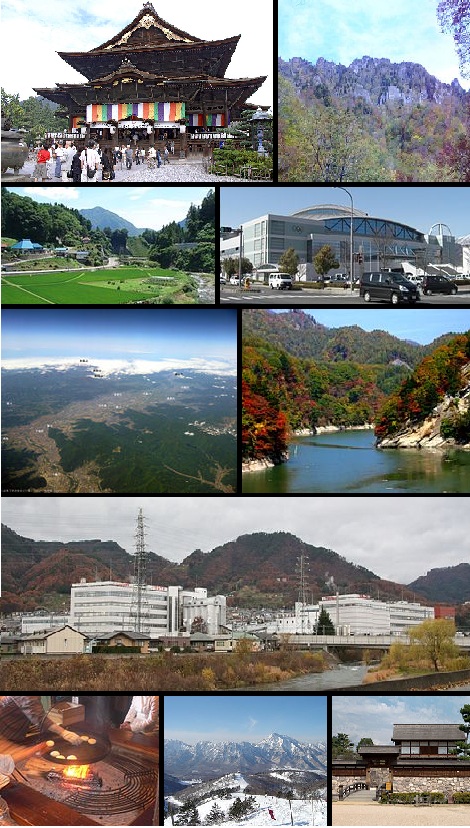
Nagano sits in the Chubu region of central Honshu, a city of 2 million people spread across a basin at 610 m above sea level, with the Japan Alps rising on nearly every side. The climate is continental, which means cold, snowy winters and warm, humid summers, a rhythm that shapes daily life and draws skiers and hikers by the millions. The timezone is Asia/Tokyo, and the city keeps its own pace, quieter than Tokyo and Osaka but well connected by rail. Expats tend to settle in two areas: Hakuba, the international ski destination known for its powder and seasonal workforce, and Nagano City Center, where everyday errands, transit, and services are easiest to reach. The expat community is small, so newcomers often find their footing through work, sport, or school networks rather than through a large established scene.
Living costs in Nagano are moderate by Japanese standards, and the numbers make the case. A one-bedroom apartment in the city center rents for $620/mo, while the same outside the center drops to $480/mo. Three-bedroom units run $1,150/mo in the center and $850/mo outside it. Utilities average $132/mo, internet $13/mo, and a mobile phone plan $24/mo. A gym membership costs $51/mo. Eating out is affordable: an inexpensive restaurant meal is $6 per person, a mid-range three-course meal for two is $41, and a cappuccino is $3. Excluding rent, a single person spends about $950/mo and a family of four about $3,100/mo. Budget, mid-range, and comfortable tiers for a single adult, rent included, come to $579/mo, $908/mo, and $1,157/mo respectively. The average monthly net salary locally is $633/mo, and the cost of living index is 64/100 against New York City at 100, so remote earners and dual-income households have far more room than local wages alone suggest.
Safety is one of Nagano's strongest selling points. The safety index is 90/100 and the crime index is 10/100, where a lower score is safer, so walking at night and leaving a bike unlocked for a quick stop are not the gambles they would be in many cities. Air quality is good, with an index of 38, where lower is better, helped by the surrounding mountains and the absence of heavy industry. Healthcare quality is rated excellent, and English proficiency is widely spoken, which makes navigating clinics, pharmacies, and paperwork far less daunting than in more rural parts of Japan. Average internet speed is 55 Mbps, enough for video calls, streaming, and most remote work, though heavy data users may want a backup connection.
The Japan Digital Nomad Visa is the main route for remote workers, and it requires a minimum monthly income of $6,667/mo. The nearest airport is MMJ, 18 km away, which keeps arrivals and departures simple. Nagano scores 76/100 overall for expats, 76/100 on the FIRE measure, 72/100 for retirees, and 75/100 for digital nomads. It suits remote professionals who want four seasons, mountain access, and a low cost base, as well as retirees drawn to the safety and healthcare. It is less suited to anyone who needs a large expat community or a salary earned locally, since the average net salary of $633/mo will not stretch far once rent and daily costs are counted.