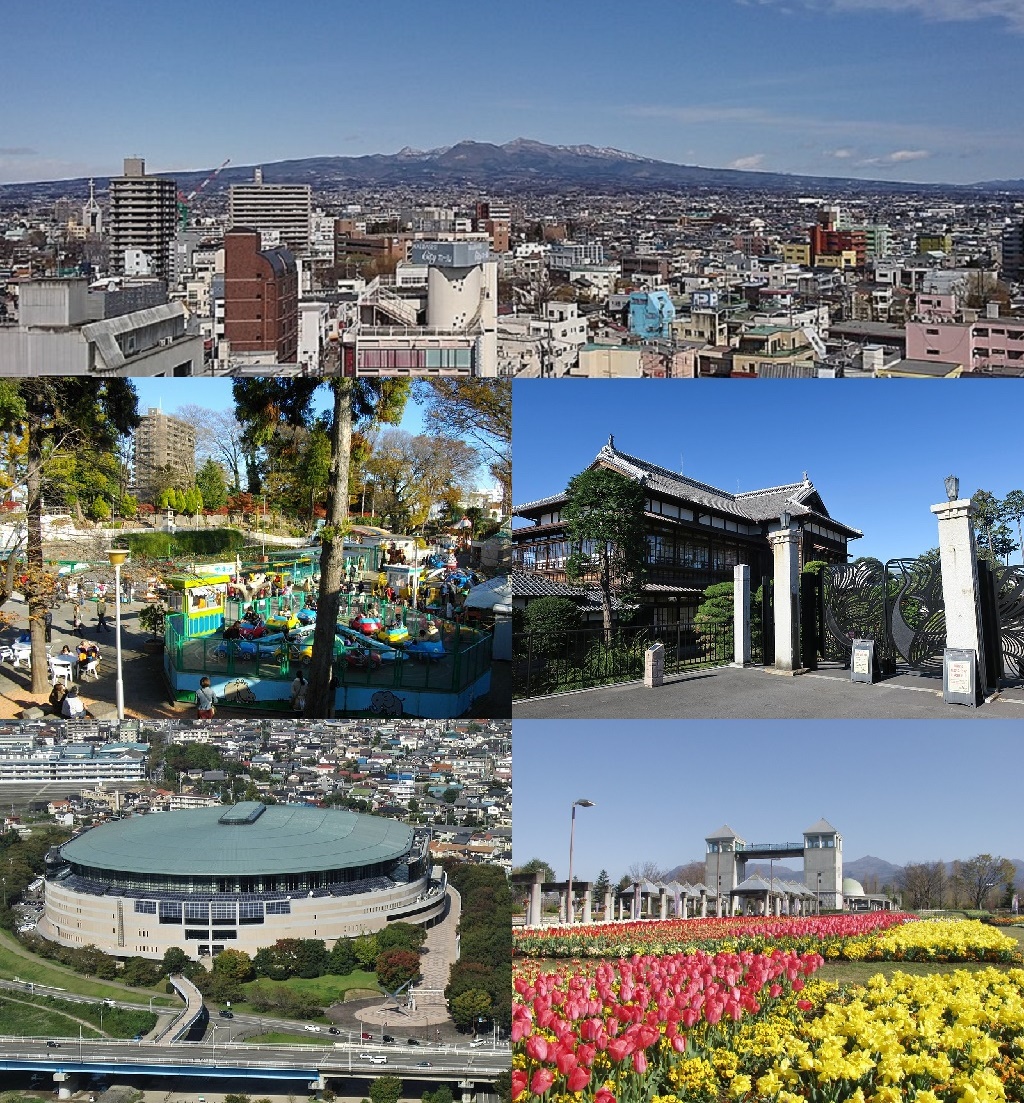
Manufacturing drives the local economy, with automotive parts suppliers and electronics companies taking advantage of proximity to Tokyo's industrial corridor. As Gunma's prefectural capital, government jobs provide steady employment for thousands of civil servants and contractors. The service sector serves the broader regional population of over 1 million, creating opportunities in retail, healthcare, and logistics. Agriculture remains significant with rice and vegetable production in surrounding areas. Most foreign workers here are either English teachers, factory technicians, or researchers at local universities.
One-bedroom apartments in the city center average $500 monthly, dropping to $350-400 in outer areas. The JR Takasaki Line connects directly to Tokyo in 2 hours for ¥1,940, making reverse commuting feasible but expensive daily. Healthcare follows Japan's universal system with good regional hospitals, though specialists often require referrals to Tokyo. Japanese fluency is essential—English signage is minimal outside train stations. City hall bureaucracy moves at typical Japanese pace, requiring multiple visits and precise paperwork for residence registration and utilities setup.
Winters bring the infamous karakkaze winds that make January feel brutal despite moderate temperatures, while summers are sticky and hot. The food scene centers on Gunma specialties like konjac and decent ramen shops, but international options are scarce. Mount Akagi offers hiking and onsen day trips, while Tokyo's entertainment is accessible for weekend escapes. The expat community is tiny—maybe 200 foreigners total, mostly teachers and factory workers. This city works for people who want affordable Japan living with Tokyo access but can handle linguistic isolation.
Estimate the cost of moving to Maebashi, Japan
Get a free moving cost estimate for moving to Maebashi, Japan. Takes 10 seconds.
How much are you shipping?
When are you moving?
Powered by Sirelo. Free quotes from international movers.
🏚️ Cost of Living
A 1BR in the center runs about $380.16/mo. If your income is in another currency, bank FX fees add up. A multi-currency account can cut that cost.
Maebashi is genuinely safe for expats, with low violent crime and petty theft rates typical of mid-sized Japanese cities. The main concerns are minor: bicycle theft, occasional package theft, and the standard scams targeting foreigners (overly friendly strangers, inflated bar tabs). Avoid isolated areas late at night, though serious crime is rare. As Japan's prefectural capital, it has good police presence and community safety systems. For an American accustomed to major U.S. cities, this feels noticeably safer—you can walk freely at night without concern. The verdict: a solid, low-stress choice for remote work or retirement.
Maebashi has hot, humid summers (June-September) and cold, dry winters (December-February), with mild spring and autumn seasons ideal for outdoor activities.
💻 Digital Nomad
Avg Internet Speed
95 Mbps
Internet (monthly)
$31/mo
Coworking Availability
Limited
Coworking Spaces Nearby
1
Digital Nomad Score
62/100
Community Notes
Maebashi offers a peaceful environment with few coworking spaces but high-quality healthcare.
Located near Maebashi Station, Basis Maebashi offers a modern and stylish coworking environment. It's a good option for those seeking a professional atmosphere with easy access to transportation and local amenities.
Antenna hatch is a coworking space that also functions as a community space, fostering collaboration and networking. Located in the central area of Maebashi, it's suitable for digital nomads looking to connect with local entrepreneurs and creatives.
Maebashi Plaza Genesis offers coworking spaces and rental offices. It is located in the heart of Maebashi, providing a convenient location for accessing shops and restaurants. It's a practical choice for those seeking a straightforward and affordable workspace.
See how Maebashi's digital nomad life compares with Tokyo
🧳 Expat Life
English Proficiency
Limited
Expat Community
Very Few
Top Neighborhoods
Maebashi City Center
Banks Nearby
41
ATMs Nearby
8
Expat Life Notes
A quiet inland capital of Gunma. Safe and local, with very few international residents.
Pros
✓ High safety
✓ Clean air
✓ Near Japanese Alps
Cons
✗ Bedroom-town atmosphere
✗ No English spoken
✗ Isolated from Tokyo
🏘️ Neighborhoods in Maebashi
Areas of Maebashi that expats often consider.
Conditions can change from one block to the next, and these descriptions are general guides, not safety assessments. Before choosing where to stay or live, check current travel advisories, talk to people who live there, and visit in person if you can.
Chuo-dori
Central, convenient, urban living
Chuo-dori is the main street and central hub of Maebashi. It offers easy access to shopping, dining, and public transportation, making it convenient for daily life. While not exclusively an expat area, its central location and amenities make it relatively easy to navigate, though English may be limited in some establishments.
Ote-machi
Historic, quiet, residential area
Ote-machi is a more traditional residential area with a historic feel. It's quieter than Chuo-dori, making it suitable for retirees or those seeking a more peaceful environment. However, English is less common, and a higher level of Japanese proficiency would be beneficial.
Sannomiyamachi
Residential, family-friendly, local charm
Sannomiyamachi is a residential neighborhood with a strong sense of community. It's a good option for those seeking an authentic Japanese experience away from the city center. Public transport is available, but owning a car might be preferable for exploring the surrounding areas. Expect limited English spoken.
Akagiyama
Scenic, nature, outdoor recreation
Akagiyama is located near Mount Akagi, offering beautiful scenery and outdoor activities. It's ideal for nature lovers and those seeking a more rural lifestyle. Transportation can be challenging without a car, and English is rarely spoken. Housing options may be limited to traditional houses.
Kawaramachi
Budget-friendly, local, up-and-coming
Kawaramachi is a more affordable area with a local atmosphere. It might be a good option for budget-conscious expats or digital nomads. While it may lack some of the conveniences of the city center, it offers a more authentic Japanese experience. Expect limited English and older housing stock.
Honmachi
Commercial, convenient, mixed residential
Honmachi is a commercial area with a mix of shops, restaurants, and residential buildings. It's a convenient location with good access to amenities and transportation. While not a major expat hub, its central location makes it relatively easy to navigate for foreigners, though Japanese language skills will still be helpful.
Page 1 of 2
Could living/working in Maebashi cut years off your work life?
With a 1-bedroom in the center at $380/mo, your FIRE number here might be much lower than you think.
Maebashi has a population of approximately 340,291 people.
A single person can expect to spend around $950 per month in Maebashi, including rent. A 1-bedroom apartment in the city center costs approximately $380/month.
The nearest airport to Maebashi is HND, approximately 136km away.
Maebashi is considered relatively safe, with a safety index of 72.0. As with any city abroad, expats should research specific neighborhoods before committing to a location.
Maebashi has an average internet speed of 95 Mbps. It is considered a well-established digital nomad destination.
You need conversational Japanese minimum. Unlike Tokyo, English support is virtually non-existent in daily life—banks, city hall, hospitals, and most shops operate entirely in Japanese. Even basic tasks like setting up utilities require Japanese phone calls.
Technically yes via JR Takasaki Line (2 hours, ¥1,940 each way), but the daily cost adds up to ¥116,400 monthly. Most Tokyo commuters live closer and visit Maebashi for cheaper living, not daily work.
English teaching (ALT positions or private schools), manufacturing/engineering roles at automotive suppliers, and occasional university research positions. The job market is limited compared to major cities—most positions require Japanese language skills.
Japan doesn't have a specific retirement visa. However, you can explore options like the Tourist Visa (allowing stays up to 90 days), the Business Manager Visa (if you start a business), or the Long-Term Stay Visa for specific activities like cultural studies. Consulting with an immigration lawyer is highly recommended to determine the best path.
Maebashi is generally considered a very safe city with low crime rates, especially violent crime. Petty theft can occur, so it's wise to take normal precautions, but overall, you can feel very secure walking around at any time of day or night. The Gunma Prefectural Police also maintain a visible presence.
Maebashi offers excellent internet connectivity, with fiber optic widely available. You can expect download speeds of 100-300 Mbps, which is more than sufficient for video conferencing, streaming, and other remote work tasks. Many cafes and co-working spaces also offer free Wi-Fi.
While not every doctor speaks fluent English, some clinics and hospitals in Maebashi have English-speaking staff or offer translation services. The Gunma University Hospital is a larger facility that may be able to provide assistance in English. It's always a good idea to call ahead and confirm.
Maebashi has a smaller expat community compared to Tokyo or Osaka, but it's still present. You'll find most expats are English teachers (ALT program) or work in other specialized fields. Online groups and language exchange events are good ways to connect.
Public transportation in Maebashi is reliable, with buses and trains connecting different parts of the city. However, owning a car can be convenient, especially for exploring the surrounding Gunma prefecture. Cycling is also a popular option for getting around town.
Maebashi has a humid subtropical climate with hot, humid summers and mild winters. Expect typhoons in late summer and early autumn. Snowfall is possible in winter, but it's usually not heavy or prolonged. Spring and autumn offer the most pleasant weather.
Opening a bank account in Japan can be challenging as a foreigner, but it's possible with the right documentation (residence card, passport). Shinsei Bank and Japan Post Bank are often recommended for their English services. For international transfers, consider using services like Wise or Remitly for better exchange rates and lower fees than traditional banks.
For convenient access to amenities and transportation, consider areas near Maebashi Station. For a quieter, more residential feel, look at neighborhoods like Ogo or Soja. The best area depends on your budget and lifestyle preferences.
As a US citizen, you're still required to file US taxes even when living abroad. You may be able to exclude a significant portion of your income using the Foreign Earned Income Exclusion (FEIE) or claim the Foreign Tax Credit (FTC). Consult with a tax professional specializing in expat taxes.
Yes, Maebashi offers a lower cost of living compared to many US cities, allowing you to stretch your retirement income further. Housing, food, and transportation are generally more affordable. This makes it an attractive option for retirees on a fixed income.
Cost-of-living and visa updates for Maebashi and the rest of Japan. Free with RA Postcards.
By submitting your email address, you will receive a free subscription to RA Postcards and special offers from Rewire Abroad and our affiliates. You can unsubscribe at any time, and we encourage you to read more about our Privacy Policy.