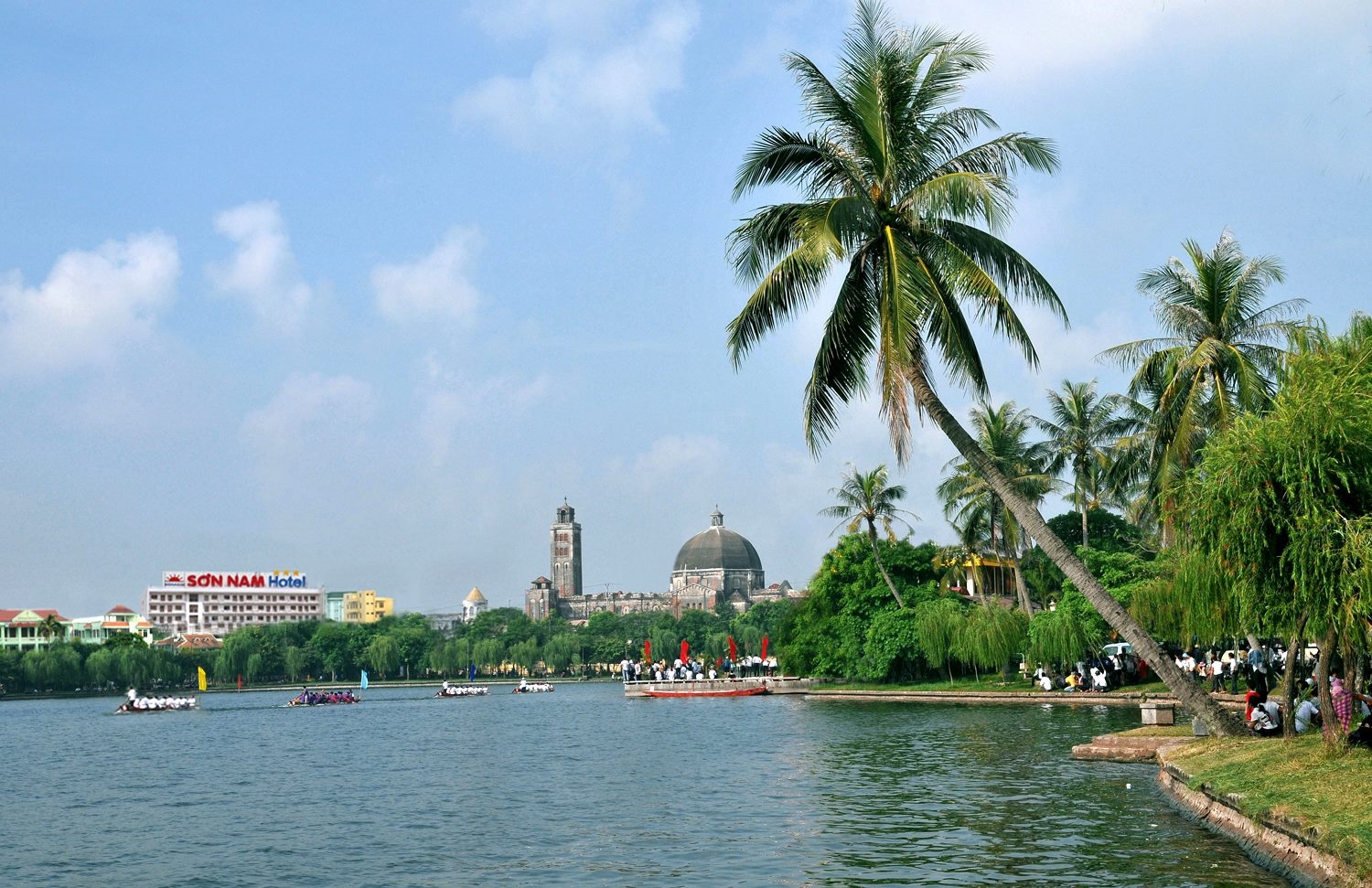
Nam Dinh sits in the Red River Delta of northern Vietnam, a compact provincial capital of 352 thousand people at just 5 m above sea level. The climate is subtropical, with humid summers and cooler, drizzly winters. The city keeps time on Asia/Bangkok. For newcomers, the practical answer on where to settle is simple: there are no established expat neighborhoods here, and the expat community is effectively nonexistent. That means housing choices follow local logic rather than a migration map. Most foreign residents who do land here choose the city center for walkability and access to markets, cafes, and administrative offices, while those who want more space or lower rent look to the surrounding wards outside the center. The upside of arriving without a ready-made enclave is that rents stay low and daily life stays authentically Vietnamese.
Living costs in Nam Dinh are among the most forgiving in Southeast Asia. A one-bedroom apartment in the city center runs $320/mo, and the same outside the center drops to $220/mo. Three-bedroom units go for $680/mo in the center and $450/mo outside it. Utilities average $86/mo, internet $9/mo, and a mobile phone plan $5/mo. A single adult can live on a budget tier of $321/mo with rent included, step up to a mid-range tier of $436/mo, or settle into a comfortable tier of $569/mo. Excluding rent, a single person spends about $450/mo, while a family of four spends around $1,350/mo. Eating out is cheap: an inexpensive restaurant meal costs $2 per person, a mid-range three-course meal for two is $23, and a cappuccino is $2. The catch is local wages. Average monthly net salary is $450/mo, so the cost of living index of 34/100 against NYC = 100 reflects local earnings as much as local prices. Internet averages 35 Mbps, enough for calls and streaming but not always for heavy data work.
Safety is a genuine strength. The safety index is 65/100 and the crime index is 35/100, with lower crime numbers meaning safer streets. Day-to-day life is calm, and the main risks are traffic and petty theft rather than violent crime. Healthcare quality is rated Good, which is reassuring for a city of this size, though complex cases are typically referred to Hanoi. Air quality is the weak point: the air quality index sits at 68, and lower is better, so sensitive individuals should plan around seasonal burning and traffic haze. English proficiency is Limited, which means everyday errands, medical visits, and paperwork usually require a translator or a patient Vietnamese-speaking friend. None of this is a dealbreaker, but it does shape the daily experience.
On the visa side, the Vietnam Digital Nomad Visa is the relevant program, and it requires a minimum monthly income of $600/mo. That threshold is above the local average net salary of $450/mo, so remote workers earning foreign income are the natural fit. The nearest airport is HAN, 125 km away, which puts international connections within a few hours by road. Nam Dinh scores 87/100 overall and 87/100 on the FIRE measure, making it compelling for early retirees and savers who want low overhead. The retiree score is 67/100 and the digital nomad score is 60/100, reflecting the lack of an expat scene and limited English. This is a city for self-directed remote workers, budget-focused retirees, and anyone who wants a quiet, low-cost base in northern Vietnam without the crowds.