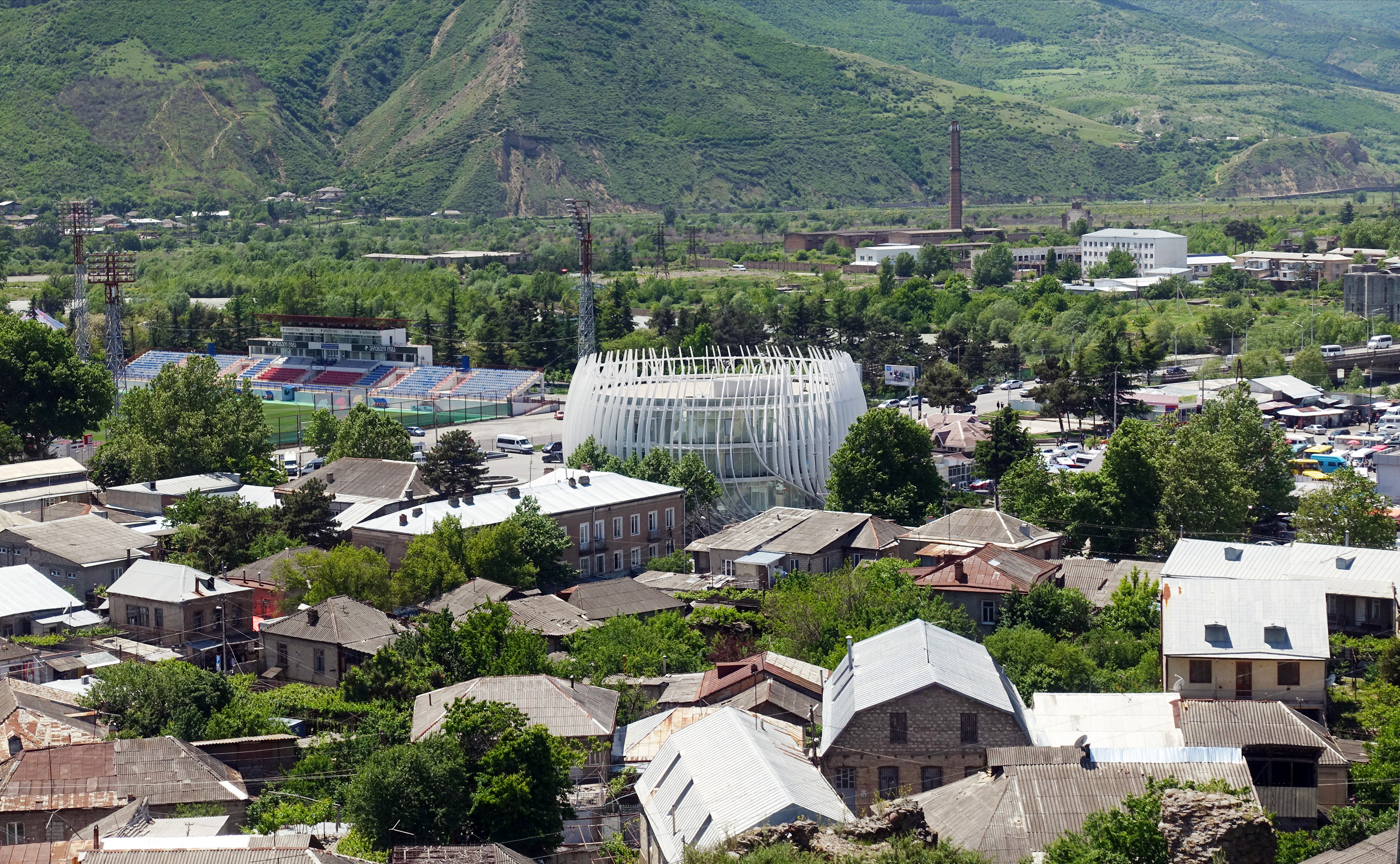
Gori sits in the subtropical belt of Georgia, a small city of 7 thousand people at 590 m above sea level, where the climate runs mild and green through most of the year and the clock stays on Asia/Tbilisi time. Expats who settle here tend to keep their housing choices simple, and the rental market splits cleanly between the center and the outskirts. A one-bedroom in the city center runs $365/mo, while the same apartment outside the center drops to $154/mo. Families or sharers looking for more space pay $538/mo for a three-bedroom in the center or $269/mo outside it, a gap that pushes many long-stay residents toward the quieter edges of town.
Day-to-day costs stay low enough that a single adult can live on figures that would barely cover a shared room in most Western capitals. Excluding rent, a single person spends around $400/mo, with utilities at $33/mo, internet at $16/mo, and a mobile phone plan at $9/mo. Eating out is casual and cheap: an inexpensive restaurant meal costs $8 per person, a three-course mid-range dinner for two comes to $25, and a cappuccino is $4. The catch is local wages. The average monthly net salary is $462/mo, which means a local earner on that income is priced out of the mid-range and comfortable tiers without outside money. For a single adult, the budget tier totals $293/mo with rent included, the mid-range tier $427/mo, and the comfortable tier $705/mo. Remote workers bringing foreign income find those numbers generous; locals working local jobs find them tight.
Safety is one of the city's quiet strengths. The safety index stands at 72/100 and the crime index at 28/100, where lower is safer, so walking home after dark is not the worry it is in larger regional hubs. Air quality sits at 52 on the index, where lower is better, a middling score that reflects the usual mix of traffic and heating smoke rather than anything severe. Healthcare quality is rated Good, which covers routine care and most everyday needs, though complex procedures still mean a trip to Tbilisi. Internet runs at an average of 50 Mbps, fast enough for video calls and remote work, and English proficiency is common in tourist areas, so daily errands are manageable without Georgian in the places visitors and newcomers frequent.
Georgia's remote work route, the Georgia Remotely From Georgia Program, sets a minimum monthly income of $24,657/mo, a threshold aimed at high earners rather than the typical freelancer. The nearest airport is TBS, 90 km away, which keeps the city connected without putting it under a flight path. The overall expat score is 92/100 and the FIRE score is 92/100, both signaling strong appeal for people chasing early financial independence on a low cost base. The retiree score of 75/100 and the digital nomad score of 74/100 are more measured, reflecting a small city with limited nightlife and a modest service sector. Gori suits remote workers with foreign income, budget-focused retirees, and anyone who wants a subtropical base with cheap rent, low crime, and a short ride to the airport, more than it suits those who need a big-city job market or a dense expat social scene.