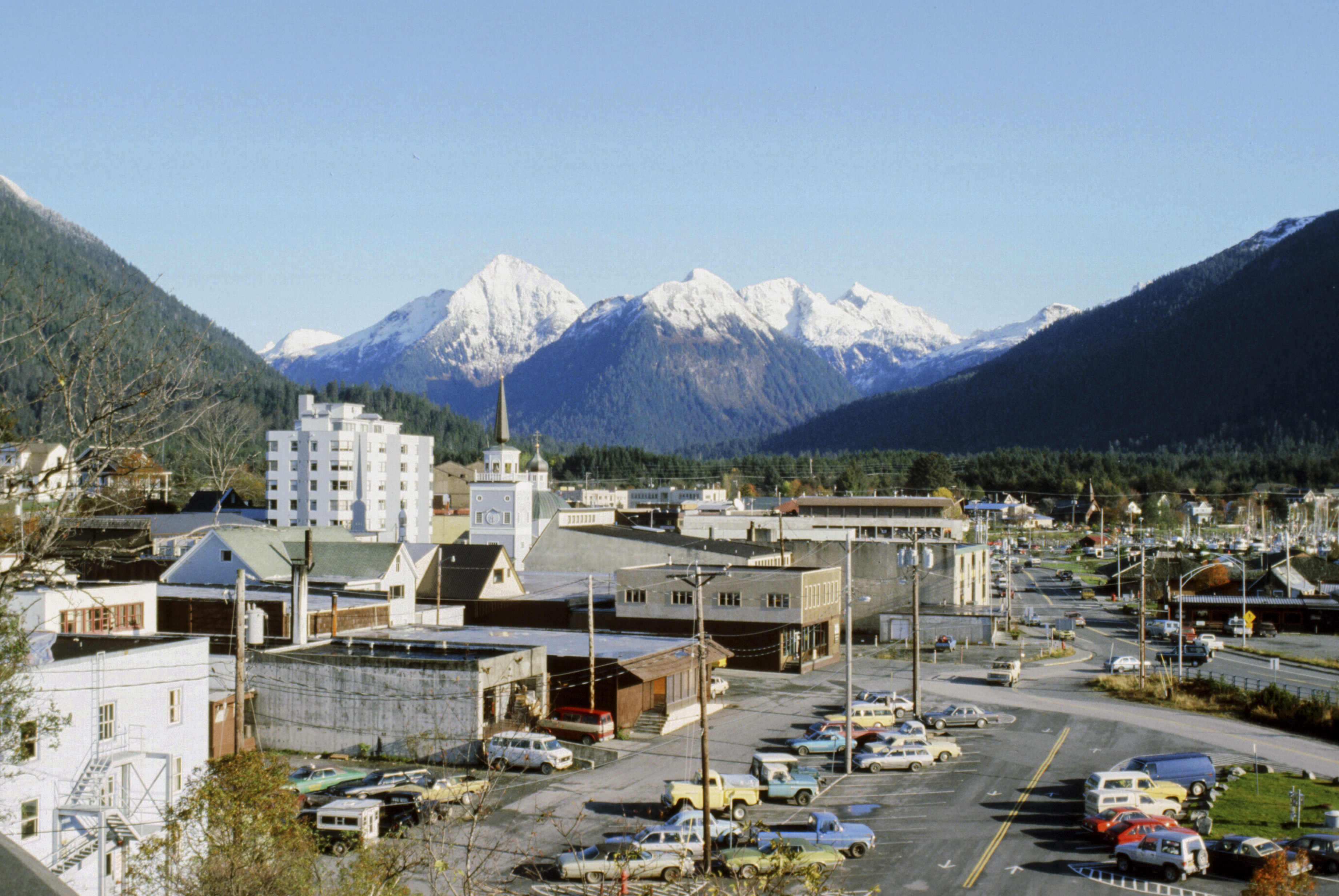
Sitka sits on the western coast of Baranof Island in Southeast Alaska, at an elevation of 6 meters above sea level. The city experiences a mild maritime climate, with cool, wet summers averaging around 14°C (June through August) and chilly, rainy winters averaging around 2°C (December through February), accompanied by frequent precipitation and high humidity year-round. The population is about 8,000 people, and the local time zone is America/Sitka. While the data does not specify particular neighborhoods favored by expats, the compact nature of the town means most areas are within easy reach of the waterfront and downtown.
Living costs in Sitka are significant. A single adult on a budget tier spends about $1,808 per month including rent, while the mid-range tier totals $2,728 per month and the comfortable tier reaches $3,108 per month. Excluding rent, a single person's monthly costs are around $1,200. Rent for a one-bedroom in the city center averages $1,400 per month; outside the center it is $1,333. A three-bedroom in the center runs $2,700 per month, while outside the center it is $2,250. Utilities run $493 per month, internet $143, and a mobile phone plan $95. An inexpensive restaurant meal costs $40 per person, a three-course meal for two at a mid-range restaurant is $80, and a cappuccino is $7. The average monthly net salary locally is $4,176, which helps offset these expenses.
Safety is a strong point for Sitka, with a safety index of 80 out of 100 and a crime index of 20 (lower is safer). Healthcare quality is rated as good, and the air quality index is 25 (lower is better). English is widely spoken, making daily life and access to services straightforward for English-speaking newcomers.
Visitors and new residents typically fly into the nearest airport, BNF (IATA code), located 31 kilometers from town. The data does not specify visa programs, so travelers should research entry requirements independently. Sitka suits those who appreciate a slower pace, strong community safety, and a temperate rainforest climate, particularly digital nomads (expat score 69, digital nomad score 69), retirees (retiree score 64), and those pursuing financial independence (FIRE score 65). The average internet speed of 100 Mbps supports remote work.