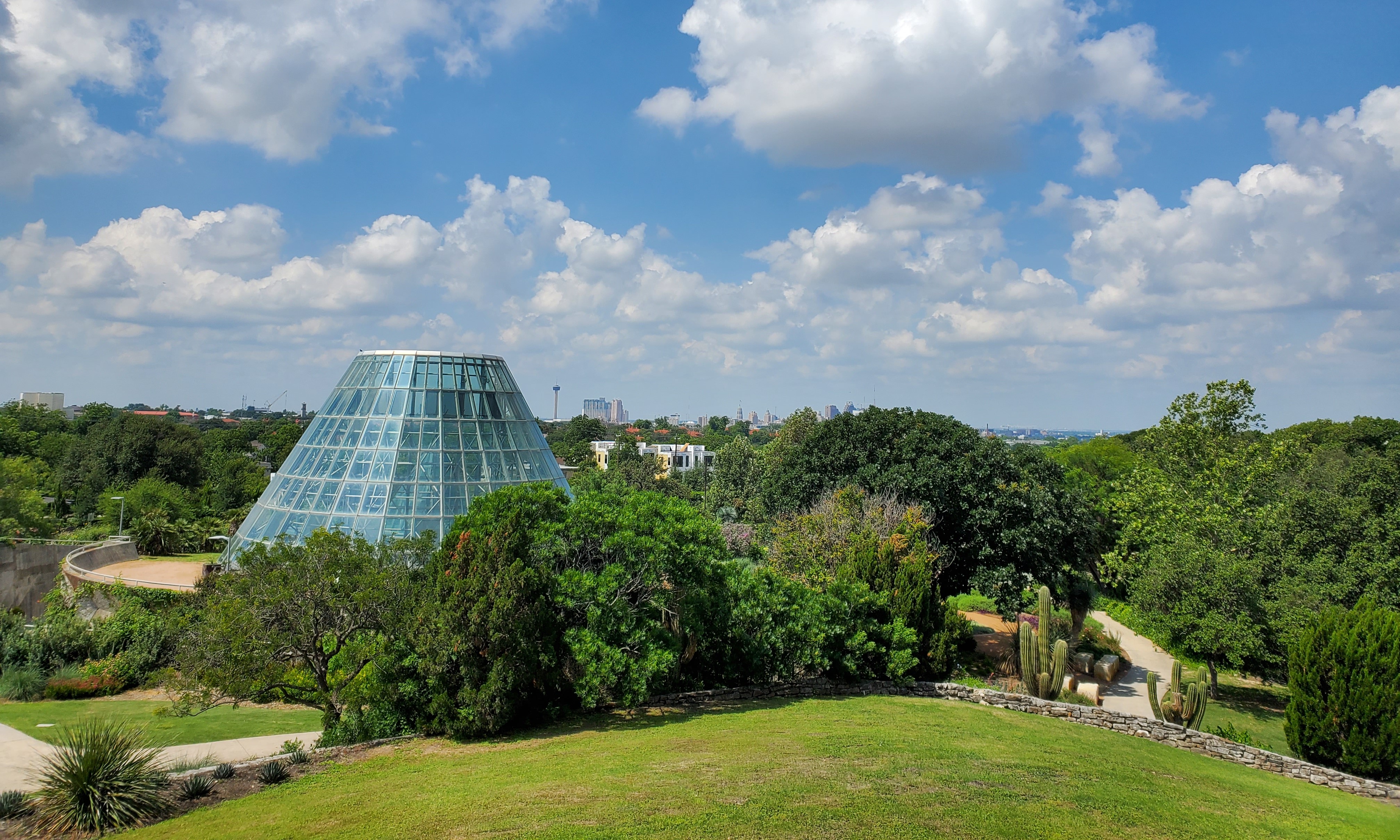
With four Fortune 500 companies, three major military installations, and the South Texas Medical Center anchoring its economy, San Antonio runs on defense, healthcare, and tourism — in roughly that order. The military presence alone (Fort Sam Houston, Lackland, Randolph) supports tens of thousands of jobs and creates a stable contractor ecosystem. Tourism generates serious money from 32 million annual visitors, but those jobs skew service-sector and low-wage. Remote workers and digital nomads are increasingly moving here from Austin and California, drawn by lower costs and the I-35 corridor connecting both cities.
A one-bedroom in the city center runs around $1,350/month — meaningfully cheaper than Austin, though the gap has narrowed. Car ownership is non-negotiable; public transit exists but won't get you where you need to go reliably. Healthcare access is strong given the massive South Texas Medical Center complex. Spanish fluency is genuinely useful here — at 64% Hispanic, this is the largest majority-Hispanic major city in the country, and some neighborhoods and businesses operate primarily in Spanish. Bureaucracy at the city level is slow but not uniquely painful by Texas standards.
Summers are brutal — weeks of 95°F-plus heat that limits outdoor activity from June through September. Winters are mild enough that a light jacket usually suffices. The food scene is legitimately excellent, particularly Tex-Mex and regional Mexican cuisine at every price point. The River Walk draws tourists but locals mostly ignore it except for specific events. The San Antonio Stock Show & Rodeo and Spurs games give the city genuine cultural anchors. The expat community is small but growing, mostly Americans relocating domestically. This city suits remote workers or retirees who want a lower cost of living than Austin without sacrificing urban infrastructure, and who don't mind heat or driving everywhere.
Estimate the cost of moving to San Antonio, TX, United States
Get a free moving cost estimate for moving to San Antonio, TX, United States. Takes 10 seconds.
How much are you shipping?
When are you moving?
Powered by Sirelo. Free quotes from international movers.
🏚️ Cost of Living
A 1BR in the center runs about $400/mo. If your income is in another currency, bank FX fees add up. A multi-currency account can cut that cost.
San Antonio feels reasonably safe for daily life, with decent walkability in downtown and River Walk areas during daylight and early evening. The city's Safety Index of 61 reflects a moderate risk profile—safer than many major U.S. metros but with pockets of concern. Most expats and remote workers report feeling comfortable in established neighborhoods like Southtown and the Pearl District, though nighttime solo walking isn't universally recommended.
Property crime (car theft, burglary) exceeds violent crime here. Petty theft and package theft occur regularly in residential areas. Avoid isolated sections of the East Side and South Side after dark; these neighborhoods have higher incident rates. Solo female travelers should exercise standard urban caution—use rideshare at night, avoid displaying valuables, and stay aware in crowded tourist zones where pickpocketing occasionally occurs.
San Antonio has no significant geopolitical risks or political instability. Police response is generally reliable, though response times vary by neighborhood. The city is politically conservative and stable. For Americans relocating here, the main consideration is choosing your neighborhood carefully—proximity to employment and established areas matters more than citywide statistics. Overall, it's a reasonable choice for remote workers seeking lower cost-of-living than coastal U.S. cities, with manageable safety if you're neighborhood-aware.
San Antonio, TX has a safety index of 61/100. Petty theft and lost belongings are the most common problems for newcomers. Compare travel insurance before you go.
Located in the Northwest part of San Antonio, VenturePoint offers a professional environment with various membership options, including virtual offices, dedicated desks, and private offices. It's a good option for those seeking a more traditional office setting with amenities like meeting rooms and business support services.
Located near the airport, The Work Joint provides a collaborative atmosphere with a focus on community. They offer flexible coworking options, private offices, and meeting spaces, making it suitable for digital nomads who value networking and a vibrant work environment.
WeWork has multiple locations in San Antonio, offering a consistent and reliable coworking experience. Known for its modern design, community events, and comprehensive amenities, it's a popular choice for remote workers seeking a well-established and professional workspace.
Common Desk offers a stylish and community-focused coworking space in San Antonio. With a range of membership options, from hot desks to private offices, it caters to diverse work styles. The space is known for its design and amenities, making it a comfortable and productive environment for digital nomads.
See how San Antonio, TX's digital nomad life compares with Byrdstown, TN
🧳 Expat Life
English Proficiency
Widely Spoken
Expat Community
Large & Active
Top Neighborhoods
The Pearl, Alamo Heights, Stone Oak
Banks Nearby
31
ATMs Nearby
8
Expat Life Notes
A major US city with a strong military presence and a rich Hispanic culture. It offers a high quality of life at a moderate cost.
Pros
✓ Very affordable for a major city
✓ Excellent food scene
✓ Family-friendly infrastructure
Cons
✗ High summer heat
✗ Sprawling/Car-dependent
✗ Property taxes are relatively high
🏘️ Neighborhoods in San Antonio, TX
Areas of San Antonio, TX that expats often consider.
Conditions can change from one block to the next, and these descriptions are general guides, not safety assessments. Before choosing where to stay or live, check current travel advisories, talk to people who live there, and visit in person if you can.
Downtown
Historic, vibrant, tourist-centric
Downtown offers a mix of historic landmarks, modern condos, and tourist attractions like the River Walk. It's walkable and has good public transit, but can be noisy and crowded, especially during peak tourist season. Expect higher prices due to its popularity and central location.
Pearl District
Trendy, upscale, culinary hotspot
The Pearl District, a revitalized brewery complex, is now a hub for upscale dining, boutique shops, and luxury apartments. It's very walkable and hosts a popular farmers market. While attractive, it's one of the most expensive areas and can feel somewhat artificial.
Alamo Heights
Affluent, residential, family-friendly
Alamo Heights is an established, affluent neighborhood known for its excellent schools and quiet, tree-lined streets. It's primarily residential, with limited public transit, making a car essential. It's a good option for families seeking a safe and comfortable environment.
Southtown
Artsy, eclectic, historic charm
Southtown is a vibrant arts district with historic homes, art galleries, and independent restaurants. It's walkable and offers a diverse community. While generally safe, some areas can be less well-maintained, and parking can be challenging.
Stone Oak
Suburban, modern, master-planned
Stone Oak is a large, master-planned community with newer homes, shopping centers, and gated communities. It's car-dependent and lacks the character of older neighborhoods. It's a good option for those seeking modern amenities and a suburban lifestyle, but less ideal for those wanting a walkable, culturally rich environment.
Terrell Hills
Quiet, upscale, residential haven
Terrell Hills is an affluent, primarily residential enclave known for its well-maintained homes and excellent schools. It's very quiet and safe, but lacks walkability and public transit. It's a good choice for retirees or families seeking a peaceful environment, but less appealing to those wanting a vibrant urban experience.
Leon Springs
Historic, relaxed, Hill Country feel
Leon Springs offers a more relaxed, small-town feel with historic buildings and a connection to the Texas Hill Country. It's less urban than other areas and requires a car. It's a good option for those seeking a quieter lifestyle and access to outdoor activities.
Page 1 of 2
Could living/working in San Antonio, TX cut years off your work life?
With a 1-bedroom in the center at $400/mo, your FIRE number here might be much lower than you think.
San Antonio, TX has a population of approximately 1,434,625 people.
A single person can expect to spend around $1,000 per month in San Antonio, TX, including rent. A 1-bedroom apartment in the city center costs approximately $400/month.
The nearest airport to San Antonio, TX is SKF, approximately 9.7km away.
San Antonio, TX is considered relatively safe, with a safety index of 61.0. As with any city abroad, expats should research specific neighborhoods before committing to a location.
San Antonio has a safety index of 61, which is moderate. Crime is unevenly distributed — some neighborhoods are genuinely rough, while areas like Alamo Heights, Stone Oak, and the Hill Country Village corridor are considered safe. Research specific neighborhoods before committing to a lease rather than treating the city as uniformly safe or unsafe.
You can get by without Spanish since English is widely spoken, but knowing it helps in daily interactions. The data confirms English proficiency is rated as widely spoken, so basic Spanish is optional for expats. No current percentage of Hispanic residents is provided, but the city's bilingual services support both languages.
San Antonio is cheaper — rent runs roughly 20-30% lower than Austin — and less congested, but it has a smaller tech and startup scene. The I-35 corridor makes commuting or day-tripping to Austin feasible at about 80 miles. If your work is fully remote and you don't need Austin's networking scene, San Antonio gives you more space and lower costs with similar Texas infrastructure.
San Antonio is affordable, with a cost of living index of 68.4 (NYC=100) and monthly expenses of about $1,050 for one person excluding rent. A one-bedroom apartment in the city center rents for around $400 per month, and dining out is inexpensive, especially at local Tex-Mex spots.
Areas like Stone Oak, Alamo Heights, and Terrell Hills are generally considered safe and family-friendly. However, like any city, San Antonio has areas with higher crime rates, so it's wise to research specific neighborhoods before committing to a lease or purchase. Check recent crime statistics online.
San Antonio has a robust healthcare system with numerous hospitals and clinics, including the South Texas Medical Center. Finding English-speaking doctors is not a problem at all; most medical professionals are fluent. Healthcare costs are generally lower than in other major US cities, but still factor in insurance.
San Antonio offers decent internet speeds, with options from providers like Spectrum and AT&T Fiber. You can typically find plans offering speeds of 100 Mbps or higher, which is sufficient for most remote work tasks. Check the availability of fiber optic in your specific neighborhood for the fastest speeds.
Yes, San Antonio has a growing number of coworking spaces catering to remote workers and freelancers. Options include The Impact Guild, Geekdom, and VenturePoint, offering various membership plans and amenities. These spaces provide a good opportunity to network and connect with other professionals.
While San Antonio is car-dependent, public transportation options exist, including VIA Metropolitan Transit buses. However, relying solely on public transport can be time-consuming, especially for reaching areas outside the city center. Ride-sharing services like Uber and Lyft are readily available.
Our verified data does not include climate information for San Antonio; it is currently listed as unknown.
San Antonio has a large and active expat community, supported by a livability score of 79 and a cost of living index of 68.4 (NYC=100). You can find connections through online groups, social events, and platforms like InterNations.
San Antonio's monthly cost for one person excluding rent is $1,050, and a 1-bedroom apartment in the city center costs around $400 per month, which is well below the national average. The cost of living index is 68.4 (NYC=100), making it affordable for retirees. Downsizing can help stretch Social Security income further.
As a US citizen, you're still subject to US taxes even when living in San Antonio. However, you may be able to take advantage of the Foreign Earned Income Exclusion (FEIE) or Foreign Tax Credit to reduce your tax liability. Consult with a tax professional specializing in expat taxes for personalized advice.
Yes, San Antonio is viable for early retirement on $3,000 per month. With a monthly cost of $1,050 excluding rent and a one-bedroom apartment in the city center for $400, total expenses are about $1,450. Healthcare quality is rated as excellent, which is favorable for retirees.
The day-to-day quality of life in San Antonio is generally good for English speakers. While Spanish is prevalent, especially in certain neighborhoods, English is widely spoken and understood. You can easily navigate daily life, access services, and participate in community activities without speaking Spanish fluently.
Cost-of-living and visa updates for San Antonio, TX and the rest of United States. Free with RA Postcards.
By submitting your email address, you will receive a free subscription to RA Postcards and special offers from Rewire Abroad and our affiliates. You can unsubscribe at any time, and we encourage you to read more about our Privacy Policy.