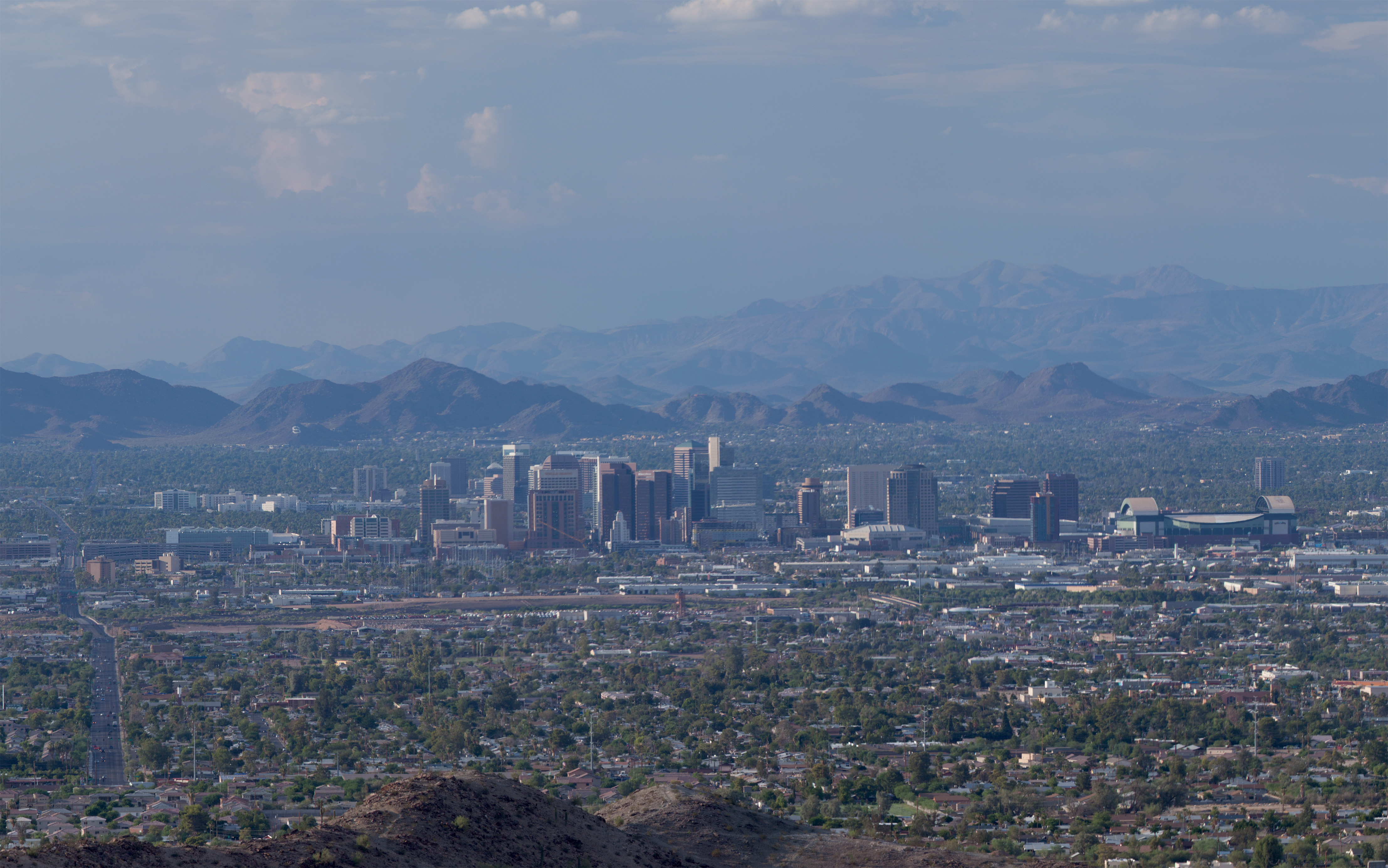
A $362 billion GDP doesn't lie — this is a serious economic engine, not a retirement backwater. High-tech firms like Intel and Microchip Technology anchor a growing semiconductor corridor, while aerospace (Honeywell, Boeing's local operations), financial services (Chase, American Express have major campuses), and healthcare systems like Banner Health collectively employ hundreds of thousands. Remote workers have flooded in since 2020, drawn by no state income tax on out-of-state retirement income and relatively lower costs than California. The job market is genuinely competitive in tech and finance; service-sector wages lag.
A one-bedroom in the city center runs about $1,426/month — up sharply from five years ago but still below Austin or Denver. You need a car; public transit exists but covers the metro poorly outside the light rail corridor. Healthcare access is solid, with major hospital systems and no meaningful language barrier for English speakers — though 42% of residents are Hispanic, so Spanish gets you further in daily life than you'd expect. Bureaucracy at the state and city level is relatively lean by U.S. standards. The real friction is summer: electricity bills hit $300–400/month June through September.
From November through April, the weather is genuinely exceptional — sunny, dry, 65–80°F, and outdoor-obsessed locals fill hiking trails, golf courses, and patios constantly. Summers are not a tradeoff; they're a four-month sentence indoors. The food scene punches above its weight, particularly for Mexican and Sonoran cuisine. The expat community here skews toward American domestic movers and retirees from colder states rather than international expats, so it's not a foreign-expat hub with ready-made meetups. Phoenix suits FIRE-minded Americans who want low taxes, genuine outdoor access eight months a year, and a real city without coastal price tags.
Estimate the cost of moving to Phoenix, AZ, United States
Get a free moving cost estimate for moving to Phoenix, AZ, United States. Takes 10 seconds.
How much are you shipping?
When are you moving?
Powered by Sirelo. Free quotes from international movers.
🏚️ Cost of Living
💰 Budgets and Costs
$2,252/mo, one person, rent included
Selected: budget lifestyle
Phoenix, AZ on a budget budget comes to about $2,252 a month for one adult, with $1,426 of that going to rent. Beyond rent the estimate covers $223 on groceries, $80.00 on dining out, $63.00 on entertainment and lifestyle, $396 on utilities and connectivity and $64.00 on transport.
Rent
$1,426/mo
1BR outside the centre
Groceries
$223/mo
75% of mid-range grocery spend
Dining out
$80.00/mo
4 inexpensive meals
Entertainment & lifestyle
$63.00/mo
1 cinema trip, 8 cappuccinos
Utilities & connectivity
$396/mo
utilities, mobile, internet
Transport
$64.00/mo
Monthly pass
Budgets (excl. rent)
Single person$826/mo
Excludes rent. The total above is all-in, rent included.
$2,552/mo, one person, rent included
Selected: mid-range lifestyle
Phoenix, AZ on a mid-range budget comes to about $2,552 a month for one adult, with $1,426 of that going to rent. Beyond rent the estimate covers $298 on groceries, $200 on dining out, $168 on entertainment and lifestyle, $396 on utilities and connectivity and $64.00 on transport.
Rent
$1,426/mo
1BR outside the centre
Groceries
$298/mo
Staples basket scaled to a full month
Dining out
$200/mo
10 inexpensive meals
Entertainment & lifestyle
$168/mo
gym, 2 cinema trips, 12 cappuccinos
Utilities & connectivity
$396/mo
utilities, mobile, internet
Transport
$64.00/mo
Monthly pass
Budgets (excl. rent)
Single person$1,126/mo
Excludes rent. The total above is all-in, rent included.
$3,275/mo, one person, rent included
Selected: comfortable lifestyle
Phoenix, AZ on a comfortable budget comes to about $3,275 a month for one adult, with $1,778 of that going to rent. Beyond rent the estimate covers $417 on groceries, $375 on dining out, $245 on entertainment and lifestyle, $396 on utilities and connectivity and $64.00 on transport.
Rent
$1,778/mo
1BR in the centre
Groceries
$417/mo
140% of mid-range grocery spend
Dining out
$375/mo
6 inexpensive meals + 6 mid-range meals
Entertainment & lifestyle
$245/mo
gym, 4 cinema trips, 20 cappuccinos
Utilities & connectivity
$396/mo
utilities, mobile, internet
Transport
$64.00/mo
Monthly pass
Budgets (excl. rent)
Single person$1,497/mo
Excludes rent. The total above is all-in, rent included.
Estimates for one adult, built from this city's average prices and the usage shown for each tier. Your spending will differ with how often you eat out and where you live.
A 1BR in the center runs about $1777.5/mo. If your income is in another currency, bank FX fees add up. A multi-currency account can cut that cost.
Phoenix feels reasonably safe for daily life, though it's a sprawling car-dependent city where nighttime walkability varies significantly by neighborhood. Downtown and central areas are moderately walkable with decent foot traffic, but peripheral zones require a vehicle. The city's safety reputation is better than its crime statistics suggest—violent crime rates are moderate for a metro of this size, and most expats report feeling secure in established residential areas.
Property crime (vehicle theft, package theft, burglary) is the primary concern; secure your car and use package delivery services cautiously. Petty theft occurs in tourist areas and parking lots. Violent crime concentrates in specific south and west Phoenix neighborhoods—avoid central South Phoenix, parts of West Phoenix, and isolated areas after dark. Solo female travelers should exercise standard precautions; the city is generally not hostile to women, but awareness of surroundings matters in less-populated areas.
Phoenix has no significant geopolitical risks or political instability. Police are generally reliable and responsive, though response times can be slow in outlying areas due to the city's size. Corruption is not a notable concern. For Americans relocating here, Phoenix is a straightforward, stable choice—safer than many major U.S. metros but requiring standard urban awareness. The main adjustment is adapting to car dependency and choosing neighborhoods carefully.
🏥 Healthcare
Excellent
Public Hospitals
Yes
Private Clinics
Yes
English-Speaking Doctors
Widely Available
See how Phoenix, AZ's healthcare compares with Whitefield, NH
🌤️ Climate
Summer Temp
41°C
Winter Temp
8°C
Humidity
30%
Air Quality Index
65
Annual Rainfall
284 mm
Best Months
FebMarNovDec
Climate Notes
Hot desert climate; one of the hottest cities in the US.
💻 Digital Nomad
Avg Internet Speed
110 Mbps
Internet (monthly)
$78/mo
Coworking Availability
Abundant
Coworking Spaces Nearby
6
Digital Nomad Score
71/100
Community Notes
A top-tier city for digital nomads with a thriving tech scene.
Located in Downtown Phoenix, this WeWork offers a vibrant atmosphere with modern amenities, making it a convenient choice for digital nomads seeking a professional workspace and networking opportunities. The central location provides easy access to restaurants and entertainment.
Situated in the historic Warehouse District of Downtown Phoenix, The Department offers a creative and collaborative environment with exposed brick and industrial-chic design. It's a good fit for remote workers looking for a unique and inspiring workspace with a strong community feel.
Located in Midtown Phoenix, Regus City Square provides a professional and well-equipped workspace with flexible options. Its central location and proximity to business amenities make it a practical choice for remote workers seeking convenience and a corporate environment.
Located near Downtown Phoenix, Co+Hoots is a community-focused coworking space known for its collaborative atmosphere and support for entrepreneurs. It's a great option for digital nomads looking to connect with the local startup scene and participate in community events.
See how Phoenix, AZ's digital nomad life compares with Whitefield, NH
🧳 Expat Life
English Proficiency
Widely Spoken
Expat Community
large
Banks Nearby
50
ATMs Nearby
30
🏘️ Neighborhoods in Phoenix, AZ
Areas of Phoenix, AZ that expats often consider.
Conditions can change from one block to the next, and these descriptions are general guides, not safety assessments. Before choosing where to stay or live, check current travel advisories, talk to people who live there, and visit in person if you can.
Downtown Phoenix
Urban, lively, and developing
Downtown Phoenix is experiencing a revitalization, attracting young professionals and those seeking an urban lifestyle. It offers a growing number of restaurants, bars, and cultural attractions, but can be noisy and expensive. Public transportation is decent, but a car is still useful for exploring the wider Phoenix area.
Arcadia
Established, family-friendly, upscale
Arcadia is known for its lush landscaping, mature trees, and well-maintained homes. It's a popular choice for families and retirees seeking a quieter, more suburban environment. While charming, it's less walkable than downtown and relies heavily on car transportation.
Scottsdale (Old Town)
Trendy, touristy, entertainment hub
While technically a separate city, Old Town Scottsdale is easily accessible from Phoenix and a major draw. It's packed with art galleries, restaurants, nightclubs, and shops, making it a vibrant but often crowded area. Expect higher prices and a strong tourist presence, especially during peak season.
Tempe (Downtown)
College town, energetic, affordable
Home to Arizona State University, Tempe offers a youthful and energetic atmosphere. Downtown Tempe has a wide range of restaurants, bars, and live music venues, and is generally more affordable than Scottsdale or downtown Phoenix. Be prepared for a strong student presence and associated noise levels.
North Central Phoenix
Residential, historic, family-oriented
North Central Phoenix features a mix of historic homes and newer developments, offering a more residential feel than downtown. It's known for its good schools and family-friendly amenities. While walkable in some areas, a car is still recommended for getting around.
Biltmore
Upscale, luxurious, centrally located
The Biltmore area is known for its high-end shopping, dining, and resorts. It's a centrally located area with easy access to other parts of the city. Expect higher living costs and a more affluent atmosphere.
Ahwatukee Foothills
Suburban, quiet, scenic views
Ahwatukee is a suburban village nestled at the base of South Mountain Park. It offers a more relaxed and quieter lifestyle with beautiful desert scenery. It's heavily car-dependent and less connected to the central Phoenix cultural scene, but can be a good option for retirees seeking peace and quiet.
Page 1 of 2
Could living/working in Phoenix, AZ cut years off your work life?
With a 1-bedroom in the center at $1778/mo, your FIRE number here might be much lower than you think.
Phoenix, AZ has a population of approximately 1,644,409 people.
A single person can expect to spend around $4,444 per month in Phoenix, AZ, including rent. A 1-bedroom apartment in the city center costs approximately $1778/month.
The nearest airport to Phoenix, AZ is PHX, approximately 10.7km away.
Phoenix, AZ is considered relatively safe, with a safety index of 65.0. As with any city abroad, expats should research specific neighborhoods before committing to a location.
Phoenix, AZ has an average internet speed of 110 Mbps. It is considered a well-established digital nomad destination.
Phoenix is no longer the bargain it was pre-2020. A city-center one-bedroom now averages $1,776.88 per month, and monthly expenses for one person without rent are $1,350. It is still cheaper than coastal cities like LA or Seattle, but the gap has narrowed.
Yes, almost certainly. The light rail connects downtown, Tempe, and Mesa usefully, but the metro sprawls across 500+ square miles. Without a car, your housing options, grocery access, and social life shrink dramatically. Budget for car ownership — it's not optional for most residents.
By staying indoors from roughly 10am to 7pm, June through September. Locals schedule outdoor activity at dawn or after dark. Many long-term residents leave for 4–6 weeks in July or August — sometimes called 'snowbirding in reverse.' If you can't work remotely or take that escape, the summers are genuinely grueling and shouldn't be minimized.
Monthly expenses for one person (excluding rent) average $1,350, while a 1-bedroom apartment in the city center rents for about $1,776.88. Grocery costs are lower than the earlier estimate, and utility spikes in summer remain a factor.
Phoenix boasts excellent healthcare, with major hospital systems like Mayo Clinic and Banner Health. Many doctors accept Medicare, and English is widely spoken. However, healthcare costs in the US are generally high, so factor that into your retirement budget.
Living comfortably on $3,000/month in Phoenix is possible, but requires careful budgeting. You'll likely need to live outside the most expensive neighborhoods, cook at home frequently, and be mindful of utility costs. Consider areas like Maryvale or Alhambra for more affordable options.
Internet speeds in Phoenix average 110 Mbps, with fiber optic widely available. Coworking spaces are plentiful in Downtown Phoenix and Tempe, including WeWork and local independents, with dedicated desks ranging from $200-$400/month.
Unfortunately, the US doesn't have a specific digital nomad visa. You'll likely need to rely on the B-1/B-2 visitor visa, which allows stays of up to 6 months, or explore options like an E-2 investor visa if you have a substantial investment to make in a US business.
English is widely spoken in Phoenix, and you'll have no problem navigating daily life without Spanish. While Spanish is present due to the city's proximity to Mexico, it's not essential for everyday interactions.
While not as large as in some other major US cities, Phoenix has a growing expat community. Online groups and social events provide opportunities to connect with other expats. Check out InterNations or Facebook groups for local expat gatherings.
Major US banks like Chase, Bank of America, and Wells Fargo have branches throughout Phoenix. For international money transfers, services like Wise (formerly TransferWise) and Remitly often offer better exchange rates and lower fees than traditional banks.
As a US citizen, you're still subject to US taxes even when living abroad. The Foreign Earned Income Exclusion (FEIE) can help you exclude a certain amount of your foreign-earned income from US taxes. Also, be aware of FBAR reporting requirements for foreign bank accounts.
Phoenix has a desert climate with extremely hot summers (May-September), mild winters, and pleasant spring and fall seasons. Expect temperatures to regularly exceed 100°F (38°C) in the summer. Hydration and sun protection are crucial.
To optimize your cost of living, consider living outside the city center where 1BR rent averages $1776.88 per month. The overall monthly cost for one person without rent is $1350, so cooking at home and using free activities like hiking help manage expenses.
Phoenix has a growing economy and a relatively low cost of living compared to other major US cities, making it attractive for FIRE. Real estate can be a good investment, but research the market carefully. The city also offers access to various investment advisors and financial institutions.
Phoenix is a diverse city, but it's still predominantly American culture. Be prepared for a more individualistic culture than you might be used to. Tipping is customary in restaurants and for various services. Casual dress is common, especially in the summer.
Cost-of-living and visa updates for Phoenix, AZ and the rest of United States. Free with RA Postcards.
By submitting your email address, you will receive a free subscription to RA Postcards and special offers from Rewire Abroad and our affiliates. You can unsubscribe at any time, and we encourage you to read more about our Privacy Policy.