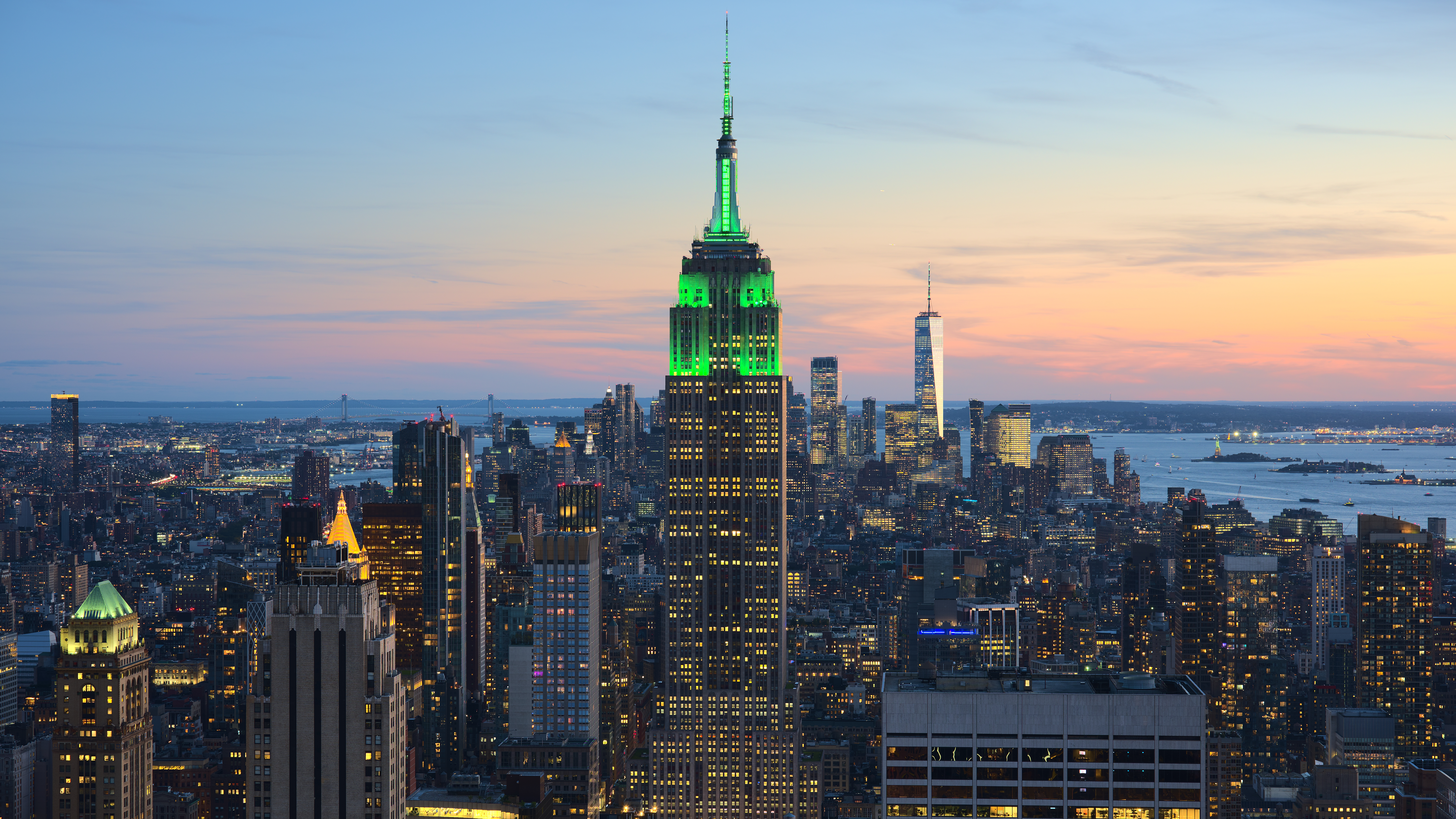
The Bronx sits at the northern edge of New York City, a borough of 1.5 million people spread across roughly 10 m above sea level and shaped by a subtropical climate with humid summers and cold winters. It is the only borough attached to the mainland, and its character shifts block by block, from the Grand Concourse's art deco apartment houses to the working waterfront and the large green expanses of Pelham Bay Park. Expats tend to settle in Riverdale, where leafy streets and larger apartments draw families and long-term residents, and in Pelham Bay, which offers a quieter residential feel with easy access to the water and the subway. Both neighborhoods give newcomers a softer landing than the denser commercial corridors farther south, and both have established communities that make the transition easier.
Living costs here run below Manhattan but remain firmly New York. A one-bedroom in the city center averages $3,735/mo, while the same outside the center drops to $2,695/mo. Three-bedroom units average $7,387/mo in the center and $4,768/mo outside it. For a single adult, a budget tier totals $2,483/mo including rent, a mid-range tier $3,879/mo, and a comfortable tier $5,172/mo. Monthly costs excluding rent come to $78/mo for one person and $5,200/mo for a family of four. Utilities average $245/mo, internet $62/mo, a mobile plan $61/mo, a public transport pass $152/mo, and a gym membership $106/mo. An inexpensive restaurant meal runs $20 per person, a three-course mid-range dinner for two $105, and a cappuccino $6. The local average net salary is $3,618/mo, and the cost of living index sits at 94/100 against New York City as 100.
Safety is a mixed picture that rewards local knowledge. The safety index is 50/100 and the crime index 50/100, meaning conditions vary widely by neighborhood and block, with Riverdale and Pelham Bay generally calmer than the South Bronx. Air quality is moderate, with an index of 45, better than some inner-city districts but still affected by traffic and industry. Healthcare quality is rated excellent, and the borough's hospitals and clinics connect residents to the broader New York medical network. Most daily life is conducted in English, which is widely spoken, and the expat community is large and active, giving newcomers both practical support and a social foothold.
Visas follow the same federal routes that govern the rest of the United States, so the process is handled through national channels rather than anything borough-specific. The nearest airport is NYS, just 4 km away, which makes arrivals and short trips unusually convenient. Internet speeds average 120 Mbps, and the time zone is America/New_York. The borough scores 73/100 overall for expats and 73/100 for digital nomads, with 59/100 for retirees and 49/100 on FIRE metrics. It suits remote workers and creatives who want New York access without Manhattan rents, families who value space and established neighborhoods, and anyone drawn to a borough with a distinct identity, a strong cultural footprint, and a realistic path to calling the city home.