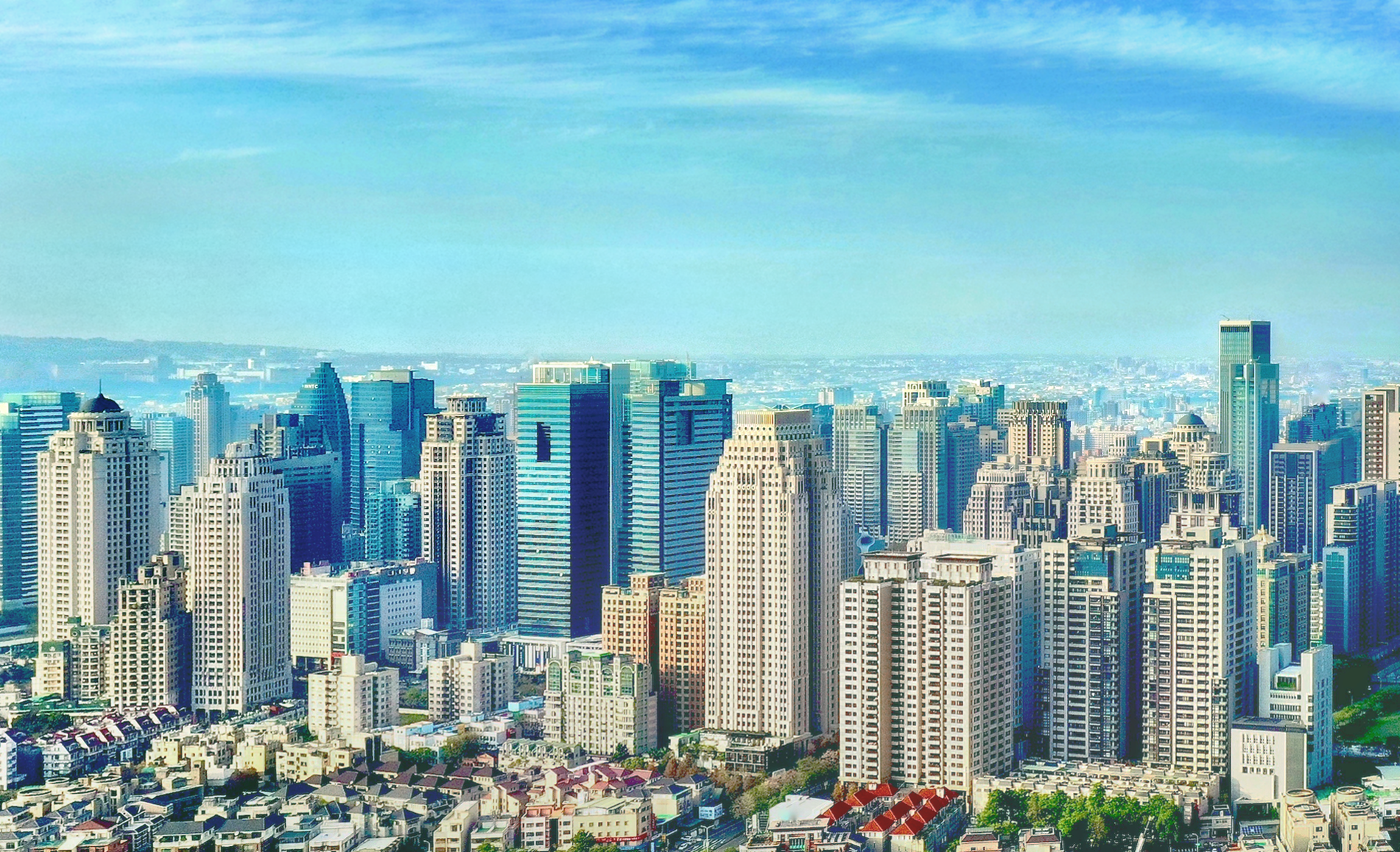
Manufacturing is the backbone here — machinery, precision instruments, petrochemicals, and electronics employ a significant chunk of the workforce, with industrial parks scattered across the metro area. For expats, the realistic work options are English teaching (cram schools and public schools both hire), remote work, or breaking into the export-oriented manufacturing sector if you have relevant technical or engineering credentials. The local job market for non-Mandarin speakers outside of education is thin. Salaries for English teachers run roughly NT$55,000–70,000/month ($1,700–$2,200), which goes further here than in Taipei.
A one-bedroom in the city center runs around $650/month; move 15–20 minutes out and you're closer to $450. The BRT and city bus network exist but are genuinely inconvenient for most daily routes — a scooter or bicycle is how most residents actually get around, and expats quickly follow suit. National Health Insurance costs roughly NT$749/month ($23) for most residents and covers the vast majority of medical needs at high-quality hospitals. The language barrier is real: English signage is limited outside tourist zones, and daily errands require at least basic Mandarin or a translation app.
Taichung sits in a basin, which traps heat and pollution — air quality is noticeably worse than Taipei or the east coast, and summer humidity is punishing. The food scene is legitimately excellent and cheap; night markets like Fengjia are worth the hype, and the city has a strong café culture. The expat community is smaller and less organized than Taipei's, which means less hand-holding but also less of an expat bubble. Weekends mean cycling paths, the National Museum of Natural Science, day trips to Sun Moon Lake, or just eating your way through the city. This suits remote workers or teachers who want lower costs than Taipei without fully disappearing into rural Taiwan.
Estimate the cost of moving to Taichung, Taiwan
Get a free moving cost estimate for moving to Taichung, Taiwan. Takes 10 seconds.
How much are you shipping?
When are you moving?
Powered by Sirelo. Free quotes from international movers.
🏚️ Cost of Living
A 1BR in the center runs about $376.67/mo. If your income is in another currency, bank FX fees add up. A multi-currency account can cut that cost.
Taichung is genuinely safe for daily life. You'll feel comfortable walking at night in most neighborhoods, and the city has a relaxed, orderly atmosphere typical of Taiwan. Expats report minimal street crime and a strong police presence. The safety index of 70 reflects reality—this is one of Asia's safer major cities, with low violent crime and reliable infrastructure. Most expats adapt quickly without heightened vigilance.
Petty theft and scams are rare but not impossible; secure valuables on public transport and be cautious with ATM transactions. Violent crime against foreigners is extremely uncommon. Solo female travelers report feeling safe, though standard precautions apply. Avoid isolated areas late at night, though 'isolated' in Taichung is relative. Motorcycle theft occurs but affects residents more than expats. Scams targeting foreigners are minimal compared to Southeast Asian cities.
Taiwan's political status creates underlying tension, but Taichung itself is politically stable with no active protests or civil unrest affecting daily life. Police are professional, trustworthy, and responsive—corruption is negligible. The main geopolitical risk is cross-strait tensions with China, but this doesn't translate to street-level danger for residents. For an American considering relocation, Taichung presents one of the lowest safety risks in Asia. It's a legitimate choice for remote workers and retirees seeking stability.
Located in the Xitun District, Futureward offers a modern, tech-focused environment. They host regular events and workshops, making it ideal for networking and collaboration among expats and locals.
Located in the heart of Taichung's Central Business District, WeWork provides a premium coworking experience with all the expected amenities. Its central location makes it easily accessible and a good choice for those wanting to be in the thick of things.
Located near the National Museum of Natural Science in North District, TCC offers a more budget-friendly option with a focus on supporting startups and small businesses. It's a good option for those looking for a less corporate environment.
Regus has multiple locations in Taichung, offering a reliable and professional coworking environment. They provide flexible options and are well-suited for those who need a more traditional office setting.
Often called Taiwan's most livable city, Taichung offers a perfect balance of urban life and nature access.
Pros
✓ Ideal climate
✓ World-class healthcare
✓ Vibrant arts and cafe culture
Cons
✗ Air quality issues at times
✗ Public transport less developed than Taipei
✗ Rising housing prices
🏘️ Neighborhoods in Taichung
Notable areas of Taichung, with descriptions adapted from public reference sources. Rent figures are Numbeo's city-wide averages, not prices for a specific area.
Conditions can change from one block to the next, and these descriptions are general guides, not safety assessments. Before choosing where to stay or live, check current travel advisories, talk to people who live there, and visit in person if you can.
Central Taichung
Central Taichung is the center of Taichung, made up of Central, Eastern, Northern, Southern, Western, Beitun, Nantun, and Xitun, and is considered the downtown area. Locals usually mean this area when they say downtown Taichung or Old downtown. It was a separate administrative region bordered by Taichung County until the 2010 merger. It is the busiest and populous area of the city.
Datun, also called the Tun districts, is made up of Dali, Taiping, Wufeng, and Wuri in the south of Taichung. It is closely connected to downtown and relies on it heavily, with locals usually traveling downtown for shopping, dining, and entertainment. As a result, there are fewer attractions here despite its large population.
Coast Line is the coastal western section of Taichung city, made up of the districts of Dajia, Qingshui, Shalu, Wuqi, Da'an, Dadu, Lonjing, and Waipu. Dajia Jenn Lann Temple is in Dajia District, and Gaomei Wetlands is in Qingshui District, a popular spot for sunset where walking on wet sand at the end of the dock is possible at low tide.
Heping District is a mountain indigenous district in eastern Taichung, Taiwan. It is the largest district of Taichung City and the largest district in Taiwan by area. It is the center of population of Taiwan.
Numbeo city average, outside-center: $500 (updated Oct 8, 2026)
Taichung has a population of approximately 2,867,537 people.
A single person can expect to spend around $942 per month in Taichung, including rent. A 1-bedroom apartment in the city center costs approximately $377/month.
The nearest airport to Taichung is RMQ, approximately 9.6km away.
Taichung is considered relatively safe, with a safety index of 70.0. As with any city abroad, expats should research specific neighborhoods before committing to a location.
Taichung has an average internet speed of 120 Mbps. It is considered a well-established digital nomad destination.
You can survive, but daily life has real friction. Outside universities, tourist areas, and some cafés, English is limited. Most long-term expats pick up basic Mandarin out of necessity. Translation apps help, but learning at least survival-level Chinese will significantly improve your experience.
Noticeably cheaper. City-center one-bedrooms run around $650/month versus $900–$1,100 in Taipei. Food, transport, and entertainment are similarly discounted. Budget expats living on remote income or a teaching salary can live comfortably on $1,500–$2,000/month including rent.
Yes, by most measures. The safety index sits at 70, and street crime is low. Traffic is the more realistic daily hazard — scooter culture is chaotic, and pedestrian infrastructure is inconsistent. Standard urban awareness applies, but violent crime against expats is rare.
Taichung has a subtropical climate with warm, humid summers and mild, dry winters. Expect typhoons during the late summer and early fall, but overall, the weather is quite pleasant, especially compared to the humidity of Taipei.
Yes, several hospitals in Taichung have English-speaking doctors, including China Medical University Hospital and Taichung Veterans General Hospital. Private clinics may also offer English-speaking staff, but it's best to call ahead to confirm.
For longer stays, Americans typically pursue a visitor visa extension, an employment-based visa (if you have a job offer), or an investment visa. Some Americans enroll in Mandarin language programs to obtain a student visa, which allows for extended stays.
Internet speeds in Taichung are generally very good, with fiber optic connections widely available. You can expect download speeds of 100 Mbps or higher in most areas, making it suitable for video conferencing and other remote work tasks.
Taichung has a decent public transportation system, including buses and a metro line (TRA). Many expats find it convenient to use scooters for shorter distances, but be aware of local traffic laws. Taxis and ride-sharing services like Uber are also readily available.
While smaller than Taipei's, Taichung has a growing expat community, primarily composed of teachers, business professionals, and retirees. You can find expat groups and social events through online forums and social media.
Popular neighborhoods include Xitun District (modern, convenient), Nantun District (residential, green spaces), and Central District (historical, revitalizing). Your choice will depend on your budget and lifestyle preferences.
A single retiree can live comfortably in Taichung on a budget of $1,500-$2,000 USD per month, covering rent, food, transportation, and healthcare. This allows for a decent lifestyle, but you may need more for extensive travel or luxury expenses.
Yes, Taichung has several coworking spaces catering to digital nomads and freelancers. Options include Futureward, The Bridge, and local business centers that offer shared office facilities.
Opening a bank account in Taichung requires your passport, ARC (Alien Resident Certificate), and proof of address. Some banks may require a local guarantor. It's generally easier to open an account with a larger international bank.
Be sure to try sun cakes (太陽餅), bubble tea (珍珠奶茶, said to have originated here), and rou yuan (肉圓, savory meat-filled dumplings). The night markets, like Feng Chia Night Market, are great places to sample a variety of local snacks.
As a US citizen or green card holder, you're still required to file US taxes even when living abroad. You may be able to exclude a certain amount of your foreign earned income using the Foreign Earned Income Exclusion (FEIE) or claim a Foreign Tax Credit. Consult with a tax professional specializing in expat taxes.
Cost-of-living and visa updates for Taichung and the rest of Taiwan. Free with RA Postcards.
By submitting your email address, you will receive a free subscription to RA Postcards and special offers from Rewire Abroad and our affiliates. You can unsubscribe at any time, and we encourage you to read more about our Privacy Policy.