Processing Time
4-12 wks
Difficulty
Moderate
Duration
36 months
Overview
For an American, Canadian, or Australian remote worker, the Taiwan Digital Nomad Visa (Gold Card) is essentially a 36‑month open work permit and residence card rolled into one. No minimum monthly income or savings threshold is officially published, even though the practical gateway for many applicants is an income-based path published on the official Gold Card site. In terms of visa mechanics, you apply online, receive a decision in about 4 to 12 weeks as of 2026, and the card itself then functions as your visa, residence permit, and multiple‑reentry document.
From a residency planning angle, the card is valid for 36 months and is explicitly renewable, and the program states that it leads to permanent residence (PR). The exact number of years to PR or citizenship is 5 years as of 2026, so if you are mapping a 10‑ to 15‑year Asia plan, you have to work with that uncertainty and check the most current National Immigration Agency (NIA) rules when you are closer to the renewal/PR decision. There is no publicly specified physical presence requirement or maximum consecutive absence in the program rules, which matters if you hope to split your time 50/50 between Taiwan and somewhere like Thailand or Mexico.
The card allows local work with no employer sponsorship, which is a major differentiator from pure “tourist‑style” digital nomad visas. Local work is explicitly permitted, but program rules do not specify any limit on local income or restrict employment types, so in principle you can mix W‑2‑style remote employment, foreign freelance clients, and Taiwanese contracts under one status. Income sources that count for qualification, and the documentation needed (contracts, tax returns, payslips), are defined field‑by‑field on the official Gold Card website rather than in a single numeric line in the regulations.
On the friction side, Taiwan removes several pain points that FIRE and nomad readers are used to: no apostille requirement, no FBI background check, no medical exam, and no in‑person interview per the program rules. Processing time runs about 4 to 12 weeks as of 2026, not a vague range stretching to several months. The bureaucracy score of 1.625/5 reflects that most steps are online and centralized through the Gold Card platform rather than scattered across consulates, labor offices, and immigration police.
In practice, this path makes the most sense if you are a high‑skill remote worker or consultant with strong recent income who wants 36 months of fully legal stay and the option to take Taiwanese clients or jobs without re‑papering your status. It is a poor fit if your finances are dominated by modest passive income (for example, $2,500/month from index fund dividends and Social Security) and you cannot credibly document professional achievements in one of Taiwan’s designated Gold Card fields.
Eligibility Requirements
Any nationality can apply for the Taiwan Digital Nomad Visa (Gold Card) in principle, as visa rules list nationality restrictions as “all.” In practice, applicants holding passports from heavily sanctioned or diplomatically constrained states such as Iran, North Korea, Syria, or Cuba, and sometimes Russia or Belarus, can face consular scrutiny, banking de‑risking, and security reviews that make approval and later account opening materially harder even if not outright banned in law. Before assembling your documentation, verify current eligibility and any additional checks directly with Taiwan’s National Immigration Agency (NIA) or the official Taiwan Employment Gold Card Office rather than relying solely on third‑party visa blogs.
Renewal Cost
$100/yr
Min Age
18 yrs
Duration
36 months
Requirements Checklist
0 of 6 documents in hand
0%These take the longest, so start them first.
Request these while the slow items are in progress.
You only need these on the day you submit.
How and where to apply
Apply fully online via the Foreign Professionals Online Application Platform (goldcard.nat.gov.tw/en/apply), from anywhere including in-country after tourist entry. U.S. applicants abroad use representative offices for passport submission post-approval; in-Taiwan applicants collect at National Immigration Agency. No need for consulates unless specified in approval notice.
Tax Information
Local tax regime and what it means for you
Taiwan uses a primarily worldwide income tax system for residents, not a territorial or remittance‑only model. Once you become a tax resident, employment income from a foreign employer, freelance earnings from clients abroad, dividends from ETFs in a US or Canadian brokerage, foreign rental income, and most pension distributions are all within the scope of Taiwan’s individual income tax. Non‑residents are taxed differently, often at flatter or higher rates, but the key point for long‑stay Gold Card holders is that extended physical presence tends to pull you into resident treatment.
Capital gains on foreign securities are a crucial question for FIRE readers. Taiwan does not levy an across‑the‑board personal income tax on capital gains from the sale of listed foreign stocks and funds in the way that, say, the US does, but it does tax certain categories of gains and financial instruments under separate rules. Because visa rules list the tax regime type as “not specified” and do not disclose a precise treatment for ETF or index‑fund gains in foreign brokerages, you should treat the taxation of those gains as unclear until you have confirmation from a Taiwan tax professional or the National Taxation Bureau. For planning purposes, do not assume those gains are fully exempt.
Tax residency is where the Gold Card’s 36‑month duration intersects directly with your liability. Taiwan uses a 183‑day presence rule in a calendar year as the main trigger for tax residency; spend more than 183 days in Taiwan in a given year, and you are generally treated as a resident for that year’s global income. The visa grant itself does not automatically make you a tax resident — the day count does. There is no separate “digital nomad” or non‑dom regime tied to this visa in visa rules.
Local filing requirements flow from that residency status. New arrivals staying long enough to become tax residents need to obtain a Taiwan tax ID (often linked to the same ID number as on your Gold Card), register with the tax office if they have local income, and file an annual return reporting worldwide income. Filing deadlines and specific forms are not disclosed in visa rules, and Taiwan does adjust brackets and deadlines periodically, so you need up‑to‑date guidance in your first filing year.
visa rules list the tax treaty status with the US as “unknown.” In practical terms, that means a US–Taiwan income tax treaty either does not exist in the standard OECD‑style form or does not provide easily accessible, comprehensive relief on items like dividends, interest, and pensions. Without a clearly applicable treaty article, you should assume there is no automatic reduction of US tax on those streams and no straightforward tie‑breaker rule to resolve dual‑residency conflicts; your planning has to lean on domestic rules, US foreign tax credits, and physical presence management instead of treaty protection.
For US Citizens and Green Card Holders
US persons on the Taiwan Digital Nomad Visa remain fully taxable by the IRS on worldwide income. The main relief tools are the Foreign Earned Income Exclusion (FEIE, Form 2555), the Foreign Tax Credit (FTC, Form 1116), and proper reporting of foreign accounts.
FEIE via Form 2555 can exclude up to $126,500 of earned income for 2024 — salary from a US or foreign employer, freelance and consulting income — but not ETF dividends, interest, capital gains, rental income, pension distributions, or Social Security. Because Taiwan uses a 183‑day test rather than a strict immigration‑status test, many Gold Card holders who actually base themselves in Taiwan full‑time will qualify either under the Physical Presence Test (330 full days abroad in any 12‑month period, where your days in Taiwan count as “abroad”) or, after you settle in, the Bona Fide Residence Test. If you deliberately limit days in Taiwan to stay non‑resident locally, the Physical Presence Test is the realistic route.
Form 1116, the Foreign Tax Credit, only helps when Taiwan taxes a category of income and the effective Taiwanese rate on that income is greater than zero. If you structure your life so you never cross 183 days and remain a Taiwan non‑resident with little or no local tax on foreign earnings, the FTC does almost nothing for you: there is no foreign tax to credit against US liability on your remote salary, dividends, or capital gains. If you do become a Taiwan tax resident and pay meaningful tax on your remote income, Form 1116 becomes central to avoid double taxation.
FEIE and FTC can interact: high‑earning remote employees sometimes combine a partial FEIE (sheltering the first $126,500 of earned income) with FTC on the remaining income. Which mix is optimal depends on Taiwanese resident tax rates in the relevant band and how much of your income is passive versus earned.
FBAR (FinCEN 114) and FATCA Form 8938 are unavoidable if you bank locally. FBAR kicks in once you have more than $10,000 aggregate in non‑US financial accounts at any point in the year — Taiwan bank accounts, brokerage accounts, and certain stored‑value products count. Non‑willful penalties start around $10,000 per violation. Form 8938 has higher thresholds but similar concepts. The visa rules do not require a local bank account for the Gold Card, yet in practice many residents open one, which immediately triggers these reporting obligations once balances exceed the thresholds.
For a US citizen on this visa, the optimal approach is coordinated planning: engage a US CPA who specializes in expat taxation and understands FEIE, FTC, FBAR, and Form 8938 in the context of East Asian tax systems, and a local Taiwan tax advisor who can confirm residency status, filing deadlines, and the treatment of foreign capital gains. The $1,500–$3,000 you spend in year one on that combined advice is often recovered through clean compliance, avoiding $10,000‑plus penalties, and structuring your mix of FEIE and FTC to minimize lifetime tax on your portfolio withdrawals and remote earnings.
Living in Taiwan
COL Index vs NYC
44.4
Monthly Cost (excl. rent)
$783
1BR Rent (City Center)
$505
Safety Index
82.9
Healthcare Index
86.5
Quality of Life Index
160.7
Time Zone
UTC+08:00
Capital
Taipei
Population
23.5M
Official Languages
Chinese
Avg Internet Speed
260 Mbps
Public Transit Quality
Excellent
With a budget covering rent and living costs, you'd need roughly $1,288/mo for a comfortable single-person lifestyle in Taiwan.See how far your money goes →
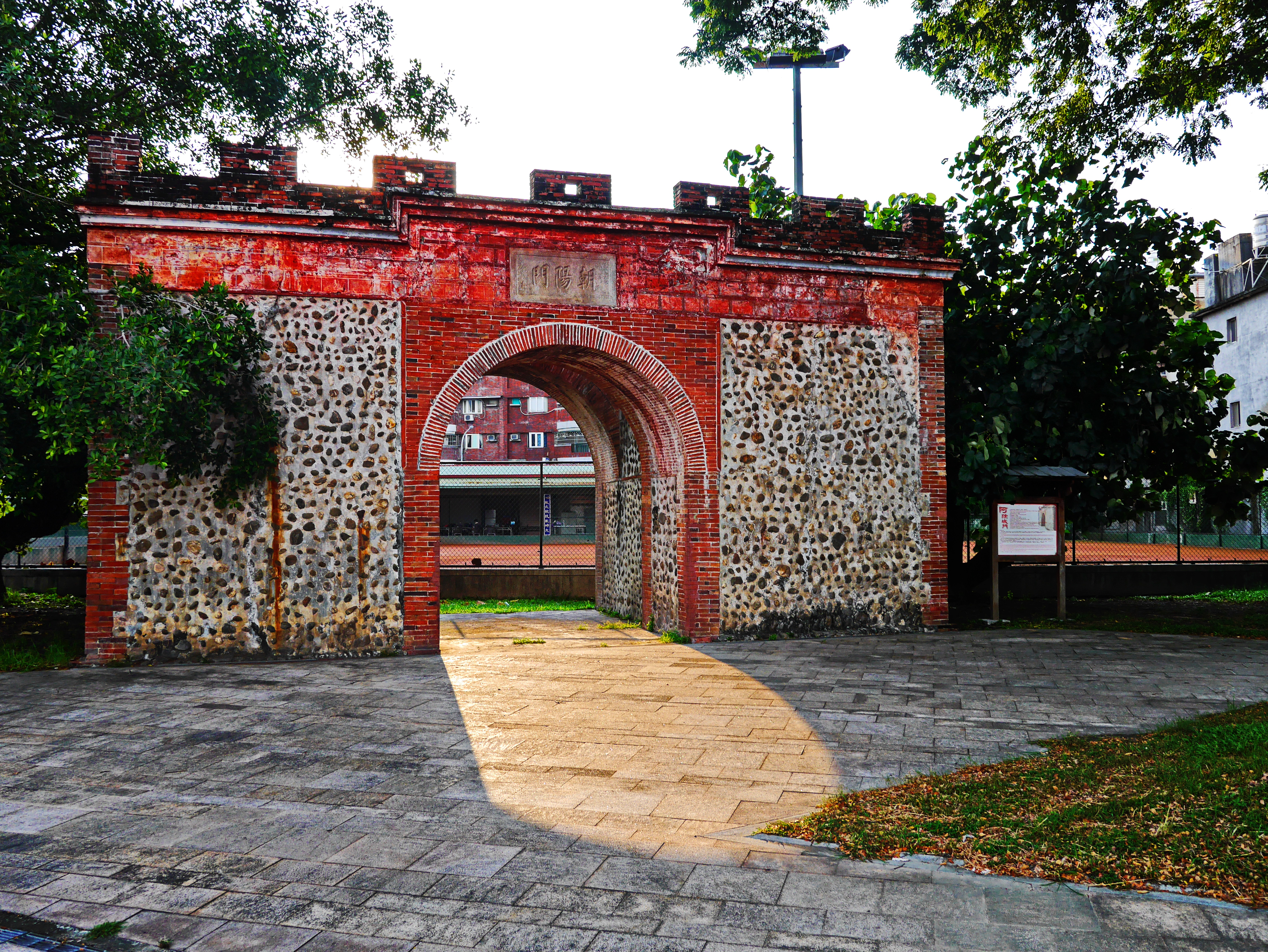
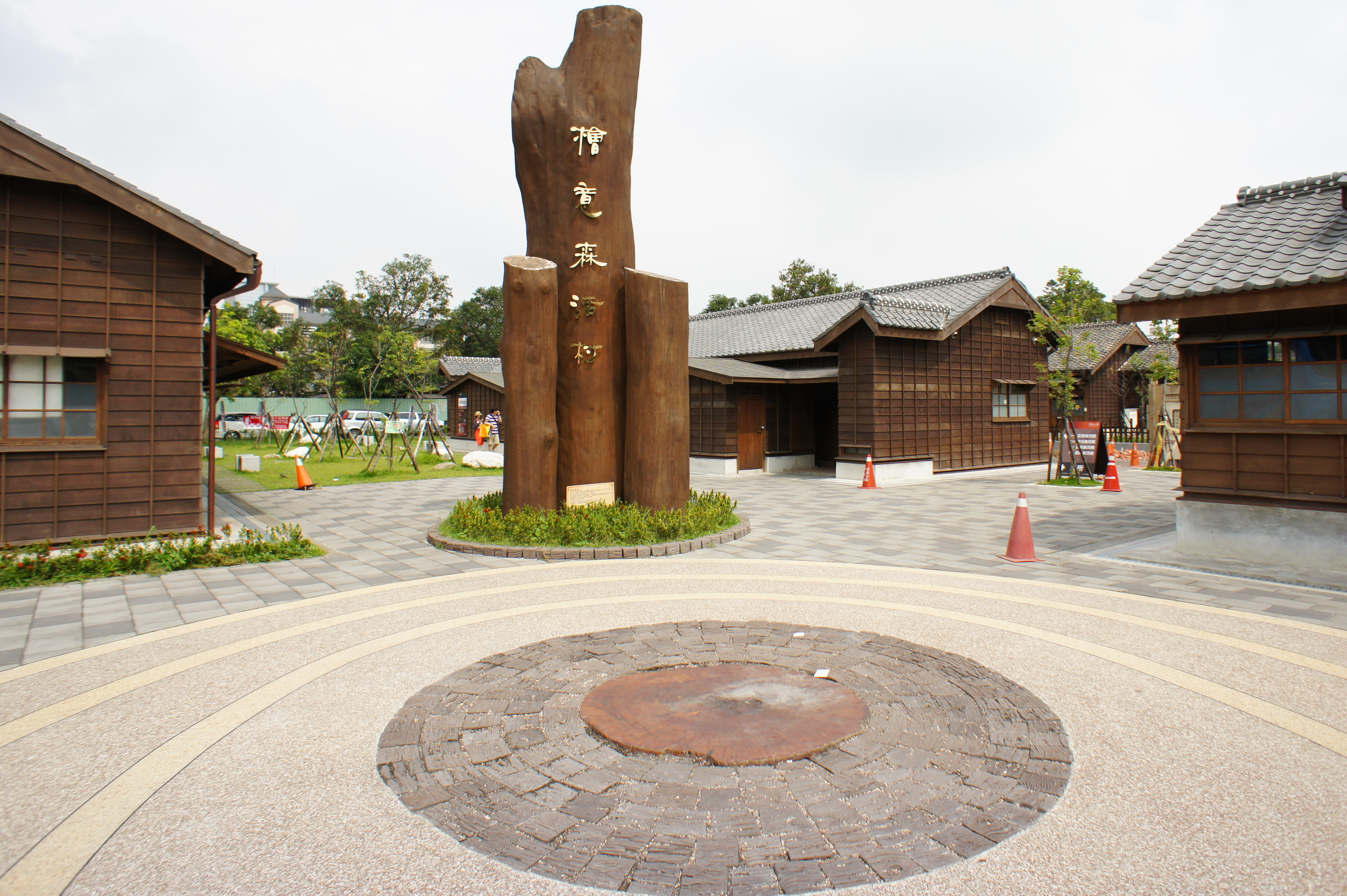
🏙️ Best Cities in Taiwan for Digital Nomads




Getting the income documentation story straight before applying
Most people prepare for this visa the way they'd prepare for a straightforward income-threshold visa: gather tax returns, pull bank statements, maybe get an employer letter. That's necessary but not sufficient here, and it's the most common way applications drag past their expected timeline. The income proof and the professional qualification proof are meant to reinforce each other, not stand as two separate boxes to check.
The failure mode looks like this: a freelance developer submits solid bank statements showing consistent deposits well above the threshold, but the accompanying materials are a generic freelance platform profile and a one-line description of "software development services." A reviewer has no way to tell if that's a senior engineer commanding premium rates or someone taking whatever work comes through, and the file gets kicked back for clarification. Contrast that with the same income supported by a portfolio of named projects, a professional certification, and maybe a conference talk or two. Same dollar figure, very different read.
The sequencing mistake to avoid is treating the professional documentation as an afterthought you'll assemble once the financial side is locked down. Build them together. If your income comes from multiple clients, decide early whether you're presenting yourself as a specialist in one domain (cleaner story, easier for a reviewer to categorize) or a generalist with breadth (harder to categorize, needs more supporting material to avoid looking scattered). Retirees and passive-income applicants have an easier version of this problem since bank statements and portfolio statements largely speak for themselves, but even then, a letter explaining the source and stability of the income helps more than people expect.
One more thing worth getting right before submission: recommendation letters or employment records, where your field calls for them, should come from people who can speak specifically to your work, not generic HR confirmations of employment dates. A reviewer skimming a stack of applications notices which letters actually say something.
The housing question nobody prepares for
Nothing in the application itself demands a lease or a hotel booking before you submit. That surprises people coming from visa processes where proof of accommodation is a checkbox item on day one, and it leads some applicants to assume housing simply isn't part of the equation. It becomes part of the equation the moment you land and need to convert your approval into an actual resident card.
Getting your Alien Resident Certificate printed requires a registered address, and that's where short-term thinking causes real delays. Booking a week of Airbnb stays and treating that as your registration address tends to create friction, since the registration process at the immigration office generally expects something that reads as an actual residence, not a rotating string of short-term listings. People who show up with a 12-month lease already lined up, or who at minimum book a month or more in one place before dealing with registration, move through this step without drama. People who try to handle the address piece the same way they handled a two-week vacation booking often end up making a second trip to the immigration office, or worse, sitting on an approved visa they can't yet turn into a usable permit while they scramble for a longer-term rental.
The other piece people underestimate is how landlord cooperation factors in. Registering an address sometimes means the landlord needs to provide documentation of their own, and not every landlord renting short or medium-term to foreigners is set up for that conversation. Asking about registration requirements before signing, rather than after, saves a scramble.
What happens after your approval lands
Approval and possession of a working permit are not the same moment, and the gap between them is where a lot of the actual friction lives. The application itself runs entirely through the online Foreign Professionals Online Application Platform, and that's true whether you're applying from the US or already sitting in Taiwan on a tourist entry. Nobody needs to walk into a consulate for the application itself.
Where the paths diverge is what happens once approval comes through. If you applied from abroad, the next step usually runs through a representative office for passport submission, since the physical documentation still needs to move through an official channel even though the application was digital. If you applied while already in Taiwan, you collect your card directly at the National Immigration Agency instead. Either way, the online approval is a green light, not a finished product, and the paperwork that finalizes it still requires a physical step somewhere.
This matters for sequencing your move. Someone who assumes the online approval is the finish line and books a one-way flight without confirming which collection path applies to their situation risks arriving with an approval notice and no clear next step lined up. Given that processing itself can run anywhere from four to twelve weeks, and the finalization step comes after that, the total runway from first submission to holding a usable card can stretch longer than the headline processing window suggests. Build slack into your moving timeline accordingly, and don't give notice on a lease or a job start date that assumes the fastest-case scenario.
The long road to permanent residency
Five years of holding the visa gets you eligible for permanent residency, which sounds simple until you map it against the fact that the initial permit itself only runs 36 months. That means most applicants are renewing at least once before they ever reach the PR eligibility line, and the $100 renewal fee is the easy part. The harder part is that PR eligibility tends to hinge on continuity, not just elapsed calendar time, so a lapse in the underlying permit or a gap in physical presence can push that five-year clock further out than a straight read of the timeline suggests.
This is worth planning around early rather than discovering at year four. If your income or professional situation shifts in a way that jeopardizes renewal (a change in client base, a gap between contracts, a career pivot into a less clearly credentialed field), the PR path is the thing at risk, not just the current permit. Treat each renewal less as a formality and more as a checkpoint where the same documentation discipline from your original application still needs to hold up.
Taiwan versus the usual alternative
For someone in the $4,000 to $10,000 monthly range comparing options, the reflexive alternative is usually a Southern European nomad visa, Portugal's version being the most commonly cited. The comparison isn't really about income thresholds, since both tend to sit in a similar band once converted. It's about what each visa optimizes for.
Taiwan's Gold Card optimizes for people who can document expertise and who want to actually work inside the local economy if the opportunity arises, since local employment is explicitly permitted here in a way it usually isn't on nomad-specific visas elsewhere. It also skips an interview and keeps the entire front end online, which matters if you're trying to make a decision and move within a few months rather than a year. The territorial tilt to how foreign income gets treated is a real advantage for someone whose income originates entirely outside Taiwan, though the professional documentation bar is higher than a straightforward income-only visa would demand.
The European alternative generally asks for less in the way of professional credentialing and more in the way of accumulated paperwork around housing and local registration before you even land, plus a path to residency that runs on a different timeline entirely. If your case for expertise is thin but your income documentation is airtight, that route may truly be the easier one. If you can tell a clean story about what makes you good at what you do, Taiwan rewards that story more directly than most alternatives in this bracket do, and the local work permission is the kind of optionality that's hard to price until you're actually living somewhere and an opportunity shows up.
Work Permissions
Application Steps
- 1
📋 Research qualifications and register account
1-2 days
- 2
📄 Fill application form online
1-3 days
- 3
📬 Pay application fee online
Same day
- 4
⏳ Await review and approval
3-4 weeks
- 5
📄 Collect approval certificate or enter Taiwan
1-2 days
- 6
🏛️ Collect Gold Card in Taiwan
Same day
This visa requires proof of health insurance. Compare international plans before you apply.
Compare health insuranceWe may earn a commission at no cost to you.
Compare this visa
Curated comparisons that include this route.
Frequently Asked Questions
Click any question to expand the answer.
Ready to Apply?
Work with trusted visa specialists who handle the paperwork so you can focus on your move.
Get help with this visa →* We may earn a commission if you apply through our link
At a Glance
Last verified: October 9, 2026