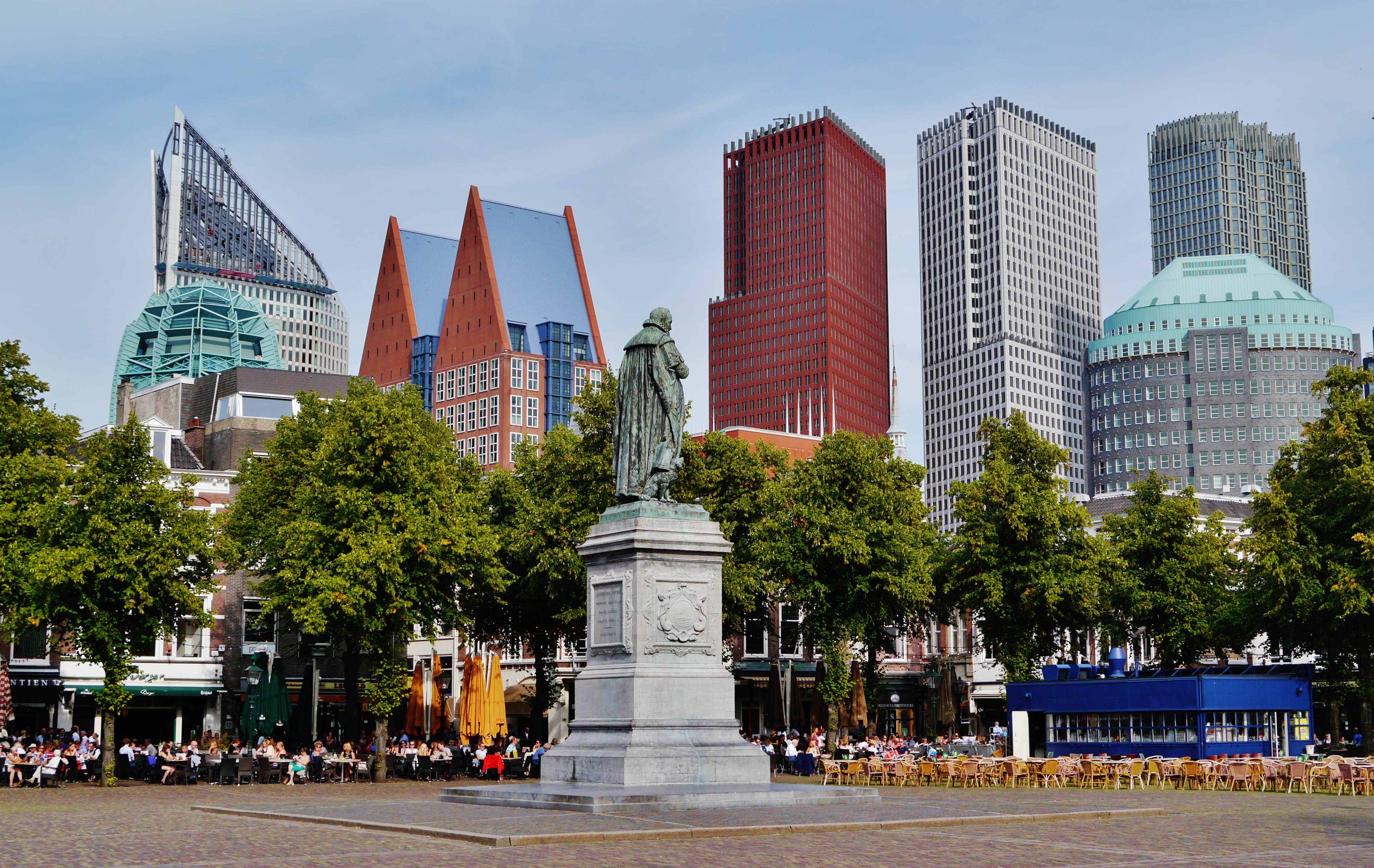
Government, law, and energy dominate the economy here. Shell's global headquarters sits in the city, and roughly 200 international organizations — including the ICC and ICJ — employ thousands of lawyers, diplomats, policy analysts, and support staff. That institutional density creates a job market that skews heavily toward international relations, legal work, public administration, and energy sector roles. Freelancers and remote workers can plug in, but the city doesn't have Amsterdam's startup scene; if you're not in law, policy, or a multinational, your options narrow quickly.
A one-bedroom in the center runs around $1,350/month — cheaper than Amsterdam but not by as much as you'd hope. Public transit is solid: trams and trains connect you to Rotterdam in 25 minutes and Amsterdam in under an hour. Healthcare follows the Dutch system, meaning you're required to buy private insurance (roughly €130–160/month) with a mandatory deductible around €385/year. English gets you surprisingly far given the expat population, but Dutch bureaucracy — registering at the gemeente, navigating DigiD, dealing with the Belastingdienst — is genuinely tedious and rarely available in English.
Summers are mild and grey more often than not; expect around 1,700 sunshine hours annually and wind off the North Sea that makes 15°C feel colder than it should. Scheveningen beach is legitimately good for a city beach — busy in summer, bleak and atmospheric in winter. The expat community is large and self-sustaining, built around the international organizations, which means English-language social infrastructure actually exists: clubs, networking events, international schools. Weekends involve cycling, the Markthal in Rotterdam, or museum-hopping. This city suits career-driven expats in law, diplomacy, or energy who want a livable, orderly base without Amsterdam's chaos.