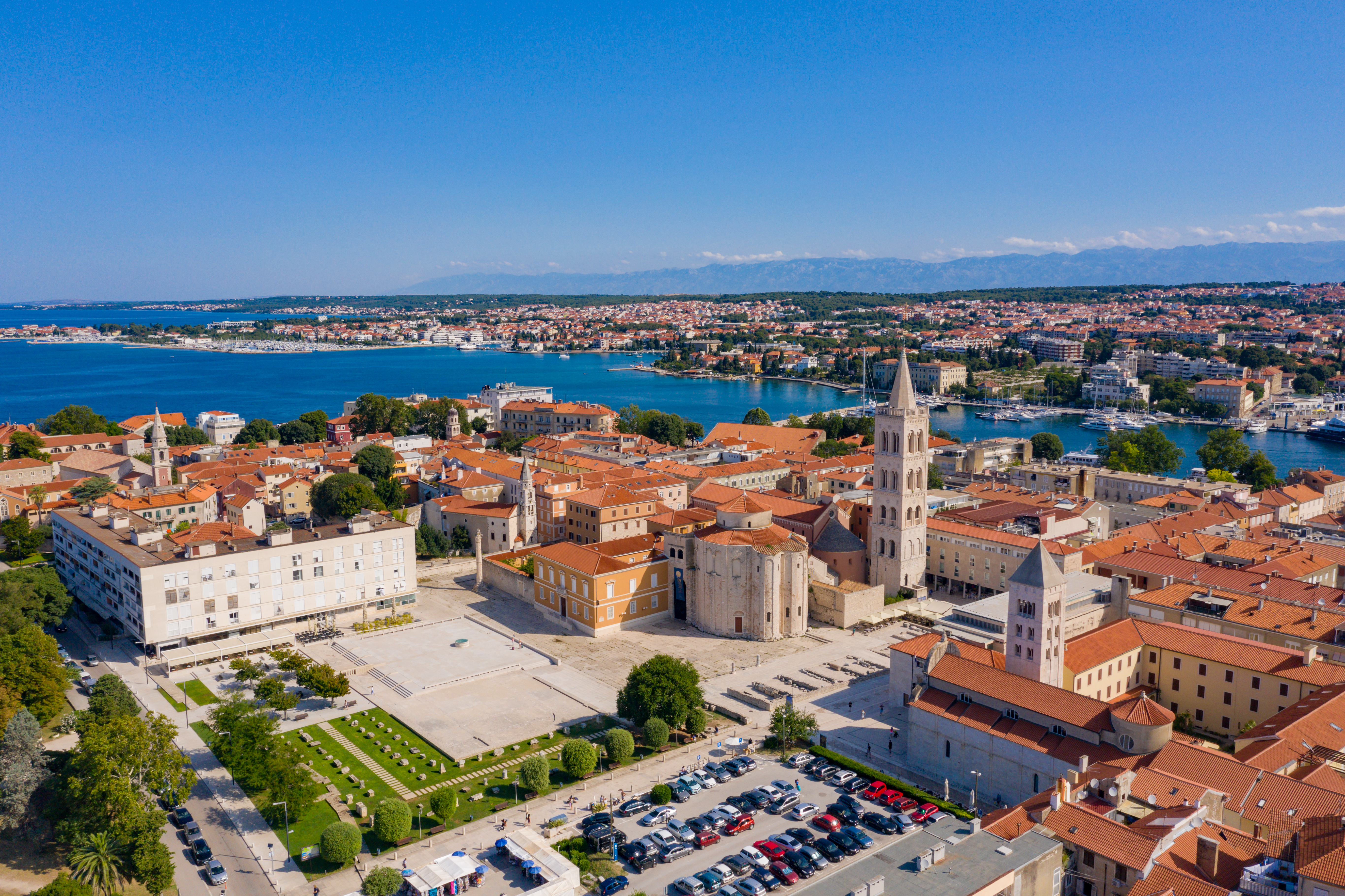
Zadar, Croatia Hero Image
Wikipedia Contributor, CC BY-SA

Zadar, Croatia

🌊 Coastal

Data updated Oct 8, 2026

Follows Croatia Residency Rules. Check Digital Nomad & Retiree Pathways →

📊 Scores

79
FIRE
71
Retiree
78
Digital Nomad

Best fit: FIRE / Geoarbitrage (score: 79)

Zadar sits on Croatia's Dalmatian coast, a small city of 71 thousand people at sea level where the Adriatic meets a subtropical climate. Summers are warm and dry, winters mild, and the sea stays swimmable well into autumn. The old town occupies a peninsula, but most newcomers settle across the water in Borgat, Arbanasi, or Diklo, where apartment blocks and family houses sit within a short walk of the shore. The timezone is Europe/Zagreb, and internet speeds average 150 Mbps, which makes remote work straightforward.

Renting a one-bedroom apartment in the city center runs $892/mo, while the same outside the center drops to $688/mo. Three-bedroom units follow the same pattern: $1,456/mo centrally and $1,128/mo further out. Beyond rent, a single adult spends about $780/mo, and a family of four about $2,600/mo. Utilities come to $181/mo, internet $40/mo, and a mobile plan $22/mo. A monthly public transport pass costs $45/mo and a gym membership $56/mo. Eating out is affordable: $15 for an inexpensive restaurant meal per person, $78 for a three-course mid-range dinner for two, and $2 for a cappuccino. The average local net salary is $1,389/mo, and the cost of living index sits at 50/100 against New York City. Budget, mid-range, and comfortable lifestyles for a single adult total $885/mo, $1,372/mo, and $1,753/mo respectively.

Safety is a strong point. The crime index is 22/100 and the safety index 78/100, so walking home at night rarely feels risky. Air quality is good at an index of 35. Healthcare quality is rated Good, and English is common in tourist areas, which eases the first weeks of settling in. The expat community is medium in size, with a steady flow of newcomers through the popular neighborhoods.

For stays beyond tourism, Croatia offers the Temporary Residence Permit (Privremeni boravak), which requires a minimum monthly income of $1,000/mo, and the Croatia Digital Nomad Visa, which requires $3,762/mo. Zadar Airport (ZAD) is 10 km away. With an overall expat score of 79/100, a FIRE score of 79/100, a retiree score of 71/100, and a digital nomad score of 78/100, the city suits remote workers, early retirees, and anyone chasing a low-cost coastal life without giving up reliable infrastructure.
Estimate the cost of moving to Zadar, Croatia

Get a free moving cost estimate for moving to Zadar, Croatia. Takes 10 seconds.

How much are you shipping?

When are you moving?

Powered by Sirelo. Free quotes from international movers.

🏚️ Cost of Living

💰 Budgets and Costs

$1,425/mo, one person, rent included
Selected: mid-range lifestyle

Zadar on a mid-range budget comes to about $1,425 a month for one adult, with $688 of that going to rent. Beyond rent the estimate covers $196 on groceries, $146 on dining out, $107 on entertainment and lifestyle, $243 on utilities and connectivity and $45.00 on transport.

Rent

$688/mo

1BR outside the centre

Groceries

$196/mo

Staples basket scaled to a full month

Dining out

$146/mo

10 inexpensive meals

Entertainment & lifestyle

$107/mo

gym, 2 cinema trips, 12 cappuccinos

Utilities & connectivity

$243/mo

utilities, mobile, internet

Transport

$45.00/mo

Monthly pass

Budgets (excl. rent)

Single person$737/mo

Excludes rent. The total above is all-in, rent included.

Estimates for one adult, built from this city's average prices and the usage shown for each tier. Your spending will differ with how often you eat out and where you live.

A 1BR in the center runs about $891.76/mo. If your income is in another currency, bank FX fees add up. A multi-currency account can cut that cost.

See low-fee transfers

We may earn a commission at no cost to you.

See how Zadar's cost of living compares with Zupanja

Be the first to report costs in Zadar

Share

🛡️ Safety & Crime

78
Safety Index

(Higher is safer)

22
Crime Index

(Lower is safer)

Zadar is genuinely safe for expats, with low violent crime and a relaxed Mediterranean atmosphere. Petty theft and pickpocketing occur occasionally in tourist areas and on public transport, but serious crime is rare. Avoid displaying expensive items and use standard urban awareness. The Old Town and waterfront are well-policed. No significant geopolitical concerns affect daily life. For a 30-65 American seeking a secure, affordable European base with good healthcare and EU stability, Zadar is a solid choice.

🏥 Healthcare

Good
Public Hospitals
Yes
Private Clinics
Yes
English-Speaking Doctors
Available

See how Zadar's healthcare compares with Zupanja

🌤️ Climate

Climate Zones
Subtropical
Summer Temp
27°C
Winter Temp
8°C
Humidity
65%
Air Quality Index
35
Annual Rainfall
1465 mm

Best Months

AprMaySepOct

Climate Notes

Zadar enjoys a Mediterranean climate with warm, dry summers (June-September) and mild winters, offering expats pleasant year-round weather with minimal rainfall and abundant sunshine.

💻 Digital Nomad

Avg Internet Speed
150 Mbps
Internet (monthly)
$40/mo
Coworking Availability
Moderate
Coworking Spaces Nearby
1
Digital Nomad Score
78/100

Community Notes

Zadar combines ancient history with vibrant coastal living, attracting digital nomads.

Coworking Spaces

NameNotes
COIN Coworking ZadarLocated in the heart of Zadar, COIN offers a modern and professional environment with various membership options. It's a great option for digital nomads seeking a central location and a collaborative community.
Regus ZadarA reliable global brand, Regus in Zadar provides serviced offices and coworking spaces with all the expected amenities. Located in a business-friendly area, it's a solid choice for those seeking a professional and established workspace.
Adriatic HubAdriatic Hub is a smaller, independent coworking space that offers a more intimate and community-focused atmosphere. It's located near the city center, making it easily accessible and a good option for those who prefer a less corporate environment.

Names, locations and hours can change. Check each space's website before you visit. Places from © OpenStreetMap contributors and Foursquare Open Source Places (Apache 2.0).

Planning to live in Zadar long-term? Croatia Digital Nomad Visa lets remote workers live legally with a minimum income of $3,762/month.

View full requirements →

Working remotely from Zadar? Nomad health insurance covers you across borders, month to month.

See nomad insurance

We may earn a commission at no cost to you.

See how Zadar's digital nomad life compares with Zupanja

🧳 Expat Life

English Proficiency
Common in Tourist Areas
Expat Community
Medium
Top Neighborhoods
Borgat, Arbanasi, Diklo
Banks Nearby
37
ATMs Nearby
102

Expat Life Notes

Zadar is becoming a major hub for digital nomads in Croatia, offering a coastal lifestyle at a better value than Split or Dubrovnik.

Pros

  • ✓ Stunning coast
  • ✓ Good airport links
  • ✓ Digital nomad visa friendly

Cons

  • ✗ Tourist overcrowding in summer
  • ✗ Limited winter activity

🏘️ Neighborhoods in Zadar

Areas of Zadar that expats often consider.

Conditions can change from one block to the next, and these descriptions are general guides, not safety assessments. Before choosing where to stay or live, check current travel advisories, talk to people who live there, and visit in person if you can.

Old Town (Stari Grad)

Historic, vibrant, tourist central

The heart of Zadar, with Roman ruins, Venetian architecture, and lively restaurants. Expect higher prices and noise, especially during peak season. Very walkable, but parking is a challenge. Great for short-term stays, but can feel crowded long-term.

Borik

Relaxed, beachside, family-friendly

Located north of the city center, Borik offers beaches, resorts, and a more laid-back atmosphere. Popular with families and tourists. Good bus connections to the center, but walking is a bit far. Quieter than Old Town, but still has amenities.

Diklo

Upscale, residential, coastal views

A more affluent area known for its villas and sea views. Quieter and more residential than Borik. Requires a car or bus to reach the city center. Offers a more peaceful lifestyle, but less English spoken.

Arbanasi

Quiet, residential, local feel

Historically an Albanian settlement, Arbanasi is a residential area with a strong local identity. Less touristy than other areas. Good bus connections to the center. Offers a glimpse into everyday Zadar life, but less English is spoken.

Page 1 of 2

Could living/working in Zadar cut years off your work life?

With a 1-bedroom in the center at $892/mo, your FIRE number here might be much lower than you think.

Calculate My FIRE Date →

🛂 Visa Options for Croatia

Many long-stay visas require proof of health insurance. Compare international health plans before you apply.

Compare health insurance

We may earn a commission at no cost to you.

🛂

Earning over $1,477/mo? You may qualify for a Croatia visa.

Answer 11 questions and get a personalized match in under 2 minutes.

Find My Visa →

More Cities to Consider instead of Zadar

FAQ

Frequently Asked Questions about Zadar

Click any question to expand the answer.

Zadar has a population of approximately 70,779 people.
A single person can expect to spend around $2,229 per month in Zadar, including rent. A 1-bedroom apartment in the city center costs approximately $892/month.
The nearest airport to Zadar is ZAD, approximately 9.5km away.
Zadar is considered relatively safe, with a safety index of 78.0. As with any city abroad, expats should research specific neighborhoods before committing to a location.
Zadar has an average internet speed of 150 Mbps. It is considered a well-established digital nomad destination.
Yes. Fiber and 4G are solid in the city center and most residential areas. Speeds typically 50–100 Mbps. Backup mobile hotspot recommended during rare outages. Cost: €20–30/month for home internet.
EU citizens get 90 days visa-free, then need residency. Non-EU citizens need a D visa (temporary residence permit) from the Ministry of Interior—requires proof of income (€500+/month), health insurance, and accommodation. Process takes 4–8 weeks and involves multiple office visits.
Yes, it empties significantly October–April. Tourist infrastructure closes, restaurants shutter, and the social scene shrinks. Locals remain, but expat community thins. If you need constant activity and nightlife, winter is rough. If you want quiet and lower prices, it's ideal.
Zadar is relatively affordable. Expect to pay around €700-€1200 per month for a one-bedroom apartment in a decent area like Borik or Diklo, plus another €500-€800 for groceries, utilities, and dining out. You can definitely live comfortably on a budget of €2000-€2500 per month.
English proficiency is quite good, especially among younger people and those working in tourism. You'll find it easy to communicate in restaurants, shops, and tourist areas. However, learning some basic Croatian phrases will greatly enhance your experience and be appreciated by locals.
Zadar is generally a very safe city with low crime rates. Petty theft can occur, especially in crowded tourist areas, so be mindful of your belongings. Violent crime is rare, and you can feel comfortable walking around most neighborhoods at night.
Borik and Diklo are popular choices for their beaches and quieter atmosphere, but they're a bit further from the city center. For a more central location, consider Puntamika or the old town (though it can be noisy). Arbanasi offers a more local feel.
Croatia has a public healthcare system, and expats with residency can access it. Private healthcare is also available, and many doctors speak English. The quality of care is generally good, but waiting times for certain procedures can be longer in the public system.
Opening a bank account usually requires a Croatian personal identification number (OIB) and proof of address. Several banks operate in Zadar, including Zagrebačka banka and Erste Bank. Be prepared to provide documentation and potentially have a translator if your Croatian isn't strong.
Zadar has a Mediterranean climate with hot, dry summers and mild, wet winters. July and August are the hottest months, with temperatures often reaching 30°C (86°F). Winters are generally mild, with average temperatures around 8°C (46°F), but it can get windy, especially with the Bura wind.
Zadar is a very walkable city, especially the old town. Public transportation is available, with buses connecting different neighborhoods. Taxis and ride-sharing services are also readily available. For exploring the surrounding areas, renting a car is recommended.
Yes, Zadar has a few coworking spaces, such as COIN Zadar, which offer a professional environment for remote workers. Some cafes also provide a good working atmosphere with reliable Wi-Fi. Check local listings for the most up-to-date options.
Services like Wise (formerly TransferWise) and Revolut are popular for international money transfers, offering competitive exchange rates and lower fees than traditional banks. Check the fees and exchange rates before making a transfer.
As a US citizen, you're still required to file US taxes even when living abroad. The Foreign Earned Income Exclusion (FEIE) can help you exclude a certain amount of your foreign-earned income from US taxes. Also, be aware of FBAR reporting requirements for foreign bank accounts.
Yes, retiring early in Zadar on $2500 USD per month is definitely feasible, especially if you own your accommodation or are willing to live slightly outside the city center. You'll be able to enjoy a comfortable lifestyle with money left over for travel and leisure.
For stays longer than 90 days, US citizens typically need to apply for a temporary residence permit. This can be based on various grounds, such as employment, self-employment, or retirement income. The process involves submitting an application to the local police station and providing supporting documentation.

Share This Guide