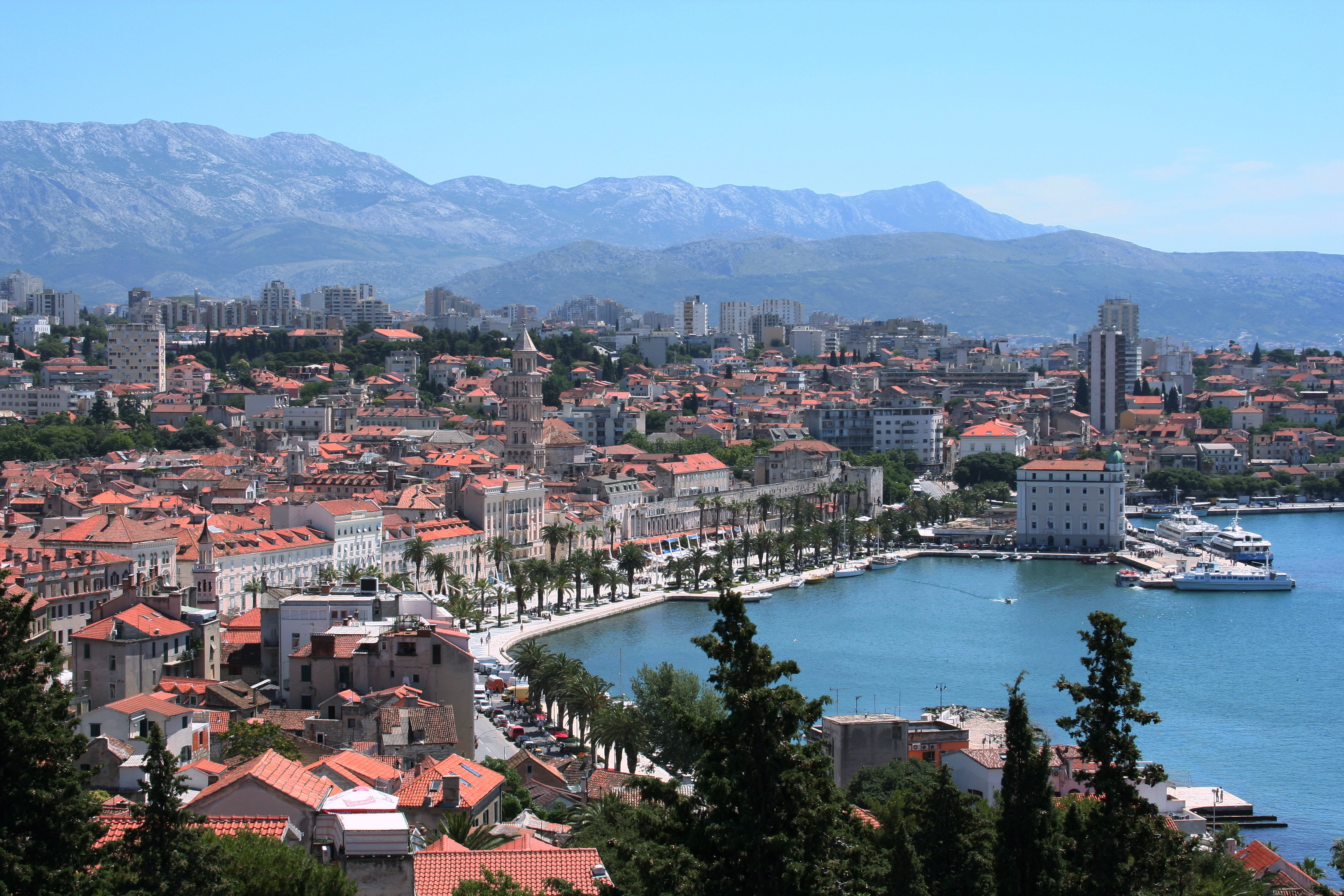
Split, Croatia Hero Image
Wikipedia Contributor, CC BY-SA

Split, Croatia

🌊 Coastal

Data updated Oct 8, 2026

Follows Croatia Residency Rules. Check Digital Nomad & Retiree Pathways →

📊 Scores

78
FIRE
73
Retiree
80
Digital Nomad

Best fit: Digital Nomad (score: 80)

Split sits on Croatia's Dalmatian coast, a Mediterranean city where the sea meets a shoreline that rests at 0 m above sea level and the climate stays mild through the year. The old town grew up around Roman ruins, and the city remains compact enough that daily life often unfolds on foot. Expats tend to settle in Meje and Varoš, two neighborhoods that put residents close to the water, the historic core, and the everyday rhythm of a city of 161 thousand people. The timezone is Europe/Belgrade, so mornings here align with much of Central and Eastern Europe.

Renting a one-bedroom apartment in the city center runs $1,011/mo, while the same outside the center drops to $720/mo. A three-bedroom in the center costs $1,921/mo, and outside the center it falls to $1,305/mo. Utilities add $210/mo, internet $41/mo, and a mobile phone plan $20/mo. A monthly public transport pass is $39/mo and a gym membership $62/mo. For a single adult, monthly costs excluding rent come to $912/mo, and a family of four spends $3,238/mo excluding rent. Budget, mid-range, and comfortable tiers for a single adult, rent included, land at $940/mo, $1,461/mo, and $1,942/mo. The average monthly net salary locally is $1,609/mo, and the cost of living index sits at 55/100 against New York City at 100. Eating out is modest: an inexpensive restaurant meal is $17 per person, a mid-range three-course meal for two is $74, and a cappuccino is $3.

Safety is a strong point, with a safety index of 80/100 and a crime index of 20/100, where lower is safer. Air quality is good, with an index of 35 where lower is better. Healthcare quality is rated Good, giving residents a dependable baseline for routine care and emergencies. The overall expat score is 80/100, and the city also scores 78/100 for FIRE, 73/100 for retirees, and 80/100 for digital nomads. English proficiency is common in tourist areas, and the expat community is medium in size, which means newcomers can find company without losing the local feel.

For longer stays, Croatia offers the Temporary Residence Permit (Privremeni boravak), which requires a minimum monthly income of $1,000/mo, and the Croatia Digital Nomad Visa, which requires a minimum monthly income of $3,762/mo. The nearest airport is SPU, 12 km away, making arrivals and departures straightforward. With average internet speeds of 100 Mbps, Split works well for remote professionals, early retirees, and anyone drawn to a Mediterranean city where the cost of living remains well below many Western European capitals. The mix of affordable rent outside the center, a safe environment, and a manageable pace makes it a practical base for those who want sea air without a punishing budget.
Estimate the cost of moving to Split, Croatia

Get a free moving cost estimate for moving to Split, Croatia. Takes 10 seconds.

How much are you shipping?

When are you moving?

Powered by Sirelo. Free quotes from international movers.

🏚️ Cost of Living

💰 Budgets and Costs

$1,519/mo, one person, rent included
Selected: mid-range lifestyle

Split on a mid-range budget comes to about $1,519 a month for one adult, with $720 of that going to rent. Beyond rent the estimate covers $208 on groceries, $168 on dining out, $113 on entertainment and lifestyle, $271 on utilities and connectivity and $39.00 on transport.

Rent

$720/mo

1BR outside the centre

Groceries

$208/mo

Staples basket scaled to a full month

Dining out

$168/mo

10 inexpensive meals

Entertainment & lifestyle

$113/mo

gym, 2 cinema trips, 12 cappuccinos

Utilities & connectivity

$271/mo

utilities, mobile, internet

Transport

$39.00/mo

Monthly pass

Budgets (excl. rent)

Single person$799/mo

Excludes rent. The total above is all-in, rent included.

Estimates for one adult, built from this city's average prices and the usage shown for each tier. Your spending will differ with how often you eat out and where you live.

A 1BR in the center runs about $1010.5/mo. If your income is in another currency, bank FX fees add up. A multi-currency account can cut that cost.

See low-fee transfers

We may earn a commission at no cost to you.

See how Split's cost of living compares with Zagreb

Be the first to report costs in Split

Share

🛡️ Safety & Crime

80
Safety Index

(Higher is safer)

20
Crime Index

(Lower is safer)

Split is genuinely safe for expats, with low violent crime and a relaxed Mediterranean atmosphere. Petty theft and pickpocketing occur mainly in tourist zones (Riva waterfront, old town) and during summer crowds—standard precautions suffice. Avoid displaying valuables and use registered taxis or Uber. The city has no significant gang activity, drug-related violence, or geopolitical instability affecting daily life. Neighborhoods like Bačvice and Varoš are residential and secure. For a 30-65 American considering relocation, Split presents minimal safety concerns and ranks well for expat comfort.

🏥 Healthcare

Good
Public Hospitals
Yes
Private Clinics
Yes
English-Speaking Doctors
Available

See how Split's healthcare compares with Zagreb

🌤️ Climate

Climate Zones
Mediterranean
Summer Temp
30°C
Winter Temp
6°C
Humidity
58%
Air Quality Index
35
Annual Rainfall
1573 mm

Best Months

MayJunJulAug

Climate Notes

Mediterranean climate with very dry, hot summers.

💻 Digital Nomad

Avg Internet Speed
100 Mbps
Internet (monthly)
$41/mo
Coworking Availability
Abundant
Coworking Spaces Nearby
1
Digital Nomad Score
80/100

Community Notes

Split is a picturesque coastal city thriving with digital nomads.

Coworking Spaces

NameNotes
Amplitudo CoworkingLocated in the heart of Split, near Diocletian's Palace, Amplitudo offers a modern and bright workspace with 24/7 access, meeting rooms, and a community-focused atmosphere, making it ideal for digital nomads seeking a central location.
Regus SplitRegus offers a reliable and professional coworking environment in Split, with multiple locations providing flexible workspace solutions, business support services, and a global network, suitable for established remote workers.
Saltwater WorkspaceSituated near the beach, Saltwater Workspace provides a relaxed and inspiring atmosphere with ergonomic chairs, fast internet, and a community of like-minded individuals, perfect for those seeking a balance between work and leisure.
Wespa SpacesLocated a bit outside the city center, Wespa Spaces offers a quiet and affordable coworking option with dedicated desks, meeting rooms, and a supportive community, making it a good choice for budget-conscious remote workers.

Names, locations and hours can change. Check each space's website before you visit. Places from © OpenStreetMap contributors and Foursquare Open Source Places (Apache 2.0).

Planning to live in Split long-term? Croatia Digital Nomad Visa lets remote workers live legally with a minimum income of $3,762/month.

View full requirements →

Working remotely from Split? Nomad health insurance covers you across borders, month to month.

See nomad insurance

We may earn a commission at no cost to you.

See how Split's digital nomad life compares with Zagreb

🧳 Expat Life

English Proficiency
Common in Tourist Areas
Expat Community
Medium
Top Neighborhoods
Meje, Varoš
Banks Nearby
55
ATMs Nearby
129

Expat Life Notes

Coastal beauty with vibrant nomad scene. safe and historic.

Pros

  • ✓ Stunning coast
  • ✓ Safe center
  • ✓ English widespread

Cons

  • ✗ Tourist crowds in summer

🏘️ Neighborhoods in Split

Areas of Split that expats often consider.

Conditions can change from one block to the next, and these descriptions are general guides, not safety assessments. Before choosing where to stay or live, check current travel advisories, talk to people who live there, and visit in person if you can.

Varoš

Historic charm, local living

Located just west of the Diocletian's Palace, Varoš offers a more authentic, less touristy experience. It's a mix of locals and expats, with narrow streets and traditional stone houses. Walkable, but parking can be a challenge. Quieter than the city center, but still close to amenities.

Radunica

Picturesque, traditional, community-focused

East of the Palace, Radunica is known for its charming architecture and strong sense of community. It's a bit quieter than the main tourist areas, but still very central. Expect a mix of locals and expats who appreciate the neighborhood's character. Walkable, but parking is limited.

Meje

Upscale, residential, sea views

Located on the Marjan hill peninsula, Meje is an affluent residential area with stunning sea views. It's quieter and more secluded than the city center, popular with families and retirees. Good for those seeking peace and quiet, but requires a car or bus for easy access to amenities.

Bačvice

Beachy, lively, family-friendly

Famous for its sandy beach, Bačvice is a popular area with families and tourists. It's lively, with plenty of cafes and restaurants. Expect higher prices and more crowds during the summer months. Walkable and well-connected by public transport.

Page 1 of 2

Could living/working in Split cut years off your work life?

With a 1-bedroom in the center at $1011/mo, your FIRE number here might be much lower than you think.

Calculate My FIRE Date →

🛂 Visa Options for Croatia

Many long-stay visas require proof of health insurance. Compare international health plans before you apply.

Compare health insurance

We may earn a commission at no cost to you.

🛂

Earning over $1,477/mo? You may qualify for a Croatia visa.

Answer 11 questions and get a personalized match in under 2 minutes.

Find My Visa →

More Cities to Consider instead of Split

FAQ

Frequently Asked Questions about Split

Click any question to expand the answer.

Split has a population of approximately 160,577 people.
A single person can expect to spend around $2,526 per month in Split, including rent. A 1-bedroom apartment in the city center costs approximately $1011/month.
The nearest airport to Split is SPU, approximately 11.8km away.
Split is considered relatively safe, with a safety index of 80.0. As with any city abroad, expats should research specific neighborhoods before committing to a location.
Split has an average internet speed of 100 Mbps. It is considered a well-established digital nomad destination.
Basic Croatian helps significantly for healthcare, bureaucracy, and building local relationships. English works in tourist areas and with younger locals, but government offices and traditional services often require Croatian or a translator.
For budget-conscious expats, consider neighborhoods like Sućidar or Mejaši, offering more affordable apartments further from the city center. Bačvice is popular for its beach proximity and lively atmosphere, while Marjan provides quieter, upscale living with stunning views. The city center (Riva area) is the most expensive but offers unparalleled access to amenities.
Split is generally a very safe city with low crime rates, especially violent crime. Petty theft, like pickpocketing, can occur in crowded tourist areas, particularly during the peak summer season, so be mindful of your belongings. Overall, expats report feeling very safe walking around Split at any time of day or night.
Split has a Mediterranean climate with hot, dry summers and mild, wet winters. Expect temperatures to soar in July and August, often exceeding 30°C (86°F), while January and February are the coldest months, averaging around 8°C (46°F). Spring and autumn offer pleasant temperatures and fewer crowds, making them ideal times to visit or live in Split.
Internet connectivity in Split is generally reliable, with decent speeds available throughout the city. Fiber optic internet is increasingly common, offering faster and more stable connections, especially in newer buildings. Check with your landlord or internet provider about specific speeds before committing to a rental.
Yes, you can find English-speaking doctors and dentists in Split, particularly in private clinics. State-run healthcare facilities may have fewer English speakers, so it's advisable to research and identify private practitioners who cater to expats. Many clinics also offer translation services to assist with communication.
Opening a bank account in Split typically requires your passport, proof of address (rental agreement or utility bill), and your Croatian tax identification number (OIB). Some banks may also request proof of income or employment. It's best to visit a few different banks to compare their fees and services before making a decision.
Americans can stay in Croatia visa-free for 90 days within a 180-day period. For longer stays, you'll need to apply for a temporary residence permit, often based on reasons like retirement, self-employment, or owning property. The process can be bureaucratic, so consider consulting with an immigration lawyer to navigate the requirements.
Split has a good public transportation system, primarily consisting of buses that cover most of the city and surrounding areas. The city center is easily walkable, but buses are convenient for reaching more distant neighborhoods. Consider purchasing a monthly bus pass for cost savings if you plan to use public transport frequently.
Split has a growing expat community, although it's smaller than in some other European cities. You can find expat groups and social events through online platforms like Facebook and InterNations. Engaging with local Croatians is also a great way to integrate and experience the culture.
Groceries in Split are generally affordable, especially if you shop at local markets and supermarkets like Konzum or Tommy. Dining out can range from budget-friendly pizzerias to more expensive seafood restaurants. Expect to pay around €10-€20 for a meal at a mid-range restaurant.
As a US citizen, you're still required to file US taxes even when living abroad. You may be able to exclude a portion of your foreign earned income using the Foreign Earned Income Exclusion (FEIE) or claim a Foreign Tax Credit. Consult with a tax professional specializing in expat taxes to ensure compliance.
Yes, a retirement income of $2,500 per month can allow for a comfortable lifestyle in Split, especially if you're willing to live slightly outside the city center. This budget should cover rent, utilities, groceries, healthcare, and some leisure activities. You may need to adjust your spending habits compared to the US, but it's definitely achievable.
While learning some basic Croatian phrases is always appreciated, you can generally get by in Split speaking English, especially in tourist areas and when dealing with younger people. Many restaurants, shops, and tourist services have English-speaking staff. However, learning some Croatian will greatly enhance your experience and integration into the local culture.
Yes, Split offers several coworking spaces catering to digital nomads and remote workers. Spaces like Amplitudo and ScaleHub provide a professional environment with reliable internet, meeting rooms, and networking opportunities. Prices vary depending on the membership type and amenities offered.
Croatians value strong personal relationships and can be more direct in their communication style than Americans. Be prepared for a slower pace of life and a greater emphasis on enjoying meals and socializing. Patience is key when dealing with bureaucracy, and punctuality may not always be strictly observed.

Share This Guide