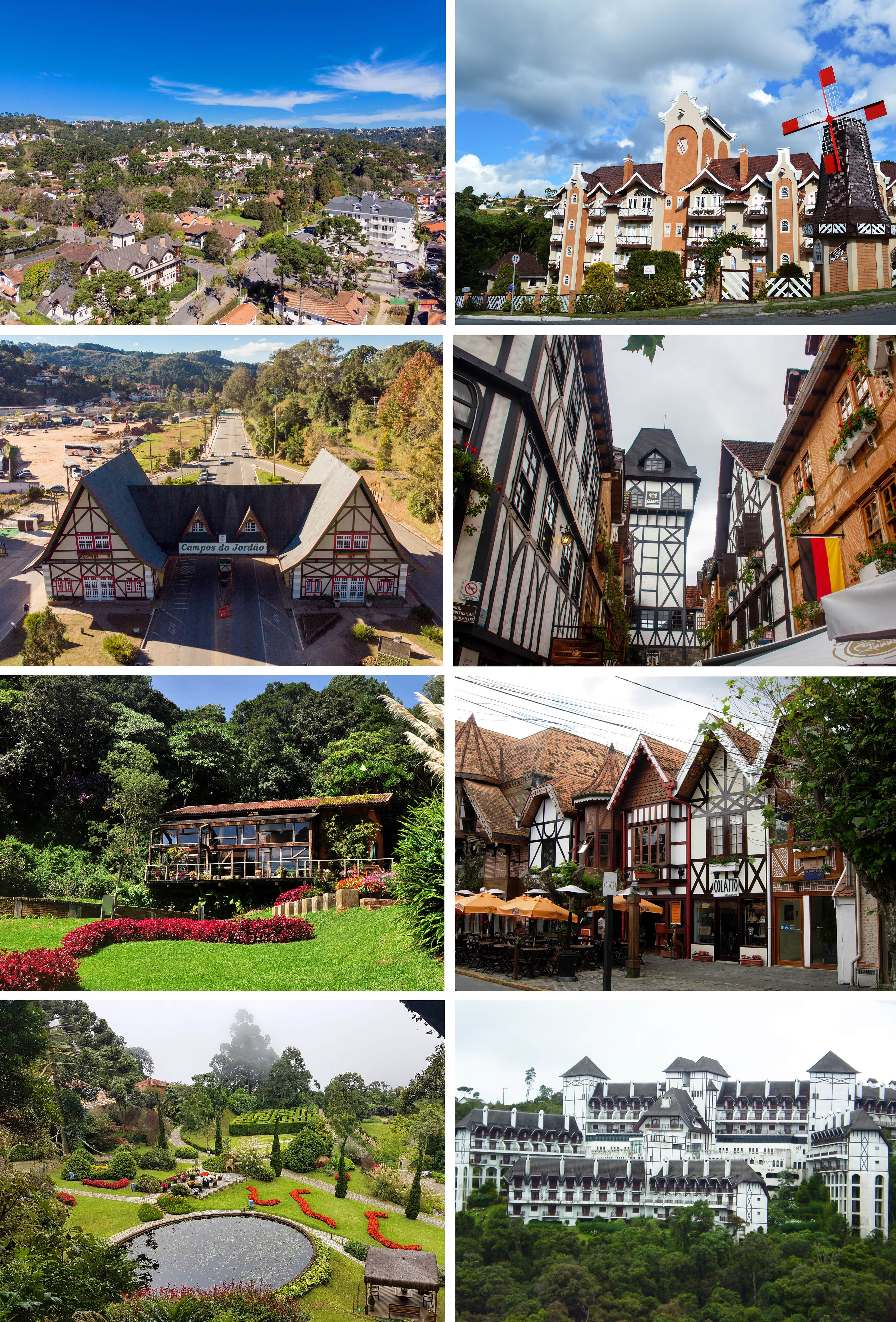
Campos do Jordão sits at 1628 meters above sea level in the temperate highlands of southeastern Brazil, a mountain town of 37 thousand people where the air stays crisp and the seasons are distinct. Expats tend to cluster in Capivari and Jaguaribe, neighborhoods that offer a mix of chalet-style architecture, forested streets, and easy access to the town's cafes and restaurants. The climate is temperate, meaning cool, damp winters and mild summers, a rarity in a country often associated with tropical heat, and it draws visitors and residents alike for its alpine character.
Living here is remarkably affordable by international standards, though local wages tell a different story. A one-bedroom in the city centre rents for $753/mo, while outside the centre it drops to $550/mo; a three-bedroom in the centre runs $1,506/mo, and outside the centre $1,100/mo. A single adult can live on a budget tier of $1,400/mo, a mid-range tier of $2,100/mo, or a comfortable tier of $3,200/mo, with monthly costs excluding rent at $650/mo. Utilities run $75/mo, a mobile plan $9/mo, a public transport pass $38/mo, and a gym membership $17/mo, while an inexpensive restaurant meal costs $7, a three-course meal for two at a mid-range spot costs $23, and a cappuccino is $1. The average monthly net salary is $282/mo, a figure that makes local employment challenging for most newcomers, but the gap between costs and income is precisely why expats with external earnings find the town appealing.
Safety and healthcare are solid, though not flawless. The safety index sits at 55/100, with a crime index of 45/100, meaning the town is moderately safe, with typical petty crime concerns but no major red flags. Healthcare quality is rated as good, and the air quality index is 35, which is clean and beneficial for those with respiratory sensitivities. English proficiency is limited, so learning Portuguese goes a long way, and the expat community is small, which can be a plus for those seeking integration over a bubble.
For those looking to stay long-term, Brazil offers two clear visa paths. The VITEM XIV retirement visa requires a minimum monthly income of $2,000/mo, while the Brazil Digital Nomad Visa requires $1,500/mo, both accessible to foreigners with verifiable income. Getting here involves flying into a major Brazilian hub and then taking a winding road or bus up the mountains, though no specific airport is named here. This town suits retirees and FIRE-minded individuals who value a cool climate, low costs, and a quiet pace, as reflected in its retiree score of 64/100 and FIRE score of 81/100, while digital nomads may find the slower internet at 35 Mbps and limited English a slight drawback, given a digital nomad score of 58/100. Overall, the expat score of 79/100 speaks to a welcoming, affordable, and scenic base for those who prioritize nature and simplicity over urban buzz.