Overview
Getting the income documentation story straight before applying
The temptation with a self-employment route is to treat income proof as a formality, something you assemble the week before your consulate appointment. That's backwards here. Because local work isn't permitted under this visa, the entire premise of your application rests on convincing an officer, and later the people who process your paperwork inside Brazil, that your money originates outside the country and will keep doing so. A stack of invoices from the last two months reads very differently than eighteen months of consistent client relationships with dates, amounts, and payment methods that line up with your bank records.
Pension income doesn't count toward this category, so if you're picturing a retirement-adjacent version of this move funded by a monthly check, this isn't your visa. It's built for people actively billing clients, and the paperwork should look like that: contracts, invoices, maybe a business registration in your home country if you have one, and a income history that doesn't spike suspiciously right before filing. Staged-looking deposits, three consecutive months of round numbers appearing right when you started thinking about Brazil, get more scrutiny than sparse but longstanding proof.
One thing that trips up freelancers with mixed income streams: if part of your income is truly self-employment and part is investment returns or a side pension, don't blend them into one number. Separate the self-employment income cleanly and let it stand on its own, because that's the category this visa is actually evaluating. A no local bank account requirement means you can keep operating through your US accounts, which is convenient, but it also means the burden of making that income legible falls entirely on your documentation rather than on a Brazilian institution vouching for you. Build the paper trail like someone else has to believe it cold, because they do.
Eligibility Requirements
Requirements Checklist
Tax Information
What Residency in Brazil Puts on the Table
Brazil taxes residents on worldwide income, full stop, and the trigger for becoming one is either spending more than 183 days in Brazil within a 12-month period or simply holding a valid permanent residency status, which most autônomo visa holders acquire directly. Once that line is crossed, everything you earn anywhere becomes reportable to the Receita Federal: US remote salary, freelance client payments routed to a US bank, dividends from a Schwab account, rental income from a house you still own in Ohio, gains from selling stock. None of it stays quietly offshore just because the money never touches Brazil.
The rate structure is progressive and not particularly generous once you clear the entry bands. Annual income up to BRL 60,000 (about $12,000) is exempt, the next slice up to BRL 88,200 (about $17,600) is taxed at 15%, and everything above that lands in the top bracket at 27.5%. Freelance revenue and remote salary both fall into this schedule through the monthly carnê-leão self-assessment system, which means you're filing and paying as the income arrives, not waiting for a single annual return. Foreign-source dividends, including anything paid out by US brokerage holdings, get folded into that same ordinary-income treatment at rates up to 27.5%, with no special carve-out for the fact that the company issuing them is American.
Capital gains run on their own tiered schedule, separate from the income brackets: 15% on gains up to BRL 5 million (roughly $1 million), climbing to 17.5%, then 20%, then 22.5% on anything above BRL 30 million. Brazil also just ended nearly three decades of dividend tax exemption. As of 1 January 2026, dividends paid by the same Brazilian company to the same resident individual in excess of BRL 50,000 a month (about $10,000) face a 10% withholding, credited against a new minimum effective tax that phases in between BRL 600,000 and BRL 1.2 million of total annual income. If your investment exposure is US-based rather than Brazilian equities, this change barely touches you, but it's worth knowing the exemption you may have read about in older guides no longer exists.
There is no reduced-rate program for foreign residents attached to this visa, and nothing resembling a flat-tax expat regime softens the numbers above. You pay what a Brazilian citizen pays: the same brackets, the same carnê-leão obligations, the same capital gains tiers. If a new incentive scheme surfaces after this writing, confirm its scope with a Brazilian tax advisor before assuming it applies to you, because none of the current framework carves out special treatment for remote workers or retirees.
The IRS Angle You Cannot Skip
None of the above replaces a US return. Citizens and green card holders file on worldwide income regardless of where they live, and the 2026 Foreign Earned Income Exclusion caps out at $132,900, applying only to earned income such as remote salary or freelance revenue. To claim it you need either the Physical Presence Test, which demands 330 full days outside the United States in a 12-month window, or Bona Fide Residence, which asks you to show genuine intent to live in Brazil indefinitely rather than just log days. Either test works here since the typical qualifying method is open, and a housing exclusion of roughly $18,000 can stack on top for qualifying rent in Brazil. What the exclusion never touches: dividends, capital gains, rental income, pensions, and Social Security, all of which remain fully taxable on your US return no matter how long you've lived abroad.
This is where the Foreign Tax Credit does the real work, and in Brazil it does quite a lot. A 27.5% top marginal rate on earned income exceeds the US top bracket in plenty of cases, so credits claimed under IRC Section 901 generally erase double taxation once income clears the exclusion limit, and they do the same job for capital gains and dividends taxed locally. Brazil has no income tax treaty with the United States, so there's no treaty text to lean on for sourcing rules or reduced withholding rates. Every credit gets built from scratch on Form 1116, basket by basket, and that absence of a treaty is exactly why retirees drawing 401(k), IRA, or Social Security income need to run the numbers carefully instead of assuming the credit lines up automatically. Foreign pensions, Roth distributions, and Social Security payments all get taxed by Brazil as ordinary income up to 27.5% with no treaty protection reducing that exposure, which for Roth holders in particular can mean paying local tax on money the US never intended to tax again.
The visa itself does not force you into a Brazilian bank account, but most freelancers and retirees open one anyway to receive local client payments or to hold investments through a corretora, and once combined foreign account balances cross $10,000 at any point during the year, FinCEN Form 114 becomes mandatory. FATCA's Form 8938 threshold runs alongside it, and Brazilian institutions already report account data to the IRS under the FATCA intergovernmental agreement, so there's no quiet corner to hide a forgotten account in. Miss the FBAR filing and the non-willful penalty for 2026 runs around $16,700 per violation, adjusted annually, which is not a number worth testing.
Three decisions tend to go sideways in the first year: picking the wrong FEIE qualifying test and discovering too late that Bona Fide Residence required documentation you never built, treating carnê-leão as optional instead of the monthly obligation it is for pension and distribution income, and opening a corretora account without realizing it now counts toward the FBAR threshold alongside any checking account back home. A first-year filing that accounts for all three properly tends to run somewhere between $1,500 and $3,000 in professional fees, and paying it once is considerably cheaper than unwinding a missed election or a late FBAR after the fact.
Living in Brazil
COL Index vs NYC
25.6
Monthly Cost (excl. rent)
$552
1BR Rent (City Center)
$381
Safety Index
35.5
Healthcare Index
59.1
Quality of Life Index
117.9
Time Zone
UTC-05:00
Capital
Brasília
Population
212.6M
Official Languages
Portuguese
Avg Internet Speed
80 Mbps
Public Transit Quality
Fair
With a budget covering rent and living costs, you'd need roughly $933/mo for a comfortable single-person lifestyle in Brazil.See how far your money goes →
🏙️ Best Cities in Brazil for Freelancers
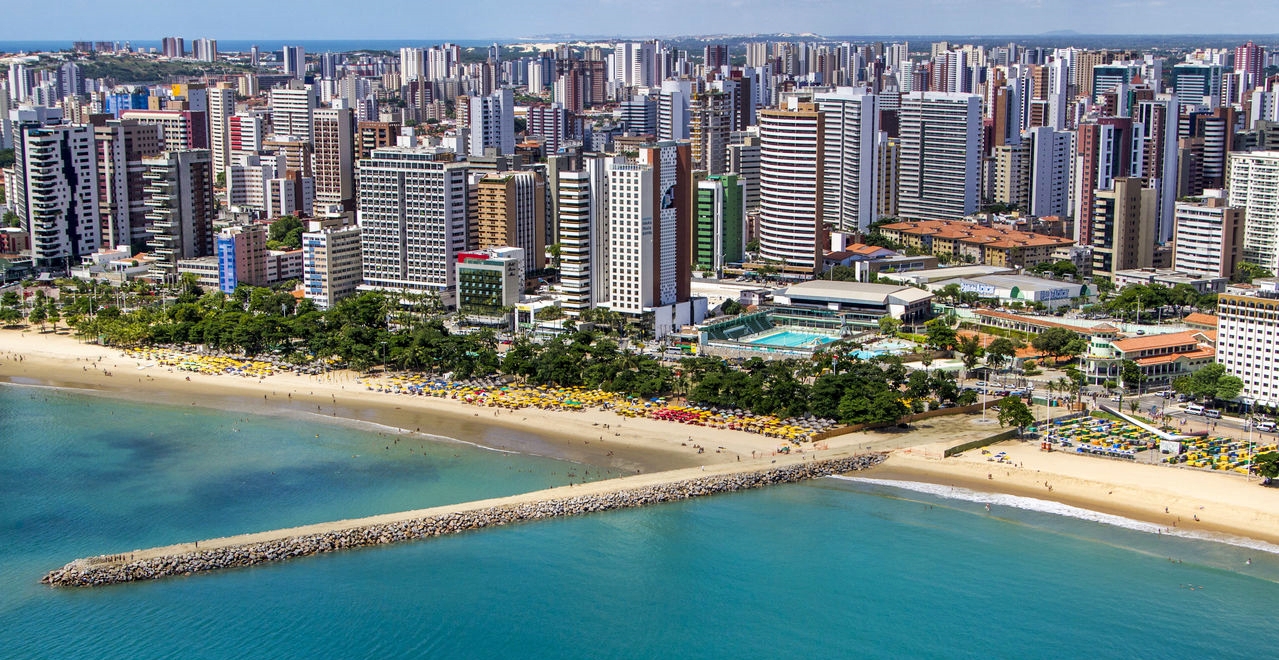 ✦ 75
✦ 75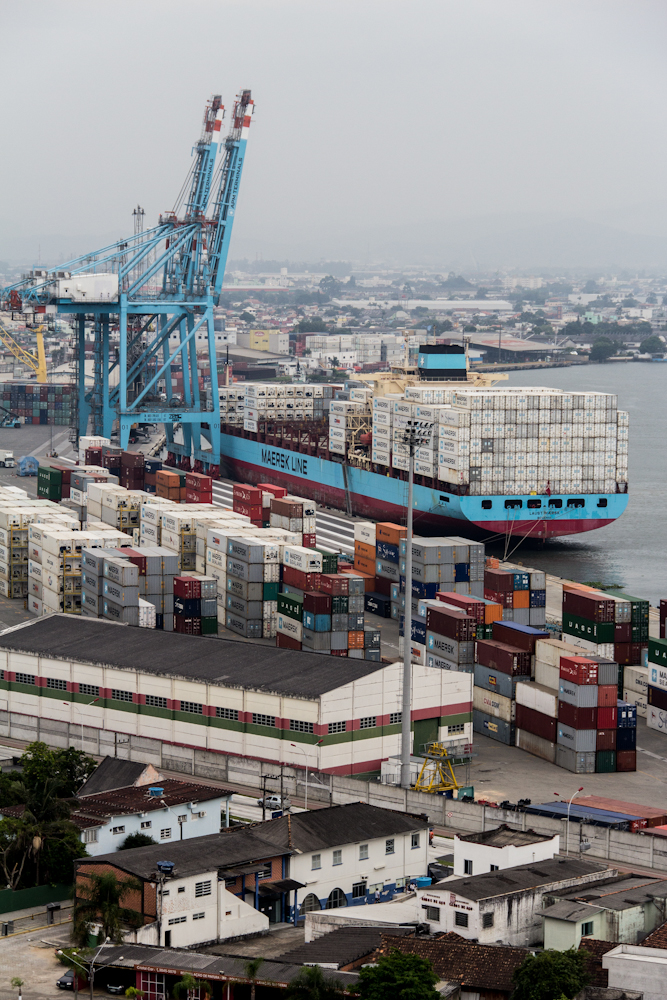 ✦ 75
✦ 75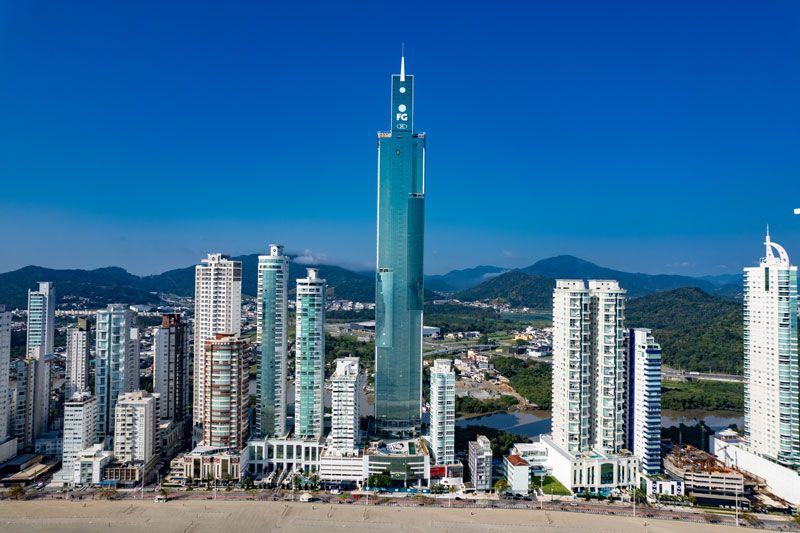 ✦ 76
✦ 76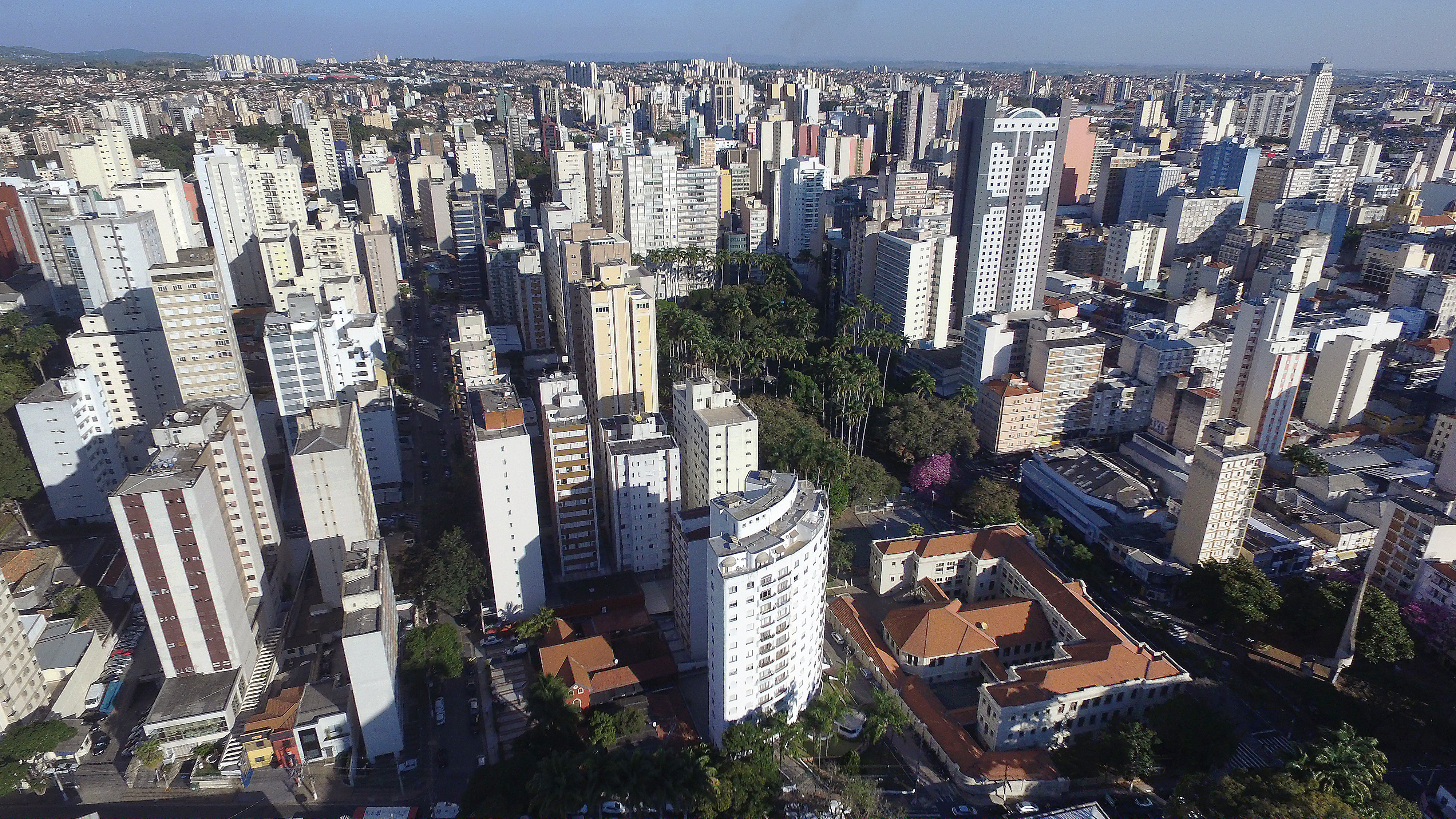 ✦ 82
✦ 82 ✦ 82
✦ 82The housing and address problem people underestimate
Health insurance is required here, and it needs to actually function once you're on the ground, not just satisfy a checkbox at the consulate. A global travel policy that technically lists Brazil in its coverage area but excludes routine outpatient care is a common trap. Insurers sell these as if they're equivalent to local-market plans, and they aren't. What consulates and, later, local authorities want to see is coverage that behaves like it would if you got sick on a Tuesday and needed a normal appointment, not an emergency evacuation clause.
Because there's no local bank account requirement, people assume the housing side is equally loose, and that's where the mistake happens. A short-term Airbnb booking used as address proof reads as a tourist arrangement, not a residence. If your paperwork is trying to establish that you're moving somewhere to live and work for an extended period, a rental agreement or lease, even one arranged remotely before you land, does more work than a hotel confirmation ever will. Landlords who deal with foreign renters sometimes want proof of the very visa you're trying to get before signing anything, which creates a chicken-and-egg problem worth solving early rather than at the last minute.
The pattern that works: secure a longer-term lease or sublet arrangement, even informally, before your final application push, and keep documentation of it even if the immigration process doesn't ask for a lease at every stage. Housing proof tends to resurface later in ways people don't expect, and having it settled removes one more variable from a process that already has enough of them.
The gap between the visa and the resident's life you actually want
Getting the visa approved is the easy part of this particular story, comparatively. No interview, no medical exam, and no apostille requirement keep the front end lighter than a lot of comparable programs elsewhere. What that light front end doesn't tell you is that the visa stamp and the local resident credential are not the same document, and the space between them is where people lose weeks they didn't budget for.
Local work is off the table under this category regardless, so the practical friction isn't about earning locally. It's about the small, ordinary transactions of daily life, signing a lease in your own name, setting up a phone plan, dealing with anything that asks for local identification, that quietly depend on finishing the registration process after you arrive rather than on the visa itself. People plan their move around the visa approval date and then discover the actual settling-in period runs longer, because the administrative step that converts entry authorization into a usable local credential takes its own time and isn't something you can rush by being organized in advance.
Since no local bank account is required going in, some applicants assume their local footprint stays minimal the whole way through. It doesn't. The absence of a banking requirement at the visa stage says nothing about what you'll eventually need once you're trying to function day to day. Treat the arrival period as its own project with its own timeline, separate from the visa approval, and you won't be caught assuming you're further along than you are.
What renewal actually asks of you, versus what people assume
This visa renews, which is the detail people fixate on and then extrapolate from in ways that aren't always warranted. It's easy to hear "renewable" and mentally file this under the familiar staircase: temporary status, then permanent, then citizenship, each step a formality if you just keep showing up. Brazil's self-employed category doesn't necessarily work that way, and the honest answer is that the route from this specific visa to a more permanent status isn't the well-trodden path some other residence categories offer.
What that means practically: don't structure your five-year plan around an assumed upgrade that may not exist in the form you're picturing. Instead, treat each renewal as its own event requiring the same income documentation rigor as your first application, because the underlying test, foreign-sourced self-employment income, continuous and provable, doesn't go away just because you've already been living there a while. If your long-term goal is permanent residency or citizenship specifically, get current, country-specific confirmation from an immigration attorney based in Brazil before you build your five-year plan around this category. Rules in this space get restructured more often than people expect, and a route that looked like a staircase two years ago can turn out to be a loop.
The decision against the more obvious alternative
For someone earning in the $4,000 to $10,000 a month range from US clients, the honest alternative isn't usually another Brazilian visa, it's a digital nomad category somewhere else entirely, Portugal or Spain being the ones most people compare against by default. The appeal there is usually a clearer, more publicized path toward permanent status and a European base. What Brazil offers instead is administrative lightness on the front end, no interview, no apostille, no FBI background check requirement, against a long-term picture that's murkier on paper.
If your priority is minimizing paperwork now and you're comfortable treating the next few years as an open question rather than a fixed track, this visa fits. If what you actually want is a documented, well-understood staircase toward a passport, the more bureaucratic European alternative may cost you more up front and give you more certainty later, which is a trade a lot of people underweight when they're focused on getting through the initial application instead of on where they'll be in year four. Dependents can come along under this category, which matters if you're weighing a family move rather than a solo one, and that's worth putting on the same side of the ledger as the paperwork question rather than treating it as a separate decision entirely.
Neither choice is obviously correct. It depends on whether you're optimizing for ease of entry or certainty of destination, and that's a judgment call that has more to do with how you plan the next five years of your life than with which country's consulate asks for less paperw
Work Permissions
Application Steps
- 1
Research
Verify all requirements for this visa type and country
- 2
Gather documents
Obtain all required documents (passport, financial statements, health insurance, etc.)
- 3
Complete application
Fill out the official application form
- 4
Submit application
Submit all documents to the appropriate consulate or online portal
- 5
Pay fees
Complete payment of application and visa fees
- 6
Attend interview
If required, attend any scheduled interviews
- 7
Wait for decision
Processing times vary from weeks to months
- 8
Travel and activate
Once approved, travel to the country and complete any activation requirements
Frequently Asked Questions
Click any question to expand the answer.
Ready to Apply?
Work with trusted visa specialists who handle the paperwork so you can focus on your move.
Get help with this visa →* We may earn a commission if you apply through our link
At a Glance
Last verified: June 8, 2026