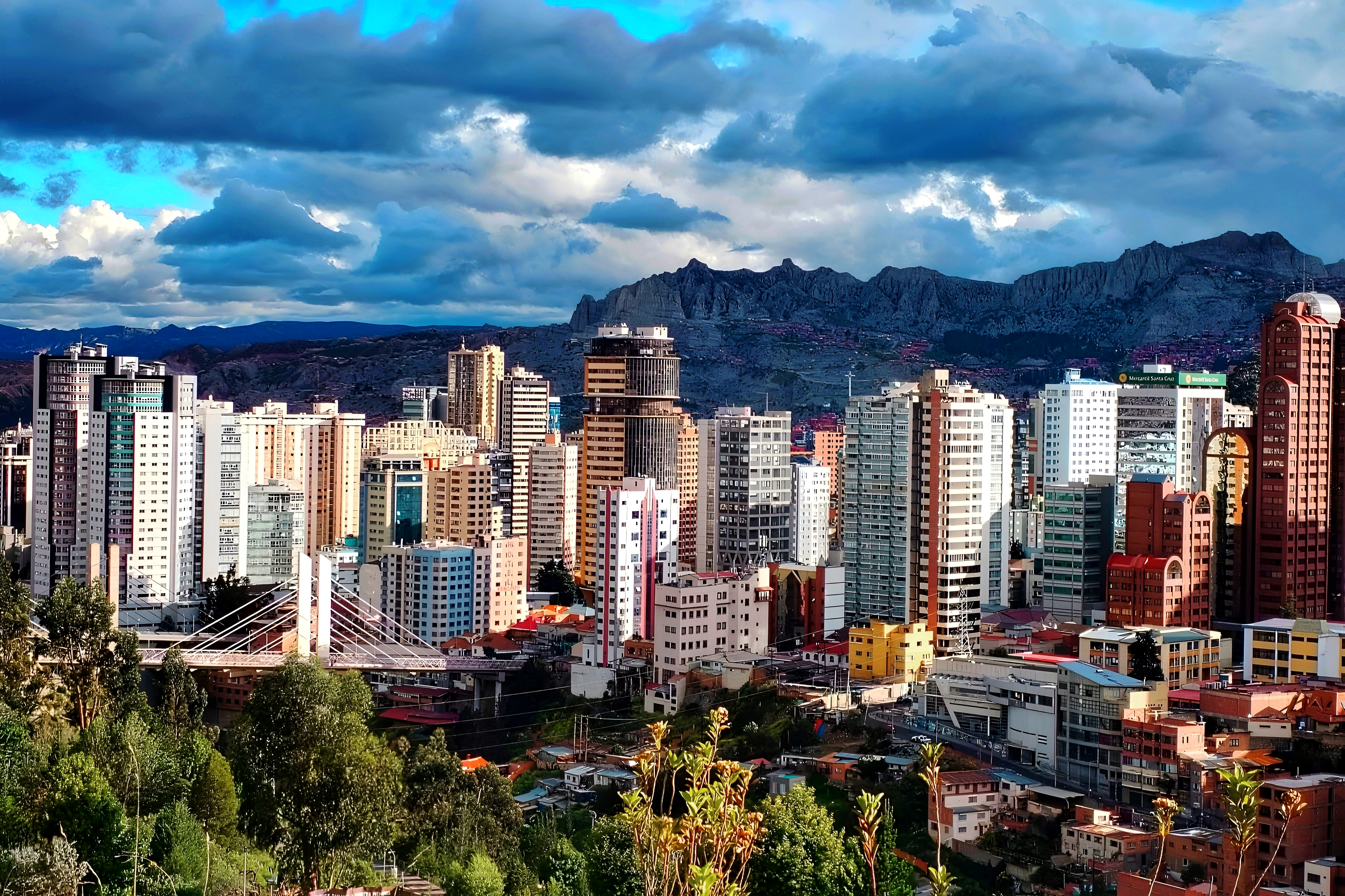
La Paz sits high in the Bolivian Andes at 3640 m above sea level, a city where the air is thin and the weather is classified as polar. The population is 756 thousand, and the timezone is America/La_Paz. Expats tend to settle in Sopocachi and Zona Sur, two areas that offer a balance of local life and access to services. The climate is polar, so expect cold conditions, especially at night, and pack accordingly.
Living costs in La Paz are low by global standards. A 1-bedroom apartment in the city centre rents for $273/mo, while outside the centre it drops to $182/mo. For a 3-bedroom, city centre rent is $419/mo, and outside the centre it is $322/mo. Utilities run $25/mo, internet $20/mo, and a mobile phone plan $15/mo. A monthly public transport pass costs $18/mo, and a gym membership is $17/mo. Eating out is cheap: an inexpensive restaurant meal is $2 per person, a mid-range restaurant meal for two with three courses is $10, and a cappuccino is $2. Excluding rent, a single person spends about $323/mo, and a family of four about $1,185/mo. Budget, mid-range, and comfortable tiers for a single adult, rent included, come to $266/mo, $379/mo, and $503/mo respectively. The cost of living index is 18/100 with New York City at 100. Local wages are modest: average monthly net salary is $270/mo.
Safety in La Paz is moderate. The safety index is 61/100, and the crime index is 39/100, where lower is safer. Air quality has an index of 65, where lower is better. Healthcare quality is poor, and English proficiency is limited. The expat community size is medium, so you will find some compatriots but should expect to use Spanish in daily life.
For stays, Bolivia offers the Specific Purpose Visa (Visa de Objeto Determinado), which requires a minimum monthly income of $300/mo, and the Bolivia Digital Nomad Visa. The nearest airport is LPB, 14 km away. The city scores 74/100 overall for expats, 76/100 for FIRE, 41/100 for retirees, and 60/100 for digital nomads. With average internet speed of 35 Mbps, remote work is feasible. La Paz suits budget-conscious expats, FIRE followers, and digital nomads who can handle altitude and cold, while retirees may find the healthcare and climate challenging.