Difficulty
Moderate
Duration
12 months
Overview
Bolivia advertises an active Bolivia Digital Nomad Visa, but the Bolivian government has not publicly specified any exact financial thresholds in US dollars or bolivianos. There is no disclosed minimum monthly income, no stated savings floor, and no defined investment requirement in the official data available. That means someone earning $3,800/month from a mix of rental income and ETF dividends cannot yet rely on a concrete number to know if they qualify, and there is no published guidance on whether Social Security, pensions, or purely passive income streams are accepted as proof of solvency. Application and renewal fees are also not specified, which makes precise budgeting impossible at this stage.
On presence and stay patterns, the published requirements list the visa duration as not specified and do not disclose whether it is renewable or for how long. There is no published physical presence requirement in days per year and no maximum consecutive absence, so long-term planners cannot yet map out a 183‑day strategy between Bolivia and another country based on official thresholds. Without numbers, you should assume that overstaying or serial border runs on related statuses will be scrutinized, but there is no formal day-count rule you can plan around from public sources.
Pathways from this digital nomad status into Bolivian permanent residency or citizenship are also not specified. There is no confirmed number of years to PR, no years-to-citizenship timeline, and no confirmation that time on this visa even counts toward later status. For someone thinking in 10‑year horizons, that uncertainty is material: at present the visa reads more as a medium-term stay tool than a documented on-ramp to a Bolivian passport, and any PR or naturalization strategy would have to be revisited once official rules are published.
On paperwork and friction, the Bolivia Digital Nomad Visa scores a low 1/5 on bureaucracy in the published data, and several common pain points are explicitly absent. Apostilles are not required, there is no FBI background check requirement, no mandated medical exam, and no interview requirement disclosed. Health insurance, a local bank account, and specific employment evidence are all marked not specified, which suggests the government has not yet locked in or publicized a definitive checklist. That removes some of the usual costs and delays, but the real trade-off is uncertainty rather than red tape volume.
This setup makes the most sense if you want to test Bolivia for 6–12 months on remote income of $3,000–$6,000/month and you are comfortable operating without a clearly published PR or tax-residency pathway. It is a poor fit if you need a documented, rule-based five-to-ten-year immigration and tax plan with a guaranteed route to permanent residency or a second passport before moving significant capital or a family.
Local tax picture
Bolivia’s tax system for individuals is not publicly specified in the published data for this visa, and there is no confirmed designation here as territorial, worldwide, or remittance-based. Because of that, there is no authoritative public rule in this dataset on whether a remote salary from a foreign company, ETF dividends in a US brokerage, or pension distributions from abroad are taxed in Bolivia for digital nomads. The tax regime type is marked not specified, so any assumptions about exemptions for foreign-source income would be guesses rather than confirmed law.
Capital gains treatment on foreign investments is also not specified. There is no disclosed rule here on whether gains from selling index funds or ETFs held in a foreign brokerage are exempt as foreign-source, taxed at a particular rate, or only taxed if remitted. For FIRE migrants planning to harvest gains, that missing piece means you cannot model after-tax returns in Bolivia from public visa data alone, and you would need local legal or tax guidance to know if those gains become taxable once you are present in the country for part of a year.
Tax-residency triggers are not disclosed in this dataset either. There is no published 183‑day rule or alternative threshold, no indication of automatic residency on visa grant, and no separate registration requirement connected specifically to this digital nomad status. Likewise, local filing requirements such as obtaining a Bolivian tax ID, annual return deadlines, or whether non-residents must file at all are not specified for this visa. The tax treaty status with the US is marked unknown, so there is no confirmed public information here about relief on double taxation of salaries, dividends, or pensions, and no data on a totalization agreement.
For US Citizens and Green Card Holders
For US persons using the Bolivia Digital Nomad Visa, US tax rules apply in full regardless of how Bolivia ultimately classifies foreign-source income. Foreign Earned Income Exclusion (FEIE) on Form 2555 can potentially shelter up to $126,500 of earned income for 2024, but only from salary or self-employment income from actual work; it does not cover ETF dividends, capital gains, pension distributions, or Social Security. Because tax-residency thresholds and physical-presence expectations in Bolivia are not publicly specified for this visa, many users will rely on the Physical Presence Test (330 full days abroad in any 12‑month period) rather than attempting the more subjective Bona Fide Residence Test.
Foreign Tax Credit (FTC) on Form 1116 will still be relevant if Bolivia ends up taxing some portion of your income. The FTC only offsets US tax when you pay Bolivian income tax on the same stream and the local effective rate is above zero. With the Bolivian tax regime for this visa not specified here, you cannot assume credits will be available on remote salary, rental income, or capital gains; if Bolivia does not tax those inflows, the FTC gives you no additional shelter and you remain fully taxed by the US on them.
FBAR (FinCEN 114) obligations remain independent of Bolivian rules. If your combined foreign financial accounts — including any Bolivian bank or brokerage account you open for practical living, even though this visa does not explicitly require one — exceed $10,000 at any point in the year, you must file an FBAR. FATCA Form 8938 may also apply at higher thresholds, and non-willful FBAR penalties start around $10,000 per violation. In practice, a US CPA experienced in expat taxation plus a Bolivia-based tax advisor familiar with foreign residents will be the right combination; spending roughly $1,500–$3,000 in year one on that pairing often pays for itself via optimized FEIE/FTC choices and avoiding missteps on registration and reporting.
Nationality notes
Any nationality can apply for the Bolivia Digital Nomad Visa in principle, as the published data lists nationality restrictions as applying to all rather than a defined subset. In practice, applicants from sanctioned or diplomatically strained states such as Iran, Syria, North Korea, Cuba, and Russia can encounter consular hurdles or banking compliance issues that make actual approval and setup difficult even when not formally barred. Before compiling a full application package, confirm current eligibility and any extra conditions directly with Bolivia’s Dirección General de Migración or the Bolivian Ministry of Foreign Affairs, as they manage and interpret the underlying rules for this visa.
Eligibility Requirements
Bolivia’s Digital Nomad Visa is, in principle, open to all nationalities; the nationality restrictions field is explicitly set to “all.” That means a US, Canadian, Australian, British, EU, or Japanese passport holder is eligible on the same formal terms as a Brazilian, Indian, or South African applicant. In practice, citizens of countries under heavy sanctions or strained diplomatic relations—currently including Iran, North Korea, Syria, and to varying degrees Cuba and Russia—can run into serious friction at the consular and banking level even when the law does not formally exclude them.
The public data for this visa does not specify different procedures or timelines by nationality. There is no published rule that, for example, Group 1 nationals apply on arrival while Group 3 nationals must pre‑apply at a consulate. Nor are there officially disclosed extra background‑check steps for particular passports. That said, Bolivian consulates already use different visa groups for tourists (some nationalities get visa‑free entry, some need prior approval), and it is reasonable to expect similar behind‑the‑scenes scrutiny patterns on a longer‑term digital nomad application, even though these are not spelled out publicly.
Where you apply and how long it takes will likely depend on consular practice rather than the black‑letter rules. A US or Canadian applicant often works through the Bolivian consulate in their country of residence, while an Indian or Nigerian applicant might find that only certain regional consulates accept long‑stay applications. Because processing time is not disclosed and difficulty is not specified, you should treat consular email replies and local immigration lawyers’ experience as more reliable guides than generalized online checklists.
The competent authority for status and rule changes is Bolivia’s Ministry of Foreign Affairs (Cancillería) working together with the immigration service (Migración). For anyone holding a passport from a sanctioned, high‑risk, or diplomatically complicated state, a short paid consultation with a Bolivian immigration lawyer—expect roughly $150–$300 for an initial review—is often the difference between a realistic strategy and an application that never gets accepted for processing.
Even for US, EU, and other low‑friction passports, lists and internal criteria can change without broad public notice. Before assembling a full document pack or making non‑refundable travel commitments, confirm your specific consulate’s current stance directly and, if anything looks inconsistent, get that double‑checked by a local practitioner who deals with Bolivian residence permits weekly rather than relying solely on aggregator sites.
Min Age
18 yrs
Duration
12 months
Max 0% from local sources
Requirements Checklist
0 of 13 documents in hand
0%These take the longest, so start them first.
Request these while the slow items are in progress.
You only need these on the day you submit.
How and where to apply
Applications should be submitted to the Bolivian consulate or embassy in your home country or country of residence. Some consulates may offer online application portals; confirm the specific application method with your nearest Bolivian diplomatic mission. If you hold a visa-exempt nationality, you may be able to enter Bolivia visa-free for up to 90 days and apply for the digital nomad visa in-country through the immigration authority (DIGEMIG); confirm this option with the consulate before arrival.
Tax Information
Local tax regime and what it means for remote income
Bolivia taxes on a primarily source‑based system, but the Digital Nomad Visa itself has no publicly specified tax regime. The official facts you have list the tax regime type as not specified and the tax treaty status with the US as unknown. In practice, Bolivian taxes focus on income generated within Bolivia; foreign‑source income, such as US‑source salary, dividends, and rental income, has historically not been the main target of the Bolivian system. However, there is no dedicated, codified “digital nomad” exemption like Portugal’s old NHR or Georgia’s Virtual Zone.
For the income streams that matter to FIRE practitioners and remote workers:
- Salary from a US, Canadian, or EU employer for work physically performed while you are in Bolivia can be argued to have Bolivian source, but how this will be treated for Digital Nomad Visa holders is not publicly confirmed.
- US rental income, ETF or mutual fund dividends, interest from US bonds, and distributions from 401(k)s or IRAs are foreign‑source. Existing Bolivian law has not been clearly updated to address how those will be treated for digital nomads, and there is no published guidance that they are categorically exempt or fully taxable.
- Social Security and foreign pension income recognition is listed as not specified, so there is no reliable public rule on whether those streams are taxed favorably, normally, or ignored.
Capital gains on foreign investments
If you sell index funds or ETFs in a US brokerage while living in Bolivia on this visa, the treatment of that gain is not publicly specified for this category. Bolivia does not publish a clear, visa‑specific capital gains rule that says, for example, “foreign securities gains are exempt” or “taxed at X%.” the published requirements leaves the tax regime type and capital gains treatment unaddressed, so you cannot safely assume that (a) gains are exempt under territorial rules or (b) taxed at a particular rate. Anyone with substantial portfolio turnover should have a Bolivian tax advisor classify those gains under current domestic law rather than rely on digital‑nomad blog interpretations.
Tax residency triggers and registration
Tax residency rules for Digital Nomad Visa holders are not specified in the facts you have. Bolivia has general tax‑residency concepts—often linked to habitual residence or spending more than a set threshold of days in‑country (183 days is common worldwide), but there is no explicit, publicly confirmed rule tying this particular visa class to automatic tax residency on day 1.
Practically, three layers matter:
- Day count: There is no disclosed threshold in the Digital Nomad Visa documentation. You should assume that long stays (over roughly half the year) are likely to put you in Bolivian tax‑resident territory under general law, but this is not publicly confirmed.
- Tax ID: There is no specified requirement in the visa rules to obtain a Bolivian tax ID (NIT) upon arrival, but banks or landlords could still require it if you open accounts or run local business operations.
- First return: No deadline for a first income declaration is disclosed for this visa, and the tax status deadline field is not specified.
This uncertainty is crucial if you plan to spend 200+ days per year in Bolivia while earning significant foreign‑source income. Without clear rules, you need individualized advice rather than assuming the Digital Nomad Visa automatically shelters foreign income.
US expat obligations while in Bolivia
US citizens on the Bolivia Digital Nomad Visa remain fully taxable by the IRS on worldwide income, regardless of whether Bolivia taxes that income.
Key mechanisms:
- Foreign Earned Income Exclusion (FEIE, Form 2555): You can exclude up to $126,500 of earned income for 2024 if you meet either the bona fide residence test or the physical presence test (330 full days in a 12‑month period outside the US). This applies to earned income only: remote salary, self‑employment, consulting. It does not cover ETFs, dividends, rental income, capital gains, Social Security, or 401(k) distributions.
- Foreign Tax Credit (FTC, Form 1116): If Bolivia taxes some of your income (for example, remote work deemed Bolivian‑source), those taxes can offset US tax on the same income. If Bolivia ends up not taxing your foreign‑source income at all, you will have little or no FTC to use; you will pay full US tax on that foreign passive income.
- FBAR (FinCEN 114) and FATCA (Form 8938): If you hold more than $10,000 collectively in foreign financial accounts (Bolivian bank accounts, brokerage, fintech wallets) at any point in the year, FBAR is required. Form 8938 kicks in at higher thresholds ($50,000 single / $100,000 married living in the US; more if you are considered resident abroad). Non‑willful FBAR penalties start at $10,000 per missed year.
For many nomads and FIRE retirees in Bolivia, FEIE will matter if they continue active remote work, while FTC will only matter if Bolivia actually taxes their income. FBAR and FATCA become relevant if you open local accounts or hold significant cash or investments in Bolivia.
Treaty uncertainty with the US
Tax treaty status with the US is marked as unknown for this visa category. Bolivia and the United States do not have a widely cited comprehensive income tax treaty or totalization agreement analogous to what exists between the US and many OECD countries. Without a clear treaty framework:
- There is no assured preferential treatment of US‑source dividends, interest, or pension distributions in Bolivia.
- There is no automatic relief from dual Social Security contributions if you were to earn Bolivian‑source employment income.
- US‑side treatment of Bolivian taxes falls back on general FTC rules without treaty overrides.
For a US person with $5,000/month in foreign passive income, this means you cannot rely on a treaty to reduce either Bolivian or US tax; any benefit will come from domestic Bolivian law and standard US mechanisms.
First‑year practical steps and advisory
Because the Digital Nomad Visa’s tax regime and deadlines are not specified, first‑year compliance is about structuring your affairs conservatively:
- Before arrival, map your expected day count in Bolivia; if you plan more than ~180–200 days, assume you could be considered tax resident under general rules and plan for that outcome.
- On arrival, ask a local accountant whether you should obtain a NIT and register with the Servicio de Impuestos Nacionales; procedures and expectations change faster than government English‑language pages.
- If you open a Bolivian bank account, maintain year‑end and peak‑balance records for FBAR and Form 8938.
Given the lack of publicly confirmed rules, two advisors are critical: a US CPA focused on expat work (for FEIE vs. FTC optimization, FBAR, and FATCA) and a Bolivian tax advisor who understands foreign‑income scenarios. The $1,500–$3,000 spent in year one on these two professionals usually pays for itself through avoided penalties and more efficient elections, especially if you are moving six‑figure portfolios or $80,000+ in annual remote income through a system that has not fully documented how it treats digital nomads.
Living in Bolivia
COL Index vs NYC
25.2
Monthly Cost (excl. rent)
$479
1BR Rent (City Center)
$352
Safety Index
47.6
Healthcare Index
42.1
Quality of Life Index
98.7
Time Zone
UTC-04:00
Capital
Sucre
Population
11.7M
Official Languages
Aymara, Guaraní, Quechua, Spanish
Avg Internet Speed
107 Mbps
Public Transit Quality
Poor
With a budget covering rent and living costs, you'd need roughly $831/mo for a comfortable single-person lifestyle in Bolivia.See how far your money goes →
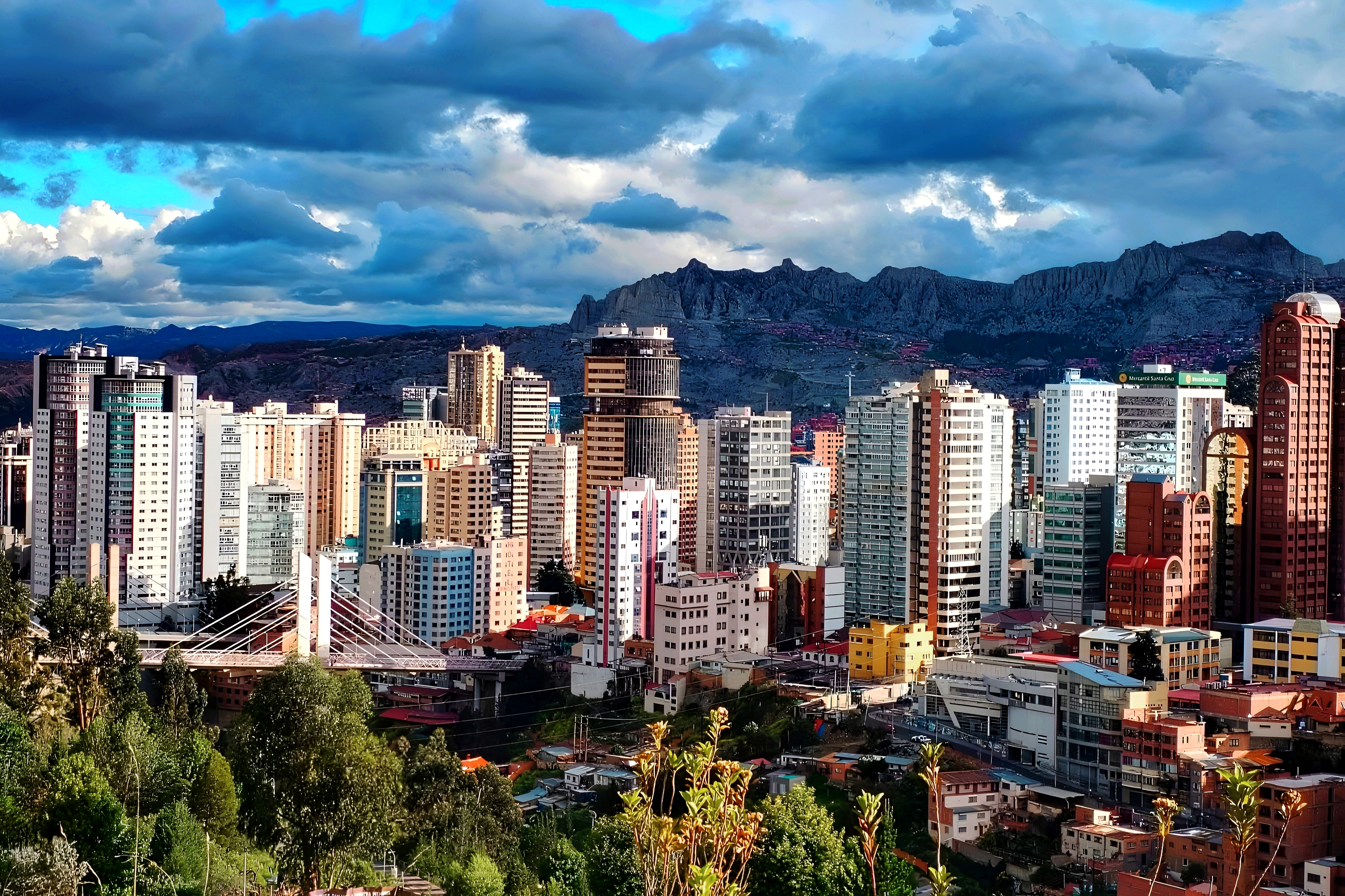
🏙️ Best Cities in Bolivia for Digital Nomads


The housing and accommodation requirement and how people get it wrong
The requirement itself is simple: something covering your intended stay, a lease, a hotel reservation, or an invitation letter. Where people go wrong is in the mismatch between what they book and what they're actually planning to do.
The most common error is booking a short hotel stay, ten or fourteen nights, to satisfy the paperwork, when the visa itself is granted for twelve months. That gap reads as incomplete rather than flexible. If you don't have a lease yet because you haven't landed and don't want to commit to a neighborhood sight unseen, that's reasonable, but the accommodation proof needs to at least gesture at the full period, either through an extended reservation, a longer-stay booking platform confirmation, or an invitation letter from someone hosting you for a defined stretch.
The opposite mistake is signing a full twelve-month lease from abroad, sight unseen, to make the paperwork airtight. This solves the visa problem and creates a housing problem. Rental markets in Bolivian cities aren't uniform, and a lease signed remotely, often through a broker with limited incentive to represent your interests, can lock you into a unit or a neighborhood that doesn't fit once you're actually living day to day. Better to arrive on a shorter confirmed booking, use the first few weeks to find the right place, then handle any local registration or lease paperwork once you're on the ground and can see what you're signing.
Invitation letters occupy a middle ground and consulates vary in how much detail they want here, address, relationship to the host, sometimes a copy of the host's own residency or property documents. Confirm this with your specific consulate rather than assuming a template letter will clear review, since this is one of the documents most often bounced back for missing detail rather than rejected outright.
What actually happens after you land
Getting the visa approved and having a usable permit in Bolivia are two different milestones, and the gap between them is where a surprising number of people lose momentum. The approval you receive from the consulate abroad gets you into the country; it does not, by itself, complete your status once you're there.
If you're a visa-exempt national, there's a separate track worth understanding before you commit to either path: entering visa-free and applying in-country through the immigration authority, DIGEMIG, rather than processing everything through a consulate beforehand. This can save a round of document shipping and translation delays, but it also means arriving without a resolved status, running against your 90-day visa-free window while your application is under review. Anyone considering this route should confirm directly with a consulate that their nationality qualifies and that DIGEMIG is currently accepting this category in-country, because immigration procedure at the entry-and-apply level shifts more often than the consulate-based process does.
Either way, once your visa or permit is granted, treat the following weeks as an administrative project, not a formality. Health insurance coverage needs to remain valid and match what you submitted, since Bolivia isn't going to independently verify your policy stayed active if it's never checked again. There's no medical exam required, which removes one appointment from the list, but plan for whatever local registration steps apply to your permit type before assuming you're fully settled just because you cleared entry. The mistake people make here is relaxing after the approval email, when the approval is a checkpoint, not the finish line.
What the long-term path requires in practice vs on paper
The permit runs twelve months and is renewable, which sounds simple until you plan around it. Renewable doesn't mean automatic, and the practical question, how far in advance to start the renewal file, what changes if your income situation has shifted, whether a gap between permits creates a problem, deserves more attention than the word "renewable" implies on its own.
Anyone treating this visa as a bridge toward permanent residency should be careful about assuming a clean, published escalator from digital nomad status to something more permanent. Digital nomad visas, in Bolivia and elsewhere, are frequently designed as a standalone category rather than a stepping stone, and immigration authorities can and do change the rules connecting one status to another with little warning. If long-term residency in Bolivia is the actual goal rather than a nice-to-have, it's worth having a conversation with an immigration attorney in-country about which residency category actually leads there, rather than assuming this visa quietly converts.
What you can plan around with more confidence is the renewal cycle itself. Building your income documentation habits in year one, keeping consistent bank statements, retaining copies of client contracts, maintaining continuous insurance coverage, pays off directly when renewal comes around, because you're not reconstructing a year of financial history from scratch under a deadline. Treat the first twelve months as the file you'll need again, not just the file you needed once.
The judgment call against the most obvious alternative
For a lot of people weighing Bolivia, the real comparison isn't against another country's digital nomad visa on a feature-by-feature basis. It's against staying in a country with a denser, more forgiving support network for people doing exactly this, Mexico or Colombia being the usual candidates, where the visa process is more heavily trodden and the expat community has already solved most of the logistical questions you'd otherwise be solving alone.
That density is real and it's worth pricing honestly. A more established digital nomad market means more property managers used to renting to foreigners, more accountants who've seen your exact tax situation before, more people who can tell you which neighborhood in which city actually works for someone who needs a stable internet connection and a reasonable commute to nothing in particular. Bolivia doesn't have that scale yet, and pretending otherwise sets up avoidable frustration in month one.
What Bolivia offers instead isn't better paperwork, it's a lower cost floor and a tax posture that rewards staying foreign-sourced and staying quiet about it. If your monthly spend elsewhere in the region is already comfortable and your main filter is finding the cheapest twelve months to build a remote-work routine with real geographic distance from your previous life, that combination is hard to match at the same price point. If your priority is minimizing friction, having a fully solved onboarding experience, fast internet in every neighborhood, an established community that already speaks English and knows the visa office by name, the busier markets earn their reputation.
The honest way to decide isn't which country has the better visa. It's whether you're optimizing for cost and quiet or for speed and company. Bolivia answers the first question well. It doesn't try to answer the second.
Work Permissions
Application Steps
- 1
📋 Verify your nationality eligibility
Same day
- 2
📋 Confirm current visa requirements with consulate
1-2 weeks
- 3
📄 Gather required identity and financial documents
1-3 weeks
- 4
📄 Arrange health insurance coverage
1-2 weeks
- 5
📄 Complete the visa application form
1-2 days
- 6
📬 Submit application to consulate or embassy
Same day
- 7
📬 Pay the application fee
Same day
- 8
⏳ Await visa processing decision
2-8 weeks
- 9
📬 Receive visa approval and travel to Bolivia
1-2 weeks
- 10
🏛️ Register with local immigration upon arrival
1-2 weeks
- 11
🏛️ Establish tax residency and open local bank account
2-4 weeks
This visa requires proof of health insurance. Compare international plans before you apply.
Compare health insuranceWe may earn a commission at no cost to you.
Frequently Asked Questions
Click any question to expand the answer.
Ready to Apply?
Work with trusted visa specialists who handle the paperwork so you can focus on your move.
Get help with this visa →* We may earn a commission if you apply through our link
At a Glance
Last verified: May 13, 2026