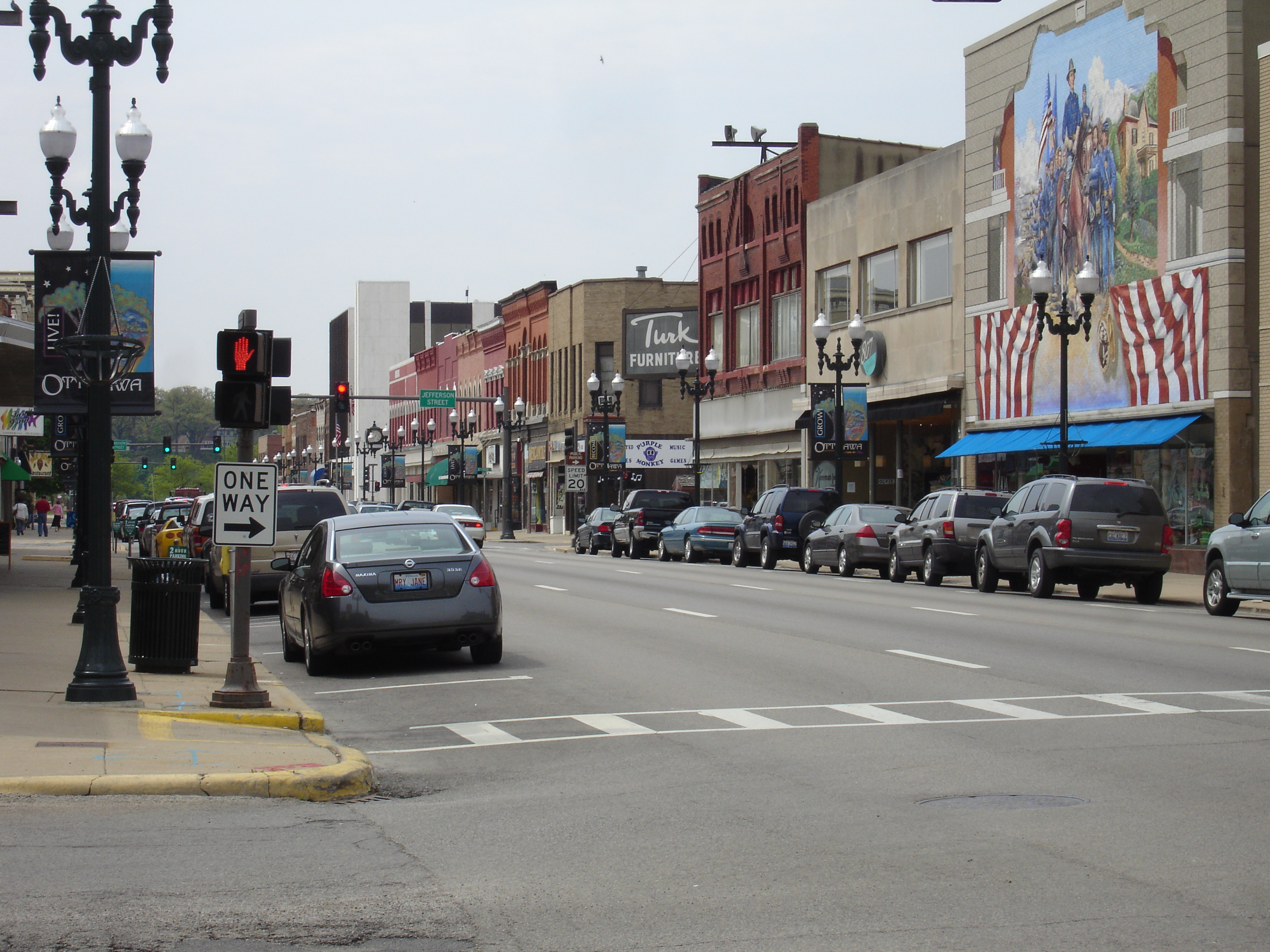
Ottawa, Illinois sits in the north-central part of the state within the America/Chicago timezone, at an elevation of 146 m above sea level, and it experiences a continental climate with distinct seasons. The city is home to roughly 19 thousand residents, and among those who relocate from abroad, Ottawa North is the neighborhood that draws the most attention. The expat community here is small, which means newcomers often get to know one another quickly, and English is widely spoken, so daily errands and conversations rarely require a translator. For anyone mapping out a move, the setting offers a compact, approachable introduction to life in the American Midwest.
Housing costs in Ottawa are modest by national standards, though the numbers do not always follow the usual pattern. A 1-bedroom apartment in the city center runs $650/mo, while the same unit outside the center is $850/mo. For larger households, a 3-bedroom in the city center is $1,250/mo, and a 3-bedroom outside the center comes to $1,500/mo. Beyond rent, a single adult can expect monthly costs of about $1,050/mo excluding rent, while a family of four faces roughly $3,700/mo excluding rent. Utilities average $238/mo, internet $68/mo, and a mobile phone plan $45/mo. A monthly public transport pass costs $98/mo, a gym membership $47/mo, an inexpensive restaurant meal $15 per person, a mid-range three-course meal for two $60, and a cappuccino $5. The average monthly net salary locally is $2,400/mo, and the cost of living index stands at 67/100 against New York City as 100. Budget, mid-range, and comfortable tiers for a single adult, rent included, come to $1,115/mo, $1,652/mo, and $1,624/mo respectively.
Safety is a strong point, with a safety index of 71/100 and a crime index of 29/100, where a lower crime figure is better. Air quality registers at 48 on the index, where lower numbers indicate cleaner air. Healthcare quality is rated as good, giving residents reasonable confidence in local medical services. The combination of a low crime profile and dependable healthcare makes the city a comfortable base for people who prioritize peace of mind in their day-to-day routine.
Visas are handled through the standard channels for entering the United States, and the nearest major airport is ORD, located 103 km away. That distance means travelers typically arrange ground transportation for the final leg into Ottawa. The city tends to suit remote workers, early retirees, and budget-conscious movers who want a slower pace without giving up reliable infrastructure. With an overall expat score of 68/100, a FIRE score of 64/100, a retiree score of 59/100, a digital nomad score of 68/100, and average internet speeds of 110 Mbps, Ottawa rewards those who value affordability, quiet surroundings, and a small but welcoming international presence.