Min Monthly Income
$1,627
Application Fee
$91
Processing Time
2-12 wks
Difficulty
Moderate
Duration
12 months
Path to Citizenship
11 years
Overview

Spain's digital nomad visa is marketed as a lifestyle product - sun, tapas, slow mornings in a Barcelona café - but what you're actually signing is closer to a residency contract. The moment you apply, you're committing to spending more than half your year in one country, filing taxes there, and building a bureaucratic paper trail that will follow you for the next decade if you want the citizenship that's theoretically at the end of this road. Worth being clear-eyed about what you're agreeing to before you start gathering apostilles.
The person who moves through this process smoothly is a W2 remote employee or a freelancer with two or three long-term foreign clients generating $4,000+ per month - someone whose income story fits on one page and doesn't require explanation. They already live mostly in one place. They want Spain specifically, not "Europe in general." They find the idea of building toward an EU passport genuinely interesting rather than abstractly appealing. The person who gets burned is the one who pictures this as a flexible base - wintering in Spain, summering somewhere else, maybe a few months in Southeast Asia. That math doesn't work with 183 days. The wrong category entirely is the FIRE retiree whose income is entirely passive: dividends, rental cash flow, index fund drawdowns. The visa isn't designed for them, and no amount of documentation creativity changes that.

The tax piece is where most people get surprised, and it deserves more attention than it usually gets before someone books their consulate appointment. Once you cross 183 days in Spain, you're a Spanish tax resident, and Spain taxes worldwide income. There's a special regime - the Beckham Law - that can cap your Spanish tax rate at 24% for up to six years if you qualify, but it requires applying within six months of registering as a resident and has its own eligibility rules. If you don't apply in time, or don't qualify, you're in the general system. That affects whether this visa is financially better or worse than your current situation, and it's a calculation worth running before you submit anything to a consulate.
What this visa actually unlocks is the ability to live legally in Spain - not visit, live - and to have that time count toward something durable. Five years gets you permanent residency across the EU. Eleven gets you a Spanish passport and with it, the right to live and work anywhere in the bloc. For a 35-year-old American tired of the visa lottery every time they want to spend a real season somewhere in Europe, that's a concrete path that most other nomad visas don't offer.
Eligibility Requirements
Citizens of EU and EEA states have free movement and work rights in Spain and therefore do not use the Spain Digital Nomad Visa at all; this route is intended for third‑country nationals whose citizenship lies outside the EU/EEA framework. That includes US, Canadian, Australian, New Zealand, UK, Swiss, and other non‑EU passport holders who need a residence basis to stay beyond 90 days while working remotely.
The common confusion cluster is around non‑EU Europeans and post‑Brexit and EFTA states. Norway, Iceland, and Liechtenstein are in the EEA and enjoy freedom of movement equivalent to EU citizens, so they do not require this visa. Switzerland, while not in the EU or EEA, has its own bilateral free‑movement arrangements with the EU and in practice doesn’t fall under the non‑EU digital‑nomad scheme either. By contrast, UK citizens are now fully third‑country nationals for Spain’s immigration system and can in principle use this Digital Nomad Visa if they meet the income and remote‑work rules.
Dual nationals holding an EU or EEA passport – for example, a US–Italian, Canadian–Irish, or Australian–German citizen – should enter and reside in Spain using their EU/EEA passport rather than applying for the Digital Nomad Visa. Exercising free‑movement rights is faster, cheaper, involves far less documentation, and places you under the standard EU citizen registration process instead of a specialised non‑EU residence permit.
Min Income
$1,627
Application Fee
$91
Min Age
18 yrs
Duration
12 months
Physical Presence
183 days/yr
W2 Employee (foreign employer) · 1099 Contractor
Max 20% from local sources
+75% per adult · +25% per child
Requirements Checklist
0 of 25 documents in hand
0%These take the longest, so start them first.
Request these while the slow items are in progress.
You only need these on the day you submit.
Extra requirements for this visa
- Apostille required on official documents
How and where to apply
Apply at the Spanish consulate in your country of residence or from within Spain if legally present (e.g., on a tourist visa). Online submission is possible through representatives who mediate with authorities. This dual option provides flexibility for expats already visiting.
Tax Information
The Local Tax Reality
Spain taxes residents on worldwide income. Once you spend 183 days in a calendar year inside the country, your remote salary from a US employer, freelance payments from foreign clients, ETF dividends held at Schwab or Vanguard, and rental income from a property back home are all within Spain's tax scope. The federal income tax brackets run from 19% on the first €12,450 up to 47% on income above €300,000, with regional surcharges layered on top - so the rate you actually pay depends partly on which autonomous community you live in. That 183-day trigger is the same threshold the immigration rules use to maintain your residency status, meaning the two clocks run together. Capital gains are taxed separately as savings income on a progressive scale: 19% up to €6,000, 21% between €6,000 and €50,000, and 26% above that. Dividends follow a similar structure - 19% on the first €6,000, climbing to 26% above €50,000. There is no foreign-source exemption built into the Digital Nomad Visa itself.
The Beckham Law

Spain has a preferential regime - the Beckham Law - that allows qualifying arrivals to be taxed as non-residents on foreign-source income for up to six years, with Spanish-source income capped at a flat 24% rate up to €600,000. Under that regime, foreign passive income including dividends and rental income from abroad is generally taxed at 0% in Spain. The database confirms this program exists and applies to qualifying nomads, but the application window is tight: you must elect into it within six months of registering as a tax resident. Miss that window and you're in the standard progressive system for the year, with no way to go back. Anyone with significant foreign investment income - dividend portfolios, appreciated index funds, US rental properties - should treat this election as the single most time-sensitive financial decision of their first year. Wealth tax also applies and varies by region; Madrid and Andalusia offer the most favorable treatment for high-net-worth individuals.
The US Tax Layer - FEIE, FTC, and FBAR

The IRS doesn't care that you moved. US citizens and green card holders file US returns regardless of where they live, and Spain doesn't change that. The Foreign Earned Income Exclusion lets you shelter up to $126,500 in earned income for 2024 - verify the current year limit before filing - which covers remote salary and freelance payments but nothing else. Dividends, capital gains, rental income, pensions, Social Security: none of it is touched by the FEIE. The Foreign Tax Credit is usually the more powerful tool once you're paying Spanish tax at meaningful rates, because it offsets US liability dollar-for-dollar on income both countries are taxing. Spain and the US have an income tax treaty, which governs how certain income types are treated across both systems - the treaty text and its interaction with the Beckham Law regime is something a cross-border CPA needs to map for your specific income mix, not something to assume from general summaries. On FBAR: the Digital Nomad Visa doesn't technically require a Spanish bank account, but practically speaking you'll open one for rent and utilities within the first few months. Once any combination of foreign accounts crosses $10,000 at any point in the year, FinCEN 114 is mandatory. Non-willful penalties start at $10,000 per violation per year.
Get Year One Right

The decisions that go wrong without professional help in year one are specific and expensive. Missing the Beckham Law registration window is the most common - it's permanent, there's no late election, and depending on your investment income it can cost tens of thousands in avoidable tax over the six-year window. Choosing the wrong FEIE election method - Bona Fide Residence vs. Physical Presence Test - can affect eligibility in transition years and is difficult to unwind cleanly. And FBAR non-filing for an account the visa practically requires you to open is the kind of mistake that surfaces years later during an audit when the penalties have already stacked up. A US expat CPA and a Spanish tax advisor together will run $1,500 to $3,000 in year one. What that buys is correct elections made on time, treaty positioning applied where it applies, and a clean filing record from day one of a residency path that could run a decade or longer.
Living in Spain
COL Index vs NYC
43.5
Monthly Cost (excl. rent)
$823
1BR Rent (City Center)
$1,028
Safety Index
63.4
Healthcare Index
77.3
Quality of Life Index
184.4
Time Zone
UTC
Capital
Madrid
Population
47.4M
Official Languages
Spanish, Catalan, Basque, Galician
Avg Internet Speed
263 Mbps
Public Transit Quality
Excellent
With a budget covering rent and living costs, you'd need roughly $1,851/mo for a comfortable single-person lifestyle in Spain.See how far your money goes →
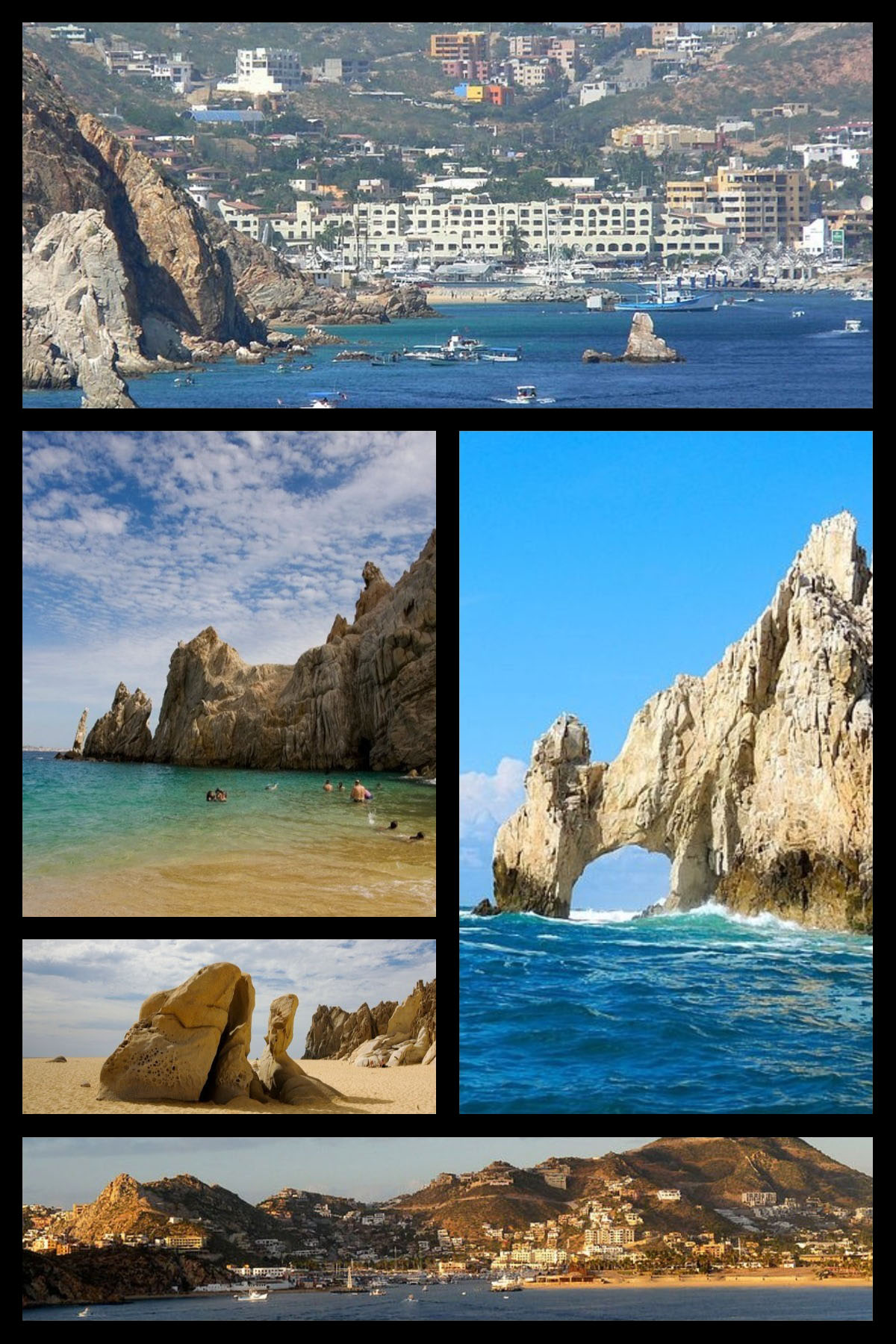
🏙️ Best Cities in Spain for Digital Nomads





Getting Your Income Story Straight Before You Apply

The income threshold looks simple - prove you earn above a certain floor - but the documentation is where applications actually fall apart. What the consulate wants to see is not just that money is coming in. They want to understand the structure: who is paying you, under what arrangement, and why that work can continue from Spain without you serving Spanish clients or crossing into Spanish employment law. A single employer letter and three months of pay stubs is usually enough if you're a W2 employee. If you're freelance, you need contracts, invoices, and bank statements that together tell a coherent story about ongoing work with foreign clients.
The trap for freelancers is thinking that total income is what matters most. It's not. A $6,000/month freelancer with five clients, rotating contracts, and inconsistent monthly deposits looks shakier on paper than a $3,200/month freelancer with two stable, long-term clients and clean monthly invoices. Reviewers are looking for predictability, not maximums. If your income is lumpy - big project payments followed by quiet months - it's worth putting together a 12-month average and being ready to explain the pattern. Don't assume the numbers speak for themselves.
One thing people consistently underestimate: if your income comes from a mix of sources - some salary, some freelance, maybe some passive - the visa is really only counting the active remote work portion toward the core requirement. That passive income doesn't disappear from your application, but it isn't doing the same work as a contractor agreement from a US company. Know which column your income actually sits in before you walk into a consulate appointment.
The Housing Requirement and How People Get It Wrong

Spain requires proof of accommodation as part of the visa application, and this is where people make a mistake that's easy to avoid. The instinct is to book an Airbnb for a few weeks and present that as your address. That usually doesn't hold up. What you need is something that looks like a real housing arrangement - a rental contract with a lease term that extends meaningfully beyond your application date, ideally with a landlord who will provide documentation if asked.
Getting a long-term rental signed before you have a Spanish address or a Spanish bank account is genuinely annoying. Landlords want to vet you. You have no local credit history. Some platforms now exist specifically to bridge this gap for incoming foreigners, and some relocation attorneys will hold a temporary address for clients. Neither is free, but either is better than submitting an application with a hotel booking and hoping for the best.
The other version of this mistake is signing a lease in the city you think you want to live in before you've actually spent more than a tourist week there. Spain is not one place. The cost of living, the pace, the expat scene, the Spanish you'll actually need day-to-day - all of it varies enormously between Madrid, Valencia, Málaga, and a mid-sized city like Alicante. A 12-month lease is a real commitment. If you have flexibility, consider a 3-month furnished rental first, then sign something longer once you know the neighborhood.
What Actually Happens After You Land
Visa approval is not the finish line. Once you arrive in Spain, you have a limited window to register with local authorities and convert your entry visa into an actual residence permit - the Tarjeta de Identidad de Extranjero, or TIE. Without that card, you're in an ambiguous status that creates friction every time you try to open a bank account, sign a lease, or do anything that requires proving your residency formally.
The appointment to get that card - booked through the Spanish immigration office, the Extranjería - can have a multi-week wait depending on the city. Madrid and Barcelona tend to be slower than smaller cities. You can't show up without an appointment. If you arrive and assume you'll get this sorted in the first two weeks, you may be waiting for a slot well into your second month. Book it as soon as you have an arrival date in mind. Some people book it before they land.
In that gap between landing and having your TIE in hand, you'll also need to register your address with the local town hall - the empadronamiento. That registration is separate from the TIE process, required for various municipal services, and the appointment timeline varies by municipality. Getting empadronado early also matters for the 183-day count: you want documentation that shows when your actual residency began.
What the Long-Term Path Actually Requires

The 5-years-to-permanent-residency, 11-years-to-citizenship numbers are real, but the path between here and there involves more than just staying. Continuous residence means being in Spain for more than 183 days per year, every year, for the full duration. If you spend a year abroad - a sick parent, a long work project, a pandemic - that break in continuity can reset or delay your timeline depending on how it's categorized. The rules have some flexibility for documented exceptions, but you need to understand them in advance, not after you've already been gone for eight months.
Language is the other thing the PR/citizenship timeline makes unavoidable. Citizenship requires demonstrating Spanish proficiency, typically at a B1 level. If you're arriving with no Spanish, B1 is achievable in two or three years of consistent effort - it's not a fluency requirement, it's a working competency requirement. But a lot of people who move to Spain assuming they'll pick it up passively find that English is widely enough spoken in major expat neighborhoods that they can go years without being forced to improve. You will need to actually study.
The 11-year citizenship path selects for people who genuinely want to be in Spain. That's worth sitting with before you start an application.
Spain vs. Portugal: A Real Judgment Call
Portugal's digital nomad visa is the obvious comparison. Lower income threshold, similar EU residency path, similar climate in the south, lower cost of living in most cities, and for some applicants a faster citizenship clock - Portuguese citizenship is available after 5 years of residency, not 11. On paper, Portugal often looks better, and that's not wrong.
The reason people still pick Spain usually comes down to one of three things: they already speak Spanish, or want to, because Spanish is more globally useful than Portuguese; they have a specific city in mind - Barcelona, Madrid, Seville - that they want to actually live in; or they find Spain's size and internal variety more interesting for the decade they're planning to spend there. Portugal is smaller. Lisbon and Porto absorb the vast majority of expat arrivals, and both have become expensive and crowded enough that the cost-of-living advantage over Spain has narrowed considerably in recent years.
There's also the Beckham Law, which Portugal doesn't have a real equivalent of. If you're earning $7,000+ per month and you qualify, the tax math may actually favor Spain despite the higher headline rate. That calculation is individual enough that it's worth a conversation with a cross-border tax advisor before you choose a country based on reputation alone.
Neither visa is clearly better. The choice usually comes down to where you actually want to spend the next decade of your life.
Work Permissions
Application Steps
- 1
📋 Verify eligibility and gather basics
1-2 days
- 2
📄 Collect employment proofs
1-2 weeks
- 3
📄 Secure health insurance
1 week
- 4
📅 Book consulate or in-country appointment
2-4 weeks
- 5
📬 Submit application online or in-person
1 day
- 6
⏳ Wait for approval decision
not specified
- 7
🏛️ Enter Spain and apply for TIE
1-2 weeks
This visa requires proof of health insurance. Compare international plans before you apply.
Compare health insuranceWe may earn a commission at no cost to you.
Compare this visa
Curated comparisons that include this route.
Frequently Asked Questions
Click any question to expand the answer.
Ready to Apply?
Work with trusted visa specialists who handle the paperwork so you can focus on your move.
Get help with this visa →* We may earn a commission if you apply through our link
At a Glance
Last verified: October 9, 2026