Min Monthly Income
$3,900
Application Fee
$103
Processing Time
2-17 wks
Difficulty
Easy
Duration
4 months
Path to Citizenship
10 years
Overview

The D8 is marketed as a digital nomad visa, and in some ways that framing is accurate. But the people who get the most out of it aren't treating it as a nomad visa at all — they're treating it as a residency strategy: permanent residency at year five, citizenship at year ten under the 2026 nationality law. What you're actually deciding when you apply isn't "where should I work remotely for a while." It's whether you want to plant a flag in Europe, pay Portuguese taxes, and build a paper trail that ends with an EU passport. The café in Lisbon with good espresso and fast WiFi is real. So is the tax residency that comes with it.
The applicants who sail through are the ones with a clean, boring income story: one employer, consistent monthly deposits, a single-page letter from an HR department confirming remote work authorization. That profile is almost frictionless. The harder road belongs to multi-client freelancers with variable monthly totals, especially if some payments arrive through Wise or Payoneer rather than a traditional bank wire. Harder still is the person whose income looks right on paper but comes from ETFs, rental properties, or dividends. That's not a D8 income source — it's disqualifying regardless of the dollar amount. Knowing which profile you are before you book a consulate appointment saves months.

On taxes: the NHR regime that made Portugal a favorite among financially-motivated expats is largely gone for new applicants as of 2024. The IFICI replacement exists, but it's narrower and qualification isn't automatic. A US remote worker who becomes Portuguese tax resident under ordinary rates while continuing to file US returns will face a situation that's manageable — especially with the Foreign Earned Income Exclusion and Foreign Tax Credit in play — but it requires a cross-border CPA who knows both systems. Have that conversation before your consulate appointment, not six months after you've moved.
None of that should scare you off. Portugal still puts permanent residency five years out on an active-income path, English works in nearly every city nomads actually live in, and the cost of living still makes sense even without NHR. Schengen access from day one. An EU passport at year ten, now that the 2026 nationality law stretched the timeline. The option to base yourself somewhere stable while your income stays portable. For the right person — earning enough, willing to commit, ready to think beyond the next 12 months — this is an asymmetric bet that very few other visas in the world currently offer.
Eligibility Requirements
Citizens of EU and EEA countries already have free movement and residence rights in Portugal and do not need or qualify for the D8 Digital Nomad Visa route. Everyone outside the EU/EEA, including US, Canadian, Australian, New Zealand, UK, and other non‑EU nationals, falls into the non‑EU category for this program and can apply if they meet the income and other criteria.
A common confusion point involves quasi‑EU groupings. Norway, Iceland, and Liechtenstein are in the EEA, and their citizens are treated like EU citizens for residence in Portugal, so they do not use the D8. Switzerland is not in the EU or EEA but has its own bilateral free‑movement framework with the EU; Swiss citizens also generally rely on those arrangements rather than applying under the D‑category visas like the D8. Post‑Brexit UK citizens, however, are now definitively non‑EU for Portuguese immigration purposes, so Britons who want to work remotely from Portugal need the D8 or another residence route.
If you hold dual nationality and one of your passports is from an EU or EEA member state (for example, an American with Irish, Italian, or Portuguese citizenship), the correct and far simpler approach is to exercise your EU free‑movement rights using that EU passport. That route bypasses the D8 entirely, avoids income thresholds and consular vetting, and leads directly into standard EU citizen registration in Portugal rather than third‑country national residence procedures.
Min Income
$3,900
Min Savings
$12,658
Application Fee
$103
Min Age
18 yrs
practical
Duration
4 months
Physical Presence
183 days/yr
Remote Work / Freelance
1099 Contractor · Self-Employed
+50% per adult · +30% per child
Requirements Checklist
0 of 22 documents in hand
0%These take the longest, so start them first.
Request these while the slow items are in progress.
You only need these on the day you submit.
Extra requirements for this visa
- FBI background check required (allow 3–4 months)
- In-person interview required
How and where to apply
Apply initially at the Portuguese consulate or embassy in your home country or country of legal residency. After visa approval and entry to Portugal, complete the residence permit process at an AIMA office (formerly SEF). In-country applications for the initial visa are not permitted for non-EU citizens.
Tax Information
Portugal taxes residents on worldwide income. That's the hard fact, and there's no territorial carve-out that softens it. Once you cross the residency threshold — 183 days in Portugal in any 12-month period, or maintaining a habitual home there as your primary base — your Vanguard dividends, brokerage capital gains, and rental income from property back home are all in scope alongside your remote salary. The income tax brackets run from 12.5% on income up to €9,067 to a top rate of 48% above €94,251, with a solidarity surcharge of up to 5% layered on at higher income levels. Capital gains on most assets are taxed at a flat 28%, though residents have the option to fold those gains into their overall income and be taxed at progressive rates instead — an election that only makes sense at lower income levels. Dividends are taxed at a flat 28%. The 183-day clock is the primary trigger, but "habitual home" is a secondary one: if your apartment in Lisbon is clearly where your life is centered, Portuguese tax authorities don't need to count days.

The NHR regime that made Portugal a tax destination for many expats ended for new applicants in 2024. The replacement — IFICI, often called NHR 2.0 — targets workers in tech, science, and innovation, and it offers real benefits for qualifying applicants: a 20% flat tax on qualifying Portuguese-source income and broad exemptions on foreign passive income for 10 years. One significant difference from the original NHR: foreign pensions are no longer exempt under IFICI and are taxed at standard progressive rates. Whether you qualify for IFICI depends on your profession and how your application is structured — qualification isn't automatic, and the registration deadline is January 15 of the year after you become resident. A Portuguese tax advisor needs to make this call before you arrive, not after your first tax return is due.
IFICI qualification depends on your profession and how your application is structured - it's not automatic, and the registration deadline is January 15 of the year after you become resident. A US expat CPA who knows the Portugal-US treaty can make sure you're not leaving that benefit on the table while also keeping your US filings clean.
The IRS does not care that you moved to Portugal. US citizens and green card holders file US returns regardless of where they live. The Foreign Earned Income Exclusion (FEIE, Form 2555) can shield up to $130,000 (tax year 2025; $132,900 for 2026) of earned income from US federal tax — verify the current year limit with your CPA — but earned income means remote salary and freelance revenue only. Dividends, capital gains, rental income, and Social Security are outside FEIE's scope. The Foreign Tax Credit (Form 1116) handles the overlap: when Portugal taxes income that the US also taxes, Portuguese taxes paid offset your US liability dollar-for-dollar on that income stream. A US-Portugal income tax treaty exists to prevent double taxation, though how it applies to your specific income mix requires professional interpretation rather than a general assumption. Once you open the Portuguese bank account this visa requires, FBAR (FinCEN 114) is mandatory if your combined foreign accounts exceed $10,000 at any point in the year. The non-willful penalty for non-filing is $10,000 per violation per year — the Portuguese account the consulate asked you to open is not an optional disclosure.

The decisions that go wrong without professional guidance aren't obscure edge cases — they're the core elections every D8 holder faces in year one. Missing the IFICI registration deadline is permanent; there's no late filing that restores the regime. Choosing between the Bona Fide Residence Test and the Physical Presence Test for FEIE has real consequences depending on how you structure your travel. And FBAR non-filing for a required visa account is exactly the kind of oversight that compounds quietly until it doesn't. Budget $1,500–$3,000 for a US expat CPA and a Portuguese tax advisor working in parallel during your first year of residency. What that buys is correct elections from the start, treaty positioning where it applies, and a clean foundation for the full five-year residency path — which is the whole point of being here.
Living in Portugal
COL Index vs NYC
41.2
Monthly Cost (excl. rent)
$776
1BR Rent (City Center)
$1,040
Safety Index
67.9
Healthcare Index
72.2
Quality of Life Index
167.8
Time Zone
UTC+00:00
Capital
Lisbon
Population
10.3M
Official Languages
Portuguese
Avg Internet Speed
352 Mbps
Public Transit Quality
Good
With a budget covering rent and living costs, you'd need roughly $1,816/mo for a comfortable single-person lifestyle in Portugal.See how far your money goes →
🏙️ Best Cities in Portugal for Digital Nomads
 ✦ 82
✦ 82 ✦ 82
✦ 82 ✦ 80
✦ 80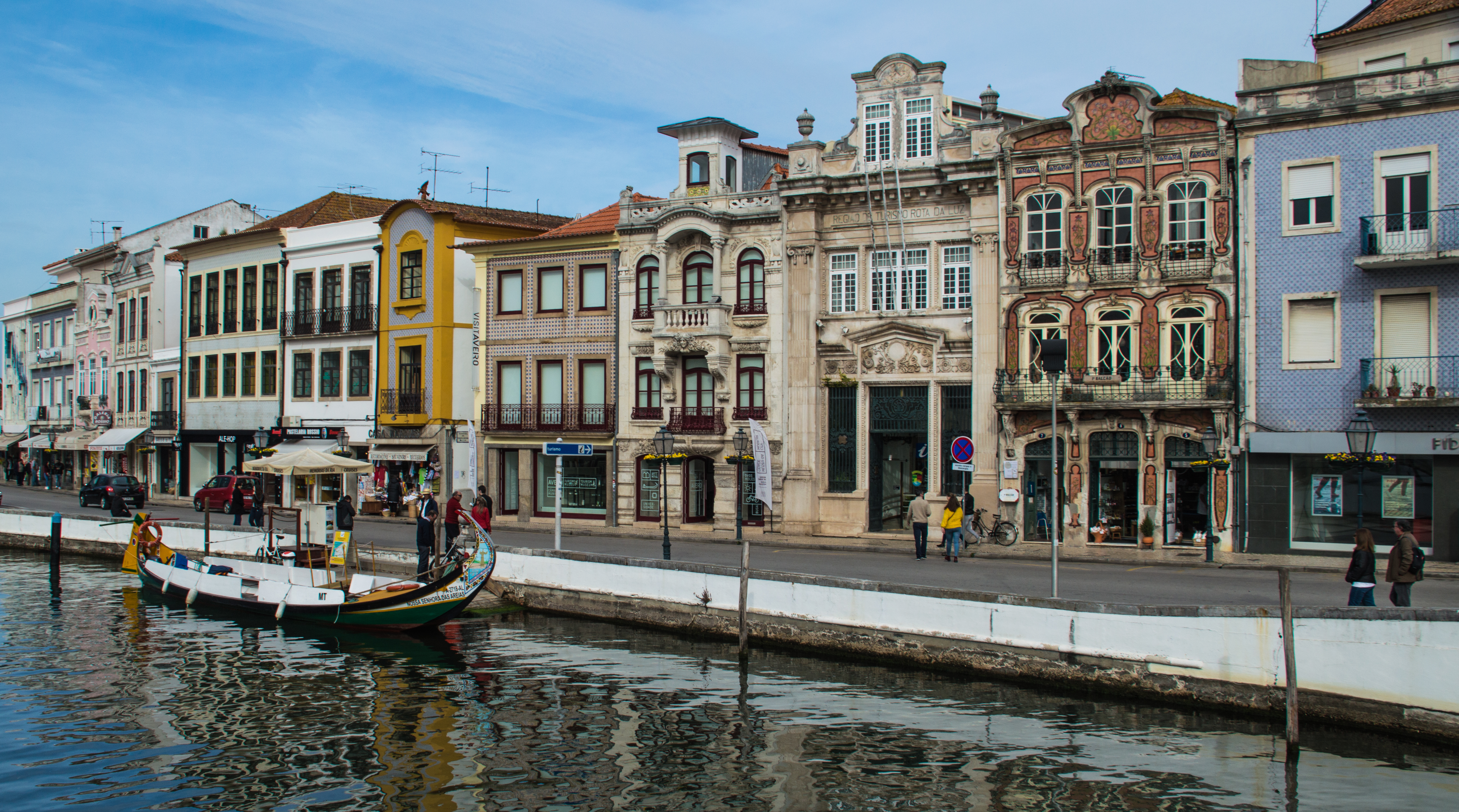 ✦ 81
✦ 81 ✦ 83
✦ 83 ✦ 85
✦ 85Getting Your Income Story Straight Before You Apply

Consular officers processing D8 applications aren't just checking whether your last three months of deposits clear the threshold. They're looking at your income history as a pattern — asking whether what you're showing them looks like your actual financial life or like something you assembled for the application. Three months of $5,500 deposits preceded by eight months of $900 deposits doesn't read as "person who recently got a raise." It reads as "person who staged their bank statements." That distinction matters more than most applicants expect.
A clean income story has three qualities: consistency, source clarity, and documentation that connects. Consistency means the deposits land in roughly the same amount, at roughly the same cadence, over at least six to twelve months. Source clarity means a reviewer can see where the money comes from without having to guess — one employer, or a small number of identified clients, with payments that match your contract amounts. Connected documentation means your contracts, your payslips or invoices, and your bank statements all point at each other. When those three things align, your file is easy to approve.
Freelancers have more to prove, but it's doable. If you have multiple clients and variable monthly totals, your cover letter becomes load-bearing. It's not a formality — it's the document that ties together the evidence your reviewer would otherwise have to interpret on their own. Name your clients, explain the payment cadence, and note if certain months were high or low due to project timing. If payments arrive through Wise Money Transfer, Payoneer, or another fintech rail rather than a traditional SWIFT wire, acknowledge this and show how it maps to your invoices. Don't make the officer figure it out.
One thing people routinely overlook: if you've shifted from salaried employment to independent contracting in the last year, or vice versa, that transition shows up as an obvious inflection point in your statements. Trying to ignore it doesn't work. A short paragraph in your cover letter explaining the transition — when it happened, why, and how your income has stabilized since — turns a potential red flag into a resolved question. Reviewers aren't looking for perfect financial histories. They're looking for applicants who understand what they're submitting.
The Lease You Have to Sign Before You Move

Most visa applications ask you to demonstrate where you'll live after you arrive. The D8 asks you to prove it before you go — specifically, before your consulate appointment. You need documentation showing 12 months of accommodation in Portugal secured for a country you haven't moved to yet, under a visa you haven't received. This is the step that trips up more applicants than any single documentation requirement.
The practical options are more workable than they sound. Remote leases signed via email with Portuguese landlords are common and generally accepted. Extended Airbnb bookings covering the full 12-month window are used by some applicants, though consulate acceptance varies — US consulates have been inconsistent on this, and if you go this route, having a local immigration lawyer review your file before submission is worth the cost. Relocation agencies that specialize in the D8 often offer letters-of-accommodation services that satisfy the requirement without requiring you to commit to a specific apartment. This is a legitimate option if you want the visa approved before you've chosen a neighborhood.
Find Short-Term Housing in Portugal
Find Short-Term Housing in Portugal
Booking a whole-home rental for your first month gives you a real address for the consulate and time to find a permanent place without rushing.
We may earn a commission if you book through this link. Affiliate Disclosure
Signing a 12-month lease before visa approval sounds riskier than it usually is. Qualified applicants with clean income documentation and no prior visa issues are approved at high rates. Most people who wait until after approval to deal with housing add 6–8 weeks to their overall timeline, sometimes more, because they're searching in a market that doesn't move slowly for good apartments.
The Lisbon rental reality is worth knowing before you start: prices have risen sharply since 2022, and decent apartments in walkable neighborhoods — Principe Real, Campo de Ourique, Mouraria — move fast. The $1,040/month figure for a city-center one-bedroom is roughly accurate as an average, but it doesn't capture what the market actually demands from a foreign applicant arriving without a Portuguese rental history. Many landlords ask for two to three months' deposit upfront, and some require a local guarantor. If you're applying remotely and leaning on a relocation agency, verify whether they can help with landlord introductions, not just document services.
The AIMA Gap - What Actually Happens After You Land

Your visa is approved. You pack, you fly, you land in Lisbon. The clock starts. What most D8 guides skip is what happens in the window between arriving on your entry visa and actually holding a physical residence permit — a period that, under the current AIMA backlog, can run three to five months and sometimes longer.
AIMA replaced SEF as Portugal's immigration agency in 2023. The transition created an appointment backlog that became the most common complaint among D8 applicants from 2024 onward. The entry visa gives you 120 days to request a residence permit. But 120 days is often not enough to get an AIMA appointment, attend it, and receive your card — especially in Lisbon and Porto, where appointment availability is worst. This gap has a real legal dimension: your entry visa expires, your permit isn't issued yet, and you're technically in a limbo status that Portuguese law has a mechanism for but that most applicants don't know about until they're already in it.
The mechanism is the "Manifestação de Interesse" — a proof-of-pending-application submission most immigration lawyers recommend filing as soon as possible after arrival. It doesn't accelerate your appointment, but it establishes a documented record that you entered legally, applied within the valid window, and are waiting on the system rather than overstaying. This matters for your residency record and removes ambiguity if you travel within Schengen during the wait.
The honest case for hiring a local immigration lawyer at this stage isn't that the paperwork is complicated. It's that immigration lawyers in Portugal often have access to AIMA appointment slots through professional channels that move faster than the public portal. In a market where appointment wait times have pushed into months, that access is worth more than the legal advice itself. You can handle most of the pre-arrival documentation yourself and still bring in a lawyer specifically for the AIMA appointment piece — many firms offer this as a standalone service.
What the Long Game Actually Costs You - and What It Gets You

The five-year citizenship path is one of the most frequently cited reasons to choose the D8 over other European residency options. It's also the one that most applicants understand as a concept and underplan for in practice. Five years of Portuguese tax residency, maintained continuously, with the physical presence to support it — that's a different commitment than five years of good intentions.
The 183-day rule is the ceiling, not a suggestion. If your life involves extended trips back to the US for family, long client engagements that pull you stateside for months at a time, or a partner whose work keeps them in another country, your ability to maintain qualifying residency needs to be actively managed, not assumed. Portugal doesn't send reminders when you're running low on days. That calculation is yours to track, and gaps that interrupt your continuous residency can delay your PR or citizenship application — sometimes requiring you to restart the count depending on the circumstances.
The A2 Portuguese language requirement for citizenship surprises people who've been ignoring it since year one. A2 is genuinely achievable — it's the second level on the European framework, covering basic conversation, not literary fluency. Most people who study consistently for six months get there. The problem is the applicants who treat it as a year-four problem, then realize they have a language exam, a citizenship application to assemble, and a Portuguese bureaucracy to navigate simultaneously. Start earlier than you think you need to.
The financial math over five years is net positive for most remote workers who run it honestly. Yes, you're filing in two countries. Yes, Portuguese progressive income tax rates apply if you're a tax resident without NHR or IFICI coverage. But what you're buying with those filings is the right to hold an EU passport — a document that gives you freedom to live and work in 26 countries without sponsorship, without a new visa process, and without a five-year clock on anything. For someone whose income travels with them anyway, that's not a lifestyle perk. It's infrastructure. Most people who reach year five say committing to the first year was the hardest part.
Portugal vs. Spain - Settling the Argument
If you're reading a D8 page this deep, you've probably already looked at Spain's Digital Nomad Visa. The comparison is worth addressing directly, because the answer isn't "both are great options" — it depends on what you're optimizing for.
Spain's income threshold lands in a similar range, but the documentation stack is meaningfully heavier. You're typically required to get more documents apostilled from more countries, obtain criminal background checks from multiple jurisdictions if you've lived abroad, and work with consulates that have less institutional experience processing this specific visa type than their Portuguese counterparts. The Portuguese consulate network — especially in the US — has processed enough D8 applications by now that the process is more predictable. With Spain, the variance between consulates is wider and the processing timelines reflect it.
The citizenship timeline no longer separates them for Americans: Portugal moved to 10 years in May 2026, and Spain has required 10 years for most US applicants all along. What still differs is the mechanics and the milestones. Portugal counts from the date your first residence card is issued and gives you permanent residency at year five; Spain's two-year fast track applies only to Ibero-American nationals, which does not include Americans. If EU passport optionality is part of your reasoning, plan on a decade in either country and choose on livability, taxes, and process instead.
Since May 2026 both countries put Americans on a 10-year citizenship clock, so the passport race is a tie. The real differences are documentation load, consulate predictability, taxes, and where you'd rather actually live.
Day-to-day livability also breaks in Portugal's favor for most first-time arrivals without existing Spanish skills. English fluency in Lisbon and Porto is high enough that you can run your life for the first few months without Portuguese, while you're getting settled. Spain outside of Barcelona and Madrid is harder to navigate in English, and even in those cities the gap is noticeable. That's not a permanent advantage — eventually you're learning the local language regardless — but it affects how hard the first year is.
The one honest case for Spain: if your work depends on in-person proximity to other founders, tech operators, or startup infrastructure, Barcelona and Madrid have a denser English-speaking professional scene than anything Portugal currently offers. That matters for a specific type of remote worker. If it doesn't describe your situation, it's probably not the deciding factor. You're here because you've already thought this through. Trust the direction you came in.
Work Permissions
Application Steps
- 1
📋 Research eligibility and gather basics
1-2 weeks
- 2
📄 Collect required documents
2-4 weeks
- 3
📅 Book consulate appointment
1-4 weeks wait
- 4
📬 Submit visa application
Same day submission
- 5
⏳ Wait for visa approval
8 weeks
- 6
🏛️ Enter Portugal and attend AIMA
90 days processing
- 7
🏛️ Open local bank account
1-2 days
- 8
🏛️ Register as resident
Same day
This visa requires proof of health insurance. Compare international plans before you apply.
Compare health insuranceWe may earn a commission at no cost to you.
Compare this visa
Curated comparisons that include this route.
Frequently Asked Questions
Click any question to expand the answer.
Ready to Apply?
Work with trusted visa specialists who handle the paperwork so you can focus on your move.
Get help with this visa →* We may earn a commission if you apply through our link
At a Glance
Last verified: October 9, 2026