Min Monthly Income
$1,500
Overview
Nepal’s announced Digital Nomad Visa targets people earning from remote work, not from passive income alone. To qualify under the published framework you need at least $1,500/month in remote income or $20,000 in savings, and the allowed income source is explicitly “remote_work” — salary, contractor, or your own business serving foreign clients. A FIRE retiree drawing $3,800/month entirely from ETF dividends and rental income would not meet the current rule set unless they can also document at least $1,500/month of active remote work. Social Security and pension income are not recognized as qualifying income in the program rules.
The proposal is structured around a long stay: external sources describe a 5‑year visa, which aligns with the Captain Digital Nomad summary, but the official duration has not been published and the visa is non-renewable. That implies you should think of this as a single multiyear run, not an indefinite base like Portugal’s old D7. No physical presence requirements, day counts, or maximum consecutive absences are disclosed, so there is no confirmed rule yet about how many days per year you must remain in Nepal if you want to keep the visa active or how liberal you can be with regional travel.
Nothing in the current framework promises a path to permanent residency or citizenship. “Leads to PR,” “Years to PR,” and “Years to Citizenship” are all not publicly specified, so anyone planning a 10‑year relocation should not assume this visa converts into an immigrant track the way Uruguay’s rentista or Spain’s Digital Nomad Visa can eventually feed into long‑term residence. Treat this as a medium‑term lifestyle visa until Nepal publishes an explicit upgrade ladder.
On the friction side, the bureaucracy score is 1/5, driven by relatively light formalities in the program rules: no apostille, no FBI background check, no medical exam, and no interview. You will still need standard documentation: passport, proof of $1,500+/month or $20,000 savings, and health insurance (guides consistently reference $100,000 coverage in Nepali hospitals). Application fees, renewal costs, processing times, and any local bank account requirement are not disclosed, so you should budget time and cash slack for unknowns.
This structure makes the most sense if you earn at least $1,500/month from foreign remote work, want a low‑bureaucracy base, and are comfortable treating 5 years as the outer horizon with no PR guarantee. It is a poor fit if your income is mainly dividends, bonds, pensions, or Social Security, or if your core goal is a clear, codified residency‑to‑citizenship ladder in a single jurisdiction.
Eligibility Requirements
VISA FACTS mark nationality restrictions as “all,” so in principle any nationality can apply for Nepal’s Digital Nomad Visa once it is implemented. In practice, applicants from sanctioned or diplomatically problematic countries such as Iran, North Korea, Syria, Afghanistan, and in some banking contexts Russia or Belarus can encounter denials at consulates or difficulty passing KYC at Nepali banks, even if the law does not ban them outright. Before assembling documents or wiring funds, verify your specific eligibility on the Nepal Department of Immigration website (immigration.gov.np) or via a Nepali embassy/consulate, since that is the authority that will ultimately issue or refuse this visa.
Min Income
$1,500
Min Savings
$20,000
Remote Work / Freelance
W2 Employee (foreign employer) · 1099 Contractor · Business Owner · Self-Employed
Max 0% from local sources
Requirements Checklist
0 of 5 documents in hand
0%Request these while the slow items are in progress.
You only need these on the day you submit.
How and where to apply
Apply online via Nepal's official immigration portal or at a Nepali embassy/consulate in your home country once launched. In-country application may be possible after entering on a tourist visa, but details are not specified. Monitor official announcements as the visa is currently announced only.
Tax Information
Local tax regime and how it hits nomads
VISA FACTS classify Nepal’s regime for this visa as “resident,” which means that once you cross the tax‑residency threshold you are treated as a normal Nepali tax resident rather than enjoying a special territorial or non‑dom regime. Public sources around the proposal reference a flat 5% income tax if you stay 183+ days, but the official rate schedule specific to the Digital Nomad Visa is not embedded in the VISA FACTS. Under a standard resident model, remote salary, contractor income, and business profits linked to you as an individual would be within the local tax net once you are resident, even if they come from a foreign employer or clients.
Passive income – foreign ETF dividends, bond interest, and rental income from property abroad – would also normally be taxed for residents under a worldwide system, but the exact treatment, bands, and any exemptions for foreign‑source investment income are not publicly specified in the Digital Nomad context. Pension distributions and Social Security are flagged as “not specified,” so there is no confirmed preferential or exempt treatment for retirees using this visa.
For FIRE readers, the key missing piece is capital gains on foreign investments. There is no explicit rule in the VISA FACTS, and no special territorial carve‑out, so you have to assume that realized gains on index funds or ETFs in a foreign brokerage could be taxable in Nepal once you are tax resident, subject to whatever rates and thresholds the general Income Tax Act applies. This is not the kind of digital‑nomad carve‑out you see in Georgia’s Virtual Zone or Portugal’s old NHR.
Tax residency is described indirectly. External policy commentary points to a 183‑day trigger with a 5% tax rate beyond that, consistent with many standard residency regimes, but the “Tax Status Deadline” field is not specified in the visa data. Practically, if you spend 183+ days in Nepal in a tax year on this visa, you should assume you will be a resident for tax purposes unless a later law says otherwise.
Local compliance is not spelled out in the Digital Nomad framework. In a normal resident system you would expect to: obtain a permanent account number or local tax ID after arrival, register with the Inland Revenue Department, and file an annual income tax return declaring remote work income and any locally taxable passive income by the standard deadline, which is not disclosed in the VISA FACTS for this visa. Because the Tax Treaty with the US is listed as “unknown,” Americans and other treaty‑reliant investors cannot assume reduced withholding or double‑tax relief on dividends or Social Security – the existence, scope, and interaction of any treaty provisions need to be checked in the underlying bilateral documents, not inferred from the visa label.
For US Citizens and Green Card Holders
A Nepal Digital Nomad Visa does not change your US tax obligations: you remain fully taxable on worldwide income, including the $1,500+/month in remote work and any ETF dividends, capital gains, or rental income funding your stay. Three US mechanisms matter most.
First, the Foreign Earned Income Exclusion via Form 2555 can shield up to $126,500 of earned income (2024 figure; indexed annually) – that is, remote salary, self‑employment, or consulting income. It does nothing for dividends, capital gains, pension distributions, or Social Security. This visa is designed for remote workers, so most holders will have earned income to exclude. The Physical Presence Test (330 full days outside the US in any 12‑month period) is the cleaner fit for nomads who also spend time in nearby countries; the Bona Fide Residence Test is harder to rely on until Nepal clarifies long‑term residence rules and you actually settle in for full calendar years.
Second, the Foreign Tax Credit via Form 1116 only helps where Nepal’s effective tax on a given income stream is greater than zero. If your remote income is taxed in Nepal – for example at a proposed 5% once you cross 183 days – you can generally use those foreign taxes as a credit against US tax on the same income, shrinking or eliminating residual US liability on that stream. If Nepal ultimately taxes your foreign ETF gains or rental income as a resident, those foreign tax payments can also feed into Form 1116. If, for any category, Nepal’s effective tax ends up being zero, the FTC does nothing for that category and you bear full US tax.
Third, FBAR (FinCEN 114) and FATCA Form 8938 become relevant the moment you interact with the local banking system. If you open a Nepali bank account – something strongly hinted at in policy discussions even though “Local Bank Account Required” is not specified – and your aggregate balance in all non‑US accounts exceeds $10,000 at any point in the year, you must file an FBAR. Form 8938 has higher thresholds but overlaps for many high‑net‑worth nomads. Non‑willful FBAR penalties start around $10,000 per violation per year, so ignoring a modest checking account used for rent can be expensive.
For a serious stay in Nepal under this visa, the rational move is to engage two professionals in year one: a US CPA who specializes in expat taxation (to structure FEIE vs FTC, track the 330‑day test, and handle FBAR/FATCA) and a Nepali tax advisor who understands how remote income, foreign investments, and any prospective 5% regime are applied in practice. The $1,500–$3,000 you spend upfront usually pays for itself via avoided penalties and better elections on what gets excluded or credited where.
Living in Nepal
COL Index vs NYC
31.1
Monthly Cost (excl. rent)
$319
1BR Rent (City Center)
$123
Safety Index
62.3
Healthcare Index
30.2
Quality of Life Index
103.2
Time Zone
UTC+05:45
Capital
Kathmandu
Population
29.1M
Official Languages
Nepali
Avg Internet Speed
119 Mbps
Public Transit Quality
Fair
With a budget covering rent and living costs, you'd need roughly $442/mo for a comfortable single-person lifestyle in Nepal.See how far your money goes →
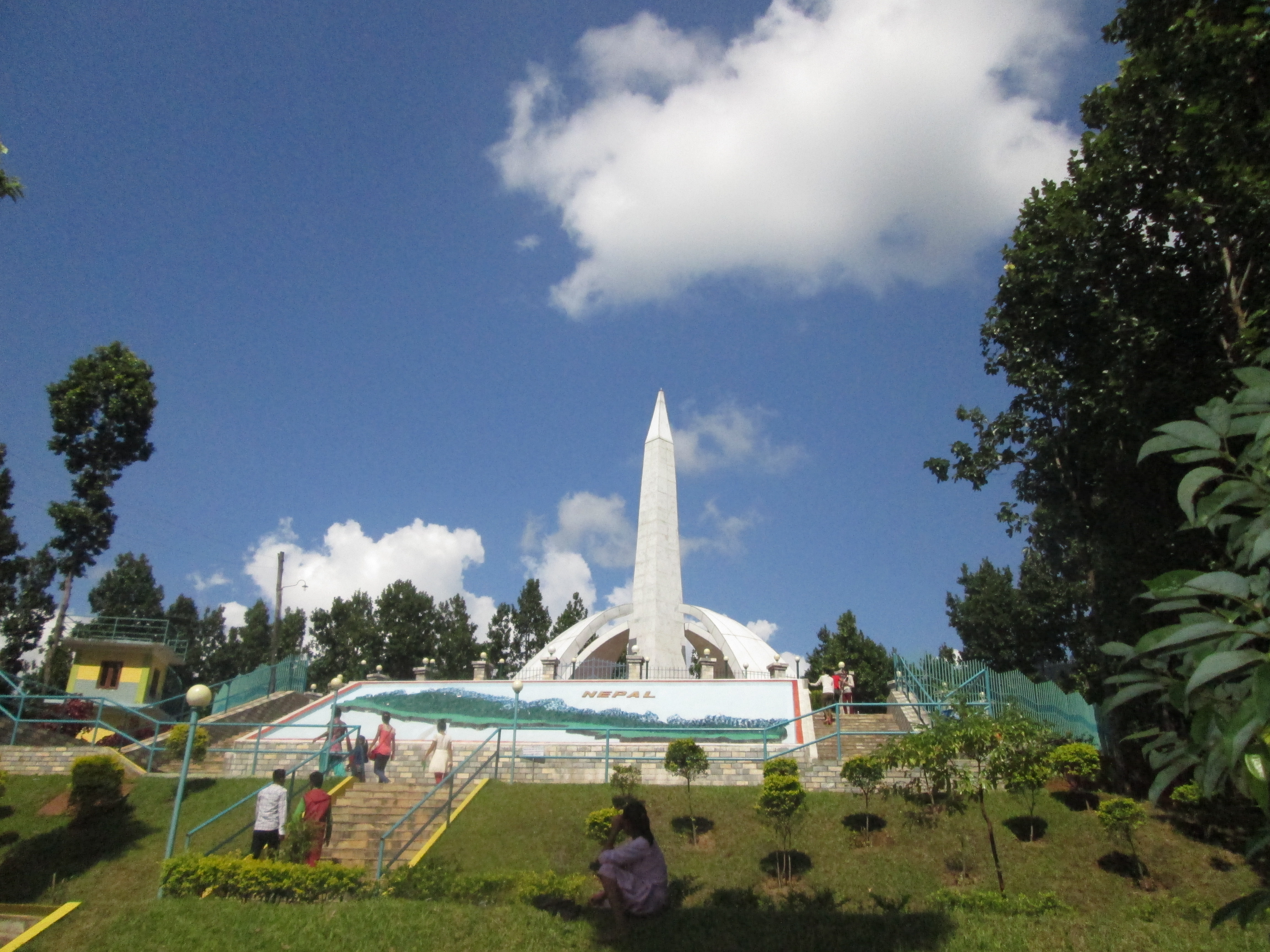
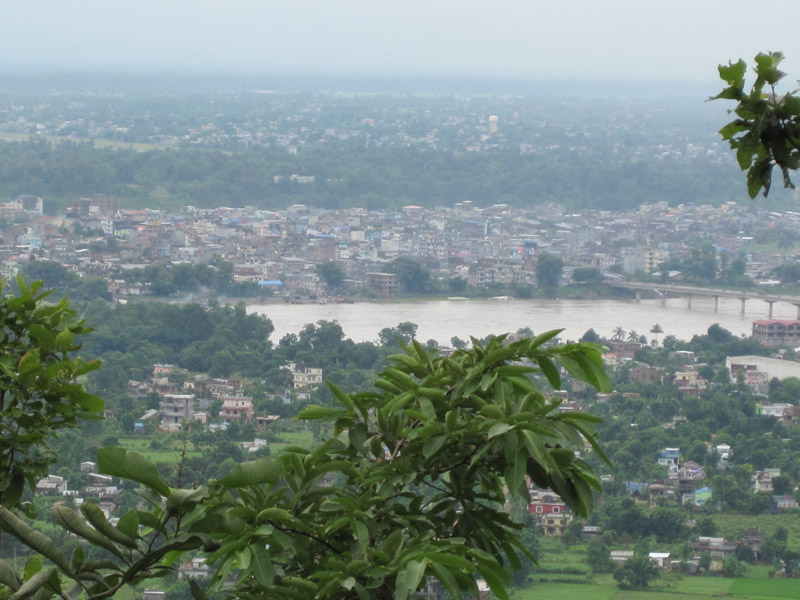
🏙️ Best Cities in Nepal for Digital Nomads




Work Permissions
Application Steps
- 1
📋 Verify eligibility and monitor launch
1-2 weeks
- 2
📄 Gather identity documents
1 week
- 3
📄 Collect financial proofs
1-2 weeks
- 4
📄 Obtain health insurance
3-5 days
- 5
📬 Submit application online or embassy
Same day
- 6
⏳ Wait for processing and approval
not specified
- 7
🏛️ Arrive and complete in-country registration
1-3 days
This visa requires proof of health insurance. Compare international plans before you apply.
Compare health insuranceWe may earn a commission at no cost to you.
Compare this visa
Curated comparisons that include this route.
Frequently Asked Questions
Click any question to expand the answer.
Ready to Apply?
Work with trusted visa specialists who handle the paperwork so you can focus on your move.
Get help with this visa →* We may earn a commission if you apply through our link
At a Glance
Last verified: May 13, 2026