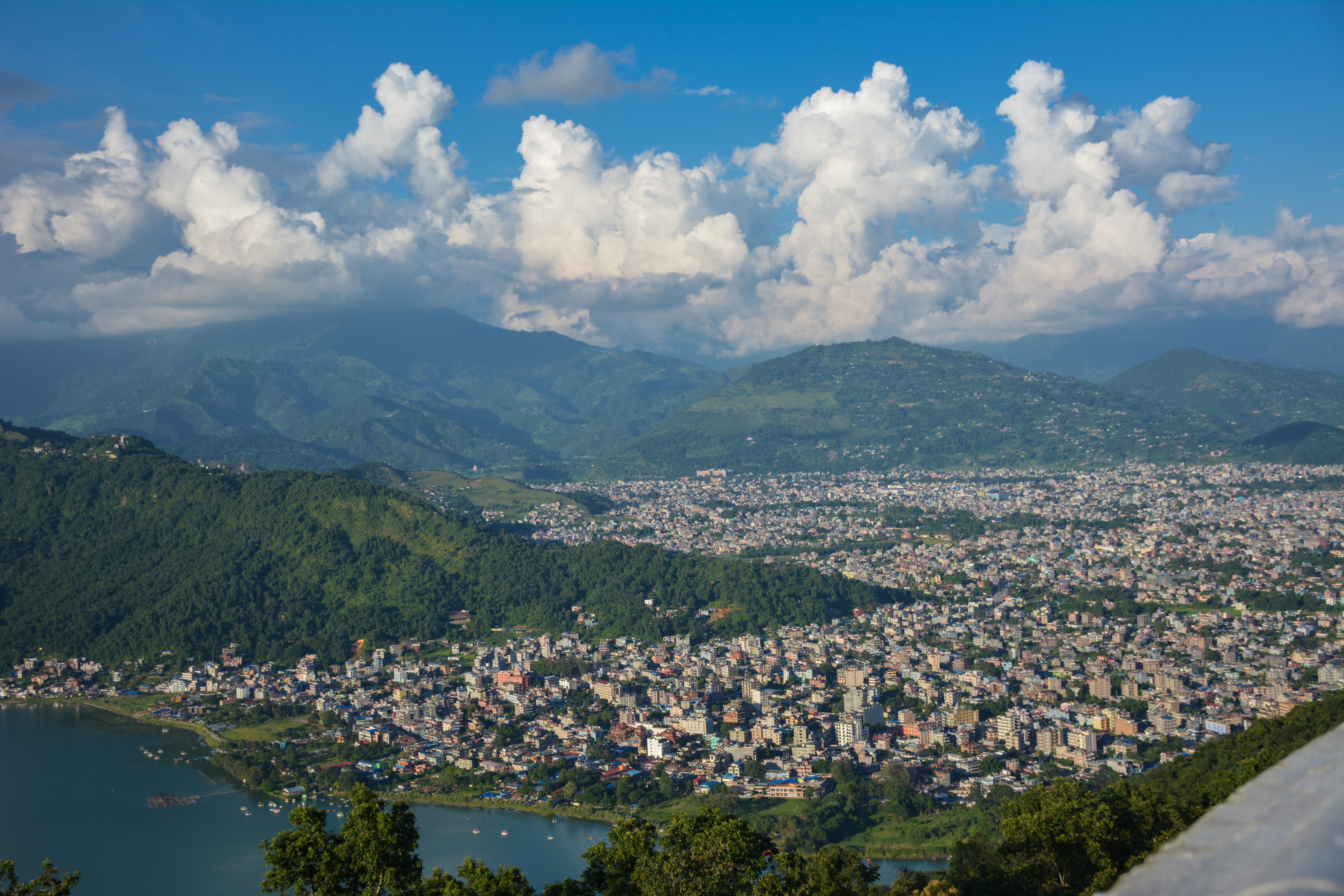
Pokhara sits in central Nepal at 827 m above sea level, in the Asia/Kathmandu timezone, and its subtropical monsoon climate brings warm, wet summers from June through September and mild, dry winters from December through February. That pattern keeps the city pleasant year-round, though the monsoon months run quite humid. With a population of 354 thousand, Pokhara is large enough to support a real expat scene without feeling like a metropolis. Most newcomers settle in Lakeside, the popular expat neighborhood, where guesthouses, cafes, and trekking outfitters cluster near the water. The expat community here is large and active, which makes it easy to find company, advice, and shared plans for weekends in the hills.
Living costs are the headline. A one-bedroom apartment in the city center rents for $125/mo, while the same outside the center drops to $84/mo. Three-bedroom units run $237/mo in the center and $157/mo outside it. Utilities add $65/mo, internet $7/mo, and a mobile phone plan $5/mo, with a monthly public transport pass at $19/mo and a gym membership at $19/mo. Everyday spending stays low: an inexpensive restaurant meal costs $3 per person, a mid-range three-course meal for two is $13, and a cappuccino is $1. Numbeo puts monthly costs excluding rent at $354/mo for a single person and $1,248/mo for a family of four. Budget, mid-range, and comfortable tiers for a single adult, rent included, come to $218/mo, $298/mo, and $371/mo respectively. Against that, the average monthly net salary locally is $178/mo, and the cost of living index is 28/100 against New York City at 100. In short, remote income goes very far here, while local wages do not.
Safety is moderate. The safety index is 55/100 and the crime index is 45/100, where lower is safer, so ordinary precautions apply as they would in most mid-sized Asian cities. Air quality sits at 68 on the air quality index, lower being better, and haze can build in the dry season. Healthcare quality is rated fair, which means routine care is manageable but serious conditions often mean traveling elsewhere. English proficiency is limited, so learning some Nepali helps with daily errands, landlords, and markets, even though the expat community is large and active.
For longer stays, Nepal offers a Residential Visa, and the stated minimum monthly income threshold is $20,000/mo. The nearest airport is Pokhara Airport (PKR). Overall, Pokhara scores 78/100 for expats, 80/100 on the FIRE measure, 63/100 for digital nomads, and 55/100 for retirees, with average internet speed at 24 Mbps. That mix suits remote workers and early retirees chasing low rent and a walkable Lakeside base, while the retiree score and fair healthcare suggest the city rewards those who plan ahead rather than those who need extensive medical infrastructure.