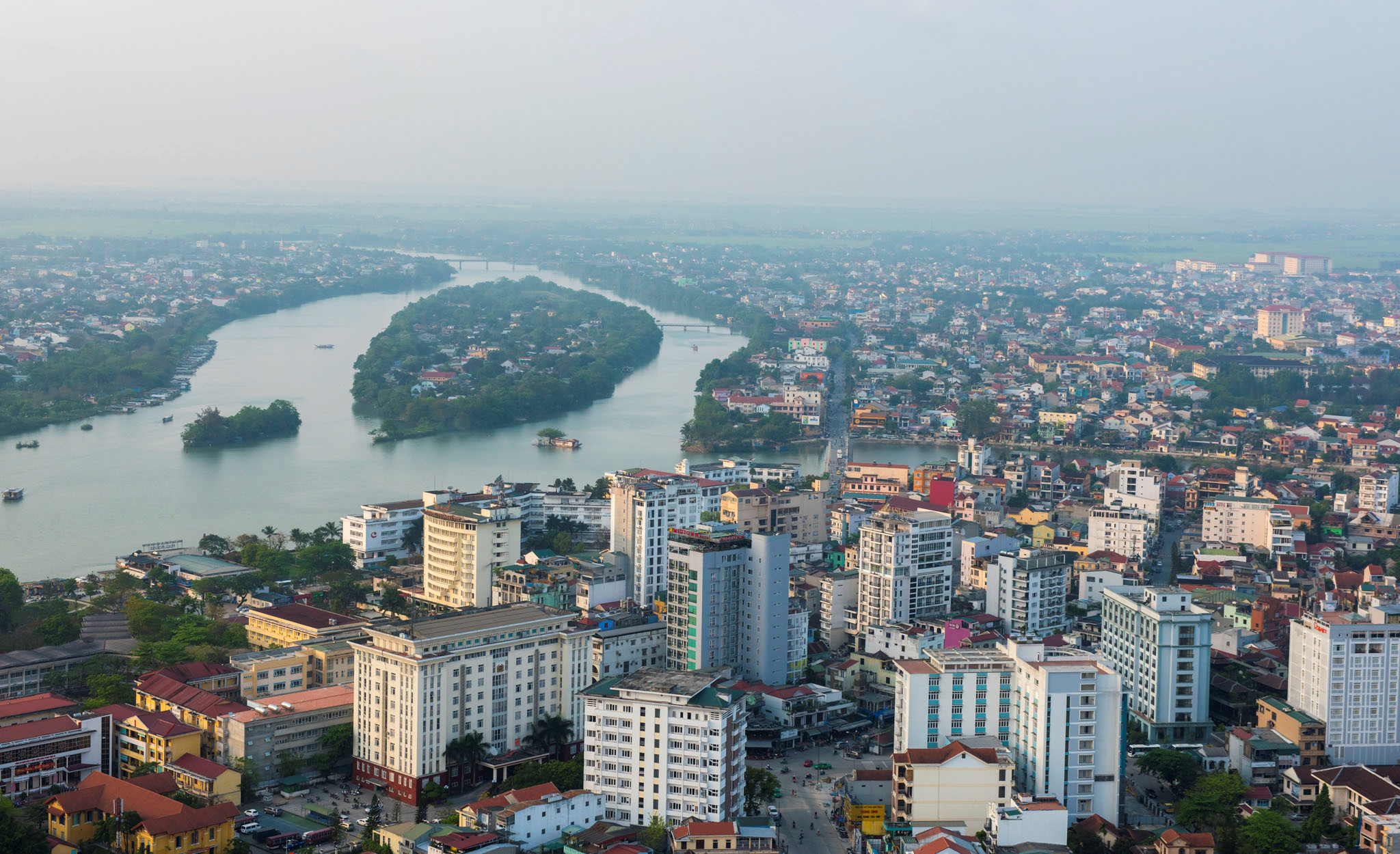
Hue sits in central Vietnam at just 3 m above sea level, in the Asia/Ho_Chi_Minh timezone, with a tropical climate that shapes daily life around a distinct wet and dry rhythm. The city holds 1.2 million residents, and its most established expat neighborhood is Hue City Center, where most newcomers settle for easy access to cafes, markets, and the Perfume River. The nearest airport is HUI, about 15 km away, which keeps arrivals and departures simple for anyone based in the center.
Living costs here are low enough to reset assumptions. A 1-bedroom apartment in the city center rents for $132/mo, while outside the center it drops to $99/mo. A 3-bedroom in the center runs $517/mo, and outside the center it is $357/mo. Utilities come to $38/mo, internet is $8/mo, a mobile phone plan is $6/mo, and a monthly public transport pass is $7/mo. A gym membership costs $39/mo. Eating out is inexpensive: a restaurant meal is $1 per person, a three-course mid-range meal for two is $11, and a cappuccino is $1. For a single adult, monthly costs excluding rent average $380/mo, while a family of four averages $1,200/mo excluding rent. Budget, mid-range, and comfortable tiers for a single adult with rent included come to $268/mo, $359/mo, and $412/mo. Against that, the average monthly net salary locally is $291/mo, and the cost of living index is 32/100 with New York City at 100.
Safety is generally favorable, with a safety index of 65/100 and a crime index of 35/100, where lower is safer. Air quality sits at 55 on an index where lower is better. Healthcare quality is rated Good. English proficiency is common in tourist areas, and the expat community is small, so social and professional circles tend to form quickly around Hue City Center. Average internet speed is 35 Mbps, which supports remote work without much friction.
The Vietnam Digital Nomad Visa requires a minimum monthly income of $600/mo. Arrivals typically route through HUI, 15 km from the city. Hue suits budget-conscious remote workers, early retirees, and anyone chasing a high overall expat score of 87/100 and a FIRE score of 87/100, though the retiree score of 69/100 and digital nomad score of 68/100 suggest a quieter, less built-out expat scene than larger Vietnamese cities.