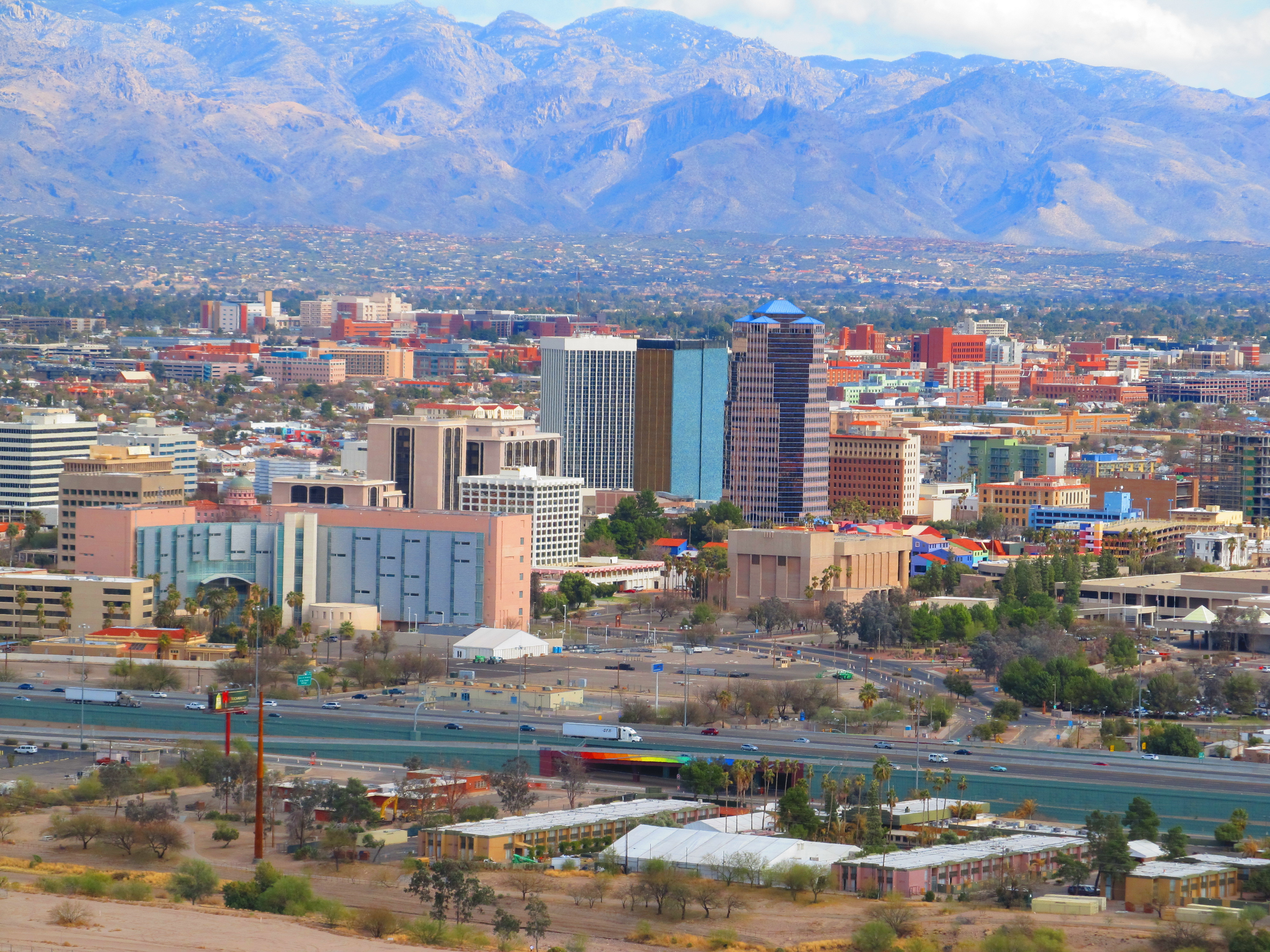
Three pillars hold up Tucson's economy: the University of Arizona (roughly 15,000 employees and 50,000 students), a serious aerospace and defense cluster anchored by Raytheon and Davis-Monthan Air Force Base, and an optics and photonics industry that earned the city its 'Optics Valley' nickname — companies like II-VI and Steward Observatory Mirror Lab operate here. Remote workers and FIRE retirees increasingly fill the gaps, drawn by lower costs than Phoenix or California. The job market is real but not deep; if you're not in defense, tech, academia, or healthcare, expect a thinner bench.
A one-bedroom in the city center runs around $1,350/month, dropping to $850–$1,000 in neighborhoods like Midtown or South Tucson. You need a car — public transit exists but is genuinely inadequate for daily life. Healthcare access is solid given the UA medical school and Banner–University Medical Center. Spanish fluency helps in daily life and is essentially required in some neighborhoods, though English gets you through most transactions. Bureaucracy at the state level (Arizona DMV, vehicle registration) is manageable but not frictionless, especially for new arrivals from out of state.
Summers are brutal — June and July regularly hit 105°F — but winters are legitimately pleasant, with daytime highs in the 60s and 70s from November through March. The UNESCO City of Gastronomy designation isn't marketing fluff: Sonoran cuisine here is distinct and excellent, and the food scene punches above the city's weight. The expat community is modest but growing, concentrated around retirees and remote workers; social infrastructure exists but you'll build your own circle. Weekends mean hiking Sabino Canyon, eating at a James Beard–recognized taco stand, or driving two hours to the Mexican border. This city suits FIRE retirees and remote workers who want Southwest sunshine, genuine affordability relative to coastal cities, and don't mind heat-induced hibernation for three months a year.
Estimate the cost of moving to Tucson, AZ, United States
Get a free moving cost estimate for moving to Tucson, AZ, United States. Takes 10 seconds.
How much are you shipping?
When are you moving?
Powered by Sirelo. Free quotes from international movers.
🏚️ Cost of Living
💰 Budgets and Costs
$1,745/mo, one person, rent included
Selected: budget lifestyle
Tucson, AZ on a budget budget comes to about $1,745 a month for one adult, with $1,088 of that going to rent. Beyond rent the estimate covers $190 on groceries, $78.00 on dining out, $55.00 on entertainment and lifestyle and $334 on utilities and connectivity.
Rent
$1,088/mo
1BR outside the centre
Groceries
$190/mo
75% of mid-range grocery spend
Dining out
$78.00/mo
4 inexpensive meals
Entertainment & lifestyle
$55.00/mo
1 cinema trip, 8 cappuccinos
Utilities & connectivity
$334/mo
utilities, mobile, internet
Budgets (excl. rent)
Single person$657/mo
Excludes rent. The total above is all-in, rent included.
$1,997/mo, one person, rent included
Selected: mid-range lifestyle
Tucson, AZ on a mid-range budget comes to about $1,997 a month for one adult, with $1,088 of that going to rent. Beyond rent the estimate covers $254 on groceries, $195 on dining out, $126 on entertainment and lifestyle and $334 on utilities and connectivity.
Rent
$1,088/mo
1BR outside the centre
Groceries
$254/mo
Staples basket scaled to a full month
Dining out
$195/mo
10 inexpensive meals
Entertainment & lifestyle
$126/mo
gym, 2 cinema trips, 12 cappuccinos
Utilities & connectivity
$334/mo
utilities, mobile, internet
Budgets (excl. rent)
Single person$909/mo
Excludes rent. The total above is all-in, rent included.
$2,625/mo, one person, rent included
Selected: comfortable lifestyle
Tucson, AZ on a comfortable budget comes to about $2,625 a month for one adult, with $1,385 of that going to rent. Beyond rent the estimate covers $355 on groceries, $357 on dining out, $194 on entertainment and lifestyle and $334 on utilities and connectivity.
Rent
$1,385/mo
1BR in the centre
Groceries
$355/mo
140% of mid-range grocery spend
Dining out
$357/mo
6 inexpensive meals + 6 mid-range meals
Entertainment & lifestyle
$194/mo
gym, 4 cinema trips, 20 cappuccinos
Utilities & connectivity
$334/mo
utilities, mobile, internet
Budgets (excl. rent)
Single person$1,240/mo
Excludes rent. The total above is all-in, rent included.
Estimates for one adult, built from this city's average prices and the usage shown for each tier. Your spending will differ with how often you eat out and where you live.
A 1BR in the center runs about $1385.33/mo. If your income is in another currency, bank FX fees add up. A multi-currency account can cut that cost.
Tucson feels moderately safe for daily life, with reasonable walkability in central neighborhoods during daylight hours. The city has a relaxed, college-town atmosphere that generally puts expats at ease. However, nighttime solo walking isn't recommended in many areas, and the overall crime rate is noticeably higher than safer U.S. cities. Most expats adapt quickly by using standard urban precautions.
Property crime—vehicle break-ins, package theft, and residential burglary—is the primary concern, particularly in south and east Tucson. Petty theft and scams targeting tourists occur but aren't epidemic. Violent crime exists but is concentrated in specific neighborhoods; avoid south of 22nd Street and east of Kolb Road after dark. Solo female travelers should exercise normal caution; the city is generally welcoming but not exceptionally safe compared to peer cities.
Tucson is politically stable with reliable police and no significant geopolitical risks for American expats. The main consideration is Arizona's border proximity and occasional immigration-related tensions, though these rarely affect daily life for residents. For a 30-65 demographic seeking a lower cost-of-living U.S. retirement or remote work base, Tucson is reasonable—safer than many major metros but requires awareness of neighborhood selection and standard urban safety habits.
🏥 Healthcare
Excellent
Public Hospitals
Yes
Private Clinics
Yes
English-Speaking Doctors
Widely Available
See how Tucson, AZ's healthcare compares with Chester, CA
🌤️ Climate
Summer Temp
38°C
Winter Temp
5°C
Humidity
25%
Air Quality Index
45
Annual Rainfall
312 mm
Best Months
MarNovDec
Climate Notes
Hot desert climate with hot summers and mild winters.
💻 Digital Nomad
Avg Internet Speed
180 Mbps
Internet (monthly)
$74/mo
Coworking Availability
Abundant
Coworking Spaces Nearby
2
Digital Nomad Score
78/100
Community Notes
Tucson is known for its sunny climate and vibrant nomad community.
Regus offers a reliable, professional environment with multiple locations throughout Tucson, including downtown and near the airport. It's a good option for those who need a no-frills, consistent workspace with flexible terms.
Located in the heart of downtown Tucson, The Office Coworking provides a vibrant and collaborative atmosphere. It's known for its community events and is close to restaurants and entertainment, making it ideal for digital nomads seeking a social environment.
Workhub Tucson, located near the University of Arizona, offers a modern and bright workspace with a focus on productivity. It's a good choice for those who want a quiet and focused environment with easy access to university resources and amenities.
Located in the historic Armory Park neighborhood, this coworking space offers a unique and inspiring setting. It's known for its creative vibe and is well-suited for freelancers and entrepreneurs looking for a collaborative community.
See how Tucson, AZ's digital nomad life compares with Chester, CA
🧳 Expat Life
English Proficiency
Widely Spoken
Expat Community
Medium
Top Neighborhoods
Sam Hughes, Catalina Foothills
Banks Nearby
55
ATMs Nearby
14
Expat Life Notes
A relaxed desert city with a major university and world-class astronomical observatories.
Pros
✓ Stunning desert nature
✓ Low cost for the West Coast US
✓ Artsy and academic atmosphere
Cons
✗ High summer heat
✗ Lower job market outside university/tech
✗ Sprawling
🏘️ Neighborhoods in Tucson, AZ
Areas of Tucson, AZ that expats often consider.
Conditions can change from one block to the next, and these descriptions are general guides, not safety assessments. Before choosing where to stay or live, check current travel advisories, talk to people who live there, and visit in person if you can.
Downtown Tucson
Urban, lively, historic revival
Downtown is experiencing a renaissance with new restaurants, bars, and cultural attractions. It's walkable and has good public transit, including the Sun Link streetcar. However, it can be noisy and parking can be a challenge, especially during events.
Sam Hughes
Historic, charming, family-friendly
Sam Hughes is a desirable historic neighborhood with tree-lined streets and well-maintained bungalows. It's close to the University of Arizona and offers a mix of families and students. Walkable to shops and restaurants on 4th Avenue, but can be pricey.
Catalina Foothills
Upscale, scenic, desert living
The Catalina Foothills offer stunning mountain views and luxury homes. It's a quieter, more residential area with access to hiking trails and resorts. Requires a car for most errands and activities, and rents are higher than in other parts of Tucson.
Armory Park
Historic, quiet, residential charm
Armory Park is a historic district with beautiful architecture and a peaceful atmosphere. It's located close to downtown but offers a more residential feel. Walkable to some amenities, but a car is still helpful for exploring the wider Tucson area.
University of Arizona Area
Student-centric, lively, affordable
This area is dominated by the University of Arizona and offers a vibrant, youthful atmosphere. It's walkable and has good public transit, but can be noisy and crowded, especially during the school year. More affordable than other central areas.
Barrio Viejo
Historic, colorful, artistic community
Barrio Viejo is known for its colorful adobe buildings and rich history. It's a walkable neighborhood with a strong sense of community and a growing arts scene. Some areas can be a bit rough around the edges, but it's generally safe and becoming increasingly popular.
Midtown
Eclectic, diverse, up-and-coming
Midtown encompasses a large area with a mix of residential and commercial properties. It's generally more affordable than downtown or the Foothills and offers a diverse range of housing options. Good access to amenities and public transportation, but can lack the charm of the historic districts.
Page 1 of 2
Could living/working in Tucson, AZ cut years off your work life?
With a 1-bedroom in the center at $1385/mo, your FIRE number here might be much lower than you think.
Tucson, AZ has a population of approximately 542,629 people.
A single person can expect to spend around $3,463 per month in Tucson, AZ, including rent. A 1-bedroom apartment in the city center costs approximately $1385/month.
The nearest airport to Tucson, AZ is AVW, approximately 26.2km away.
Tucson, AZ is considered relatively safe, with a safety index of 65.0. As with any city abroad, expats should research specific neighborhoods before committing to a location.
Tucson, AZ has an average internet speed of 180 Mbps. It is considered a well-established digital nomad destination.
Tucson has a cost of living index of 64.4 (NYC=100) and a city-center one-bedroom rent of $1,350 per month, making it more affordable than many coastal US metros. Monthly costs excluding rent are $60.4, though this figure may be unusually low. These numbers do not include transportation costs, which vary by lifestyle.
Bad enough to change your lifestyle. June and early July regularly hit 105–110°F before the monsoon arrives in mid-July. Most long-term residents shift outdoor activity to early mornings and evenings and treat July–September as indoor months. If you're coming from a cold climate, the winters (60s–70s daily) will feel like a fair trade. If you hate heat, it won't.
Strong in specific lanes — defense contracting (Raytheon is a major employer), University of Arizona academia and research, healthcare, and optics/tech manufacturing. Outside those sectors, wages are lower than national averages and opportunities thinner. Remote workers and retirees with outside income are increasingly common precisely because local salaries alone can be limiting.
Rent in Tucson varies, but you can typically find a decent one-bedroom apartment in areas like Sam Hughes or West University for around $1,000-$1,400 per month. Expect to pay more for newer complexes or those closer to downtown or the University of Arizona.
Tucson has a safety index of 65 and a crime index of 35, indicating moderate safety. Areas like the east side and foothills are considered safer, but research specific neighborhoods before committing.
While Tucson is car-dependent, the Sun Link streetcar and bus system (Sun Tran) offer decent coverage, especially in the downtown and university areas. Biking is also popular, with dedicated bike lanes, but be prepared for the heat.
Internet speeds in Tucson are generally good, with most providers offering fiber optic options. Expect download speeds of 100 Mbps or more in most areas, which is sufficient for video conferencing and other remote work needs. Check provider availability at your specific address.
The current data does not include information on coworking spaces in Tucson, so a verified answer is not available.
The monthly cost for one person excluding rent in Tucson is $60.4, which covers groceries and other essentials. Eating out at affordable spots costs $10-$15 per person, while upscale dining starts at $30 per person. Farmer's markets offer fresh local produce at reasonable prices.
Tucson has a good healthcare system with major hospital networks like Banner Health and Carondelet. Finding English-speaking doctors is not an issue. Many expats opt for private health insurance for broader coverage and shorter wait times.
While not as large as some major metropolitan areas, Tucson has a welcoming expat community. You can find groups and events through online platforms like Meetup and InterNations, offering opportunities to connect with other expats.
Retiring in Tucson on $3,000 per month is feasible as average 1BR rent in city center is $1,350 and monthly costs without rent are $60.4, leaving about $1,590 for other expenses and savings. The city has Excellent healthcare quality and a Safety index of 65, but a Walkability score of 50 means a car may be needed.
Since Tucson is in the US, retirees remain subject to standard US federal and Arizona state taxes, and the Foreign Earned Income Exclusion does not apply. The cost of living index is 64.4 relative to New York City, which is relevant for budgeting but does not change tax residency. Consult a tax professional for retirement-specific deductions.
For geoarbitrage in Tucson, focus on neighborhoods like Flowing Wells where a 1BR rent averages $1,350 per month, with a cost of living index of 64.4 (NYC=100) and monthly expenses around $860.4 for one person including rent, providing significant savings over cities like NYC.
Tucson has a more relaxed pace of life compared to larger cities. People are generally friendly and welcoming, and there's a strong emphasis on outdoor activities and enjoying the natural surroundings. It's a good fit for those seeking a slower, more laid-back lifestyle.
While Spanish is spoken by a significant portion of the population, especially in certain neighborhoods, English is widely spoken throughout Tucson. You can easily get by without knowing Spanish, but learning some basic phrases can enhance your experience and interactions with locals.
Cost-of-living and visa updates for Tucson, AZ and the rest of United States. Free with RA Postcards.
By submitting your email address, you will receive a free subscription to RA Postcards and special offers from Rewire Abroad and our affiliates. You can unsubscribe at any time, and we encourage you to read more about our Privacy Policy.