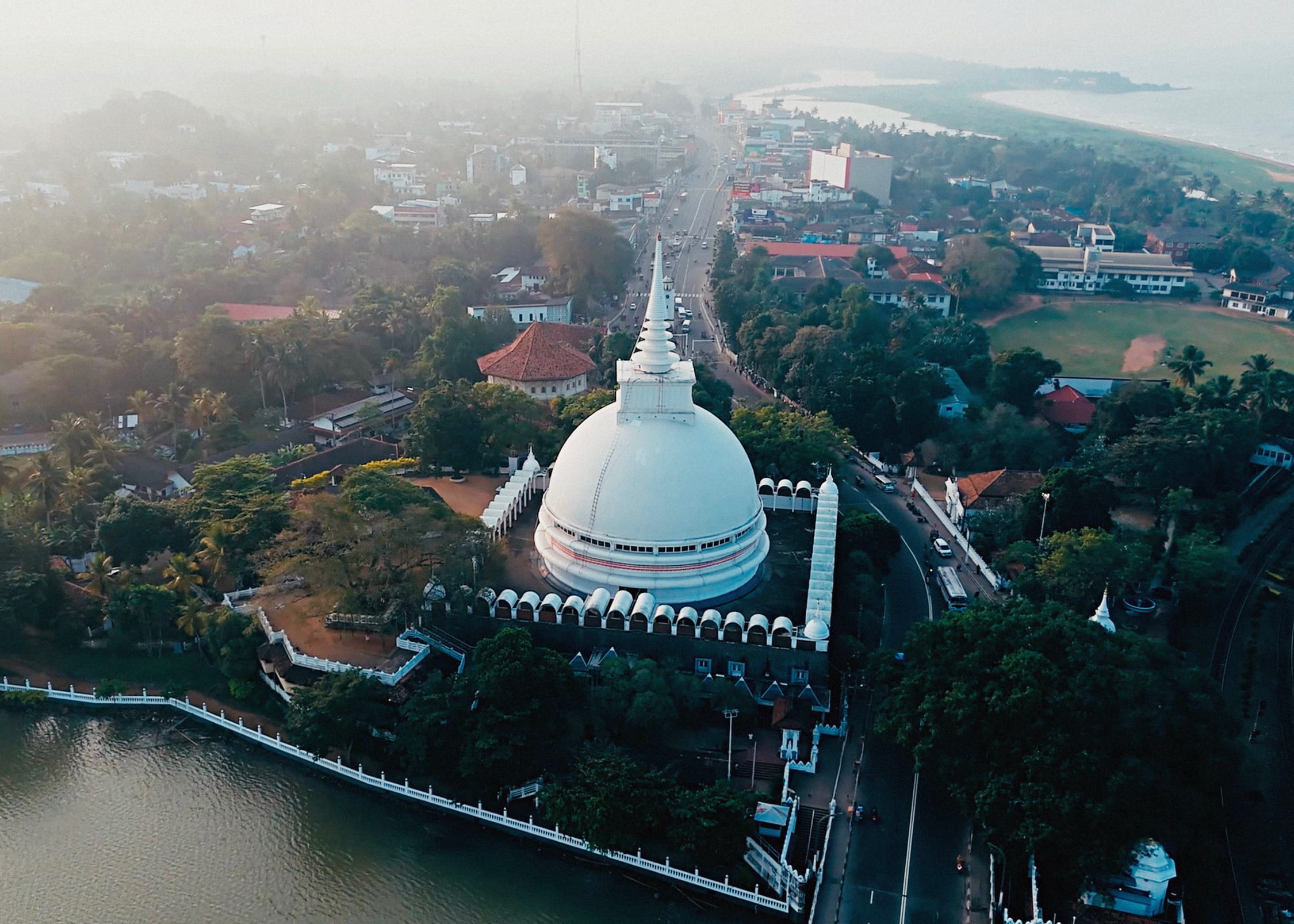
Kalutara sits on Sri Lanka's southwest coast, roughly 40 kilometers south of Colombo, at an elevation of just 10 meters above sea level. The tropical climate brings warm temperatures year-round, with monsoon rains sweeping in from May to September and a drier, sunnier stretch from December to March. The town itself is compact, with a population of around 40,000, and most expats gravitate toward the quieter residential lanes near the Kalu Ganga river, where the pace of life slows to a gentle rhythm. The beachfront stretches north and south of the town center offer the most sought-after rentals, though the data does not name specific neighborhoods beyond the general distinction between the center and the outskirts.
Living here is remarkably affordable. A one-bedroom apartment outside the center rents for about $85 per month, while a comparable unit in the city center runs closer to $350 per month, a country-level estimate. For a single adult, the budget tier totals $252 per month including rent, and the mid-range tier comes to $338 per month. Utilities add roughly $59 monthly, internet about $21, and a mobile plan just $4. Public transport is a steal at $9 for a monthly pass, and a gym membership costs $9. Eating out is inexpensive: a meal at a casual restaurant runs $4, a three-course dinner for two at a mid-range spot costs $25, and a cappuccino sets you back $3. These figures make Kalutara one of the most cost-effective coastal towns in the region.
Safety is a strong point here. The safety index stands at 68 out of 100, while the crime index is a low 32, meaning violent crime is uncommon and petty theft is manageable with normal precautions. Healthcare quality is rated as good, with a hospital and several clinics in town, though for specialized procedures most residents head to Colombo. The air quality index is 45, which is moderate and generally acceptable for outdoor activities. English proficiency is limited, so learning some Sinhala phrases goes a long way in daily interactions, especially with shopkeepers and tuk-tuk drivers.
For longer stays, Sri Lanka offers two clear visa pathways. The Sri Lanka My Dream Home Program requires a minimum monthly income of $1,500 per month, making it a viable option for retirees with modest pensions. The Digital Nomad Visa, by contrast, demands a minimum monthly income of $2,000 per month, which suits remote workers with steady online earnings. Getting to Kalutara is straightforward via the nearest airport, KTY, located just 4 kilometers away. With an average internet speed of 28 Mbps, the town is workable for light remote tasks, but the digital nomad score of 53 out of 100 suggests it is better suited to those who prioritize low costs and a relaxed coastal lifestyle over blazing connectivity. Retirees, in particular, will find the retiree score of 73 out of 100 appealing, while the overall expat score of 71 reflects a welcoming, affordable, and safe environment for those willing to adapt to a slower, more local way of life.