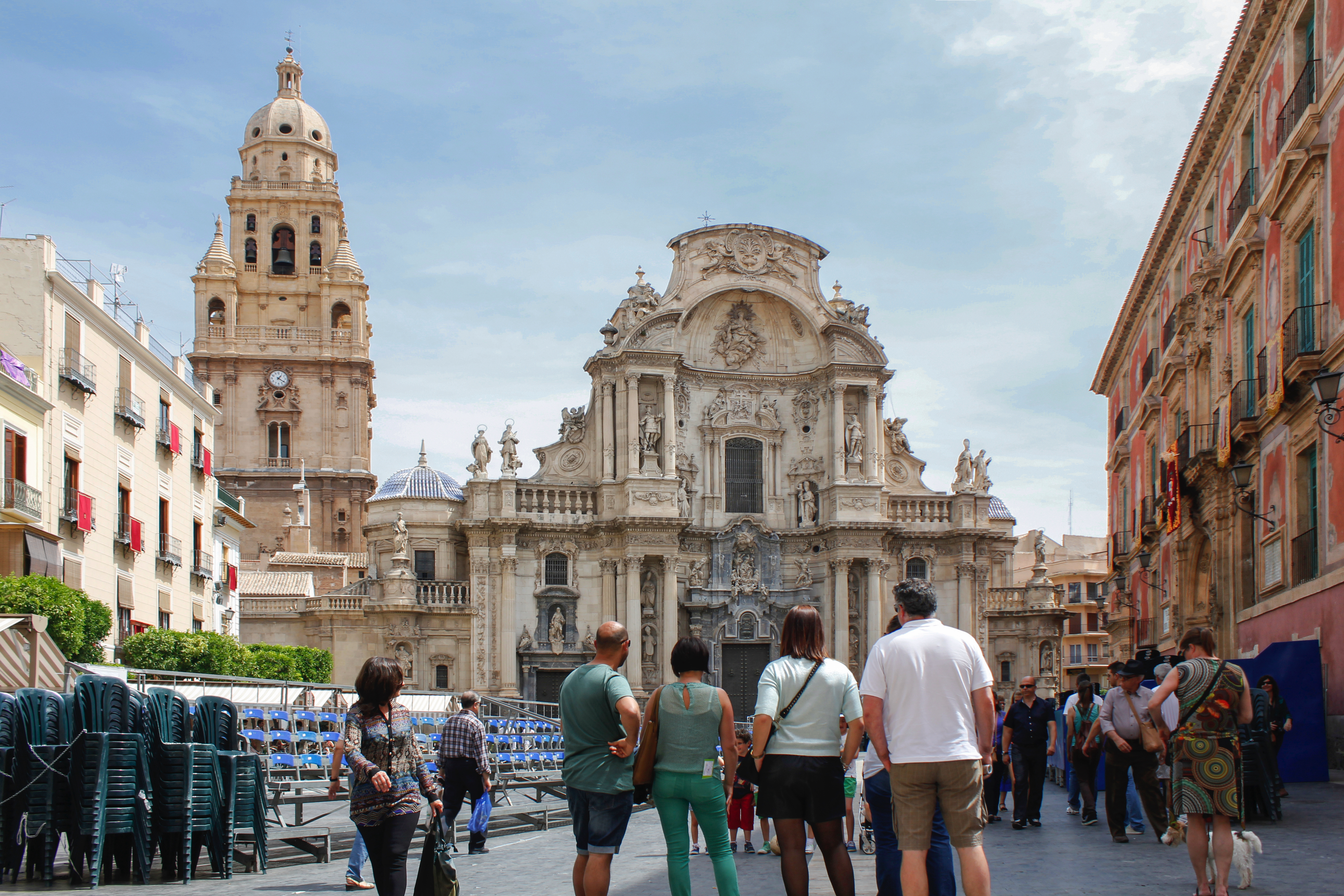
Agriculture dominates the economic landscape here, with massive fruit and vegetable operations earning the region its 'Europe's orchard' nickname. The University of Murcia employs thousands and draws students who fuel the service economy — restaurants, retail, and rental markets. Beyond farming and education, you'll find logistics companies capitalizing on the transport links, plus a growing tourism sector around the baroque cathedral and Holy Week processions. Job opportunities exist mainly in agribusiness, education, hospitality, and regional government roles, though salaries typically lag behind Madrid or Barcelona.
Rent averages $720 monthly for a one-bedroom in the city center, dropping to around $500-550 in outer neighborhoods. Public transport consists of buses and a single tram line — functional but limited compared to larger Spanish cities. Healthcare runs through Spain's public system with decent regional hospitals, though specialists may require trips to Valencia or Madrid. Spanish fluency is essential; English speakers are rare outside university circles. Bureaucracy follows standard Spanish patterns — expect multiple office visits for residency permits and NIE numbers.
The Mediterranean climate delivers 300+ sunny days annually with scorching summers hitting 40°C and pleasant winters around 15°C. Food centers on fresh produce from surrounding farms, excellent tapas bars, and traditional Murcian dishes like zarangollo and caldero. The expat community remains small — mostly EU retirees and university exchange students rather than digital nomads. Weekends mean beach trips to nearby Mar Menor or hiking in regional parks. This suits people wanting authentic Spanish living without tourist crowds, but you'll need Spanish skills and patience with provincial pace.
Estimate the cost of moving to Murcia, Spain
Get a free moving cost estimate for moving to Murcia, Spain. Takes 10 seconds.
How much are you shipping?
When are you moving?
Powered by Sirelo. Free quotes from international movers.
🏚️ Cost of Living
💰 Budgets and Costs
$997/mo, one person, rent included
Selected: budget lifestyle
Murcia on a budget budget comes to about $997 a month for one adult, with $561 of that going to rent. Beyond rent the estimate covers $132 on groceries, $67.00 on dining out, $29.00 on entertainment and lifestyle, $174 on utilities and connectivity and $34.00 on transport.
Rent
$561/mo
1BR outside the centre
Groceries
$132/mo
75% of mid-range grocery spend
Dining out
$67.00/mo
4 inexpensive meals
Entertainment & lifestyle
$29.00/mo
1 cinema trip, 8 cappuccinos
Utilities & connectivity
$174/mo
utilities, mobile, internet
Transport
$34.00/mo
Monthly pass
Budgets (excl. rent)
Single person$436/mo
Excludes rent. The total above is all-in, rent included.
$1,201/mo, one person, rent included
Selected: mid-range lifestyle
Murcia on a mid-range budget comes to about $1,201 a month for one adult, with $561 of that going to rent. Beyond rent the estimate covers $176 on groceries, $168 on dining out, $88.00 on entertainment and lifestyle, $174 on utilities and connectivity and $34.00 on transport.
Rent
$561/mo
1BR outside the centre
Groceries
$176/mo
Staples basket scaled to a full month
Dining out
$168/mo
10 inexpensive meals
Entertainment & lifestyle
$88.00/mo
gym, 2 cinema trips, 12 cappuccinos
Utilities & connectivity
$174/mo
utilities, mobile, internet
Transport
$34.00/mo
Monthly pass
Budgets (excl. rent)
Single person$640/mo
Excludes rent. The total above is all-in, rent included.
$1,619/mo, one person, rent included
Selected: comfortable lifestyle
Murcia on a comfortable budget comes to about $1,619 a month for one adult, with $768 of that going to rent. Beyond rent the estimate covers $247 on groceries, $269 on dining out, $127 on entertainment and lifestyle, $174 on utilities and connectivity and $34.00 on transport.
Rent
$768/mo
1BR in the centre
Groceries
$247/mo
140% of mid-range grocery spend
Dining out
$269/mo
6 inexpensive meals + 6 mid-range meals
Entertainment & lifestyle
$127/mo
gym, 4 cinema trips, 20 cappuccinos
Utilities & connectivity
$174/mo
utilities, mobile, internet
Transport
$34.00/mo
Monthly pass
Budgets (excl. rent)
Single person$851/mo
Excludes rent. The total above is all-in, rent included.
Estimates for one adult, built from this city's average prices and the usage shown for each tier. Your spending will differ with how often you eat out and where you live.
A 1BR in the center runs about $767.82/mo. If your income is in another currency, bank FX fees add up. A multi-currency account can cut that cost.
Murcia is genuinely safe for daily life, with a Numbeo Safety Index of 78 reflecting a secure, walkable city. Expats report comfortable evening strolls through the historic center and residential neighborhoods. The city lacks the petty crime intensity of larger Spanish metros like Barcelona or Madrid, and violent crime is rare. Most expats feel at ease here, though standard urban awareness applies.
Petty theft and pickpocketing occur occasionally in crowded areas like the train station and central plazas, particularly during summer tourist season. Avoid displaying expensive jewelry or leaving valuables visible in cars. Scams targeting tourists are minimal compared to coastal resorts. Solo female travelers report feeling safe, though nighttime solo walks in peripheral neighborhoods warrant caution. Residential areas like Espinardo and Centro are reliably secure.
Spain's political environment is stable with reliable police and judicial systems. Murcia has no significant geopolitical tensions or protest activity affecting residents. Corruption is low by international standards. The city's main vulnerability is petty opportunistic crime rather than organized crime or systemic instability. For Americans considering relocation, Murcia presents a genuinely low-risk option—safer than most mid-sized U.S. cities and ideal for remote workers or retirees seeking a calm, walkable European base.
Located in the heart of Murcia, UCo offers a modern and professional environment with various membership options. It's a great choice for expats seeking a central location with easy access to amenities and transportation.
Regus provides a reliable and globally recognized coworking experience. With multiple locations in Murcia, it offers flexible workspace solutions and is well-suited for digital nomads seeking a professional and established environment.
Coworking Murcia offers a friendly and collaborative atmosphere, perfect for freelancers and remote workers. Located near the city center, it provides a convenient and affordable option for expats looking to connect with the local community.
Talent Garden is a large, modern coworking space focused on technology and innovation. It's a good option for digital nomads looking for a vibrant community and access to events and workshops.
See how Murcia's digital nomad life compares with Altea
🧳 Expat Life
English Proficiency
Common in Tourist Areas
Expat Community
Medium
Top Neighborhoods
Santo Domingo, La Flota
Banks Nearby
100
ATMs Nearby
9
Expat Life Notes
A major agricultural and university city. It offers a very authentic Spanish life at a low cost.
Pros
✓ Low cost of living
✓ Excellent food (Tapas hub)
✓ Warm, sunny weather
Cons
✗ Limited English spoken
✗ Quiet social scene in summer
✗ High heat
🏘️ Neighborhoods in Murcia
Areas of Murcia that expats often consider.
Conditions can change from one block to the next, and these descriptions are general guides, not safety assessments. Before choosing where to stay or live, check current travel advisories, talk to people who live there, and visit in person if you can.
La Merced
Historic center, lively atmosphere
The heart of Murcia, La Merced is known for its historic buildings, tapas bars, and the University of Murcia. It's a vibrant area popular with students and young professionals. Expect some noise, especially on weekends, but enjoy excellent walkability and access to amenities.
El Carmen
Traditional, residential, well-connected
Located just across the Segura River, El Carmen offers a more residential feel while still being close to the city center. It's well-connected by public transport, including the train station. It's a good option for those seeking a quieter environment with easy access to amenities.
Vistalegre
Modern, family-friendly, residential
A more modern residential area, Vistalegre is popular with families and offers a range of amenities, including parks and schools. It's a bit further from the city center, but well-served by buses. Spanish language skills are helpful here as it's less touristy.
Santa Eulalia
Central, historic, authentic Murcia
Located near the Cathedral, Santa Eulalia is a charming neighborhood with narrow streets and historic buildings. It offers a mix of residential and commercial properties. It's very walkable and offers a taste of authentic Murcian life, but can be crowded during peak tourist season.
San Antón
Up-and-coming, diverse, affordable
San Antón is a more budget-friendly option that's undergoing revitalization. It's a diverse neighborhood with a mix of cultures. While it may not be as polished as other areas, it offers a more authentic and affordable living experience. Public transport is readily available.
Juan Carlos I Avenue Area
Modern, commercial, well-connected
This area along Juan Carlos I Avenue features modern apartments, shopping centers, and good transport links. It's a convenient location for those who want easy access to amenities and the rest of the city. Expect higher rents and a less traditional atmosphere.
Page 1 of 2
Could living/working in Murcia cut years off your work life?
With a 1-bedroom in the center at $768/mo, your FIRE number here might be much lower than you think.
Murcia has a population of approximately 479,405 people.
A single person can expect to spend around $1,920 per month in Murcia, including rent. A 1-bedroom apartment in the city center costs approximately $768/month.
The nearest airport to Murcia is RMU, approximately 9.1km away.
Murcia is considered relatively safe, with a safety index of 78.0. As with any city abroad, expats should research specific neighborhoods before committing to a location.
Murcia has an average internet speed of 100 Mbps. It is considered a well-established digital nomad destination.
Yes, Spanish fluency is essential. Unlike tourist areas, English speakers are rare outside the university. Basic Spanish won't suffice for bureaucracy, healthcare, or most jobs.
Limited options include English teaching at the university, agricultural export companies, and tourism roles. Most positions require Spanish fluency and EU work authorization. Salaries are lower than major Spanish cities.
Murcia is generally considered a very safe city. Petty crime, like pickpocketing, can occur in touristy areas or on public transport, but violent crime is rare. As with any city, be aware of your surroundings, especially at night.
For budget-conscious expats, consider areas like Vistabella or La Flota. These neighborhoods offer more affordable rent than the city center while still providing good access to amenities and transport. You can find apartments for around €500-€700 per month.
Murcia has a good public healthcare system, which you can access once you obtain residency. Private healthcare is also available and relatively affordable. While not all doctors speak fluent English, you can find English-speaking physicians, especially in private clinics and hospitals like Hospital Quirónsalud Murcia.
Murcia has a Mediterranean climate with hot, dry summers and mild winters. Expect temperatures to soar in July and August, often exceeding 35°C (95°F). Winters are mild, with average temperatures around 10-15°C (50-59°F), and rainfall is relatively low throughout the year.
Rent in Murcia is quite affordable compared to other Spanish cities. A one-bedroom apartment in the city center might cost around €600-€800 per month, while a similar apartment outside the center could be found for €500-€700. Larger apartments with multiple bedrooms will naturally be more expensive.
The most common visa for Americans retiring in Murcia is the non-lucrative visa. This requires proof of sufficient financial means to support yourself without working in Spain, typically around €28,800 per year for a single applicant. You'll also need private health insurance and a clean criminal record.
Internet speed in Murcia is generally excellent, with fiber optic connections widely available. You can expect speeds of 300 Mbps or higher in most areas, making it suitable for video conferencing and other remote work activities. Coworking spaces also offer reliable, high-speed internet.
Yes, Murcia has a growing number of coworking spaces catering to digital nomads and freelancers. Popular options include Regus Murcia, ULab Coworking, and several smaller independent spaces. Expect to pay around €100-€200 per month for a dedicated desk.
Murcia is a very walkable city, and the public transport system is efficient and affordable. There are buses and trams that connect different parts of the city. Taxis and ride-sharing services are also readily available. A car is not essential for getting around.
As a US citizen, you're still required to file US taxes even when living abroad. The Foreign Earned Income Exclusion (FEIE) allows you to exclude a certain amount of your foreign-earned income from US taxes. You may also need to report foreign bank accounts if the total value exceeds $10,000 (FBAR).
While not as large as in coastal areas like Alicante or Málaga, Murcia has a growing expat community, particularly from the UK and Northern Europe. You can find expat groups and social events through online platforms like Facebook and InterNations. It's a good way to connect with other expats and make friends.
Retiring comfortably in Murcia is very achievable on a reasonable budget. With a monthly income of €1,500-€2,000, you can live a comfortable life, covering rent, groceries, healthcare, and leisure activities. This assumes you own your property outright or have low housing costs.
Murcian cuisine is delicious and varied. Be sure to try *paparajotes* (lemon leaf fritters), *michirones* (broad bean stew), *arroz caldero* (rice cooked in fish broth), and *pastel de carne* (meat pie). The local wines are also excellent and very affordable.
Spaniards in Murcia tend to have a more relaxed pace of life than in the US. Meal times are later, and businesses often close for siesta in the afternoon. Politeness and respect are highly valued, so learning basic Spanish greetings is essential. Be prepared for a more collectivist culture than you might be used to.
Cost-of-living and visa updates for Murcia and the rest of Spain. Free with RA Postcards.
By submitting your email address, you will receive a free subscription to RA Postcards and special offers from Rewire Abroad and our affiliates. You can unsubscribe at any time, and we encourage you to read more about our Privacy Policy.