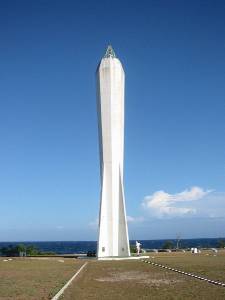
Madang sits on Papua New Guinea's north coast at just 8 m above sea level, in the Pacific/Port_Moresby timezone, and its tropical climate keeps temperatures consistently warm all year with high humidity and two distinct seasons: a wet season from December through March with heavy rainfall, and a drier season from May through October with slightly less precipitation. The city holds a population of 27 thousand, and its compact scale means most daily errands unfold within a short distance. Air quality is comparatively good, with an index of 35, where lower is better.
Housing costs split sharply between the center and the outskirts. A 1-bedroom apartment in the city center runs $377/mo, while the same outside the center drops to $226/mo. A 3-bedroom in the city center reaches $580/mo. Utilities add about $65/mo. Beyond rent, a single person spends roughly $937/mo excluding rent, according to a Numbeo summary. Everyday food is affordable by regional standards: a cappuccino in a restaurant costs $2, an inexpensive restaurant meal runs $24 per person, and a mid-range three-course meal for two comes to $49. The catch is income. The average monthly net salary locally is $232/mo, which means the gap between local earnings and expat-style living costs is wide, and internet service averages 15 Mbps.
Safety is a real consideration. The safety index stands at 35/100, and the crime index is 65/100, where lower is safer. Healthcare quality is rated poor, so residents typically plan for medical care carefully and often travel for serious treatment. These two factors shape daily life more than almost anything else, and they are the main reasons the overall expat score lands at 31/100, with a retiree score of 41/100 and a digital nomad score of 37/100.
For longer stays, the Retirement Visa requires a minimum monthly income of $4,917/mo. Arrivals come through MAG, the nearest airport. English proficiency locally is limited, so patience and a willingness to learn Tok Pisin go a long way. Madang suits travelers who want a low-rise tropical base, cheap rent outside the center, and a slow pace, and who can accept limited healthcare, modest safety, and a salary scale that makes local employment impractical for most newcomers.