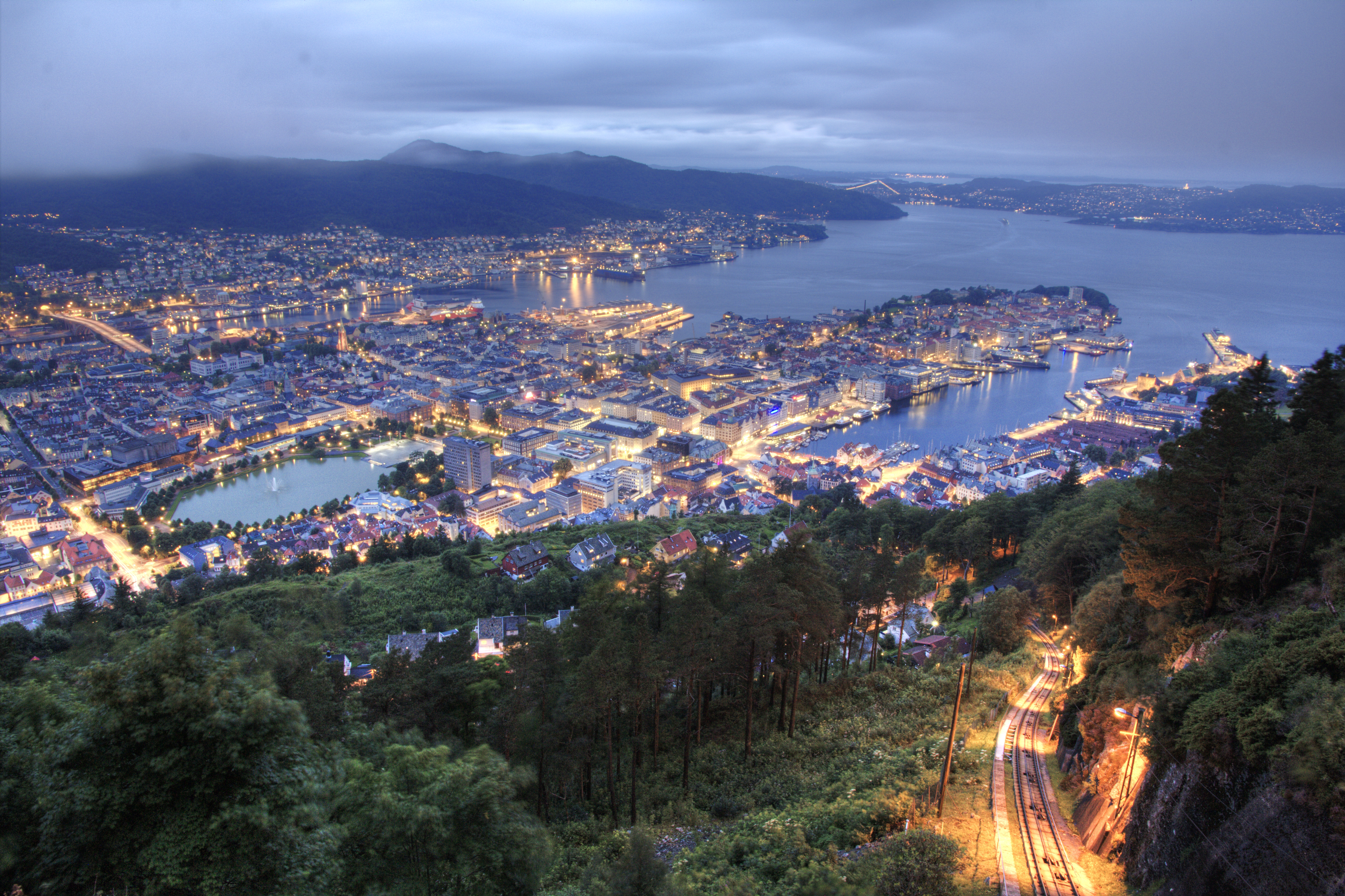
Bergen's economy runs on oil, shipping, and fish. Offshore petroleum and subsea technology dominate high-wage employment; aquaculture and maritime industries employ thousands. The University of Bergen and Norwegian School of Economics anchor a solid knowledge sector. Most expats work in tech, finance, or education—remote work is common because local salaries rarely justify the cost of living. Cruise tourism floods the city (300+ ships annually), but that's seasonal and doesn't create stable jobs for residents.
Rent for a one-bedroom city center runs $1,650/month; outside the center, expect $1,200–$1,400. Transport is efficient: light rail, buses, and ferries work well, though a car isn't necessary. Healthcare is excellent and free to residents after registration. Norwegian bureaucracy is thorough but digitized—residency permits take weeks, not months. The real friction: Norwegian is essential for integration; English works for expats but limits social depth. Winters are mild (rarely below freezing) but wet—200+ rainy days yearly.
Weekends mean hiking in the surrounding fjords, kayaking, or sitting in cafés watching rain. The expat community exists but stays small; you'll meet other foreigners but won't find an expat bubble. Food is expensive and Nordic-heavy; eating out costs $20–$35 per meal. Summers are genuinely pleasant; winters are gray and damp. Bergen suits remote workers with savings, outdoor enthusiasts unbothered by rain, and people serious about learning Norwegian—not those seeking cheap living or a large English-speaking social scene.
Estimate the cost of moving to Bergen, Norway
Get a free moving cost estimate for moving to Bergen, Norway. Takes 10 seconds.
How much are you shipping?
When are you moving?
Powered by Sirelo. Free quotes from international movers.
🏚️ Cost of Living
A 1BR in the center runs about $1432.15/mo. If your income is in another currency, bank FX fees add up. A multi-currency account can cut that cost.
Bergen is genuinely one of Europe's safest cities. Walking alone at night is routine and unremarkable; locals do it without concern. The city feels orderly and well-maintained, with visible police presence and strong community policing. Expats consistently report feeling safer here than in most US cities, and this isn't hype—the low crime rate is real and reflects Norway's social stability, wealth, and effective governance.
Petty theft exists but is rare compared to other European cities. Pickpocketing in crowded areas like the harbor or markets is possible but uncommon. Violent crime is extremely rare. The main risks are opportunistic bike theft and occasional package theft, so secure valuables accordingly. Solo female travelers face virtually no gender-specific safety concerns. Avoid the Årstad neighborhood late at night if unfamiliar, though even this is relatively safe by global standards.
Norway has zero political instability, minimal corruption, and highly reliable police. Protests are peaceful and rare. The main contextual consideration is cost of living—Bergen is expensive, which can strain budgets for those on fixed incomes. For Americans 30-65 considering relocation, Bergen presents exceptional safety with excellent healthcare, infrastructure, and quality of life. The trade-off is weather (dark winters) and expense, not security.
🏥 Healthcare
Excellent
Public Hospitals
Yes
Private Clinics
Yes
English-Speaking Doctors
Widely Available
See how Bergen's healthcare compares with Kristiansand
🌤️ Climate
Climate Zones
Temperate
Summer Temp
15°C
Winter Temp
2°C
Humidity
80%
Air Quality Index
25
Annual Rainfall
2454 mm
Best Months
MayJunJulAugSep
Climate Notes
Bergen has a mild oceanic climate with cool summers, cold wet winters, and persistent rainfall year-round—expect frequent drizzle and overcast skies.
💻 Digital Nomad
Avg Internet Speed
180 Mbps
Internet (monthly)
$81/mo
Coworking Availability
Moderate
Coworking Spaces Nearby
6
Digital Nomad Score
80/100
Community Notes
Bergen’s coworking spaces are nestled between fjords and mountains offering breathtaking views.
Located in the city center, MESH Bergen offers a vibrant community and modern workspace. It's a great option for expats looking to network and collaborate, with regular events and a focus on innovation.
Regus provides multiple locations in Bergen, offering reliable and professional coworking spaces. These locations are suitable for remote workers seeking a more corporate environment with flexible terms.
Located centrally, Impact Hub Bergen focuses on social impact and sustainability. It's a good choice for digital nomads interested in connecting with like-minded individuals and contributing to a positive change.
Kontorhuset offers a modern and stylish coworking environment in Bergen. With flexible membership options and a central location, it's a convenient choice for remote workers seeking a professional and well-equipped workspace.
See how Bergen's digital nomad life compares with Kristiansand
🧳 Expat Life
English Proficiency
Widely Spoken
Expat Community
Large & Active
Top Neighborhoods
Nordnes, Sandviken
Banks Nearby
16
ATMs Nearby
20
Expat Life Notes
Coastal beauty with huge international presence. safe and highly cultured.
Pros
✓ Stunning fjord nature
✓ Safe and clean
✓ Universal English
Cons
✗ Rainy climate
✗ High costs
🏘️ Neighborhoods in Bergen
Areas of Bergen that expats often consider.
Conditions can change from one block to the next, and these descriptions are general guides, not safety assessments. Before choosing where to stay or live, check current travel advisories, talk to people who live there, and visit in person if you can.
Bryggen
Historic, touristy, vibrant waterfront
Bryggen is the iconic Hanseatic wharf, a UNESCO World Heritage site. While beautiful and central, it's heavily touristed and can be noisy. Living here offers unparalleled access to Bergen's history and culture, but expect higher prices and less residential feel.
Sentrum
Central, lively, urban convenience
Sentrum is Bergen's city center, offering easy access to shops, restaurants, and public transportation. It's a good choice for those who want to be in the heart of the action, but can be busy and expensive. Expect some noise, especially on weekends.
Nordnes
Charming, historic, peninsula living
Nordnes is a picturesque peninsula with narrow streets, wooden houses, and stunning views. It's quieter than Sentrum but still within walking distance of the city center. The Bergen Aquarium is located here, and there are several parks and green spaces.
Sandviken
Residential, scenic, slightly removed
Sandviken is a residential area north of the city center, offering a mix of older houses and modern apartments. It's a bit further from the main attractions but well-connected by bus. This area provides a quieter, more local feel with beautiful views of the fjord.
Møhlenpris
Up-and-coming, student, diverse
Møhlenpris is a neighborhood close to the University of Bergen, making it popular with students. It's becoming increasingly trendy, with new cafes and shops opening up. Expect a younger, more diverse population and slightly more affordable rents compared to Sentrum.
Årstad
Residential, family-friendly, practical
Årstad is a larger residential district south of the city center. It's a good option for those seeking a quieter, more family-oriented environment. While less touristy, it still offers good access to amenities and public transportation, though knowledge of Norwegian is more helpful here.
Fyllingsdalen
Suburban, affordable, modern living
Fyllingsdalen is a more modern, suburban area located further from the city center. It offers more affordable housing options, but requires reliance on public transportation or a car to reach Bergen's main attractions. It's a good choice for those prioritizing budget and space over immediate proximity to the city's core, but less expat-centric.
Page 1 of 2
Could living/working in Bergen cut years off your work life?
With a 1-bedroom in the center at $1432/mo, your FIRE number here might be much lower than you think.
Bergen has a population of approximately 95,889 people.
A single person can expect to spend around $3,580 per month in Bergen, including rent. A 1-bedroom apartment in the city center costs approximately $1432/month.
The nearest airport to Bergen is BGO, approximately 2.1km away.
Bergen is considered relatively safe, with a safety index of 83.0. As with any city abroad, expats should research specific neighborhoods before committing to a location.
Bergen has an average internet speed of 180 Mbps. It is considered a well-established digital nomad destination.
Yes, but mainly in tech, finance, education, or maritime sectors. Most expats work remotely or for international companies. Local salaries rarely justify the high cost of living unless you're in senior roles. Norwegian language skills help significantly for permanent positions.
Bergen gets 200+ rainy days annually—it's genuinely wet. Winters are mild (rarely below freezing) thanks to the Gulf Stream, but gray and damp. If you hate rain, this isn't your city. Summers (June–August) are pleasant and dry.
Yes. Rent is $1,650+ for a one-bedroom city center, food costs $20–$35 per meal, and general prices are high. It's cheaper than Oslo in some categories but more expensive than smaller Norwegian towns. Budget $2,500–$3,500/month for comfortable solo living.
For families, areas like Sandviken and Åsane offer quieter residential streets and good schools. For younger expats and digital nomads, the city center (Sentrum) and Møhlenpris are popular due to their proximity to cafes, bars, and cultural attractions. Budget-conscious expats might consider areas slightly further out, like Fyllingsdalen, which offer more affordable housing options.
Bergen is generally a very safe city with low crime rates. Petty theft, like pickpocketing, can occur in touristy areas, but violent crime is rare. As an expat, you're unlikely to encounter any significant safety concerns, but it's always wise to be aware of your surroundings.
Bergen boasts excellent internet infrastructure, with widespread access to high-speed fiber optic connections. You can expect download speeds of 50-100 Mbps or higher in most areas, making it ideal for remote work. Many cafes and coworking spaces also offer reliable Wi-Fi.
Yes, you'll find many doctors and dentists in Bergen who speak English fluently. The healthcare system is generally excellent, and most medical professionals are accustomed to treating international patients. You can find English-speaking providers through online directories or by asking for recommendations from other expats.
Norway doesn't have a specific retirement visa. US citizens typically need to apply for a residence permit based on other grounds, such as employment (if you're working remotely for a foreign company), family ties, or self-sufficiency. The requirements can be strict, so it's best to consult with the Norwegian Directorate of Immigration (UDI) for the most up-to-date information.
While not as large as in some other European cities, Bergen has a growing expat community. There are various online groups and social events where you can connect with other expats. The University of Bergen also attracts many international students, adding to the city's diverse atmosphere.
Bergen has a well-developed public transportation system, including buses and a light rail (Bybanen). Walking and cycling are also popular options, especially in the city center. A car is not necessary for most people living in Bergen, and parking can be expensive and difficult to find.
As a US citizen, you're still required to file US taxes even when living abroad. You may be able to exclude a significant portion of your foreign earned income using the Foreign Earned Income Exclusion (FEIE). It's crucial to consult with a tax professional specializing in expat taxes to ensure compliance and optimize your tax situation.
Several options exist for international money transfers, including traditional bank transfers, online platforms like Wise (formerly TransferWise), and remittance services. Wise often offers competitive exchange rates and lower fees compared to traditional banks. Be sure to compare fees and exchange rates before choosing a method.
Groceries in Bergen are expensive compared to the US. Expect to pay a premium for fresh produce, meat, and dairy products. Dining out is also costly, with a typical restaurant meal costing upwards of 300 NOK (around $30 USD). Budget-conscious expats often cook at home and take advantage of supermarket deals.
Bergen can be challenging for FIRE due to the high cost of living. However, if you have a substantial passive income stream or significant savings, it's possible. The key is to carefully manage your expenses and potentially live in a more affordable neighborhood outside the city center. The beautiful scenery and outdoor activities can contribute to a high quality of life.
The day-to-day quality of life in Bergen is generally very high, even if you don't speak Norwegian fluently. Most Norwegians speak excellent English, making it easy to communicate in shops, restaurants, and public services. While learning some Norwegian is recommended for deeper cultural immersion, you can comfortably live in Bergen as an English speaker.
Cost-of-living and visa updates for Bergen and the rest of Norway. Free with RA Postcards.
By submitting your email address, you will receive a free subscription to RA Postcards and special offers from Rewire Abroad and our affiliates. You can unsubscribe at any time, and we encourage you to read more about our Privacy Policy.