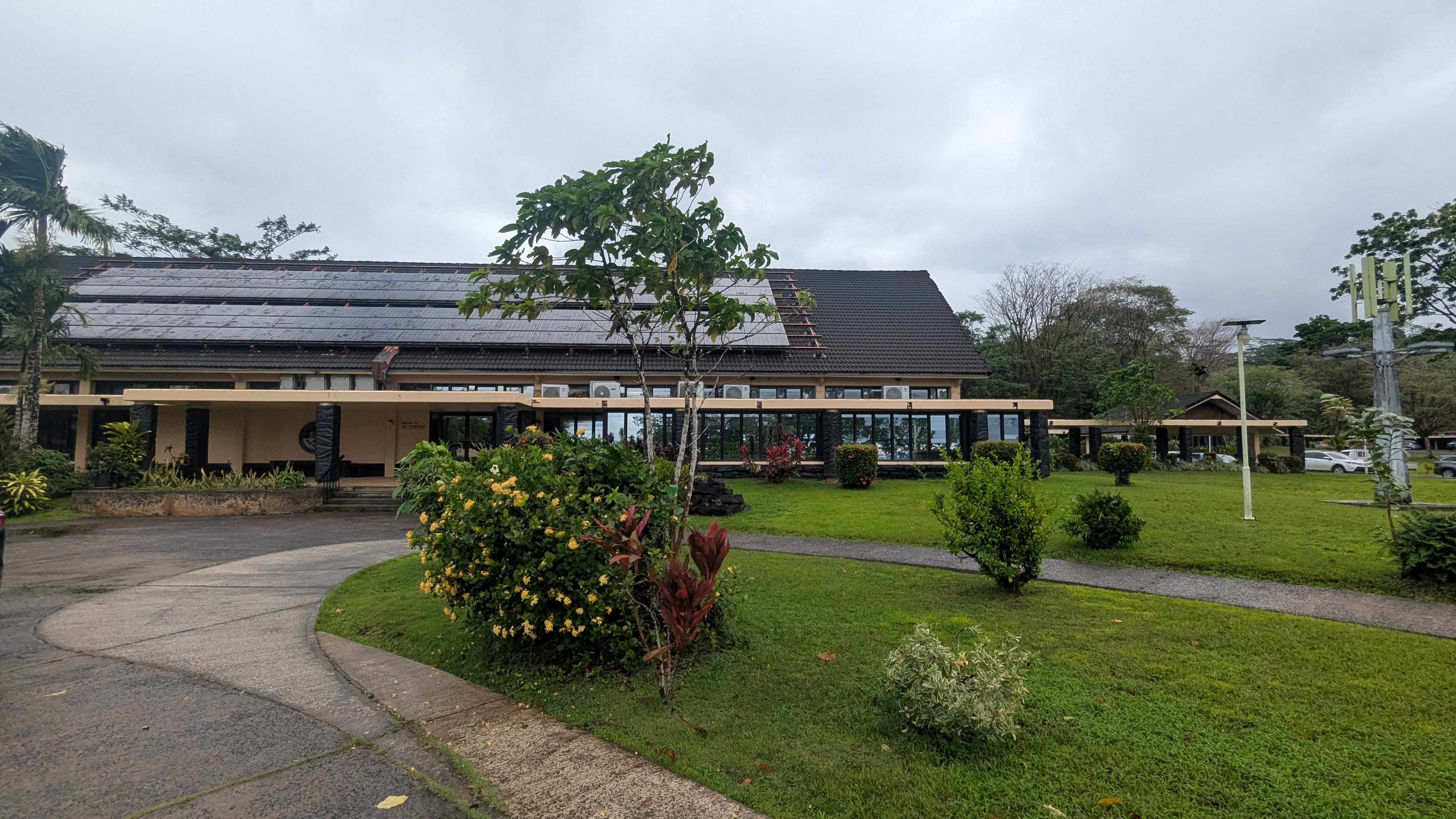
Government employment dominates Palikir's economy—it's essentially a federal administrative hub sustained by US aid and free association status. The FSM receives roughly $76 million annually in US funding, which flows directly into civil service salaries, infrastructure, and operations. Fishing and copra production exist elsewhere in the FSM, but Palikir itself generates almost no private-sector income. If you're not working for government or an NGO, earning a living here is genuinely difficult.
Rent for a modest two-bedroom runs $800–1,200/month; groceries cost 30% more than US mainland due to import dependence and remoteness. Healthcare exists but serious cases require evacuation to Guam (4+ hours by plane, expensive). English is official, so language isn't a barrier. Bureaucracy is light by expat standards, but getting residency requires sponsorship—you can't just move here. Internet is slow and unreliable. Transportation relies on one regional airline and occasional ships; no direct international flights.
Palikir is brutally wet—5,202mm annual rainfall, the world's wettest capital—with 27°C heat year-round and high humidity. Weekends mean hiking, diving, or fishing if you're outdoorsy; the expat community is tiny (mostly government workers and their families). Food is limited and expensive; fresh produce is scarce. This city suits only people with government contracts, serious remote work income, or genuine passion for isolation and tropical ecology—not casual digital nomads or FIRE seekers.
Estimate the cost of moving to Palikir, Micronesia
Get a free moving cost estimate for moving to Palikir, Micronesia. Takes 10 seconds.
How much are you shipping?
When are you moving?
Powered by Sirelo. Free quotes from international movers.
🏚️ Cost of Living
💰 Budgets and Costs
$1,410/mo, one person, rent included
Selected: budget lifestyle
Palikir on a budget budget comes to about $1,410 a month for one adult, with $819 of that going to rent. Beyond rent the estimate covers $86.00 on groceries, $120 on dining out, $31.00 on entertainment and lifestyle, $320 on utilities and connectivity and $34.00 on transport.
Rent
$819/mo
1BR outside the centre
Groceries
$86.00/mo
75% of mid-range grocery spend
Dining out
$120/mo
4 inexpensive meals
Entertainment & lifestyle
$31.00/mo
1 cinema trip, 8 cappuccinos
Utilities & connectivity
$320/mo
utilities, mobile, internet
Transport
$34.00/mo
Monthly pass
Budgets (excl. rent)
Single person$591/mo
Excludes rent. The total above is all-in, rent included.
$1,678/mo, one person, rent included
Selected: mid-range lifestyle
Palikir on a mid-range budget comes to about $1,678 a month for one adult, with $819 of that going to rent. Beyond rent the estimate covers $114 on groceries, $300 on dining out, $91.00 on entertainment and lifestyle, $320 on utilities and connectivity and $34.00 on transport.
Rent
$819/mo
1BR outside the centre
Groceries
$114/mo
Staples basket scaled to a full month
Dining out
$300/mo
10 inexpensive meals
Entertainment & lifestyle
$91.00/mo
gym, 2 cinema trips, 12 cappuccinos
Utilities & connectivity
$320/mo
utilities, mobile, internet
Transport
$34.00/mo
Monthly pass
Budgets (excl. rent)
Single person$859/mo
Excludes rent. The total above is all-in, rent included.
$1,777/mo, one person, rent included
Selected: comfortable lifestyle
Palikir on a comfortable budget comes to about $1,777 a month for one adult, with $819 of that going to rent. Beyond rent the estimate covers $160 on groceries, $315 on dining out, $129 on entertainment and lifestyle, $320 on utilities and connectivity and $34.00 on transport.
Rent
$819/mo
1BR in the centre
Groceries
$160/mo
140% of mid-range grocery spend
Dining out
$315/mo
6 inexpensive meals + 6 mid-range meals
Entertainment & lifestyle
$129/mo
gym, 4 cinema trips, 20 cappuccinos
Utilities & connectivity
$320/mo
utilities, mobile, internet
Transport
$34.00/mo
Monthly pass
Budgets (excl. rent)
Single person$958/mo
Excludes rent. The total above is all-in, rent included.
Estimates for one adult, built from this city's average prices and the usage shown for each tier. Your spending will differ with how often you eat out and where you live.
A 1BR in the center runs about $818.77/mo. If your income is in another currency, bank FX fees add up. A multi-currency account can cut that cost.
Palikir is a small, quiet capital with moderate safety—generally secure for expats but not crime-free. Petty theft and burglary occur, particularly targeting expat homes and vehicles; secure your property well. Violent crime is uncommon but occasional altercations happen, especially involving alcohol. Avoid walking alone at night in less populated areas. The main risks are opportunistic theft and property crime rather than organized danger. For a retiree or remote worker, it's reasonably safe with standard precautions, though the isolation and limited infrastructure mean fewer resources if problems arise.
Palikir has a safety index of 55/100. Petty theft and lost belongings are the most common problems for newcomers. Compare travel insurance before you go.
See how Palikir's healthcare compares with Pohnpei
🌤️ Climate
Climate Zones
Tropical
Summer Temp
28°C
Winter Temp
27°C
Humidity
82%
Air Quality Index
35
Annual Rainfall
4840 mm
Best Months
FebMarApr
Climate Notes
Palikir has a tropical climate with consistently warm temperatures year-round, high humidity, and a wet season from July to November bringing heavy rainfall and occasional typhoons.
💻 Digital Nomad
Avg Internet Speed
5 Mbps
Internet (monthly)
$265/mo
Coworking Availability
None
Coworking Spaces Nearby
0
Digital Nomad Score
39/100
Community Notes
Beautiful island with limited connectivity and infrastructure.
While not a dedicated coworking space, the FSM Development Bank in Palikir may offer affordable desk rentals or meeting room access. It's a central location and could provide a basic workspace for digital nomads seeking a budget-friendly option.
Similar to the FSM Development Bank, the PIDB in Palikir might have options for renting office space or desks. It's worth inquiring about short-term rentals, as it could serve as a functional workspace in a professional environment.
See how Palikir's digital nomad life compares with Pohnpei
🧳 Expat Life
English Proficiency
Limited
Expat Community
small
Banks Nearby
2
ATMs Nearby
3
🏘️ Neighborhoods in Palikir
Areas of Palikir that expats often consider.
Conditions can change from one block to the next, and these descriptions are general guides, not safety assessments. Before choosing where to stay or live, check current travel advisories, talk to people who live there, and visit in person if you can.
Sokehs
Scenic, historic, somewhat remote
Located on the northern peninsula, Sokehs offers stunning views and historical sites like the Sokehs Rock. It's quieter and more rural than other parts of Palikir, appealing to those seeking tranquility. Transportation is limited, so owning a vehicle is almost essential.
Kolonia (near Nett Point)
Commercial hub, convenient, bustling
While technically a separate town near Palikir, Kolonia serves as the main commercial center. The area near Nett Point offers a mix of shops, restaurants, and government offices. It's relatively walkable and offers more amenities, but can be noisy and crowded.
Ohwa
Residential, local, family-oriented
Ohwa is primarily a residential area with a strong local community feel. It's further from the main commercial areas, offering a quieter lifestyle. Limited public transport makes a car necessary for convenient access to amenities.
Temwen Island (near Lehn Diadi Waterfall)
Rural, natural beauty, secluded
Temwen Island offers a very secluded and nature-focused experience. Access is limited, and amenities are scarce. This area is best suited for adventurous expats seeking complete immersion in the local culture and environment, and who don't mind basic living conditions.
U Municipality (Coastal Area)
Coastal, fishing, traditional lifestyle
The coastal areas within U Municipality offer a glimpse into traditional Micronesian life, with a focus on fishing and small-scale agriculture. It's a very local environment with limited infrastructure. While beautiful, it requires a high degree of cultural sensitivity and self-sufficiency.
Page 1 of 2
Could living/working in Palikir cut years off your work life?
With a 1-bedroom in the center at $819/mo, your FIRE number here might be much lower than you think.
Palikir has a population of approximately 6,227 people.
A single person can expect to spend around $2,047 per month in Palikir, including rent. A 1-bedroom apartment in the city center costs approximately $819/month.
The nearest airport to Palikir is PNI, approximately 8.6km away.
Palikir is considered moderate in terms of safety, with a safety index of 55.0. As with any city abroad, expats should research specific neighborhoods before committing to a location.
Palikir has an average internet speed of 5 Mbps. It is not yet considered a well-established digital nomad destination.
Technically no. Residency requires employer sponsorship or government employment. Tourist visas are short-term. The FSM doesn't have a digital nomad visa, and immigration will ask how you'll support yourself. Remote income alone won't get you legal residency.
Very. A two-bedroom apartment costs $800–1,200/month. Groceries are 30% pricier than the US mainland due to imports. A simple meal out is $12–18. The US government officially recognizes a 30% hardship premium for federal employees posted here. Budget $2,500–3,500/month minimum for a basic expat lifestyle.
Palikir is the world's wettest capital—expect 5,202mm rain annually, 27°C year-round, and constant humidity. Flights arrive in nearby Kolonia (45 minutes away by car/boat). There are no direct international flights; you'll connect through Guam or Manila. Flights are infrequent and expensive ($600–1,200 round-trip from Guam).
US citizens can enter Micronesia visa-free for up to 30 days. For longer stays, you'll need to apply for a residency permit, typically tied to employment or investment. Consult the FSM Department of Foreign Affairs for the most current requirements and pathways.
Healthcare in Palikir is limited. The main hospital offers basic services, but serious medical conditions often require evacuation to Guam or Hawaii. While some doctors have studied abroad and speak English, it's advisable to have comprehensive travel insurance that covers medical evacuation.
Public transportation is limited to shared taxis and buses, which can be unreliable. Renting a car is the most convenient way to get around, but be prepared for rough roads. Walking is possible within the city center, but distances can be significant.
Coworking spaces are not currently available in Palikir. Internet access is improving, but can still be unreliable. The best option is to secure a local SIM card with a data plan or arrange for a dedicated internet connection at your accommodation, but speeds may be slower than what you're used to.
The expat community in Palikir is small but welcoming, consisting mainly of aid workers, government advisors, and missionaries. Socializing often revolves around church activities, community events, and informal gatherings. It's a great way to connect with others and learn about the local culture.
The food scene in Palikir is basic, with a focus on local Micronesian cuisine and some Chinese influences. Eating out is inexpensive, with meals at local restaurants costing around $5-$10 USD. Fresh seafood is readily available, but imported goods can be pricey.
Opening a bank account in Palikir can be challenging for foreigners, requiring specific documentation and proof of residency or employment. It's best to inquire with local banks directly about their requirements. International money transfers can be slow and expensive, so plan accordingly.
As a US citizen, you're still required to file US taxes even when living abroad. You may be eligible for the Foreign Earned Income Exclusion (FEIE) or Foreign Tax Credit, which can reduce your tax liability. Consult with a tax professional specializing in expat taxes to ensure compliance.
Palikir offers a very relaxed and slow-paced lifestyle, which can be appealing to retirees seeking tranquility. However, be prepared for limited amenities and a more traditional way of life. The cost of living is low, but access to healthcare and certain goods may be a concern.
Yes, $2,000 USD per month can provide a comfortable lifestyle in Palikir for a retiree. This budget should cover rent, food, utilities, and basic transportation. However, it's essential to factor in potential medical expenses and the cost of travel for medical care or emergencies.
English is an official language in Micronesia and is widely spoken in Palikir, especially in government offices, businesses, and schools. While learning some basic Pohnpeian phrases is appreciated, you can generally get by with English in most situations.
The areas around the government buildings and the College of Micronesia-FSM are generally considered safer and more desirable due to increased security and better infrastructure. These areas also tend to have slightly higher rental costs compared to more remote parts of the city.
Cost-of-living and visa updates for Palikir and the rest of Micronesia. Free with RA Postcards.
By submitting your email address, you will receive a free subscription to RA Postcards and special offers from Rewire Abroad and our affiliates. You can unsubscribe at any time, and we encourage you to read more about our Privacy Policy.