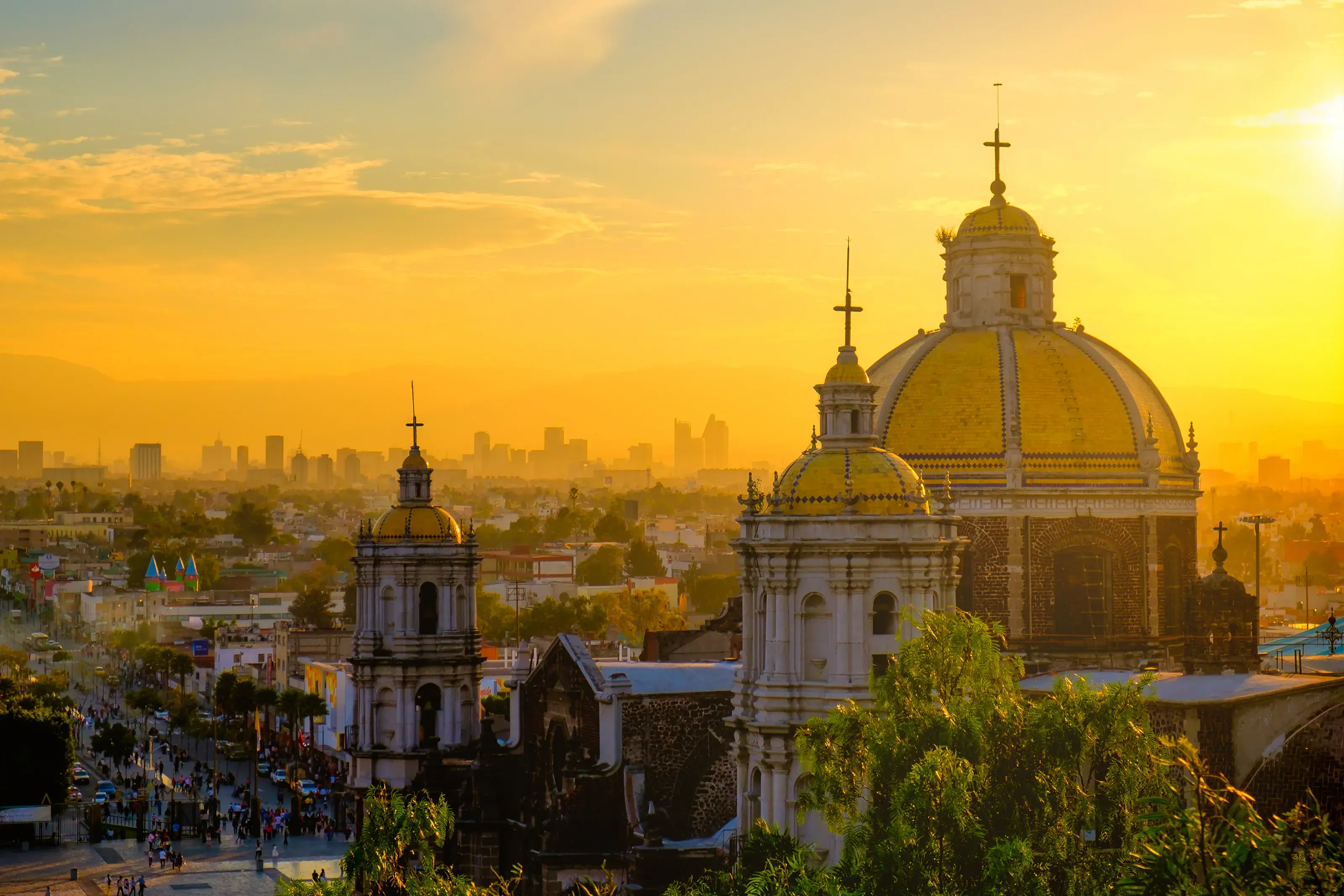
Mexico City spreads across a high valley at 2,240 meters above sea level, where a temperate, Mediterranean climate delivers mild, dry winters and warm, rainy summers. The city is home to 9.2 million people, and expats tend to cluster in a handful of neighborhoods that balance charm with convenience. Roma Norte and Condesa draw the largest share of newcomers with their tree-lined streets, cafes, and walkable blocks, while Polanco offers a more upscale, polished feel. Juárez, Coyoacán, and Narvarte round out the popular list, each with its own character, from historic plazas to quieter residential lanes. English is common in tourist areas, and the expat community is large and active, making it easy to find social circles, coworking spaces, and familiar services.
Living costs here are strikingly low compared to major U.S. cities, with a cost of living index of 47 out of 100 relative to New York City. A one-bedroom apartment in the city center runs about $1,043 per month, while the same unit outside the center drops to $665. For a three-bedroom, expect $2,369 in the center or $1,249 further out. Utilities, internet, and a mobile plan add roughly $62, $34, and $28 per month respectively, and a monthly public transport pass costs just $20. A single adult can live on a budget tier of $746 per month, a mid-range tier of $1,181, or a comfortable tier of $1,684, all including rent. Excluding rent, a single person spends about $777 monthly, while a family of four spends around $2,906. The average monthly net salary is $995, which puts local wages below what many expats earn remotely, but the gap is manageable for those with foreign income.
Safety is a real consideration, with a safety index of 34 and a crime index of 66, meaning caution is warranted, especially at night or in unfamiliar areas. That said, many expats live comfortably by sticking to well-trafficked neighborhoods and using common sense. Healthcare quality is rated good, and the city has both public and private options, with private clinics popular among foreigners who want faster appointments and English-speaking staff. The air quality index sits at 148, which is poor by international standards, so those with respiratory sensitivities should plan accordingly, though many residents adapt by using masks on high-pollution days or spending weekends in greener areas.
For longer stays, Mexico offers two clear visa paths. The Mexico Temporary Resident Visa requires a minimum monthly income of $3,738, while the Mexico Digital Nomad / Remote Worker Visa sets the bar at $2,600 per month. Both are attainable for many remote workers and retirees, and the retiree score of 58 reflects that the climate and cost are appealing, though the visa income threshold is higher than the average local salary. Getting to the city is easy via the nearest airport, MEX, located just 5 kilometers from the center. With a digital nomad score of 74 and an overall expat score of 72, Mexico City suits remote workers, budget-conscious travelers, and anyone who values cultural depth, good food, and a large, welcoming expat network.