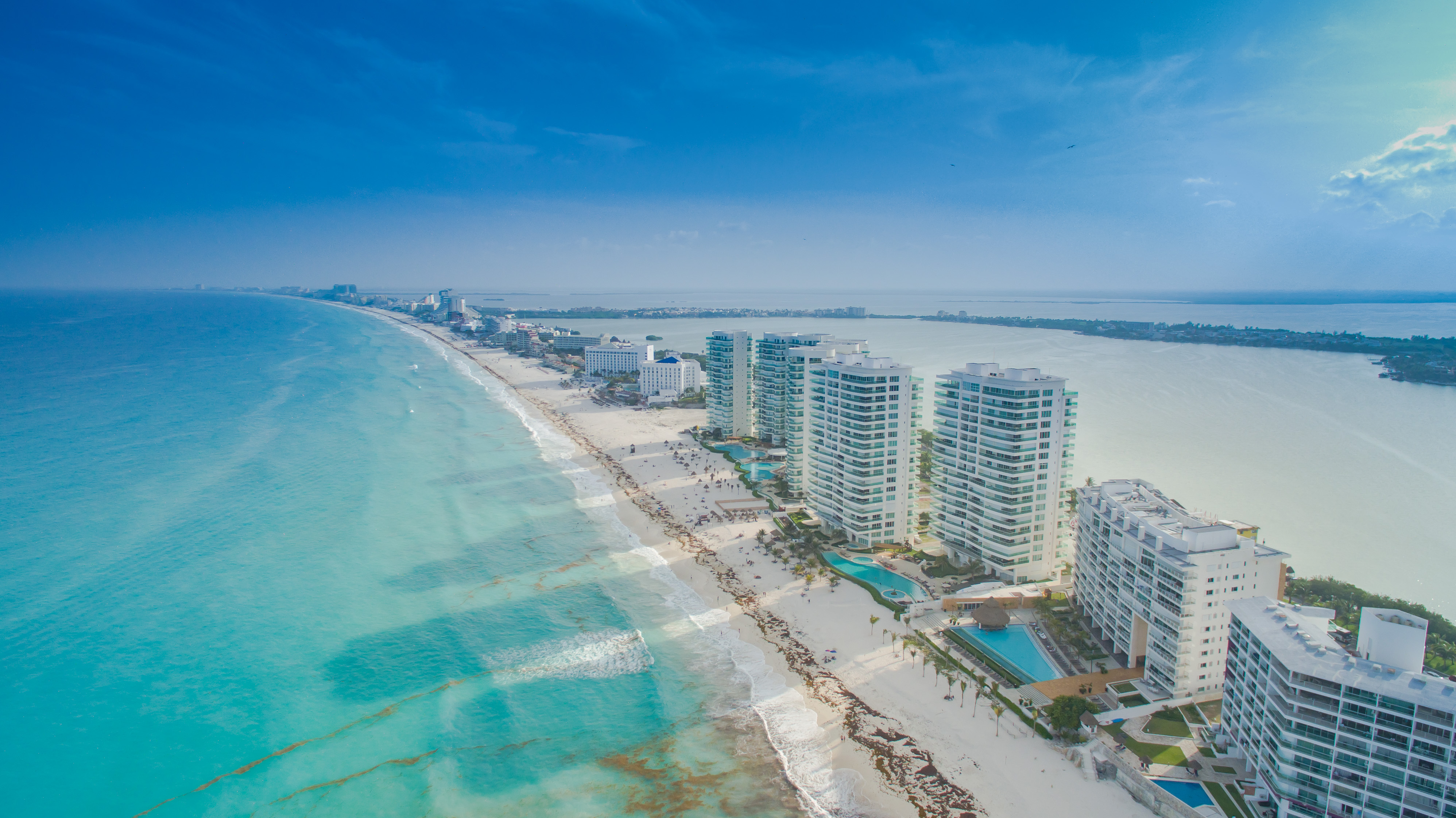
Cancun, Mexico Hero Image
Wikipedia Contributor, CC BY-SA

Cancun, Mexico

🌊 Coastal

Data updated Mar 24, 2026

Follows Mexico Residency Rules. Check Digital Nomad & Retiree Pathways →

📊 Scores

77
FIRE
71
Retiree
85
Digital Nomad

Best fit: Digital Nomad (score: 83)

Cancun sits on the northeastern tip of the Yucatan Peninsula, a tropical city where the Caribbean meets a lagoon and the temperature stays warm year round. At just 10 m above sea level, it is flat, walkable in its older quarters, and oriented around water. Expats tend to cluster in three areas: Puerto Cancun, a planned marina district with condos and shopping; the Hotel Zone, the long barrier island of resorts and residences; and Southside, the more local grid of streets near downtown. Each offers a different balance of beach access, English-speaking neighbors, and distance from the tourist core.

Rent tells the story of that split. A one-bedroom in the city center runs $850/mo, while the same apartment outside the center drops to $650/mo. Three-bedroom units follow the pattern: $1,800/mo in the center and $1,300/mo outside it. Beyond rent, a single adult spends about $750/mo, and a family of four about $2,250/mo. Utilities average $182/mo, a mobile plan $23/mo, a monthly public transport pass $28/mo, and a gym membership $36/mo. Meals out are modest: $11 per person at an inexpensive restaurant, $36 for a three-course mid-range meal for two, and $4 for a cappuccino. The cost of living index sits at 50/100 against New York City, and average monthly net salary locally is $845/mo, which is why many newcomers arrive with remote work or savings. Budget tiers for a single adult land around $1,500/mo, $2,500/mo mid-range, and $4,000/mo comfortable, rent included.

Safety is a common concern, and the numbers here are reassuring. The safety index is 70/100 and the crime index is 30/100, where lower is safer. Air quality is good at 32, and healthcare quality is rated Good. The expat community is large and active, and English is widely spoken, which softens the first months of settling in. Internet averages 101 Mbps, fast enough for video calls and remote work, and the city runs on America/Cancun time.

For stays beyond a tourist visit, Mexico offers the Temporary Resident Visa, which requires a minimum monthly income of $3,738/mo, and the Mexico Digital Nomad / Remote Worker Visa, which requires $2,600/mo. Cancun International Airport (ISJ) is 15 km from the city. With a population of 889 thousand, the city has the services of a mid-sized metro without the scale of Mexico City. The overall expat score is 83/100, the digital nomad score 85/100, the FIRE score 77/100, and the retiree score 71/100. It suits remote workers, early retirees, and anyone who wants tropical weather, a strong expat network, and a cost base well below most U.S. cities.
Estimate the cost of moving to Cancun, Mexico

Get a free moving cost estimate for moving to Cancun, Mexico. Takes 10 seconds.

How much are you shipping?

When are you moving?

Powered by Sirelo. Free quotes from international movers.

🏚️ Cost of Living

A 1BR in the center runs about $850/mo. If your income is in another currency, bank FX fees add up. A multi-currency account can cut that cost.

See low-fee transfers

We may earn a commission at no cost to you.

See how Cancun's cost of living compares with Ciudad Cuauhtemoc

Be the first to report costs in Cancun

Share

🛡️ Safety & Crime

70
Safety Index

(Higher is safer)

30
Crime Index

(Lower is safer)

Cancun presents a mixed safety profile for expats. While tourist zones and established neighborhoods like Playa del Carmen and Puerto Morelos are relatively secure with visible police presence, petty theft, pickpocketing, and vehicle break-ins occur regularly. Avoid displaying valuables, using ATMs at night, or traveling alone after dark. Organized crime exists but typically targets drug trafficking rather than expats; however, occasional violence spills into public areas. The Numbeo Safety Index of 70 reflects tourist-heavy areas; residential neighborhoods vary significantly. For remote workers, stick to established expat communities, use registered taxis, and maintain situational awareness. Cancun is livable for expats who follow basic precautions, but it requires more vigilance than comparable U.S. retirement destinations.

🏥 Healthcare

Good
Public Hospitals
Yes
Private Clinics
Yes
English-Speaking Doctors
Available

See how Cancun's healthcare compares with Ciudad Cuauhtemoc

🌤️ Climate

Climate Zones
Tropical
Summer Temp
33°C
Winter Temp
19°C
Humidity
78%
Air Quality Index
32
Annual Rainfall
1080 mm

Best Months

MayJunJulAug

Climate Notes

Tropical monsoon climate; warm year-round with high humidity.

💻 Digital Nomad

Avg Internet Speed
100.5 Mbps
Coworking Availability
Abundant
Coworking Spaces Nearby
0
Digital Nomad Score
85/100

Community Notes

Cancun's vibrant digital nomad scene is bolstered by its Caribbean charm and amenities.

Coworking Spaces

NameNotes
WeWork Blvd. Kukulcan 360Located in the Hotel Zone, this WeWork offers stunning lagoon views and is close to restaurants and amenities, making it a convenient and professional option for expats.
Workósfera CoworkingLocated in downtown Cancun, Workósfera offers a more local vibe with a focus on community and collaboration, ideal for digital nomads seeking a less touristy experience.
Regus Cancun CentroSituated in the city center, Regus Cancun Centro provides a professional and reliable workspace with various office solutions, suitable for remote workers needing a structured environment.
Selina Cancun DowntownMore of a hostel with coworking, Selina Cancun Downtown offers a social atmosphere with a pool and bar, appealing to younger digital nomads looking for a vibrant and budget-friendly option.

Names, locations and hours can change. Check each space's website before you visit. Places from © OpenStreetMap contributors and Foursquare Open Source Places (Apache 2.0).

Planning to live in Cancun long-term? Mexico Digital Nomad / Remote Worker Visa lets remote workers live legally with a minimum income of $2,600/month.

View full requirements →

Working remotely from Cancun? Nomad health insurance covers you across borders, month to month.

See nomad insurance

We may earn a commission at no cost to you.

See how Cancun's digital nomad life compares with Ciudad Cuauhtemoc

🧳 Expat Life

English Proficiency
Widely Spoken
Expat Community
Large & Active
Top Neighborhoods
Puerto Cancun, Hotel Zone, Southside
Banks Nearby
39
ATMs Nearby
13

Expat Life Notes

A global tourism hub with massive expat infrastructure and many amenities catering to English speakers.

Pros

  • ✓ Universal English in business
  • ✓ World-class beaches
  • ✓ Excellent flights globally

Cons

  • ✗ Overtourism
  • ✗ Rising crime rates
  • ✗ Hurricane risk

🏘️ Neighborhoods in Cancun

Areas of Cancun that expats often consider.

Conditions can change from one block to the next, and these descriptions are general guides, not safety assessments. Before choosing where to stay or live, check current travel advisories, talk to people who live there, and visit in person if you can.

Hotel Zone (Zona Hotelera)

Tourist-centric, lively, beach access

The main tourist drag, offering beachfront condos and easy access to amenities. Primarily caters to short-term visitors, so expect higher prices and a less authentic Mexican experience. Public transportation is readily available, but walking can be limited to the hotel strip.

Downtown (El Centro)

Authentic, bustling, local culture

Offers a more authentic Mexican experience with local markets, restaurants, and shops. More affordable than the Hotel Zone, but can be noisy and crowded. While some expats live here, Spanish proficiency is helpful for navigating daily life.

Puerto Juarez

Coastal, fishing village, relaxed

A quieter, more local area known for its fishing port and ferry access to Isla Mujeres. Offers a more relaxed pace of life and lower prices than the Hotel Zone or Downtown. Less expat-focused, so Spanish is essential, but a good option for budget-conscious retirees.

Playacar

Upscale, residential, gated community

A gated community offering a mix of condos and villas, popular with expats and retirees seeking security and amenities. Located south of downtown Playa del Carmen (about an hour from Cancun airport), it provides a quieter, more suburban lifestyle. Prices are higher, but the area is well-maintained and offers easy access to the beach.

Page 1 of 2

Could living/working in Cancun cut years off your work life?

With a 1-bedroom in the center at $850/mo, your FIRE number here might be much lower than you think.

Calculate My FIRE Date →

🛂 Visa Options for Mexico

Many long-stay visas require proof of health insurance. Compare international health plans before you apply.

Compare health insurance

We may earn a commission at no cost to you.

🛂

Earning over $2,600/mo? You may qualify for a Mexico visa.

Answer 11 questions and get a personalized match in under 2 minutes.

Find My Visa →

More Cities to Consider instead of Cancun

FAQ

Frequently Asked Questions about Cancun

Click any question to expand the answer.

Cancun has a population of approximately 888,797 people.
A single person can expect to spend around $2,125 per month in Cancun, including rent. A 1-bedroom apartment in the city center costs approximately $850/month.
The nearest airport to Cancun is ISJ, approximately 14.6km away.
Cancun is considered relatively safe, with a safety index of 70.0. As with any city abroad, expats should research specific neighborhoods before committing to a location.
Cancun has an average internet speed of 100.5 Mbps. It is considered a well-established digital nomad destination.
In the Hotel Zone, English gets you surprisingly far — staff at resorts, hospitals like Amerimed, and many restaurants are English-fluent. But outside the tourist corridor, in government offices, local markets, and everyday life in downtown Cancun, Spanish is essential. If you're pursuing residency or dealing with any bureaucracy, expect Spanish-only paperwork and processes.
For budget-conscious expats, consider downtown Cancun (Ciudad Cancun) for affordable apartments. For a more upscale, tourist-oriented experience, the Hotel Zone offers beachfront condos, but at a premium. Safe, gated communities like Puerto Cancun are popular with families and retirees seeking tranquility.
Internet speeds in Cancun are generally reliable, especially in the Hotel Zone and newer developments. You can expect speeds sufficient for video conferencing and most remote work tasks, typically ranging from 50-100 Mbps. Coworking spaces like Workósfera offer dedicated high-speed connections and backup power.
As a tourist, you can stay in Mexico for up to 180 days. For longer stays, you'll need a temporary or permanent residency visa. The temporary residency visa is a good starting point, and you can apply based on financial solvency, property ownership, or a job offer.
Cancun has a mix of public and private healthcare. Private hospitals like Hospiten and Galenia offer excellent care and have English-speaking doctors. Many expats opt for private health insurance for access to these facilities and shorter wait times.
Cancun has a tropical climate with hot and humid weather year-round. The rainy season is from June to October, with a higher risk of hurricanes. Expect temperatures in the 80s and 90s Fahrenheit, with high humidity, so air conditioning is essential.
Opening a bank account in Cancun requires your passport, proof of address (like a utility bill), and your Mexican visa (if applicable). Banks like Banorte, Santander, and BBVA are popular choices. Be prepared for some paperwork and potentially needing a Spanish speaker to assist.
Cancun has a sizable and active expat community, with numerous Facebook groups and social events. You'll find expats from all over the world, making it easy to connect with people who share similar experiences. Don't be afraid to join groups and attend meetups to build your network.
Cancun has a decent public transportation system consisting of buses that run frequently along the main routes. Taxis and ride-sharing services like Uber are also readily available. For longer distances, consider renting a car, but be aware of traffic and parking challenges.
While Cancun is generally safe, it's wise to exercise caution in less touristy areas, especially at night. Avoid walking alone in poorly lit areas and be aware of your surroundings. Stick to well-traveled routes and tourist zones for added security.
Cancun offers a lower cost of living than many US cities, allowing your retirement income to go further. By living outside the Hotel Zone, cooking at home, and utilizing local markets, you can significantly reduce your expenses. Consider renting instead of buying to avoid property taxes and maintenance costs.
As a US citizen, you're still required to file US taxes even when living abroad. You may be eligible for the Foreign Earned Income Exclusion (FEIE) to exclude a certain amount of your income from US taxes. Also, be aware of FBAR requirements for reporting foreign bank accounts.
Yes, $2,500 USD per month can provide a comfortable lifestyle in Cancun, especially if you live outside the Hotel Zone and embrace local living. This budget should cover rent, groceries, healthcare, and some entertainment. However, unexpected expenses can arise, so having a buffer is always recommended.
While you can get by with English in tourist areas, learning some basic Spanish will greatly enhance your daily life in Cancun. It will make it easier to navigate local markets, interact with neighbors, and access services. Many locals appreciate the effort, even if your Spanish isn't perfect.

Share This Guide