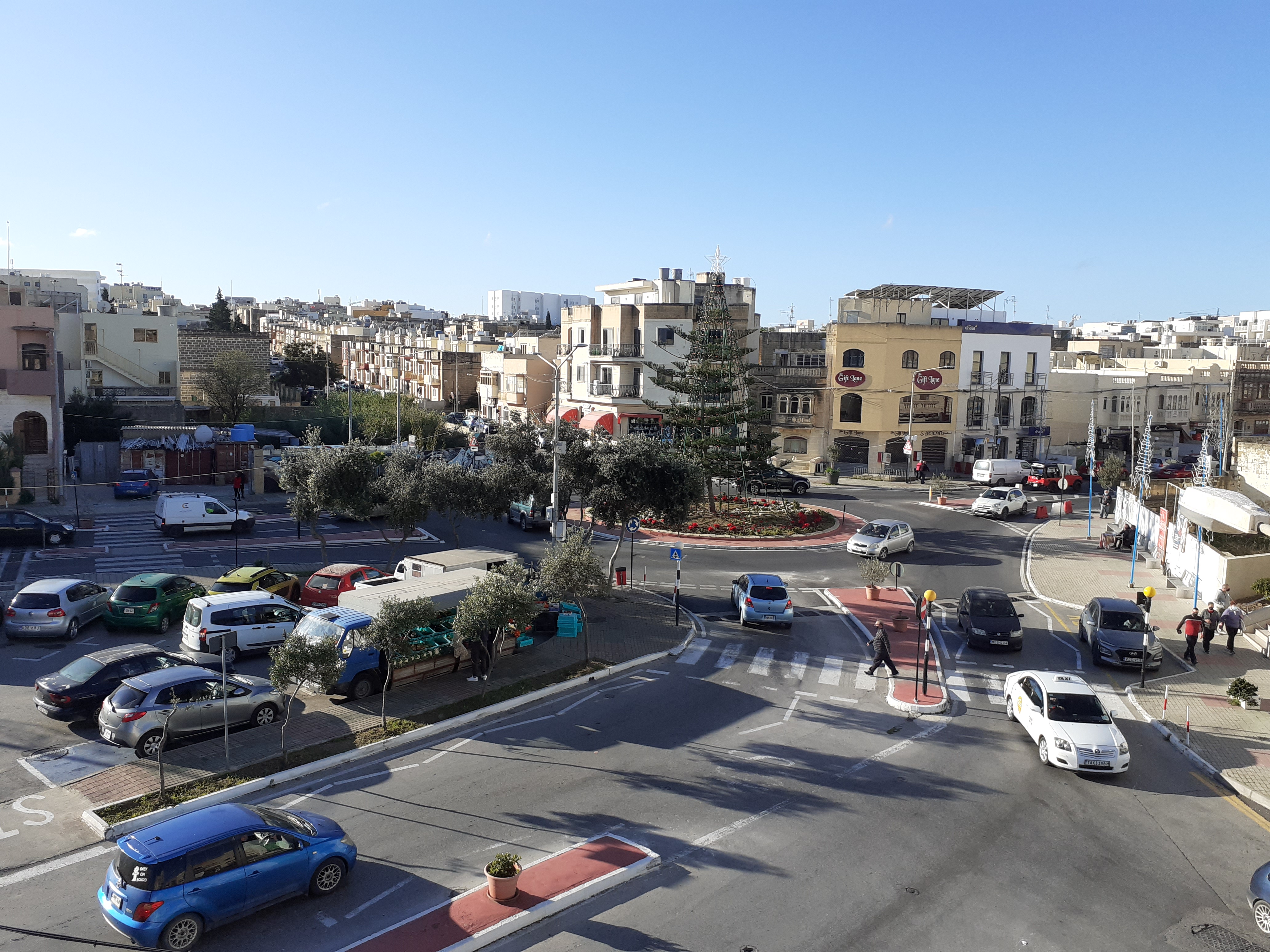
The Malta Dockyards historically anchored Fgura's economy, though that's now a smaller player. Today, retail and commerce dominate—the town is a shopping and services hub for central-southern Malta. Most expats here work remotely or commute to Valletta/Sliema for finance, tourism, or tech jobs. Local employment is thin unless you're in retail or hospitality. The economy is stable but unremarkable; you're not moving here for career opportunities.
A 1-bedroom in the center runs €950–$1,050/month; outside center, expect €700–$850. Public buses are reliable and cheap (€26/month unlimited pass), though crowded during rush hours. Healthcare access is solid—public system is free for residents, private clinics abundant. English is universal; zero language barrier. Bureaucracy for residency is straightforward compared to EU mainland, but Malta's visa rules shift frequently—check current requirements before committing. The town itself is cramped and noisy; expect narrow streets and constant traffic.
Summers are scorching (35°C+), winters mild. Food is Mediterranean-heavy with good local restaurants and supermarkets. The expat community is moderate—mostly British retirees and remote workers, not a party scene. Weekends mean beach trips to nearby Marsaxlokk or Valletta, or escaping to quieter villages. Fgura suits budget-conscious remote workers or retirees seeking low cost-of-living and EU residency, not those wanting a relaxed or spacious lifestyle.
Estimate the cost of moving to Fgura, Malta
Get a free moving cost estimate for moving to Fgura, Malta. Takes 10 seconds.
How much are you shipping?
When are you moving?
Powered by Sirelo. Free quotes from international movers.
🏚️ Cost of Living
A 1BR in the center runs about $785/mo. If your income is in another currency, bank FX fees add up. A multi-currency account can cut that cost.
Fgura is genuinely safe for expats, with low violent crime and a strong police presence typical of Malta's secure environment. Petty theft and pickpocketing occur occasionally in crowded areas, but serious crime is rare. The main concerns are typical Mediterranean issues: occasional scams targeting tourists, minor vehicle break-ins, and the need for standard precautions in nightlife areas. As a small, residential town south of Valletta, Fgura feels secure for daily life. Americans relocating here can expect a peaceful, stable community with minimal safety concerns compared to most U.S. cities.
Fgura experiences a Mediterranean climate with hot, dry summers (June-September) and mild, wet winters (December-February), making it ideal for sun-seekers but requiring air conditioning in peak summer.
💻 Digital Nomad
Avg Internet Speed
100 Mbps
Internet (monthly)
$43/mo
Coworking Availability
Moderate
Coworking Spaces Nearby
1
Digital Nomad Score
80/100
Community Notes
Fgura boasts a solid digital nomad community benefiting from Malta's allure.
While not directly in Fgura, SOHO's locations in nearby areas like Sliema and St. Julian's are easily accessible and popular with expats. They offer modern facilities, networking opportunities, and a professional environment ideal for digital nomads.
Located in St. Julian's, a short commute from Fgura, Regus Pendergardens provides a reliable and professional coworking environment. It offers various workspace options, meeting rooms, and business support services, making it suitable for remote workers seeking a structured setting.
Located in Mriehel, which is a short distance from Fgura, Kollega offers a modern and collaborative workspace. It's a good option for those seeking a community-focused environment with flexible membership options and convenient amenities.
See how Fgura's digital nomad life compares with Siggiewi
🧳 Expat Life
English Proficiency
Widely Spoken
Expat Community
Medium
Top Neighborhoods
Main Square area
Banks Nearby
24
ATMs Nearby
31
Expat Life Notes
A residential and commercial town in the South of Malta. Very densely populated and affordable.
Pros
✓ Cheap rent
✓ Good shops
✓ Very Maltese feel
Cons
✗ Densely packed
✗ Traffic noise
✗ Lack of greenery
🏘️ Neighborhoods in Fgura
Areas of Fgura that expats often consider.
Conditions can change from one block to the next, and these descriptions are general guides, not safety assessments. Before choosing where to stay or live, check current travel advisories, talk to people who live there, and visit in person if you can.
Fgura Center
Bustling, convenient, local Maltese life
The heart of Fgura, offering easy access to shops, restaurants, and public transport. It's a lively area, but can be noisy. Many Maltese families reside here, providing an authentic cultural experience, and English is widely spoken.
Tal-Gallu Area
Quiet residential family neighborhood
A more residential area on the outskirts of Fgura, offering a quieter environment. It's further from the main commercial area, so a car might be useful. Less frequented by tourists and expats, it provides a more immersive Maltese experience.
Fgura (New Developments)
Modern apartments, growing community
Several new apartment complexes have been built in Fgura in recent years. These offer modern amenities and are often popular with younger expats and remote workers. Expect slightly higher rents but potentially better facilities and soundproofing.
Paola (Adjacent to Fgura)
Historic, commercial, well-connected
While technically a separate town, Paola is directly adjacent to Fgura and easily accessible. It offers a wider range of shops and services, including the large department store, 'The Duke'. It's a busy area with good transport links to Valletta and other parts of Malta.
Tarxien (Near Fgura)
Historical sites, residential, quieter
Located close to Fgura, Tarxien is known for its prehistoric temples. It's a more residential area with a slower pace of life. While less expat-centric, it offers a glimpse into Malta's ancient history and a more authentic local experience.
Page 1 of 2
Could living/working in Fgura cut years off your work life?
With a 1-bedroom in the center at $785/mo, your FIRE number here might be much lower than you think.
Fgura has a population of approximately 13,986 people.
A single person can expect to spend around $1,963 per month in Fgura, including rent. A 1-bedroom apartment in the city center costs approximately $785/month.
Fgura is considered relatively safe, with a safety index of 85.0. As with any city abroad, expats should research specific neighborhoods before committing to a location.
Fgura has an average internet speed of 100 Mbps. It is considered a well-established digital nomad destination.
Malta offers several visa routes: digital nomad (€300/month income requirement), retirement (€1,000/month passive income), or investor visas. Processing is 2–4 weeks. Check current rules on the Identity Malta website before applying.
Yes—buses connect to everywhere on the island within 30–45 minutes. Valletta, Sliema, and beaches are accessible. But Fgura itself is industrial and cramped; most expats live here for cost, not charm, and travel out on weekends.
Fgura is generally more affordable than most US cities. Expect to pay significantly less for rent, groceries, and dining out, especially if you shop at local markets and eat at family-run restaurants. A couple can live comfortably on $2,000-$2,500 USD per month, excluding luxury expenses.
Several visa options exist for Americans, including the Malta Retirement Programme (MRP) which offers tax benefits, and the Global Residence Programme (GRP). The MRP requires you to receive the majority of your income as a pension and purchase or rent a property meeting minimum value requirements. Consulting with an immigration lawyer is highly recommended.
Malta has a good healthcare system, with both public and private options. You'll find English-speaking doctors readily available, especially in private clinics and hospitals. Many doctors have trained in the UK or other English-speaking countries. Mater Dei Hospital, a large public hospital, is a short drive away.
Internet speeds in Fgura are generally reliable and fast enough for most remote work needs. You can expect download speeds of 50-100 Mbps, sufficient for video conferencing and other bandwidth-intensive tasks. Check with your landlord or internet provider for specific speeds at your address.
While Fgura itself doesn't have dedicated coworking spaces, several options are available in nearby towns like Paola and Valletta, easily accessible by bus. These spaces offer a professional environment and networking opportunities for digital nomads.
Public transport in Malta is primarily buses, which are frequent and relatively inexpensive. Fgura is well-connected to other parts of the island. Taxis and ride-sharing services are also available, but can be more expensive. Renting a car is an option, but parking can be challenging.
While Fgura itself is more residential, the surrounding areas like Sliema and St. Julian's have a significant expat population. You'll find numerous expat groups and social events, making it easy to connect with other foreigners. Online forums and Facebook groups are good resources for finding these communities.
Fgura enjoys a Mediterranean climate with hot, dry summers and mild, wet winters. Expect temperatures to range from 10-15°C (50-59°F) in winter to 25-35°C (77-95°F) in summer. Spring and autumn offer pleasant temperatures and are ideal for outdoor activities.
As a US citizen, you're still required to file US taxes even when living abroad. The Foreign Earned Income Exclusion (FEIE) can help you exclude a certain amount of your foreign-earned income from US taxes. You may also need to report foreign bank accounts (FBAR). Consult with a tax professional specializing in expat taxes.
Fgura is generally a safe area with low crime rates. Petty theft can occur, so it's always wise to be aware of your surroundings, especially in crowded areas. There are no specific areas to actively avoid, but exercise normal precautions as you would in any city.
Opening a bank account in Malta can be challenging but not impossible. Banks require documentation such as proof of residency, passport, and proof of income. Some banks may be hesitant to work with US citizens due to FATCA regulations, so shop around and be prepared to provide thorough documentation.
Fgura offers a variety of dining options, from traditional Maltese cuisine to international flavors. For groceries, you'll find several supermarkets like Lidl and local mini-markets. Try Ta' Kalcina Restaurant for local food and Busy Bee for pastries and coffee.
Fgura could be viable for FIRE on $2000 USD per month, but it requires careful budgeting. Renting a smaller apartment further from the center, cooking at home, and utilizing public transport are key. It's definitely achievable, but you'll need to be mindful of your spending.
Yes, you can easily get by speaking only English in Fgura. English is an official language in Malta, and most residents are fluent. While learning some basic Maltese phrases is appreciated, it's not essential for day-to-day life.
Cost-of-living and visa updates for Fgura and the rest of Malta. Free with RA Postcards.
By submitting your email address, you will receive a free subscription to RA Postcards and special offers from Rewire Abroad and our affiliates. You can unsubscribe at any time, and we encourage you to read more about our Privacy Policy.