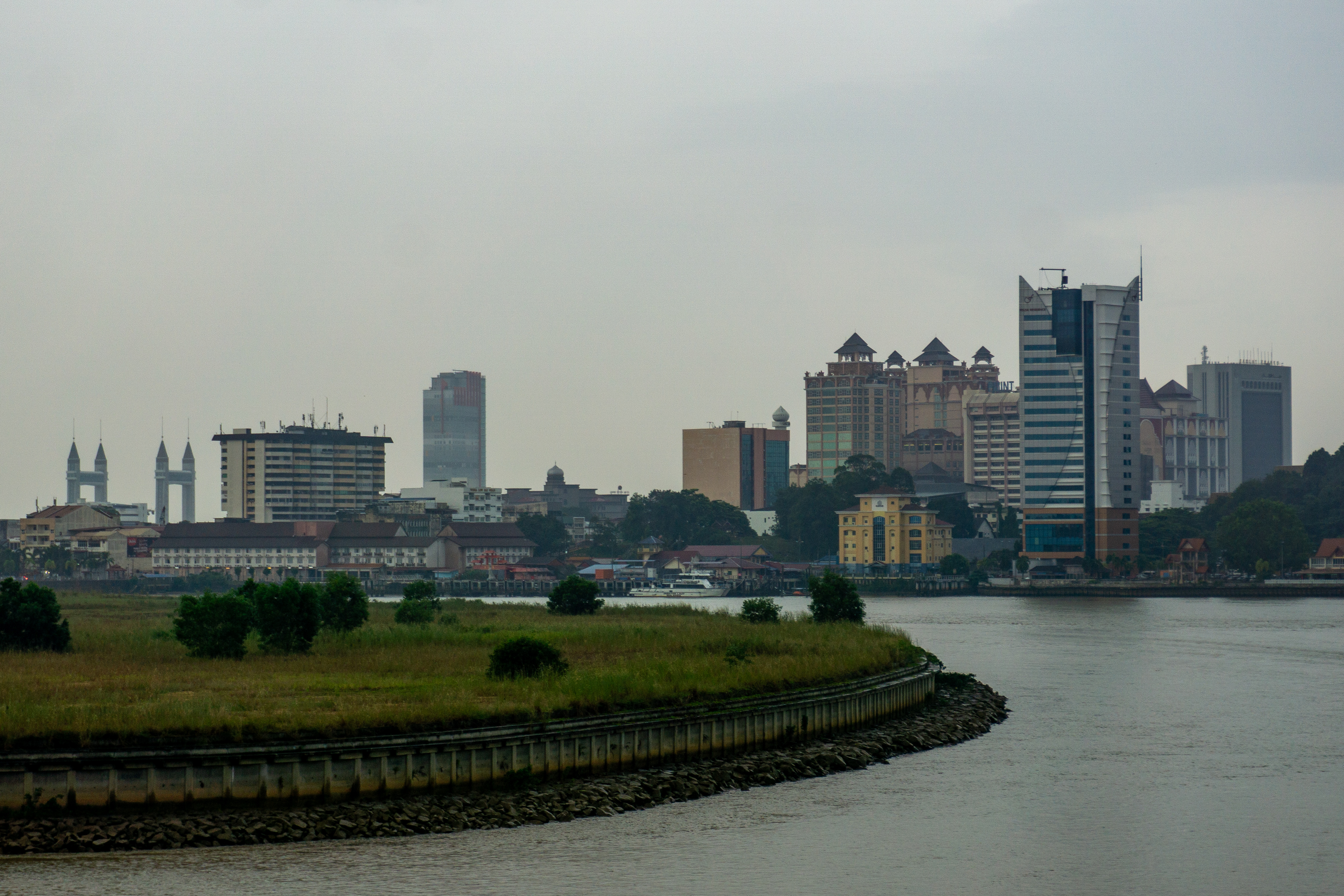
Kuala Terengganu sits on Malaysia's east coast at just 6 meters above sea level, a compact city of 255,000 people where the South China Sea shapes daily life. The climate is tropical, hot and humid all year, with a pronounced monsoon season from November to March that drenches the coast in heavy rainfall. For expats, the community is small, and the popular neighborhood is Batu Burok, a beachside strip that offers the most familiar mix of cafes, guesthouses, and ocean views. Life here moves at a slower, more local pace than Kuala Lumpur, and the low-rise skyline keeps the horizon open toward the water.
Living costs are strikingly low, even by Malaysian standards. A one-bedroom apartment in the city center rents for $322/mo, while the same unit outside the center drops to $174/mo. A three-bedroom in the center runs $745/mo, and outside the center it is $372/mo. A single adult can live on a budget tier total of $900/mo, including rent, or step up to a mid-range tier total of $1,350/mo, or a comfortable tier total of $1,900/mo. Excluding rent, a single person spends about $540/mo, and a family of four spends $1,900/mo. Meals are cheap: an inexpensive restaurant meal costs $2 per person, a three-course meal for two at a mid-range restaurant is $23, and a cappuccino is $3. The local average monthly net salary is $508/mo, which puts the cost of living index at 40/100 relative to New York City, meaning everyday expenses are far below Western norms.
Safety is a strong point. The safety index sits at 65/100, with a crime index of 35/100, where lower is safer, so street crime and petty theft are uncommon, and the city feels relaxed even after dark. Healthcare quality is rated good, and while the air quality index is 45, which is moderate, it is not a major concern for most residents. The main limitation is language: English proficiency is limited, so daily interactions in markets, clinics, and government offices often require basic Malay or a translation app. The expat community is small, which means less hand-holding but also a more authentic immersion into local life.
For longer stays, the Malaysia Premium Visa Program (PVIP) requires a minimum monthly income of $3,333/mo, while the Malaysia DE Rantau Digital Nomad visa requires a minimum monthly income of $2,000/mo. The nearest airport is TGG, just 7 km from the city, making regional travel easy. This is a place for retirees and digital nomads who prioritize low costs and quiet living over nightlife and international networking. The retiree score is 63/100 and the digital nomad score is 63/100, but the overall expat score is 81/100 and the FIRE score is 81/100, reflecting how well the city serves those who want to stretch savings and live simply. With average internet speed at 65 Mbps, remote work is feasible, though the monsoon months will test your tolerance for rain. If you want a beach town that is genuinely Malaysian, not a tourist bubble, Kuala Terengganu delivers.