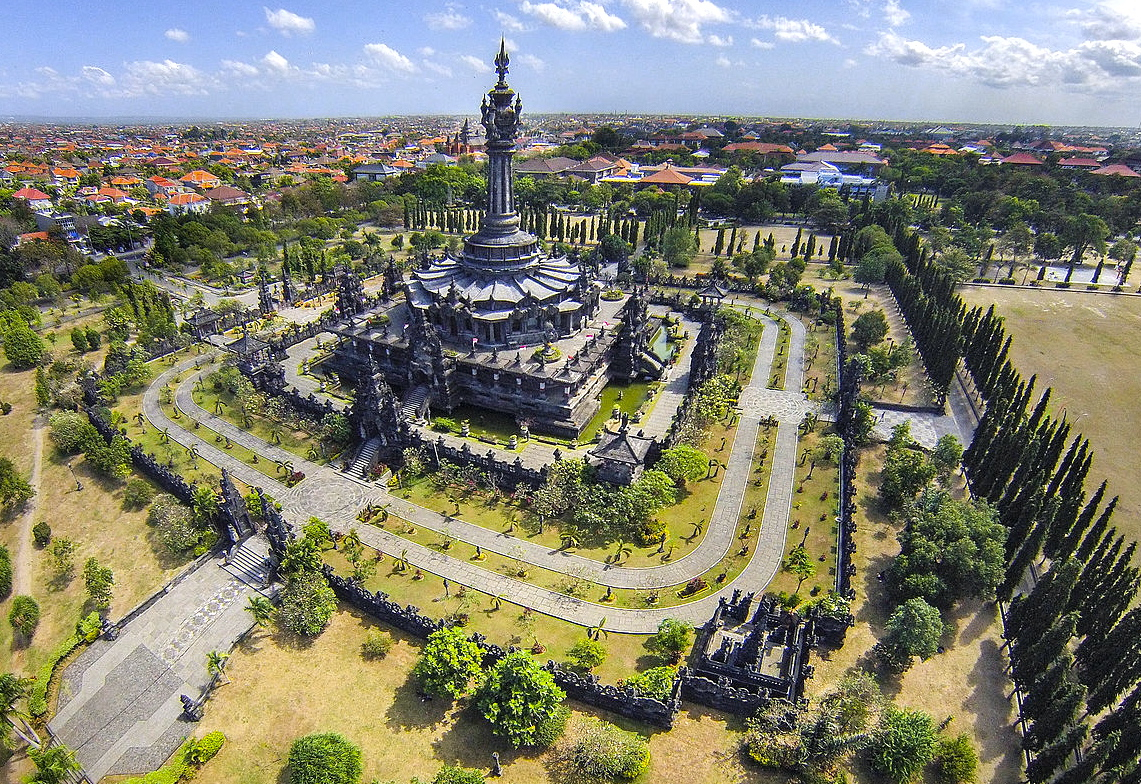
Denpasar sits on the southern coast of Bali, Indonesia, at just 10 m above sea level, in the Asia/Makassar timezone. The city's tropical monsoon climate is warm and humid with a distinct wet season, a rhythm that shapes daily life as much as the traffic does. Around 670 thousand people call Denpasar home, and the expat community here is large and active. Newcomers tend to gravitate toward Renon, known for its wide boulevards and government offices, and Sanur, the laid-back coastal stretch just east of the city center where morning walks along the beach promenade are a ritual. English is common in tourist areas, which softens the landing for anyone arriving without Bahasa Indonesia.
The cost of living is where Denpasar makes its case. A one-bedroom apartment in the city center rents for $357/mo, while the same outside the center drops to $155/mo. Three-bedroom units run $523/mo in the center and $392/mo outside it. Utilities average $50/mo, internet $17/mo, and a mobile phone plan just $4/mo. A monthly public transport pass costs $11/mo and a gym membership $20/mo. Eating out is gentle on the wallet: an inexpensive restaurant meal is $2 per person, a mid-range three-course dinner for two is $28, and a cappuccino is $2. Excluding rent, a single person spends around $408/mo and a family of four around $1,479/mo. Budget, mid-range, and comfortable tiers for a single adult, rent included, come to $270/mo, $382/mo, and $620/mo respectively. Against that, the average monthly net salary locally is $279/mo, and the cost of living index sits at 24/100 against New York City at 100, a gap that explains why remote earners find the math so agreeable and why local wages demand careful budgeting.
Safety is a point in the city's favor. The safety index is 66/100 and the crime index, where lower is safer, is 34/100. Air quality is moderate at an index of 48, lower is better here too. Healthcare quality is rated good, and with a large and active expat community, finding English-speaking doctors and clinics is rarely a struggle. Internet averages 60 Mbps, fast enough for video calls, streaming, and most remote work, though a backup connection is a sensible precaution during the wet season.
For longer stays, Indonesia offers the Retirement Visa (KITAS) and the Remote Worker Visa (E33G), each requiring a minimum monthly income of $2,000/mo. Ngurah Rai International Airport, DPS, is 11 km away, so the transfer from arrival to a Renon or Sanur address is short. The city scores 85/100 overall for expats, with 87/100 for FIRE, 80/100 for digital nomads, and 71/100 for retirees. That profile suits remote workers and early retirees chasing low overheads, warm weather, and a well-established expat scene, while anyone dependent on a local salary will find the numbers far tighter.