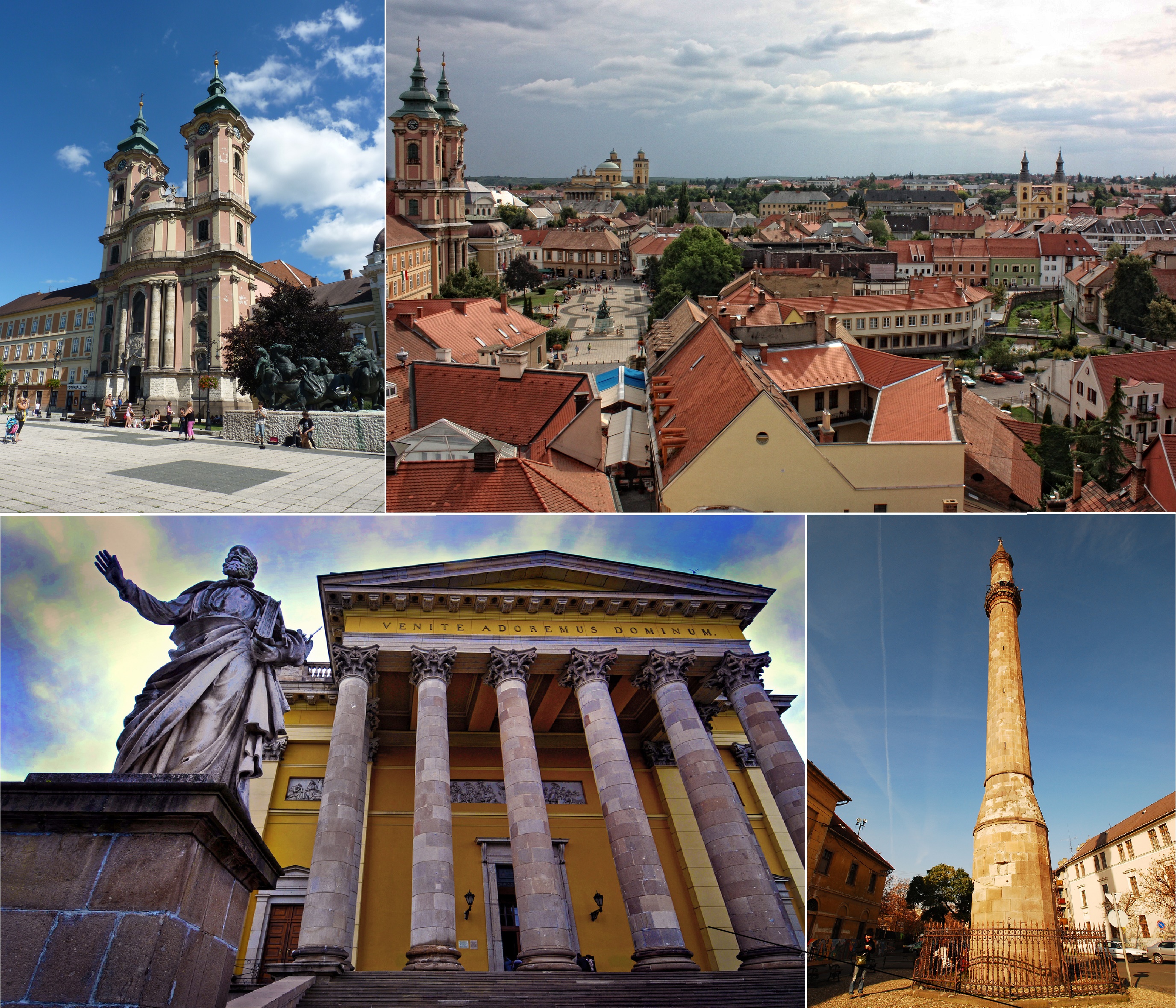
Eger sits in northern Hungary at 180 m above sea level, a small city of 49 thousand people in the Europe/Budapest timezone. Its continental climate brings warm summers, with June through August averaging around 21°C, and cold winters, with December through February averaging around 0°C, so the seasons stay distinct for anyone who wants real temperature variety across the year. Expats who settle here tend to choose Belváros, the historic center, where daily life unfolds among baroque streets and the city's well-known castle and thermal baths. The nearest major airport is BUD, 10 km away, which keeps international connections within easy reach without putting you in a capital-sized city.
Renting in Eger is affordable by Western European standards. A one-bedroom apartment in the city center runs $530/mo, while the same outside the center drops to $428/mo. Three-bedroom units go for $714/mo in the center and $632/mo outside it. Beyond rent, a single adult spends about $600/mo, and a family of four about $2,000/mo. Utilities average $124/mo, internet $20/mo, and a mobile phone plan $22/mo. A monthly public transport pass costs $31/mo and a gym membership $73/mo. Eating out is cheap: an inexpensive restaurant meal is $9 per person, a mid-range three-course meal for two is $37, and a cappuccino is $2. Budget, mid-range, and comfortable tiers for a single adult, rent included, come to $599/mo, $936/mo, and $1,147/mo respectively. The average local net salary is $1,528/mo, and the cost of living index sits at 41/100 against New York City at 100. Average internet speed is 90 Mbps.
Safety is a strong point. The safety index is 85/100 and the crime index is 15/100, with lower crime numbers meaning a safer environment. Air quality is reasonable at an index of 45, where lower is better. Healthcare quality is rated Good, which covers routine care and most everyday needs without requiring trips to Budapest. The expat community is small, and English proficiency is limited, so picking up some Hungarian pays off quickly in shops, offices, and everyday errands.
For remote workers, Hungary offers the White Card (Digital Nomad Visa), which requires a minimum monthly income of $3,362/mo. The city scores 83/100 overall for expats and 83/100 on the FIRE measure, 70/100 for digital nomads, and 65/100 for retirees. That mix suits remote professionals and early retirees who want low rent, a compact historic center, and a slower pace, while those who need a large international community or fluent English everywhere may find the adjustment slower. With BUD 10 km away, weekend trips and family visits stay simple.