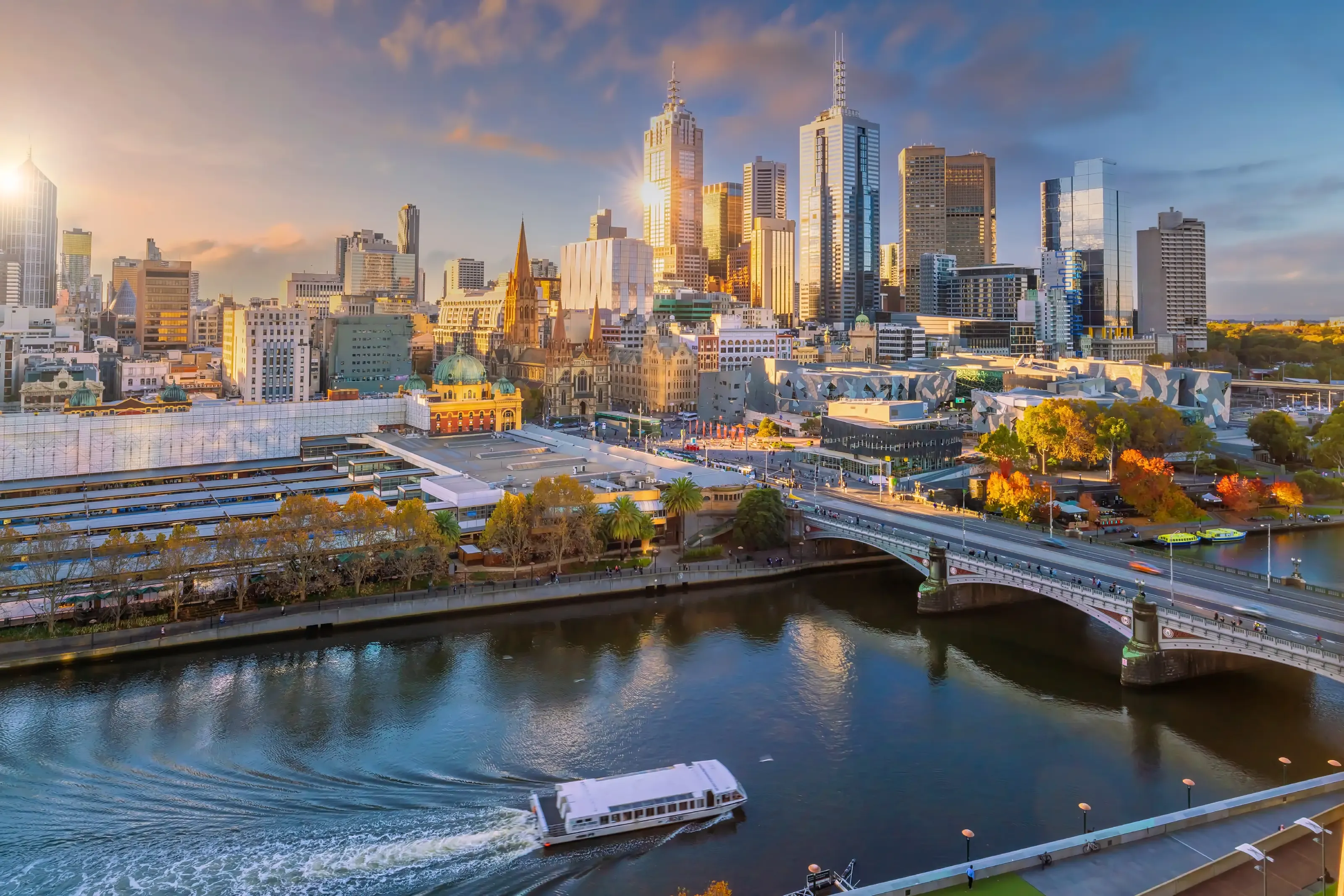
Melbourne, Australia Hero Image
Stock, CC BY-SA

Melbourne, Australia

🌊 Coastal

Data updated Oct 8, 2026

Follows Australia Residency Rules. Check Digital Nomad & Retiree Pathways →

📊 Scores

66
FIRE
71
Retiree
81
Digital Nomad

Best fit: Digital Nomad (score: 81)

Melbourne sits 31 meters above sea level in a temperate climate zone, where seasons arrive with their own character and the weather can shift within a single day. The city's 5.2 million residents enjoy a lifestyle that blends urban energy with coastal ease, and expats gravitate toward neighborhoods like South Yarra, Fitzroy, and St Kilda, each offering a distinct flavor of Melbourne life. South Yarra is known for its tree-lined streets and boutique shopping, Fitzroy for its artsy, bohemian vibe, and St Kilda for its beachside promenade and lively café culture. The nearest airport, MEB, is just 11 kilometers away, making international arrivals and departures remarkably convenient.

Living costs in Melbourne reflect its status as a major global city, though they remain more moderate than in New York, with a cost of living index of 77 out of 100. A single adult's monthly expenses, excluding rent, average $1,200, while a family of four spends around $4,302 on the same essentials. Rent for a one-bedroom apartment in the city centre runs $1,726 per month, dropping to $1,406 outside the centre, and a three-bedroom in the centre costs $3,456, versus $2,520 further out. The average monthly net salary is $4,323, which covers the budget tier total of $1,517, the mid-range tier at $2,311, and even the comfortable tier at $2,843, leaving room for savings or leisure. Utilities add $231 monthly, internet $56, a mobile plan $28, and a public transport pass $139, while a gym membership costs $50. Dining out is affordable, with an inexpensive meal at $17, a three-course meal for two at $84, and a cappuccino at $4.

Safety and healthcare are standout strengths for Melbourne. The city boasts a safety index of 85 out of 100, with a crime index of just 15, indicating a very low level of crime. The air quality index is 35, which is considered good, and healthcare quality is rated as excellent. English is widely spoken, making it easy for newcomers to navigate daily life, and the large, active expat community provides a supportive network. These factors contribute to an overall expat score of 81, with particularly high marks for digital nomads at 81 and retirees at 71, while the FIRE score sits at 66.

For those considering a move, Melbourne offers specific visa pathways. The Investor Retirement visa, subclass 405, is available for retirees, and Australia's Digital Nomad Visa caters to remote workers. The city suits a wide range of people, from professionals seeking a balanced urban lifestyle to retirees looking for excellent healthcare and safety, and digital nomads who value fast internet at 95 Mbps and a thriving expat scene. With its temperate climate, diverse neighborhoods, and strong infrastructure, Melbourne presents a compelling case for those ready to make it their home.
Estimate the cost of moving to Melbourne, Australia

Get a free moving cost estimate for moving to Melbourne, Australia. Takes 10 seconds.

How much are you shipping?

When are you moving?

Powered by Sirelo. Free quotes from international movers.

🏚️ Cost of Living

💰 Budgets and Costs

$2,390/mo, one person, rent included
Selected: mid-range lifestyle

Melbourne on a mid-range budget comes to about $2,390 a month for one adult, with $1,406 of that going to rent. Beyond rent the estimate covers $227 on groceries, $174 on dining out, $129 on entertainment and lifestyle, $315 on utilities and connectivity and $139 on transport.

Rent

$1,406/mo

1BR outside the centre

Groceries

$227/mo

Staples basket scaled to a full month

Dining out

$174/mo

10 inexpensive meals

Entertainment & lifestyle

$129/mo

gym, 2 cinema trips, 12 cappuccinos

Utilities & connectivity

$315/mo

utilities, mobile, internet

Transport

$139/mo

Monthly pass

Budgets (excl. rent)

Single person$984/mo

Excludes rent. The total above is all-in, rent included.

Estimates for one adult, built from this city's average prices and the usage shown for each tier. Your spending will differ with how often you eat out and where you live.

A 1BR in the center runs about $1726.11/mo. If your income is in another currency, bank FX fees add up. A multi-currency account can cut that cost.

See low-fee transfers

We may earn a commission at no cost to you.

See how Melbourne's cost of living compares with Bega NSW

Be the first to report costs in Melbourne

Share

🛡️ Safety & Crime

85
Safety Index

(Higher is safer)

15
Crime Index

(Lower is safer)

Melbourne is genuinely safe for expats, with low violent crime and a well-policed city center and inner suburbs. Property crime (car break-ins, bike theft) occurs but is manageable with basic precautions. Avoid isolated areas late at night and exercise standard urban awareness in outer suburbs like Broadmeadows or Dandenong. Scams targeting expats are minimal compared to other destinations. For Americans aged 30-65, Melbourne presents minimal safety concerns—it's one of Australia's most secure cities with excellent emergency services and a stable, welcoming environment.

🏥 Healthcare

Excellent
Public Hospitals
Yes
Private Clinics
Yes
English-Speaking Doctors
Widely Available

See how Melbourne's healthcare compares with Bega NSW

🌤️ Climate

Climate Zones
Temperate
Summer Temp
26°C
Winter Temp
7°C
Humidity
60%
Air Quality Index
35
Annual Rainfall
778 mm

Best Months

JanFebMarAprNovDec

Climate Notes

Temperate oceanic climate known for its changeable weather patterns.

💻 Digital Nomad

Avg Internet Speed
95 Mbps
Internet (monthly)
$56/mo
Coworking Availability
Abundant
Coworking Spaces Nearby
22
Digital Nomad Score
81/100

Community Notes

Melbourne is renowned for its cultural diversity and robust nomad scene.

Coworking Spaces

NameNotes
WeWork MelbourneWeWork has multiple locations throughout Melbourne (e.g., Collins Street, Bourke Street) offering a consistent, reliable experience with good amenities and a strong community, making it easy for expats to connect. They offer various membership tiers to suit different needs.
The ClusterLocated in the heart of Melbourne's CBD, The Cluster offers premium coworking spaces with stunning city views. It's known for its professional atmosphere and high-end facilities, appealing to established remote workers.
Creative Cubes Co.With locations in Richmond and South Melbourne, Creative Cubes Co. provides a vibrant and collaborative environment. They focus on fostering a strong community and offer various events, making it great for networking.
York Butter FactoryLocated in the vibrant Fitzroy neighborhood, York Butter Factory is a well-established coworking space known for its startup-focused community. It offers a mix of open-plan and private offices, suitable for both individual remote workers and small teams.

Names, locations and hours can change. Check each space's website before you visit. Places from © OpenStreetMap contributors and Foursquare Open Source Places (Apache 2.0).

Planning to live in Melbourne long-term? Australia Digital Nomad Visa lets remote workers live legally.

View full requirements →

Working remotely from Melbourne? Nomad health insurance covers you across borders, month to month.

See nomad insurance

We may earn a commission at no cost to you.

See how Melbourne's digital nomad life compares with Bega NSW

🧳 Expat Life

English Proficiency
Widely Spoken
Expat Community
Large & Active
Top Neighborhoods
South Yarra, Fitzroy, St Kilda
Banks Nearby
132
ATMs Nearby
122

Expat Life Notes

Consistently ranked as one of the world's most livable cities, famous for coffee, arts, and sports.

Pros

  • ✓ World-class dining
  • ✓ Excellent public transport (trams)
  • ✓ Highly diverse

Cons

  • ✗ Very high housing costs
  • ✗ Unpredictable weather
  • ✗ High taxes

🏘️ Neighborhoods in Melbourne

Areas of Melbourne that expats often consider.

Conditions can change from one block to the next, and these descriptions are general guides, not safety assessments. Before choosing where to stay or live, check current travel advisories, talk to people who live there, and visit in person if you can.

Fitzroy

Bohemian, artsy, vibrant nightlife

Fitzroy is known for its street art, live music venues, and eclectic shops. It's popular with younger expats and creatives. Expect a lively atmosphere and good public transport, but also higher rents and some street noise.

St Kilda

Beachside, lively, touristy

St Kilda offers a beach lifestyle with cafes, restaurants, and the iconic Luna Park. It's a popular spot for tourists and expats alike. While convenient and entertaining, it can be crowded and more expensive than other areas, especially during peak season.

South Yarra

Upscale, fashionable, sophisticated

South Yarra is a stylish suburb with high-end boutiques, restaurants, and beautiful parks. It attracts professionals and those seeking a more refined lifestyle. Excellent public transport and walkability, but expect higher living costs.

Carlton

Italian heritage, university vibe

Carlton is home to 'Little Italy' and the University of Melbourne, giving it a vibrant and intellectual atmosphere. Expect delicious Italian food, lively cafes, and a mix of students and long-term residents. Good public transport, but can be noisy due to student population.

Page 1 of 2

Could living/working in Melbourne cut years off your work life?

With a 1-bedroom in the center at $1726/mo, your FIRE number here might be much lower than you think.

Calculate My FIRE Date →

🛂 Visa Options for Australia

Many long-stay visas require proof of health insurance. Compare international health plans before you apply.

Compare health insurance

We may earn a commission at no cost to you.

🛂

Not sure which Australia visa you qualify for?

Answer 11 questions and get a personalized match in under 2 minutes.

Find My Visa →

More Cities to Consider instead of Melbourne

FAQ

Frequently Asked Questions about Melbourne

Click any question to expand the answer.

Melbourne has a population of approximately 5,235,407 people.
A single person can expect to spend around $4,315 per month in Melbourne, including rent. A 1-bedroom apartment in the city center costs approximately $1726/month.
The nearest airport to Melbourne is MEB, approximately 11km away.
Melbourne is considered relatively safe, with a safety index of 85.0. As with any city abroad, expats should research specific neighborhoods before committing to a location.
Melbourne has an average internet speed of 95 Mbps. It is considered a well-established digital nomad destination.
No. Australia's Medicare system covers residents from countries with reciprocal healthcare agreements — including the UK, Ireland, New Zealand, and several European nations — but the US is not on that list. Americans living in Melbourne need private health insurance, which typically costs $100–$250/month depending on coverage level.
The most common routes are the Skilled Independent visa (subclass 189), which requires scoring enough points based on age, English, and qualifications, and the Employer Sponsored visa (subclass 482). Both are competitive and slow — expect 6–18 months processing. Working holiday visas (subclass 417/462) are available up to age 35 for eligible nationalities and are a common entry point.
Not particularly. At $1,800/month for a city-center one-bedroom and grocery and dining costs comparable to Western Europe, Melbourne is expensive by global expat standards. It's cheaper than Sydney by roughly 10–15% on rent, but significantly pricier than Southeast Asian alternatives. The tradeoff is high wages if you're working locally — median full-time earnings are around AUD $90,000 — which makes the math work better for employed residents than for remote workers on foreign salaries.
Melbourne is known for its changeable weather, often experiencing 'four seasons in one day.' Expect mild winters (June-August) with temperatures around 46-59°F (8-15°C) and warm summers (December-February) averaging 64-79°F (18-26°C). Be prepared for sudden shifts and pack layers.
Melbourne is generally a very safe city with low crime rates compared to many major US cities. Petty theft, like pickpocketing, can occur in tourist areas, so be mindful of your belongings. Certain areas, particularly late at night, might feel less safe, but violent crime is rare.
For budget-conscious expats, consider suburbs like Brunswick, Fitzroy, or Footscray. These areas offer more affordable rent than inner-city locations while still providing good access to amenities and public transport. They also have a vibrant, multicultural atmosphere.
Melbourne has an excellent public transportation system, including trams, trains, and buses, all integrated under the Myki card system. It's easy to get around the city and surrounding suburbs without a car. Consider the cost of Myki fares when budgeting.
Yes, finding English-speaking doctors and healthcare professionals in Melbourne is very easy. The standard of healthcare is high, and many doctors have trained internationally. Private health insurance is recommended for expats to avoid long wait times for specialist appointments.
Melbourne boasts excellent internet speeds, making it ideal for digital nomads. You can expect reliable and fast connections in most cafes, coworking spaces, and apartments. NBN (National Broadband Network) is widely available, offering various speed tiers.
Melbourne has a thriving coworking scene with numerous options to suit different budgets and needs. Popular choices include WeWork, Spaces, and local independent spaces like The Cluster. Expect to pay around $300-$600 AUD per month for a dedicated desk.
As a US citizen, you're still required to file US taxes even when living abroad. The Foreign Earned Income Exclusion (FEIE) can help you exclude a certain amount of your foreign-earned income from US taxes. Also, be aware of FBAR reporting requirements for foreign bank accounts.
Several options exist for transferring money, including bank transfers, Wise (formerly TransferWise), and Remitly. Compare fees and exchange rates to find the most cost-effective method. Be aware of potential ATM fees when withdrawing cash locally.
Melbourne has a large and active expat community, making it easy to connect with people from all over the world. Numerous expat groups and social events are available through platforms like Meetup and InterNations. You'll find plenty of opportunities to make new friends.
Groceries in Melbourne are generally comparable to US prices, though some imported items can be more expensive. Dining out can range from affordable to pricey, with a decent meal costing around $25-$40 AUD per person. Look for local markets for cheaper produce.
Melbourne can be a viable option for early retirement, but careful budgeting is essential. While the quality of life is high, the cost of living can be significant. Consider your passive income streams and healthcare needs when evaluating its suitability.
Australians are generally more laid-back and informal than Americans. Punctuality is valued, and tipping is not as common as in the US (usually only for exceptional service). Familiarize yourself with Australian slang to better understand conversations.
While there isn't a specific retirement visa for Australia, options like the Investor Retirement visa (subclass 405) previously existed but are now closed to new applicants. Explore other potential pathways like the Skilled Migration visas if you have relevant skills or consider a Partner visa if you have a relationship with an Australian citizen or permanent resident. Consulting with an immigration lawyer is highly recommended.

Share This Guide