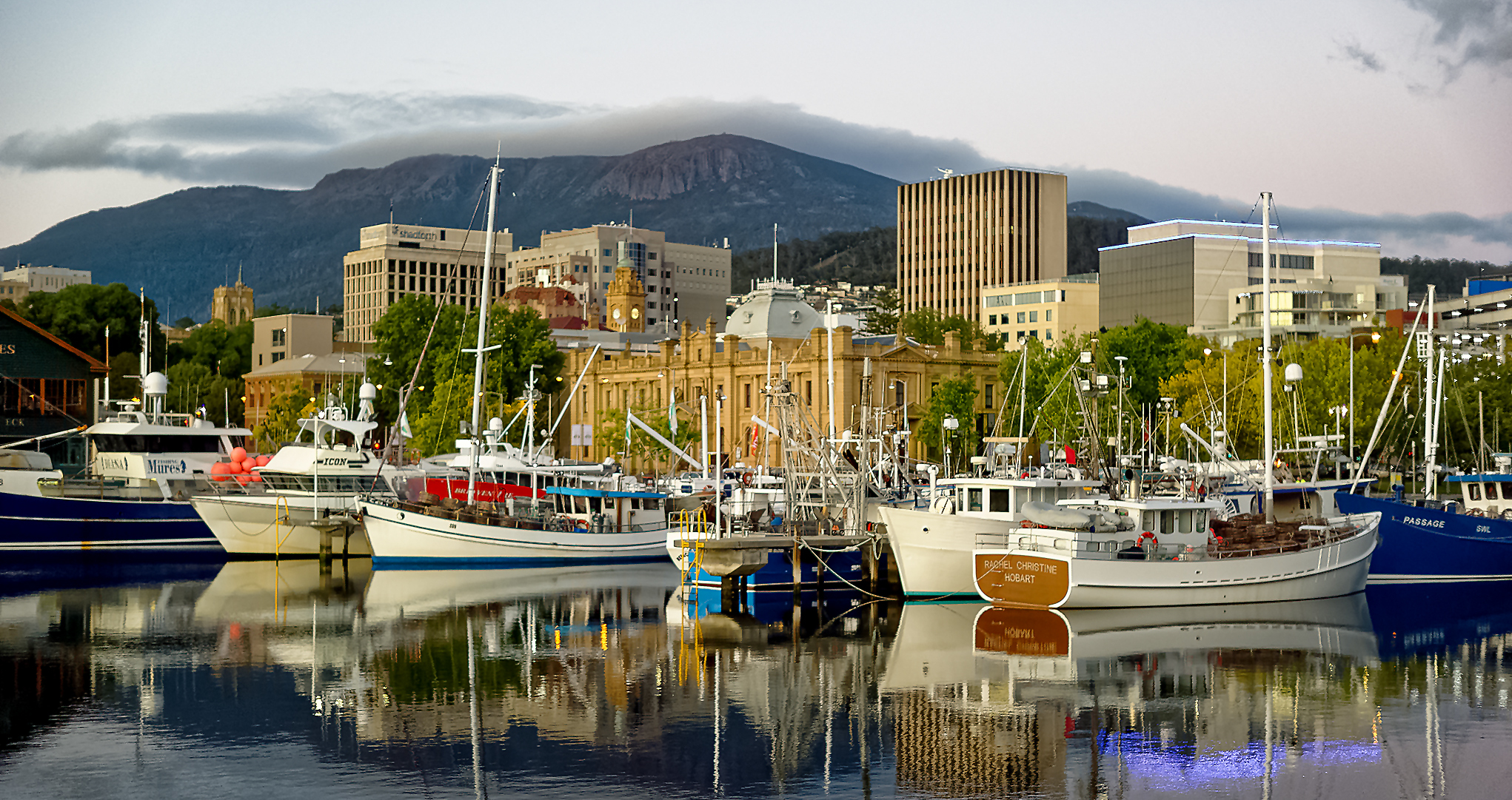
Hobart, Australia Hero Image
Wikipedia Contributor, CC BY-SA

Hobart, Australia

🌊 Coastal

Data updated Oct 8, 2026

Follows Australia Residency Rules. Check Digital Nomad & Retiree Pathways →

📊 Scores

70
FIRE
70
Retiree
78
Digital Nomad

Best fit: Digital Nomad (score: 78)

Hobart sits on the Derwent River in Tasmania, a small capital of 197 thousand people at 52 m above sea level, in the Australia/Hobart timezone. The climate is temperate, with four distinct seasons and cool changes that roll in off the water. Expats tend to settle in Sandy Bay, close to the university and the waterfront, or in Battery Point, where colonial cottages line quiet streets above the harbour. Both neighborhoods put you within easy reach of the city centre while keeping a village feel that long-term residents say is hard to find elsewhere.

Rents reflect that appeal. A one-bedroom apartment in the city centre runs $1,810/mo, while the same outside the centre drops to $1,372/mo. Three-bedroom places go for $2,144/mo centrally and $1,622/mo further out. Beyond rent, a single adult spends about $1,127/mo on everything else, and a family of four about $4,021/mo. Utilities add $223/mo, internet $60/mo, and a mobile plan $29/mo. A monthly public transport pass costs $97/mo and a gym membership $37/mo. Eating out is modest: $18 for an inexpensive restaurant meal per person, $91 for a three-course mid-range dinner for two, and $4 for a cappuccino. Against an average monthly net salary of $4,118/mo, the cost of living index of 74/100 against New York City leaves room to save. Budget-conscious singles manage on $1,435/mo all in, mid-range living costs $2,213/mo, and a comfortable tier reaches $2,878/mo.

Safety is a strong point, with a safety index of 85/100 and a crime index of just 15/100. Healthcare quality is rated excellent, and English is widely spoken, which smooths everything from booking a GP to sorting a lease. The expat community is large and active, so newcomers find established networks in Sandy Bay and Battery Point without much effort. Internet averages 45 Mbps, enough for remote work and streaming, though not the fastest you will encounter in a capital city.

For longer stays, the Investor Retirement visa (subclass 405) is the relevant retirement pathway, while the Australia Digital Nomad Visa covers remote workers. Hobart Airport (HBA) is 14 km from the centre, a short transfer that keeps arrivals simple. The city scores 78/100 overall for expats, 78/100 for digital nomads, and 70/100 for both FIRE and retirees. It suits people who want a temperate, low-crime, English-speaking base with a real community, modest daily costs, and a salary-to-rent balance that rewards those earning local wages or bringing remote income.
Estimate the cost of moving to Hobart, Australia

Get a free moving cost estimate for moving to Hobart, Australia. Takes 10 seconds.

How much are you shipping?

When are you moving?

Powered by Sirelo. Free quotes from international movers.

🏚️ Cost of Living

💰 Budgets and Costs

$2,288/mo, one person, rent included
Selected: mid-range lifestyle

Hobart on a mid-range budget comes to about $2,288 a month for one adult, with $1,372 of that going to rent. Beyond rent the estimate covers $204 on groceries, $185 on dining out, $118 on entertainment and lifestyle, $312 on utilities and connectivity and $97.00 on transport.

Rent

$1,372/mo

1BR outside the centre

Groceries

$204/mo

Staples basket scaled to a full month

Dining out

$185/mo

10 inexpensive meals

Entertainment & lifestyle

$118/mo

gym, 2 cinema trips, 12 cappuccinos

Utilities & connectivity

$312/mo

utilities, mobile, internet

Transport

$97.00/mo

Monthly pass

Budgets (excl. rent)

Single person$916/mo

Excludes rent. The total above is all-in, rent included.

Estimates for one adult, built from this city's average prices and the usage shown for each tier. Your spending will differ with how often you eat out and where you live.

A 1BR in the center runs about $1810.22/mo. If your income is in another currency, bank FX fees add up. A multi-currency account can cut that cost.

See low-fee transfers

We may earn a commission at no cost to you.

See how Hobart's cost of living compares with Ningi

Be the first to report costs in Hobart

Share

🛡️ Safety & Crime

85
Safety Index

(Higher is safer)

15
Crime Index

(Lower is safer)

Hobart is genuinely one of Australia's safest cities, with low violent crime and property theft rates typical of affluent regional areas. The main concerns are petty theft in busy areas and occasional car break-ins, particularly near tourist spots like Salamanca Place. Avoid isolated areas after dark, though serious crime remains rare. For American expats, this is a straightforward, low-risk relocation with excellent personal safety—the bigger adjustment is Tasmania's isolation and limited job market rather than security concerns.

🏥 Healthcare

Excellent
Public Hospitals
Yes
Private Clinics
Yes
English-Speaking Doctors
Widely Available

See how Hobart's healthcare compares with Ningi

🌤️ Climate

Climate Zones
Temperate
Summer Temp
34°C
Winter Temp
1°C
Humidity
74%
Annual Rainfall
590 mm

Best Months

JanFebMarNovDec

Climate Notes

Hobart experiences mild summers with occasional peaks up to 34°C and cool winters with temperatures dropping to 1°C, accompanied by relatively high average humidity of 74%.

💻 Digital Nomad

Avg Internet Speed
45 Mbps
Internet (monthly)
$60/mo
Coworking Availability
Abundant
Coworking Spaces Nearby
0
Digital Nomad Score
78/100

Community Notes

Hobart is a favorite among digital nomads for its thriving community and scenic views.

Coworking Spaces

NameNotes
Regus HobartRegus provides a globally recognized standard of coworking in Hobart's CBD. It's a reliable option with various membership levels, suitable for those who appreciate consistency and a professional atmosphere.
The Hive CollectiveSituated in North Hobart, The Hive Collective offers a more boutique and community-focused coworking experience. It's known for its collaborative atmosphere and is a good choice for those seeking a smaller, more intimate workspace.
Work Club Melbourne (Hobart Access)While Work Club doesn't have a physical location in Hobart, their membership provides access to a network of spaces including partner locations and benefits that can be useful for digital nomads traveling between cities. This is a premium option for those who value flexibility and high-end amenities, even if Hobart access is indirect.

Names, locations and hours can change. Check each space's website before you visit. Places from © OpenStreetMap contributors and Foursquare Open Source Places (Apache 2.0).

Planning to live in Hobart long-term? Australia Digital Nomad Visa lets remote workers live legally.

View full requirements →

Working remotely from Hobart? Nomad health insurance covers you across borders, month to month.

See nomad insurance

We may earn a commission at no cost to you.

See how Hobart's digital nomad life compares with Ningi

🧳 Expat Life

English Proficiency
Widely Spoken
Expat Community
Large & Active
Top Neighborhoods
Sandy Bay, Battery Point
Banks Nearby
14
ATMs Nearby
34

Expat Life Notes

Safe and stunning harbor city. Popular for its foodie scene and quality of life.

Pros

  • ✓ Nature
  • ✓ Safety
  • ✓ Native English

Cons

  • ✗ Isolated
  • ✗ Colder climate

🏘️ Neighborhoods in Hobart

Areas of Hobart that expats often consider.

Conditions can change from one block to the next, and these descriptions are general guides, not safety assessments. Before choosing where to stay or live, check current travel advisories, talk to people who live there, and visit in person if you can.

Battery Point

Historic, charming, upscale village

Battery Point is Hobart's oldest suburb, known for its beautifully preserved colonial architecture and waterfront views. It's popular with affluent retirees and professionals. Walkable and close to Salamanca Place, but can be pricey and touristy during peak season.

North Hobart

Vibrant, foodie, entertainment strip

North Hobart is a lively area centered around Elizabeth Street, with a diverse range of restaurants, cafes, and the State Cinema. It attracts a younger crowd and those seeking a more urban lifestyle. Good public transport, but parking can be challenging, and noise levels can be higher.

West Hobart

Leafy, residential, family-friendly

West Hobart offers a more relaxed atmosphere with established homes and gardens. It's popular with families and those seeking a quieter lifestyle. While walkable in parts, some areas are hilly. Offers good access to parks and schools, but less nightlife than other areas.

Sandy Bay

Upscale, coastal, university area

Sandy Bay is a desirable suburb with beaches, shops, and the University of Tasmania. It attracts students, families, and retirees. Close to the city and offers good amenities, but can be expensive and busy during university terms.

Page 1 of 2

Could living/working in Hobart cut years off your work life?

With a 1-bedroom in the center at $1810/mo, your FIRE number here might be much lower than you think.

Calculate My FIRE Date →

🛂 Visa Options for Australia

Many long-stay visas require proof of health insurance. Compare international health plans before you apply.

Compare health insurance

We may earn a commission at no cost to you.

🛂

Not sure which Australia visa you qualify for?

Answer 11 questions and get a personalized match in under 2 minutes.

Find My Visa →

More Cities to Consider instead of Hobart

FAQ

Frequently Asked Questions about Hobart

Click any question to expand the answer.

Hobart has a population of approximately 197,451 people.
A single person can expect to spend around $4,526 per month in Hobart, including rent. A 1-bedroom apartment in the city center costs approximately $1810/month.
The nearest airport to Hobart is HBA, approximately 14km away.
Hobart is considered relatively safe, with a safety index of 85.0. As with any city abroad, expats should research specific neighborhoods before committing to a location.
Hobart has an average internet speed of 45 Mbps. It is considered a well-established digital nomad destination.
Hobart is ideal for retirees seeking quiet coastal living and FIRE adherents who value low costs. Digital nomads may find the infrastructure lacking.
For long-term stays, Americans typically pursue the Skilled Independent visa (subclass 189) if eligible, or employer-sponsored visas. Retirees often explore the Investor Retirement visa (subclass 405), though it has specific financial requirements and isn't a direct pathway to permanent residency. Always consult with an Australian immigration lawyer for personalized advice.
Hobart has a good public healthcare system (Medicare), but expats usually opt for private health insurance for faster access and wider coverage. You'll find many English-speaking doctors, especially in areas like Sandy Bay and West Hobart. Check online directories like HealthEngine for listings and reviews.
Internet speeds in Hobart are generally reliable, with NBN (National Broadband Network) widely available. Expect download speeds of 50-100 Mbps in most areas, sufficient for video conferencing and other remote work tasks. Check specific addresses before committing to a rental, as some older buildings might have slower connections.
Yes, Hobart has a growing number of coworking spaces catering to freelancers and remote workers. Options include Hub Hobart and Enterprize Hobart, offering various membership plans and amenities. These spaces provide a good opportunity to network and connect with other professionals.
Hobart has a temperate maritime climate with four distinct seasons. Summers (December-February) are mild, with average temperatures around 21°C (70°F), while winters (June-August) are cool and wet, averaging around 12°C (54°F). Be prepared for changeable weather year-round.
For more affordable living, consider suburbs like Glenorchy, Moonah, or Claremont, which are further from the city center but still well-connected by public transport. These areas offer a mix of housing options and are generally cheaper than waterfront or inner-city locations.
Hobart has a decent public transport system, primarily consisting of buses operated by Metro Tasmania. While a car can be convenient for exploring the surrounding areas, you can manage without one if you live near a bus route and are comfortable with walking or cycling. Taxis and ride-sharing services are also available.
Hobart's expat community is smaller compared to larger Australian cities like Sydney or Melbourne, but it's still active and welcoming. You can connect with other expats through online groups like InterNations or local social clubs. Don't expect a huge scene, but you'll find people.
As a US citizen, you're still required to file US taxes even when living abroad. You may be able to exclude a certain amount of your foreign earned income using the Foreign Earned Income Exclusion (FEIE) or claim a Foreign Tax Credit. Be sure to file FBAR if you have foreign accounts exceeding $10,000 total at any point in the year. Consult with a tax professional specializing in expat taxes.
Several options exist for international money transfers, including Wise (formerly TransferWise), OFX, and traditional bank transfers. Wise often offers competitive exchange rates and lower fees compared to banks. Check the fees and exchange rates carefully before making a transfer.
Living comfortably in Hobart on $3,000 USD (approximately $4,500 AUD) per month would be challenging but possible with careful budgeting. You'd need to prioritize affordable housing outside the city center, cook most meals at home, and limit discretionary spending. It's doable, but requires a frugal lifestyle.
The quality of life in Hobart is generally high, especially for English speakers. You won't encounter language barriers, and the locals are known for their friendly and welcoming nature. The pace of life is slower and more relaxed compared to larger cities, which many find appealing.
Hobart is generally a safe city, but like any urban area, it has some areas with higher crime rates. It's advisable to exercise caution in the city center late at night and be aware of your surroundings in areas like parts of Moonah. Overall, violent crime is rare.

Share This Guide