Application Fee
$132
Processing Time
13-17 wks
Difficulty
Moderate
Duration
6 months
Path to Citizenship
10 years
Overview
Italy’s Golden Visa is built around a capital commitment, not day-to-day income. To qualify, a non‑EU applicant commits at least $275,000 USD into a qualifying Italian business or business-type vehicle, and must show savings of at least $272,500 USD. There is a minimum required annual income of at least €8,500 (as of 2026), so a FIRE retiree living on $3,800/month from ETF dividends and U.S. rental income qualifies financially as long as these savings and investment thresholds are met and the funds are traceable. Local work is permitted, but not required, which makes this program viable whether your income is entirely foreign or you want the option to build something on the ground in Italy.
From a lifestyle perspective, the standout feature is the 0 days/year physical presence requirement in the program details. Residency is granted for 6 months at a time initially and is renewable. That means you can hold Italian residency while spending nearly all your time in another country, as long as you maintain the qualifying investment. For someone splitting time between, say, six months in Italy and six months in the U.S. or Mexico, this flexibility is materially different from strict stay requirements under many retirement or digital-nomad visas.
The residence permit is explicitly a long-term gateway. After 5 years, it can lead to permanent residency, and after 10 years of residence you can pursue Italian citizenship, subject to standard integration and residency tests. The permit itself renews beyond the initial 6 months as long as the investment remains in place and the other conditions (such as health insurance) are maintained. This gives a 40‑something FIRE couple a clear decade-long roadmap from initial investment to an Italian passport, as long as they are willing to eventually meet Italy’s physical residence expectations for citizenship.
On friction, the process is structured but document-heavy rather than arbitrary. You won’t need an FBI background check, a medical exam, or an in‑person interview according to the program details, which removes several common bottlenecks seen in other countries. However, you do need private health insurance (a hard requirement), robust proof of funds’ lawful origin, and you should expect up to 26 weeks (as of 2026) of processing between filing and initial approval. The bureaucracy score of 1.725/5 suggests moderate, not trivial, admin: online pre‑clearance, consular filing, then an in‑Italy residence permit, all of which must align with the investment timeline.
This path makes the most sense if you can comfortably allocate about $275,000 USD into a qualifying Italian business investment and hold at least $272,500 USD in additional savings while valuing Schengen access, a 0‑day presence requirement, and a 5‑ to 10‑year EU residency/citizenship plan. It is a poor fit if your investable assets are under $300,000, you prefer a purely real-estate-based golden visa, or you want a program that converts to citizenship on a shorter timeline than 10 years.
Eligibility Requirements
EU and EEA citizens do not need the Italy Golden Visa because they already have free movement and residence rights in Italy under EU law. The target pool is non‑EU nationals: Americans, Canadians, Australians, New Zealanders, British, Swiss, Latin Americans, Asians, Africans, and others without an EU passport who want residency via investment.
Confusion often arises around edge‑case European countries. Norway, Iceland, and Liechtenstein are in the EEA and thus have free movement similar to EU citizens, so they bypass this program. Switzerland sits outside the EU/EEA but has its own bilateral free‑movement arrangements with the EU; Swiss nationals generally do not need an investor visa route either. By contrast, post‑Brexit UK nationals are now firmly in the non‑EU category from Italy’s perspective and are eligible to pursue the Golden Visa if they meet the investment and savings thresholds.
Dual nationals who hold any EU citizenship (for example, a U.S.–Irish, Canadian–Italian, or Australian–Polish dual citizen) should travel and settle in Italy using their EU passport, not the Golden Visa. Exercising EU free‑movement rights is cheaper, faster, and carries fewer conditions than an investor residency permit, and it will usually give a more straightforward path to long‑term residence and eventual citizenship in Italy.
Min Investment
$270,000
Application Fee
$132
Min Age
18 yrs
Duration
6 months
Physical Presence
None required
Requirements Checklist
0 of 25 documents in hand
0%These take the longest, so start them first.
Request these while the slow items are in progress.
You only need these on the day you submit.
How and where to apply
Start with online submission for Nulla Osta via the Italian Investor Visa portal, open to non-EU applicants worldwide. Then apply for the Type D visa at the Italian consulate in your home country. After entry, finalize the residence permit (Permesso di Soggiorno) at a local Questura or Post Office in Italy within 8 days of arrival.
Tax Information
Local tax regime and what it means for you
Italy uses a resident worldwide-tax system. The visa rules classify the tax regime as “resident,” which means once you are considered tax resident in Italy, your global income is within the Italian tax net: foreign remote salary, ETF dividends from a U.S. brokerage, pension distributions from a 401(k) or IRA, Social Security, and rental income from property abroad are all potentially taxable in Italy at progressive rates. Non‑residents are taxed only on Italian‑source income (such as an Italian salary or rental income from an Italian property).
For a Golden Visa holder who keeps their tax residency elsewhere and spends limited time in Italy, foreign passive income streams can remain outside Italian taxation. However, if you relocate and become Italian tax resident, your $5,000/month of dividends and bond interest, plus any U.S. rental income, becomes reportable in Italy under this resident regime.
On foreign capital gains (for example, selling index funds or ETFs in a U.S. or Canadian brokerage), Italian-resident taxpayers are generally taxed on those gains because worldwide income is in scope. For non‑residents who are not Italian tax residents, gains on foreign securities held abroad are outside Italy’s taxing rights. The exact rate on investment gains depends on the income category and current law; Italy applies a flat 26% substitute tax on such gains, with no additional preferential rate for Golden Visa holders.
Tax residency is not triggered simply by holding the Italy Golden Visa. The key trigger is factual residence: Italy generally treats you as tax resident if you are registered as resident in the municipal registry (anagrafe), or if your “center of vital interests” (home, family, business) is in Italy, or if you spend more than roughly 183 days per year in the country. Residency is assessed over the calendar year, and registration in the anagrafe is a strong indicator.
New residents who meet certain conditions can evaluate Italy’s preferential “flat tax” regime (a lump‑sum tax on foreign income), which is widely discussed for high‑net‑worth individuals, although it is not specific to the Golden Visa and the flat tax is EUR 300,000 per year for 2026 elections (EUR 50,000 per qualifying family member), up from EUR 200,000 for elections from August 2024. In practice, a Golden Visa investor moving full‑time to Italy might combine this residence permit with the flat‑tax option to cap Italian tax on foreign income, but this requires bespoke planning.
Once living in Italy as a tax resident, you should plan to register for a tax code (codice fiscale), register with the local tax office if required, and file an annual Italian tax return by statutory deadlines (often around late spring for the prior calendar year). Failure to register or file when resident can trigger penalties and interest.
On treaty status with the U.S., the U.S.-Italy tax treaty is in force and covers pensions and Social Security under Article 20. That means you cannot assume how Social Security, dividends, or pensions are treated for double-taxation relief without reviewing the treaty text. You’ll need to confirm the current U.S.–Italy tax treaty and any totalization agreement separately to understand creditability and Social Security coordination.
For US Citizens and Green Card Holders
U.S. citizens and green card holders remain taxed on worldwide income regardless of Italian residency or Golden Visa status. The Italy Golden Visa primarily affects where you might also owe tax, not your U.S. filing duties.
The Foreign Earned Income Exclusion (FEIE, claimed on Form 2555) only covers earned income such as remote employment, consulting, or self‑employment income, up to $132,900 for 2026 (indexed thereafter). It does not cover dividends, capital gains, rental income, or pension withdrawals that most FIRE families rely on. If you use the Golden Visa lightly and do not become Italian tax resident (for example, you spend fewer than 183 days in Italy and keep your main home in the U.S. or elsewhere), you probably will not meet the Bona Fide Residence test, and the Physical Presence test (330 days abroad in any 12‑month period) becomes the only FEIE route. Many investors using Italy primarily as a base while traveling the world qualify this way if they spend most of the year outside the U.S.
Foreign Tax Credits (FTC, Form 1116) matter once you are Italian tax resident and paying Italy’s resident tax on the same income the U.S. taxes. If Italy’s effective rate on your remote salary or investment income is higher than, or comparable to, the U.S. rate, you can usually use FTCs to offset U.S. tax on that income. If you structure your life to remain non‑resident in Italy for tax purposes and pay zero Italian tax on foreign income, FTCs give you no benefit; all U.S. tax remains payable.
FBAR (FinCEN 114) kicks in as soon as your non‑U.S. financial accounts exceed an aggregate $10,000 at any point in the year. If you open an Italian bank or brokerage account to fund your $275,000 investment or to manage your $272,500 savings, that alone can trigger FBAR filing, separate from FATCA Form 8938 on your U.S. tax return. Non‑willful penalties start at roughly $16,700 per violation as of 2026 (inflation-adjusted from a $10,000 statutory base), so accurate reporting is essential.
In practice, a Golden Visa investor needs two specialists: a U.S. CPA who works extensively with expats (for FEIE vs. FTC strategy, FBAR, FATCA, and entity reporting), and an Italian tax advisor to determine if and when you become Italian tax resident, register locally, and evaluate Italy’s flat‑tax or standard resident regime. The $1,500–$3,000 usually spent in year one on this combined advice is often recouped through optimized elections, avoided double taxation, and prevention of FBAR/FATCA penalties.
Living in Italy
COL Index vs NYC
51.0
Monthly Cost (excl. rent)
$1,017
1BR Rent (City Center)
$845
Safety Index
53.1
Healthcare Index
65.1
Quality of Life Index
151.0
Time Zone
UTC+01:00
Capital
Rome
Population
59.6M
Official Languages
Italian, Catalan
Avg Internet Speed
285 Mbps
Public Transit Quality
Good
With a budget covering rent and living costs, you'd need roughly $1,862/mo for a comfortable single-person lifestyle in Italy.See how far your money goes →
🏙️ Best Cities in Italy for Golden Visa Holders
 72
72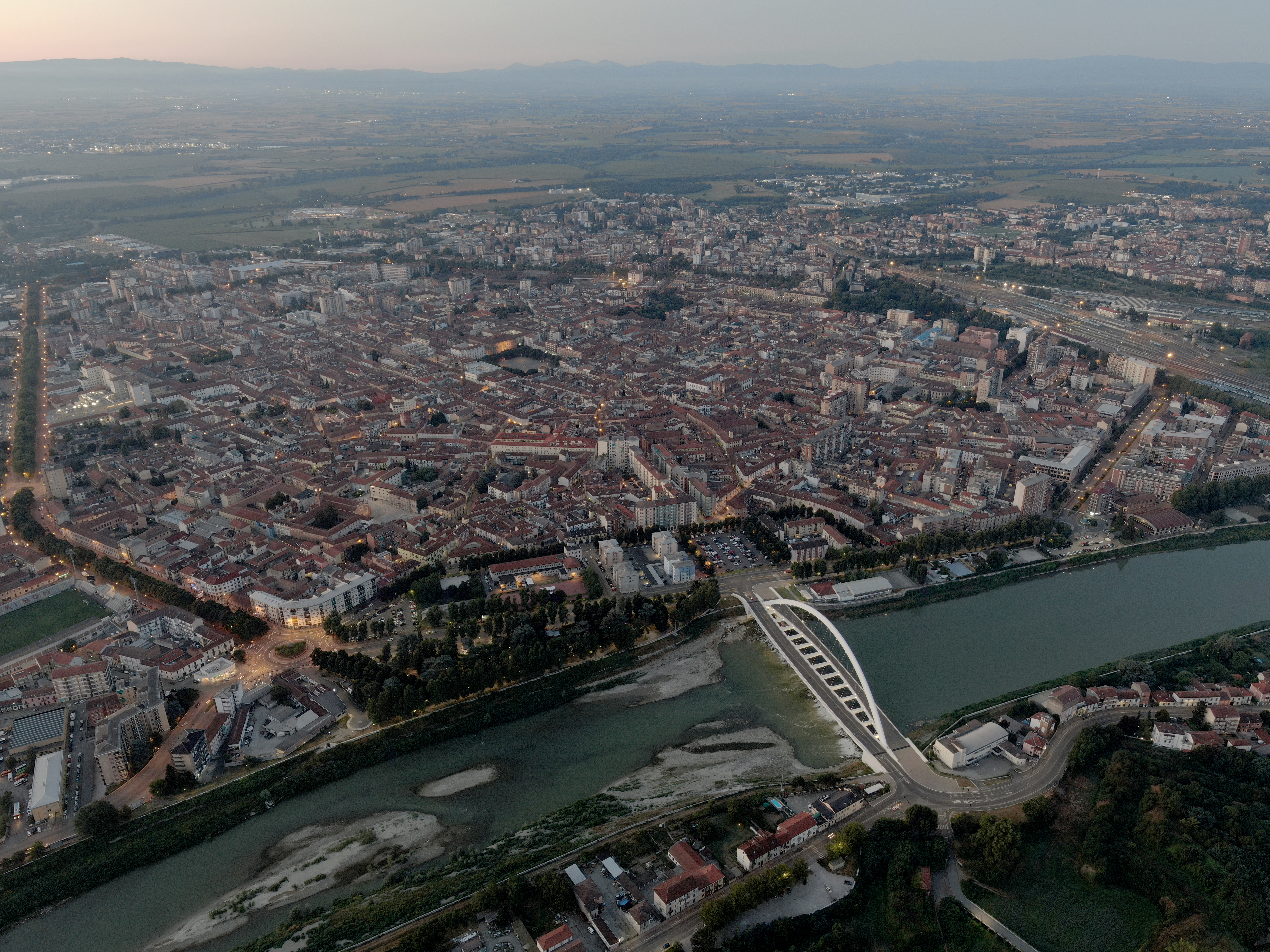 72
72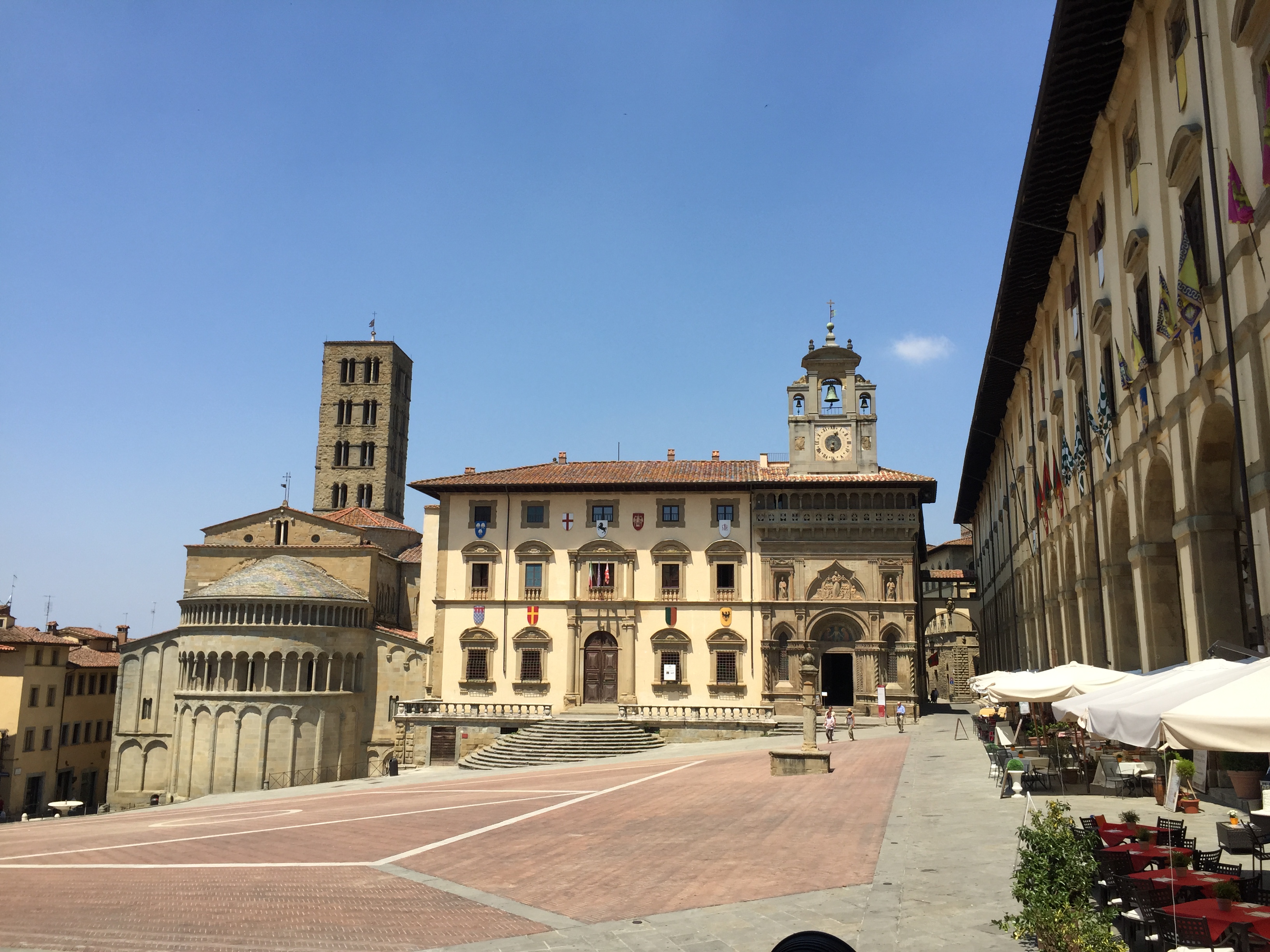 74
74The accommodation requirement and how people get it wrong
Proof of accommodation shows up twice in this process, and treating it as one requirement instead of two is where people lose time. At the consular visa stage, a hotel booking or short lease is usually enough to demonstrate you have somewhere to land. That's a low bar, and most applicants clear it without thinking hard about it.
The problem starts after arrival, when the accommodation question resurfaces for the residence permit application at the Questura or post office. A hotel booking that satisfied the consulate won't satisfy this stage. You need something that reads as an actual address, a lease with your name on it or ownership documentation, because the residence permit kit ties your legal presence in Italy to a specific place, and vague housing arrangements produce vague files that sit in queues longer than they need to.
The sequencing error is booking short-term housing for the first few weeks and assuming you'll sort out something more permanent once you're settled. That's backwards. Sort out the lease, or at least a signed reservation on one, before you fly, so the address on your residence permit application isn't a placeholder you're scrambling to replace during the eight-day window you have to file after arrival. Landlords in Italy are also not always fast about producing the kind of documentation immigration offices want, and chasing that down after you've already used up part of your filing window is a bad position to be in.
The gap between the visa and the permit
Getting the Type D visa stamped in your passport feels like the finish line, and it isn't. It's permission to enter Italy and start a second process that runs on its own clock. Within eight days of arrival you need to file for the Permesso di Soggiorno at a Questura or post office, and this is where the on-paper timeline and the lived experience diverge most sharply.
Filing within eight days means submitting the kit, not receiving the card. Between filing and actually holding the permit, there's a gap where you're legally resident but functionally operating on a filing receipt, a cedolino, for anything that requires proof of status, opening a bank account, signing a longer lease, registering with a doctor. Processing on the visa side alone has been reported anywhere from a little over a month to roughly half a year, and the permit stage adds its own queue on top of that. Plan the first few months in Italy assuming administrative friction, not assuming you'll be a fully documented resident by week three.
This is also the stage where the paperwork you assembled for the consulate gets a second look, sometimes by people applying slightly different standards than the consulate did. Keep copies of everything, because photocopies of previously submitted documents are part of what the local office wants, and reassembling a file from memory after you've moved countries is its own kind of unpleasant.
The long path to permanence, and what it actually asks of you
Five years gets you to long-term residence, ten gets you to citizenship, and both numbers assume the intervening years look clean: taxes filed as a resident, no gaps in your permit renewals, nothing that reads as you treating Italy as a mailing address rather than a home. The tax regime here is the resident one, which means once you're established, Italy taxes you as it taxes anyone else living there, not under some special low-friction expat carve-out. That's a real shift for someone used to structuring income around a US tax return and not much else, and it changes the math on where income should be earned and how it should be reported once you cross the residency threshold.
Work is permitted locally, which sounds like a minor detail until you realize it changes the entire character of the ten years ahead. This isn't a visa that quarantines you from the Italian economy while you wait out a clock. You can build a business, take a job, or keep working for US clients while living under Italian tax rules, and that flexibility matters if the plan is to actually integrate rather than sit in a holding pattern until naturalization eligibility arrives.
The gap between the five-year and ten-year marks is where people's plans tend to drift. Long-term residence status feels like the finish line because it removes most of the renewal anxiety, and it's tempting to stop thinking about the citizenship clock once you have it. But the requirements for naturalization aren't identical to the requirements for long-term residence, and treating the five-year mark as "done" is how people end up recreating paperwork gaps at year eight that they thought they'd closed at year five.
Italy against the obvious alternative
The comparison people actually want to make is Portugal, and it's worth being honest about why. Portugal's version of this visa has spent years positioning itself as the lower-friction, lower-capital route into the EU, while Italy's has leaned into a heavier documentation process without any physical presence requirement to maintain the permit, which is a genuinely different trade than most golden visa programs offer. If minimizing time actually spent in-country is the priority, that zero-day presence requirement is a real point in Italy's favor and doesn't get enough attention next to the investment conversation.
Where Italy asks more is on the front end. The dual-stage process, Nulla Osta first, then consular visa, then a separate residence permit filing after arrival, adds administrative surface area that a single-stage program doesn't have. Each stage is a place a file can stall, and the processing range on this visa reflects that, running from a bit over a month at the fast end to roughly half a year at the slow end depending on where in the pipeline things get stuck.
If the goal is EU residency as a hedge, something you want in your back pocket without restructuring your life around it, Italy's no-presence-requirement structure fits that better than most alternatives. If the goal is to actually live in the country soon and build toward citizenship on a defined timeline, the ten-year naturalization clock here is longer than some competing programs, and that's worth sitting with before committing capital, because the difference between a five-year and a ten-year commitment isn't just paperwork. It's a decade of tax residency, renewal cycles, and staying inside a system that doesn't move quickly even when you do everything right.
Work Permissions
Application Steps
- 1
📋 Research investment options
1-2 weeks
- 2
📄 Prepare required documents
2-4 weeks
- 3
📬 Submit Nulla Osta online
Same day
- 4
⏳ Wait for Nulla Osta approval
4-8 weeks
- 5
📅 Apply at Italian consulate
1-2 weeks
- 6
🏛️ Enter Italy and invest
1 week
- 7
🏛️ Apply for residence permit
2-4 weeks
Compare this visa
Curated comparisons that include this route.
Frequently Asked Questions
Click any question to expand the answer.
Ready to Apply?
Work with trusted visa specialists who handle the paperwork so you can focus on your move.
Get help with this visa →* We may earn a commission if you apply through our link
At a Glance
Last verified: October 9, 2026