Min Monthly Income
$2,895
Application Fee
$132
Processing Time
~6 wks
Difficulty
Difficult
Duration
12 months
Path to Citizenship
10 years
Overview
Financially, this visa is aimed squarely at people with substantial passive income rather than salaries. The consulates in New York and Los Angeles both require a “documented and detailed guarantee of substantial and stable private income” from pensions, Social Security, rental properties, and business or commercial activities that do not require your active work. Income from subordinate work (employment) is explicitly excluded, and local work is not permitted and local income must be 0% of your total income. Social Security and other pension income are recognized, and applicants typically need to show savings of at least $35,398 and monthly passive income of about $1,137, as of 2026, though decisions remain discretionary rather than purely formula-based.
On the timeline side, you are looking at a medium-term commitment. The visa is issued for 12 months and is renewable, and the published rules confirm that it leads to permanent residency after 5 years and to Italian citizenship after 10 years, assuming continuous lawful residence. For a FIRE retiree or pensioner planning a 10-year relocation, this is a viable on‑ramp to an EU passport rather than a dead‑end retirement permit. Processing is slow: both the Los Angeles consulate and official guidance point to processing times up to about 6 weeks as of 2026, with no rush option, so you need to apply several months before your intended move.
Residency is not just on paper: consulates are clear that this category is for people who intend to “reside permanently in Italy,” not extended tourists. Once you convert your visa to a permesso di soggiorno you fall under Italy’s normal residence-based rules. That matters if you plan to split time between, say, Italy and the US, because extended absences can eventually undermine both your immigration status and your path to the 5‑year permanent residency and 10‑year citizenship milestones.
From a bureaucracy standpoint, the difficulty score is marked as “difficult” even though the bureaucracy score is only 1/5, which aligns with the experience many applicants report: the checklist looks simple, but the main friction is convincing your consulate that your income is both high enough and truly passive. There is no FBI background check, medical exam, or mandatory local bank account in the published requirements, though apostille or consular legalization on foreign documents is required, and the consulate checklists back this up. Instead, the burden falls on assembling a thick, coherent financial dossier: official letters from banks and brokers, pension and Social Security award letters, two years of tax returns, and a registered lease or deed in Italy before you apply.
This route makes the most sense if, for example, you’re drawing $4,000–$8,000/month from a mix of US Social Security, defined-benefit pension, rentals, and ETF dividends, are comfortable becoming Italian tax-resident, and want a realistic path to EU citizenship over 10 years. It is a poor fit if your income is primarily from ongoing consulting, remote W‑2 or 1099 work, or an actively managed business where you remain operationally involved, because consulates treat that as disqualifying “subordinate work” and your application will run into problems despite high headline earnings.
Eligibility Requirements
EU and EEA citizens do not need an Italian Elective Residence Visa because they benefit from free movement and can reside in Italy under EU freedom-of-movement rules. The target pool for this visa is therefore non‑EU nationals such as Americans, Canadians, Australians, New Zealanders, Britons (post‑Brexit), and other third‑country nationals who cannot otherwise live in Italy long term.
Norway, Iceland, and Liechtenstein are part of the EEA and their citizens also exercise free movement rights comparable to EU nationals, so they would not use this visa. Switzerland, while not in the EU or EEA, has its own bilateral free-movement framework with the EU; Swiss citizens likewise rely on those agreements rather than an Italian Elective Residence Visa. By contrast, UK nationals lost EU free movement after Brexit and now fall squarely into the non‑EU category that must apply for a national D‑type visa, including this one, if they want to reside in Italy.
If you hold dual nationality and one of your passports is from an EU or EEA member state, or Switzerland, the correct strategy is to enter and reside in Italy on that EU/EEA/Swiss passport and register your residence locally, bypassing the Elective Residence Visa entirely. Using the EU route is both faster and cheaper and aligns with how Italian authorities expect EU citizens to exercise their rights.
Min Income
$2,895
Application Fee
$132
Min Age
18 yrs
practical
Duration
12 months
Min Lease
12 months
Pension / Social Security · Passive / Investment Income · Business Income
Max 0% from local sources
+20% per adult · +5% per child
Requirements Checklist
0 of 24 documents in hand
0%These take the longest, so start them first.
Request these while the slow items are in progress.
You only need these on the day you submit.
Extra requirements for this visa
- Apostille required on official documents
How and where to apply
Apply at the Italian consulate in your home country/US jurisdiction (e.g., New York, Los Angeles) serving your residence area. In-person submission required; no online portal for full application. After entry, convert to residence permit at local Questura in Italy within 8 days.
Tax Information
Local tax regime and what gets taxed
Italy applies a standard residence-based worldwide tax system for visa holders who become tax residents. There is no special territorial or remittance regime attached to the Elective Residence Visa by default. Once tax resident, you are subject to Italian IRPEF (personal income tax) on worldwide income: pensions (excluding US Social Security, which remains taxable only in the US under the tax treaty), foreign dividends, interest, and rental income from property abroad are all in scope. Local work is banned under this visa (local income limit 0%), but that does not shield you from Italian tax on foreign-source income once resident.
For someone on this visa with a US brokerage account, ETF dividends and bond interest are taxable in Italy; rental income from a US property is also taxable and must be reported in euros, even if the cash never leaves the US. Business profits that qualify as passive (for immigration) are still taxable in Italy as ordinary income if you are tax resident. There is no special exemption regime attached specifically to this visa, though new residents who have not been Italian tax resident in 9 of the prior 10 years may separately qualify for the flat tax regime for new residents (Article 24-bis TUIR).
Capital gains on foreign investments
If you sell index funds, ETFs, or other securities held in a foreign (e.g., US) brokerage while you are an Italian tax resident, Italy treats those as taxable capital gains under its worldwide system. Italy applies a flat 26% substitute tax on most capital gains from financial instruments (12.5% on government bonds), and they are not exempt under a territorial rule and are not subject to a remittance-only system. From a planning perspective, large portfolio rebalancing or harvesting of long‑held gains is more tax-efficient before you become Italian tax resident.
When you become Italian tax resident
Italy generally treats you as tax resident if you are registered as resident in an Italian comune, have your habitual abode there, or are present in Italy for more than 183 days in a calendar year. Once you move in on this visa and obtain your permesso di soggiorno and local registration, you should assume Italian tax residency for that year if you cross the 183‑day threshold. Tax residency is not triggered merely by visa grant; it flows from where you actually live and register.
New residents must obtain a codice fiscale (tax ID) early in the process, and once resident they are expected to file an Italian income tax return reporting worldwide income. New residents should seek local advice on first-year filing timing.
Tax treaty status
Italy and the United States do have a comprehensive income tax treaty and a separate totalization agreement. From the standpoint of this summary, you should not assume automatic exemptions: US dividends and capital gains can all be taxed in Italy under domestic law, with the treaty primarily used to avoid double taxation rather than to eliminate Italian tax outright.
For US Citizens and Green Card Holders
US persons on an Italian Elective Residence Visa remain fully subject to US tax on worldwide income. Three US mechanisms dominate planning here:
- Foreign Earned Income Exclusion (FEIE, Form 2555)
- Foreign Tax Credit (FTC, Form 1116)
- Foreign account reporting (FBAR, Form 114, and FATCA Form 8938)
FEIE on Form 2555 only applies to earned income from services: remote W‑2 wages, self-employment, or consulting. It does not cover the income streams that actually qualify you for this visa in the first place: dividends, interest, capital gains, rental income, pensions, or Social Security. Because Italy bars local work and the visa rules require 0% of income from local sources, many Elective Residence holders have little or no earned income to exclude under FEIE. If you did retain some remote earned income (which can conflict with consular practice), the Physical Presence Test: 330 days outside the US in any 12‑month period while living in Italy, would usually be your route; the Bona Fide Residence Test can also apply once you’ve established long‑term residence.
The Foreign Tax Credit on Form 1116 becomes your main offset once you are Italian tax resident and paying IRPEF on the same pensions, dividends, and rental income that the US taxes. Because Italy taxes worldwide income, its effective rates on higher incomes can meet or exceed US rates, which allows you to use Italian tax as a credit against US liability on the same income streams. If an income stream ends up untaxed in Italy (for instance, before you trigger Italian tax residency), the FTC provides no shelter, and you owe full US tax.
FBAR (FinCEN Form 114) kicks in once the aggregate value of your non‑US financial accounts exceeds $10,000 at any point in the year. Even though a local bank account is not required for this visa, most residents open at least one Italian account for rent and daily expenses, and any Italian deposit, brokerage, or pension account counts toward that $10,000 threshold. Non‑willful FBAR penalties start around $16,700 per violation as of 2026 (inflation-adjusted from the $10,000 statutory base). FATCA Form 8938 has higher thresholds but similar reporting logic.
In practice, you want two professionals for year one: a US CPA who specializes in expat taxation and understands FEIE, Form 1116, FBAR, and FATCA, and an Italian tax advisor who handles your registration, codification, and first Italian return. The $1,500–$3,000 this costs in the first year, as of 2026, is usually recovered through correct treaty elections, optimized timing of when you become tax resident, and avoiding five‑figure penalties for missed reporting.
Living in Italy
COL Index vs NYC
51.0
Monthly Cost (excl. rent)
$1,017
1BR Rent (City Center)
$845
Safety Index
53.1
Healthcare Index
65.1
Quality of Life Index
151.0
Time Zone
UTC+01:00
Capital
Rome
Population
59.6M
Official Languages
Italian, Catalan
Avg Internet Speed
285 Mbps
Public Transit Quality
Good
With a budget covering rent and living costs, you'd need roughly $1,862/mo for a comfortable single-person lifestyle in Italy.See how far your money goes →
🏙️ Best Cities in Italy for Passive Income Residents
 72
72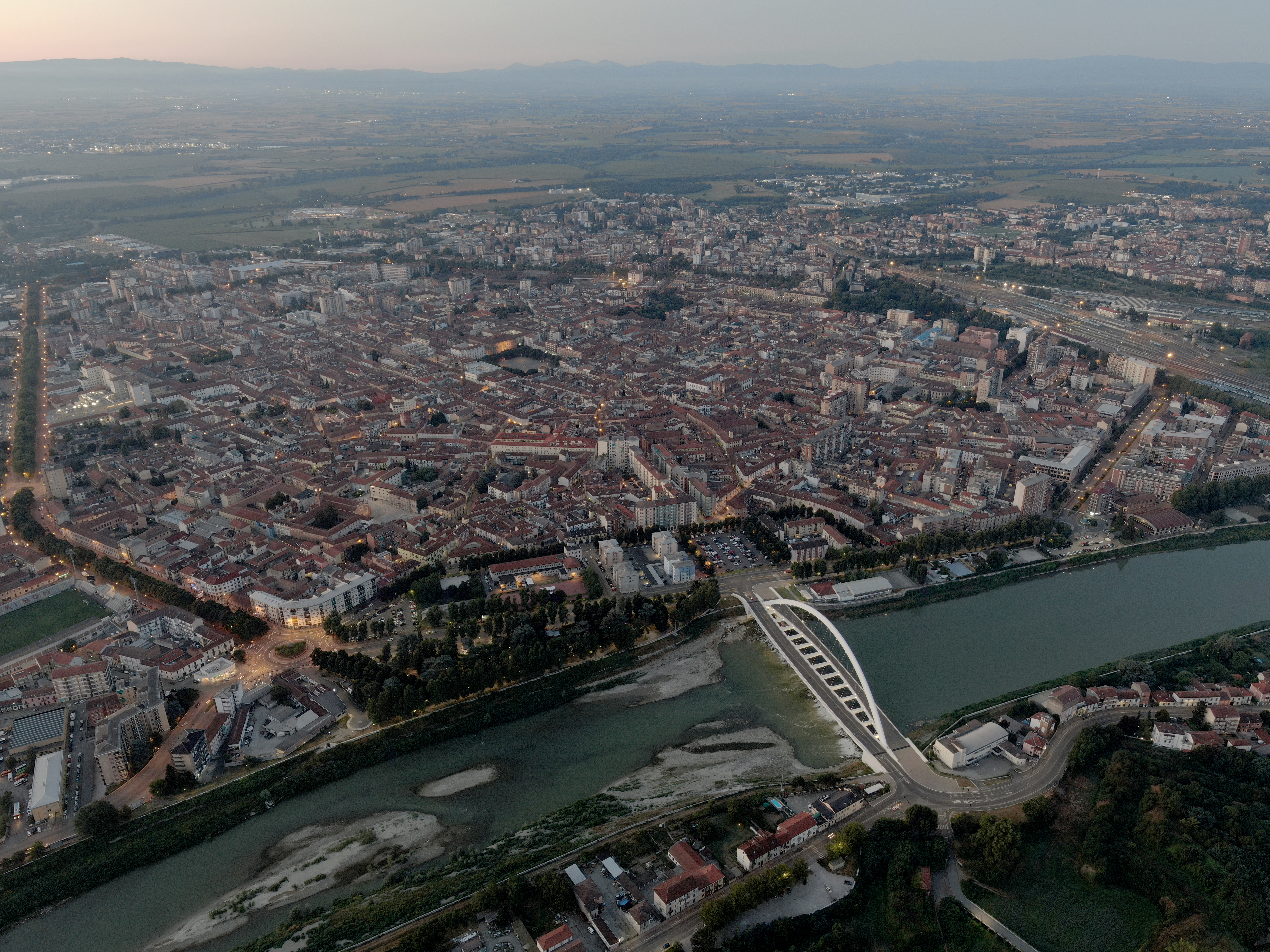 72
72 74
74The housing requirement and how people get it wrong
A twelve-month registered lease is the baseline, and "registered" is the word that trips people up. A signed contract isn't enough on its own if the consulate expects to see it registered with Agenzia delle Entrate, and that registration step is the part applicants forget exists until someone asks for proof of it at the appointment. A notarized letter of hospitality from a host is sometimes accepted, but only at the discretion of the specific consulate handling the file, which means it's a fallback to confirm in advance, not a plan to build the whole application around.
The other failure mode is timing. Sign the lease too early and it looks stale by the time the appointment happens; sign it too late and there's nothing to show. The safer sequence is to have the lease in hand close enough to the appointment that it reads as current, registered before submission, and long enough to cover the full visa period without gaps. Short-term platforms marketed as long-stay rentals rarely produce the kind of documentation a consulate will register as a genuine Italian lease, and applicants who rely on them often find that out only when asked to produce registration paperwork that never existed.
Owning property in Italy simplifies this considerably, since a deed replaces the lease question entirely, but it introduces its own documentation trail around title and registration that needs to be current and translated if the deed originated outside Italy.
What actually happens after you land
Getting the visa stamped in your passport is the beginning of the process, not the end of it. Within eight days of arrival, the requirement is to appear at the local Questura and begin converting that visa into an actual residence permit, the permesso di soggiorno. This is where a lot of the goodwill built up during the consulate stage gets tested again, because the Questura wants largely the same story the consulate already approved, just verified a second time on Italian soil.
There's no medical exam in this process, and no interview at the consulate stage either, which surprises people who expect to defend their finances in person. Instead, the scrutiny lands entirely on the paper, both times. The first permit runs twelve months, and it's renewable, but renewal isn't automatic continuation, it's a re-proof. The income has to still be there, still recurring, still documented the same way it was the first time.
Nothing about this stage requires a local bank account to get in the door, though most people open one anyway once the permit is in hand, mostly because renewal paperwork and daily life both get easier with one. The gap worth planning around isn't bureaucratic hostility, it's just volume: appointment slots at the Questura can be scarce in the weeks right after arrival, so showing up prepared with originals and copies rather than hoping to gather them locally saves a second trip.
The long path to permanent residence and citizenship
Five years of continuous legal residence gets you to the EU long-term residence permit, and ten years gets you to citizenship eligibility. Both numbers sound simple until "continuous" gets tested by the renewal cycle sitting underneath them. Every twelve-month permit renewal is a fresh checkpoint where the same income has to be shown again, and a lapse, a gap in coverage, or an income stream that dries up mid-cycle doesn't just risk the current permit, it risks the clock that's counting toward five years and then ten.
This is where the visa quietly filters out people whose passive income was never that stable to begin with. A rental property that sits empty for four months, a pension that changes structure, a dividend-paying investment that gets liquidated for an emergency, any of these can turn a renewal that should be routine into a conversation about whether the underlying income still qualifies. The paper timeline says five years, then ten. The lived timeline depends entirely on whether the income story holds up under repeated retelling, not just the first time.
Processing itself moves at a predictable pace, generally landing around six weeks (as of 2026) for the initial visa decision, which is useful for planning renewal appointments and permit conversions around the same rhythm each year rather than treating each cycle as a fresh scramble.
Elective residence versus the more work-friendly alternative
The decision that actually matters isn't Italy versus some other country, it's passive income versus active income, and which visa category your money actually belongs in. Italy's elective residence visa forbids local work outright, and Italian authorities read that broadly enough that continuing to draw a US salary or invoice US clients while living in Italy sits closer to a violation than a gray area, regardless of where the client is based. Someone earning $6,000 a month from two US clients is, on paper, exactly the profile this visa was not built for, even though the income is stable and well documented.
For that person, a visa category built around remote work rather than passive income is the more honest fit, somewhere the income source is expected to be active and ongoing rather than something to be managed around. The trade-off runs the other way too: those visas typically don't offer the same long-term residence and citizenship track that Italy's five-and-ten-year structure provides, and the appeal of Italy's path is precisely that it leads somewhere permanent if the income holds.
The judgment call is less about which country is nicer to live in and more about whether the income is actually passive or just currently untaxed by Italian work restrictions. Retirees, landlords, and people living off dividends or annuities fit the elective residence visa cleanly. Remote employees and freelancers who haven't restructured their income around genuine passive vehicles are better served looking at a visa built for exactly what they're doing, rather than trying to make active income look passive on a consulate form.
Work Permissions
Application Steps
- 1
📋 Research consulate jurisdiction
1-2 days
- 2
📄 Gather financial proof
2-4 weeks
- 3
📄 Secure Italian housing
2-4 weeks
- 4
📄 Fill visa application form
1-2 days
- 5
📅 Book consulate appointment
2-8 weeks
- 6
📬 Submit application in person
Same day
- 7
⏳ Wait for visa decision
13 weeks
- 8
🏛️ Enter Italy and apply for permit
1-2 weeks
- 9
🏛️ Register residence locally
1 week
Planning a long stay? Compare international health plans for Italy.
Compare health insuranceWe may earn a commission at no cost to you.
Compare this visa
Curated comparisons that include this route.
Frequently Asked Questions
Click any question to expand the answer.
Ready to Apply?
Work with trusted visa specialists who handle the paperwork so you can focus on your move.
Get help with this visa →* We may earn a commission if you apply through our link
At a Glance
Last verified: October 9, 2026