Application Fee
$113
Processing Time
1-52 wks
Difficulty
Moderate
Duration
12 months
Overview
France’s so‑called Digital Nomad Visa is essentially a structured way for remote workers to live in France on a long‑stay basis, as long as all earned income comes from outside France and you do not take local employment. The hard financial threshold is a minimum of 1,975 USD/month in verifiable income; in practice consulates look for regular remote‑work earnings, freelance invoices, or business income that can be documented over several months. Local work is explicitly prohibited: 0% of your total income can come from French sources, and you cannot sign a French employment contract.
The upfront cost profile is moderate: the application fee is 113 USD as of 2026, and if you stay beyond the first term you should plan for a renewal cost of 113 USD/year as of 2026. Processing runs 2–6 weeks from consular appointment to decision in most cases, so this is not a last‑minute move, you need to lock in your travel dates around that window. Health insurance is mandatory for the full visa period, while several other pain points common in other schemes are absent here: no FBI background check, no medical exam, and no formal interview requirement according to current rules.
The initial permit lasts 12 months and is renewable, though it does not carry a defined path toward permanent residence or citizenship, standard years to a French passport, physical presence rule, or maximum consecutive absence threshold. That uncertainty matters if you are planning a 10‑ to 15‑year Europe base compared to, say, Spain’s Digital Nomad Visa, which has a documented 5‑year PR track. For now you should treat France’s digital‑nomad path as a medium‑term stay with possible renewals rather than a guaranteed settlement route.
From a paperwork standpoint, bureaucracy is present but not extreme: the bureaucracy score of 1.125/5 reflects the absence of heavy security vetting and the relatively light document list compared with, for example, Italy’s self‑employment visa. The main friction points for Western expats are assembling consistent proof of the 1,975 USD/month income in a format consulates accept and securing compliant health insurance before you have a French social security number or bank account.
This arrangement makes the most sense if you earn at least 2,500–3,000 USD/month from foreign remote work, are content with zero French‑source income, and want a 1–3 year base without banking or police‑certificate hurdles. It is a poor fit if your plan depends on mixing in local French consulting, if you need a clearly codified path to permanent residency, or if your income is irregular and hovers right at the 1,975 USD/month line.
Eligibility Requirements
Any nationality can apply for the France Digital Nomad Visa in principle, as the program’s nationality restrictions field is set to “all.” In practice, applicants from countries under EU or French sanctions or with severely strained diplomatic relations—such as Iran, North Korea, Syria, and in some contexts Russia or Cuba—can encounter consular refusals, extra security screening, or banking hurdles that make successful relocation difficult even if not formally barred. Before investing in document translations or non‑refundable health insurance, confirm your individual eligibility and appointment availability directly through the official France‑Visas system operated by the French Ministry of the Interior and the Ministry for Europe and Foreign Affairs.
Application Fee
$113
Renewal Cost
$113/yr
Duration
12 months
Min Lease
12 months
Max 0% from local sources
Requirements Checklist
0 of 28 documents in hand
0%These take the longest, so start them first.
Request these while the slow items are in progress.
You only need these on the day you submit.
Extra requirements for this visa
- Apostille required on official documents
How and where to apply
Apply at the French consulate or visa application center in your home country. US applicants use consulates listed for their state. Cannot apply in-country initially; must enter on approved long-stay visa then handle residence permit at local prefecture.
Tax Information
Local tax regime and what it means for you
France taxes residents on their worldwide income under a standard residence‑based regime, not a territorial or remittance system. That means once you are considered tax resident in France, your remote salary, freelance income, ETF dividends from a US or Canadian brokerage, bond interest, Social Security, pension distributions, and rental income from property abroad are all within the French tax net under the progressive income tax scale plus social contributions. There is no publicly specified special tax regime attached to the France Digital Nomad Visa itself; any preferential treatment would come from general French rules, not from this visa category.
If you are not tax resident in France, France generally taxes only French‑source income, and under this visa you are required to keep French‑source earned income at 0% of your total. In that scenario, foreign employment income and passive income remain taxed only in the origin country, while France’s interest is limited mainly to VAT on consumption and local property‑related taxes if you buy real estate.
Capital gains on foreign investments, such as selling index funds or ETFs held in a US brokerage, are taxed in France for tax residents under the standard rules (flat prélèvement forfaitaire unique or the progressive scale), and there is no exemption carved out for this visa type. Non‑residents with no French‑source gains are not taxed by France on those disposals.
France applies tax residence tests that include day‑count (commonly 183 days in a calendar year), center of economic interests, and main home; crossing 183 days in‑country in a year often triggers French tax residency.. The visa grant alone does not automatically define your tax status; it is your pattern of presence and ties that matter.
New arrivals who become tax resident generally need to:
- Obtain a French tax identification number (numéro fiscal)
- File an annual income tax declaration reporting worldwide income
- Register and make social contributions if they are self‑employed under a French regime
France and the United States have an income tax treaty designed to prevent double taxation on income and capital. The treaty provides relief on dividends, pensions, and Social Security, though you should verify current provisions with the French tax authority (DGFiP) or a qualified advisor.
For US Citizens and Green Card Holders
US citizens and green card holders remain fully taxable by the IRS on worldwide income, regardless of where they live or which visa they hold in France. For earned income (remote employment or self‑employment performed from France), the main relief mechanism is the Foreign Earned Income Exclusion (FEIE) claimed on Form 2555. For 2026 the FEIE limit is 132,900 USD in earned income; it does not cover dividends, interest, capital gains, pension distributions, or Social Security.
To use FEIE you must qualify either under the Physical Presence Test (at least 330 full days outside the US in any 12‑month period, and your time in France counts as foreign days) or the Bona Fide Residence Test (a full calendar year with a tax home in France and an intention to reside there). Given that this visa is intended for medium‑term stays and may support multi‑year residence, many holders will eventually lean on the Bona Fide Residence Test, though early‑stage nomads who keep moving through Europe might rely on the Physical Presence Test.
The Foreign Tax Credit (FTC) on Form 1116 becomes relevant once you are also tax resident in France and paying French income tax and social charges on the same income the US taxes. The FTC generally provides value when your effective French rate on an income stream (for example, your remote salary) is equal to or higher than the US rate; if your French liability on a given category is zero—for example, while you remain non‑resident in France—the FTC gives you no shelter for that income.
FBAR (FinCEN Form 114) is required when the aggregate value of your non‑US financial accounts exceeds 10,000 USD at any point in the year. Because a local bank account is generally required for this visa, most residents open one for rent, utilities, or health insurance payments; that alone can trigger FBAR, along with FATCA Form 8938 at higher thresholds. Penalties for non‑filing start around 16,700 USD per non‑willful violation as of 2026 (the statutory base is 10,000 USD, inflation‑adjusted annually).
In practice, anyone relocating to France on this digital‑nomad track benefits from two types of advisors in year one: a US CPA who specializes in expat taxation (for FEIE vs. FTC strategy, FBAR, and FATCA) and a French tax professional to handle registration, residency determination, and the first French return. The 1,500–3,000 USD you spend on that combination in the first year is often offset by avoiding penalties and optimizing how you coordinate French and US rules.
Living in France
COL Index vs NYC
58.0
Monthly Cost (excl. rent)
$1,074
1BR Rent (City Center)
$891
Safety Index
44.6
Healthcare Index
77.7
Quality of Life Index
166.3
Time Zone
UTC+01:00
Capital
Paris
Population
67.4M
Official Languages
French
Avg Internet Speed
535 Mbps
Public Transit Quality
Good
With a budget covering rent and living costs, you'd need roughly $1,965/mo for a comfortable single-person lifestyle in France.See how far your money goes →
🏙️ Best Cities in France for Digital Nomads
 ✦ 80
✦ 80 ✦ 80
✦ 80 ✦ 79
✦ 79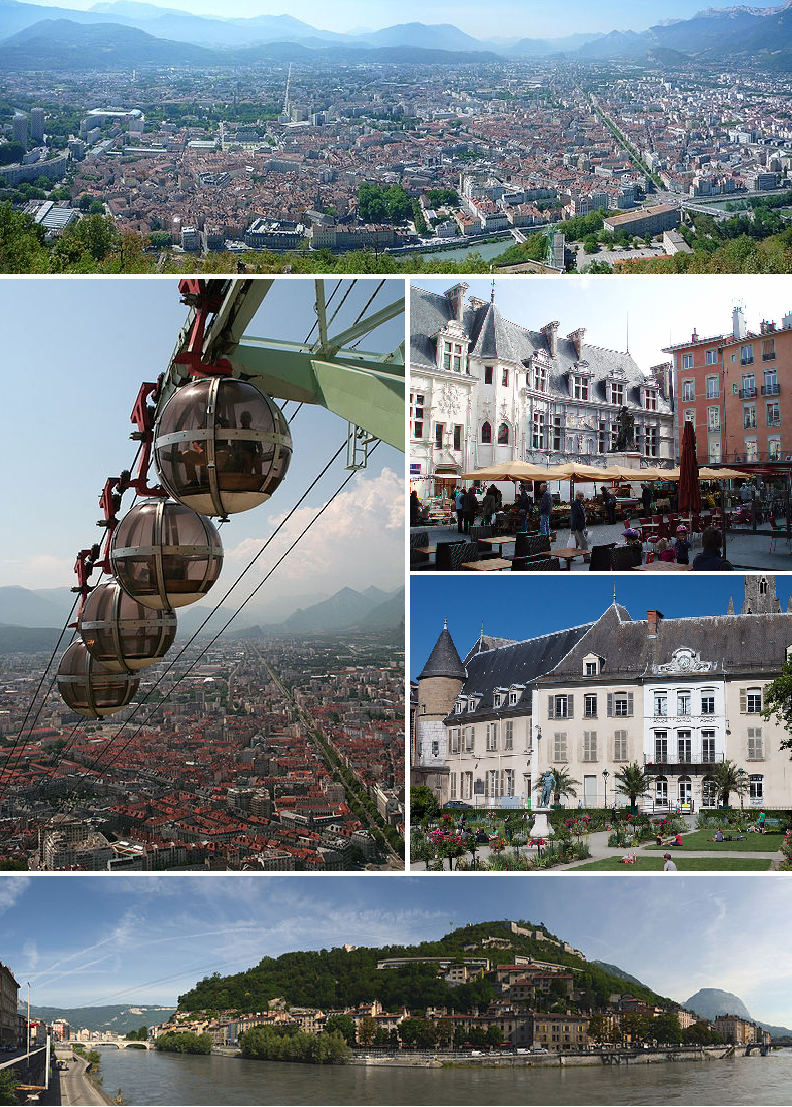 ✦ 81
✦ 81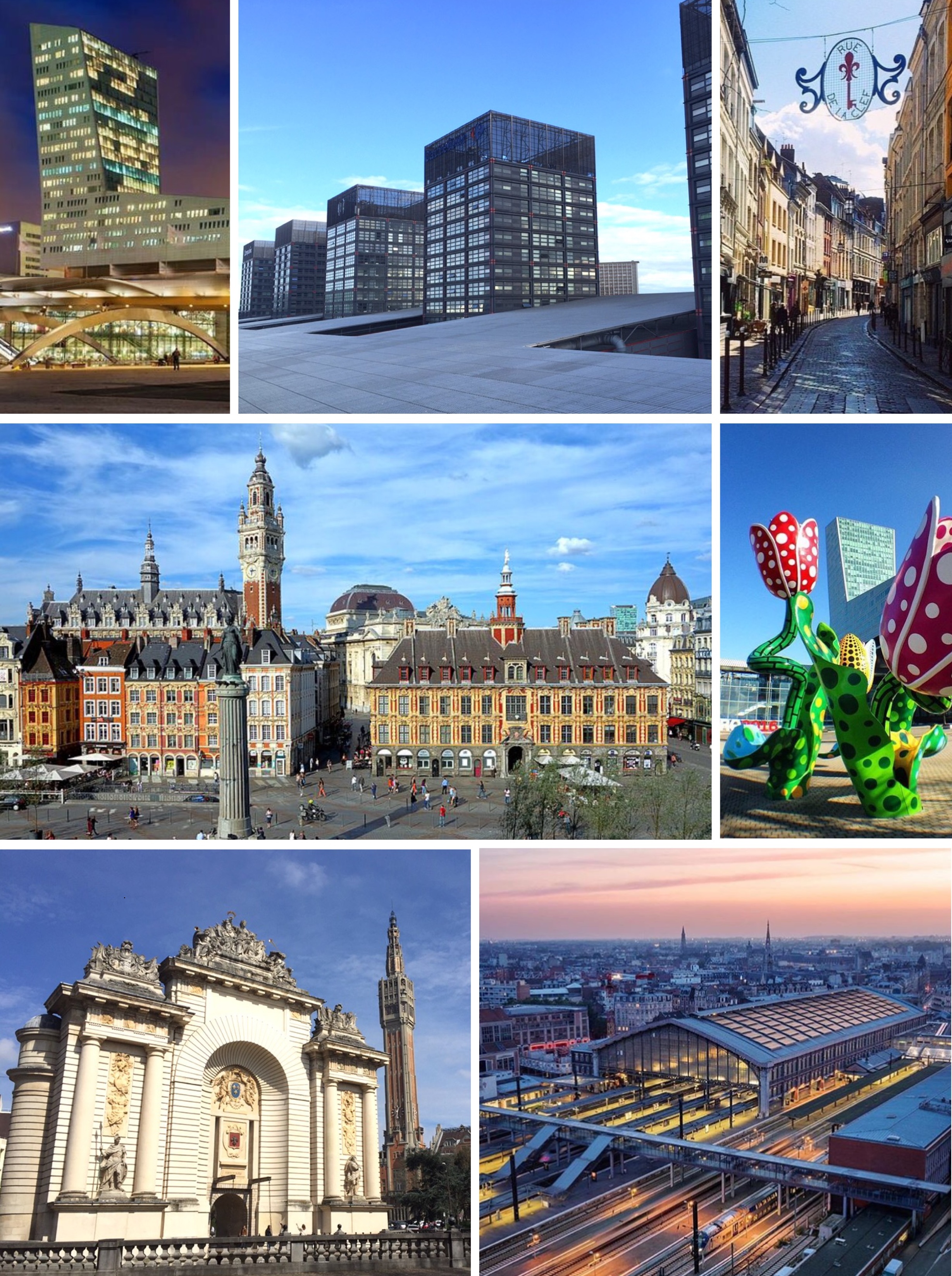 ✦ 77
✦ 77The lease and housing requirement is where timelines actually break
A twelve-month lease sounds like a simple box to tick until you try to sign one from another country, sight unseen, before your visa is even approved. Most people solve this by booking short-term accommodation for the application and telling themselves they'll sort out a real lease after arrival. That works for entry. It does not work for the residence permit conversion that follows, which wants an address that looks permanent, not a two-week booking that expired the week you landed.
The better sequence, even though it feels backward, is to treat the housing search as seriously as the visa application itself and to start it earlier. Landlords in France are cautious about signing with someone who has no local income history and no guarantor, and a lease negotiated under deadline pressure tends to be worse on price and worse on terms than one negotiated with room to walk away. An attestation d'hébergement from a host works for some applicants, but it introduces a different problem: it puts someone else's name and signature into your file, and that person needs to be reachable and consistent if anything is ever verified later.
The error that actually costs people time isn't the lease itself, it's mismatched addresses across documents. The rental agreement says one city, the bank statements were mailed to an address in another, the cover letter references a neighborhood that doesn't match either. None of these individually sinks an application, but together they read as a story that hasn't been thought through, and that's exactly the impression you don't want to give an officer deciding between a clean approval and a request for more paperwork.
The gap between an approved visa and an actual residence permit
Getting the visa stamped into your passport feels like the finish line, and for a lot of applicants it functions as one psychologically, which is exactly the problem. The visa gets you into the country. It does not, by itself, make you a resident with an ongoing legal status past the initial window. There's a follow-up step at the local prefecture that converts the entry visa into an actual residence permit, and it has its own paperwork, its own appointment backlog, and its own capacity to go wrong if you show up unprepared or late.
The mistake is treating this step as a formality because the hard part, the consulate approval, is already behind you. It isn't a formality. Appointment availability at prefectures varies by region and can run long, and missing the window to register can put you in a worse position than if you'd never applied at all. Bring the same completeness you brought to the visa application: the same lease, the same insurance proof, the same financial documents, updated rather than stale. If your bank statements were current three months ago when you applied for the visa, they are not current anymore by the time you're standing in a prefecture office.
Build slack into your arrival plan specifically for this. Don't schedule client deadlines, a full moving timeline, and the prefecture appointment into the same two weeks. The visa approval tells you the French government is willing to let you try this. The prefecture step is where you actually become the resident the visa implied you'd be.
The renewal cycle is the real long-term path, not headline permanence
The initial permit runs twelve months, and it's renewable, which sounds like a minor administrative detail but functions as the actual structure of this visa. Nobody gets a decade of certainty up front. What they get is a one-year window and a renewal fee of $113 (as of 2026), repeated, contingent each time on the same financial story holding up that got you approved the first time.
This changes how you should think about the first year. It isn't a trial period you get to coast through before the "real" decision comes later, it's the evidence file for the next approval. If your income dips in month eight because a client contract ended, that gap will be visible when renewal documents get pulled together, and there's no way to retroactively smooth a bad quarter. The people who renew cleanly are the ones who kept their bank statements, invoices, and lease documentation current the entire year, not the ones who reconstruct everything the month before the permit expires.
There's a temptation to treat the renewal as a lighter lift than the original application, since you've already done this once and the consulate relationship is behind you. In some ways it is lighter. But the underlying ask hasn't changed: prove the income is still real, the housing is still real, and the insurance is still in force. Anyone thinking about what this looks like five or ten years out should know that the near-term reality is a series of twelve-month checkpoints, not a single approval that carries them forward indefinitely. Plan around the checkpoint, not around the assumption that year one settles the question.
France's split-route system versus a single-track digital nomad country
France doesn't actually offer one clean "digital nomad visa" the way the marketing shorthand implies. What exists underneath that label is a visitor-type route for people who want to live in France without doing paid work for French entities, and a separate entrepreneur or profession libérale track for people running an actual registered business. These are different applications with different document sets, and choosing the wrong one wastes the weeks you don't have to spare, given a processing window that already runs two to six weeks at minimum.
If your work is straightforward remote employment or freelance invoicing to clients who aren't French, the visitor route is almost always the right call, and the handwritten certificate confirming you won't take paid work from French employers is the tell for which lane you're in. The entrepreneur route makes sense only if you're actually building something registered in France, which is a heavier commitment than most remote workers are looking for.
The harder decision is France versus a country running a genuine single-track digital nomad visa elsewhere in Europe. Those programs are often built with more flexibility around local income and shorter minimum commitments, since they don't route applicants through a dual system originally designed for visitors and entrepreneurs rather than remote workers specifically. France's version, by contrast, forbids local work entirely and asks for a twelve-month lease before you've set foot in the country, which is a heavier ask than a visa built from scratch for this exact use case.
What France offers instead is depth: an established consulate process that reviewers have seen thousands of times, a prefecture system that, once you're through it, gives you real footing in a major European economy rather than a smaller or newer program still working out its own edge cases. If what you want is to test remote life abroad with minimum friction, France's split system and lease requirement work against you. If you've already decided France is the country, not just a convenient base, the extra paperwork is the cost of a more established path, not a sign you picked the wrong one.
Work Permissions
Application Steps
- 1
📋 Research eligibility and options
1-2 days
- 2
📄 Gather identity and financial documents
1-2 weeks
- 3
📄 Secure health insurance coverage
1-3 days
- 4
📅 Book consulate appointment
2-4 weeks wait
- 5
📬 Submit visa application
1 day
- 6
⏳ Wait for processing decision
2-6 weeks
- 7
🏛️ Validate visa upon arrival
Same day
- 8
🏛️ Register locally post-arrival
1-2 weeks
Planning a long stay? Compare international health plans for France.
Compare health insuranceWe may earn a commission at no cost to you.
Compare this visa
Curated comparisons that include this route.
Frequently Asked Questions
Click any question to expand the answer.
Ready to Apply?
Work with trusted visa specialists who handle the paperwork so you can focus on your move.
Get help with this visa →* We may earn a commission if you apply through our link
At a Glance
Last verified: October 9, 2026