Processing Time
4 wks
Difficulty
Difficult
Duration
24 months
Overview
Start-up Denmark is aimed at self-employed non-EU founders who want to build an innovative, scalable business and are willing to tie their immigration status directly to that venture. Financially, the hard number you need to hit is at least 20,485 USD in personal savings, with no minimum monthly income and no upfront investment requirement beyond funding your own business operations. That 20,485 USD must cover your living costs in Denmark for the first year; spouse and children can join, but each dependent raises the required savings amount beyond the base figure. Salary from Danish employment outside your own startup is not the focus here; the permission is framed as self-employed.
If the expert panel approves your business plan, you can obtain a combined residence and work permit for up to 24 months. The program is renewable, with extensions reportedly available for up to 3 years at a time. Processing time takes at least 4 weeks as of 2026, so you cannot always plan on a 30- or 60‑day timeline the way you would with visas that publish service standards. For a FIRE practitioner or remote worker debating between Denmark and, say, Portugal’s D8 visa, Denmark’s minimum four-week processing time and strict innovation filter are genuine planning constraints.
This 24‑month permit can lead to permanent residence, though the exact years-to-PR and years-to-citizenship timelines are not detailed here. That means someone planning a 10‑year life arc cannot assume a linear path the way they could in a country that explicitly offers PR after 5 years and citizenship after 10. This program should be treated as a medium-term, renewable work-based stay, not as a guaranteed ladder to a Danish passport. If long-term security is your priority, you need a plan B rather than assuming Start-up Denmark will convert into PR on autopilot.
On the friction side, some things are pleasantly absent: no apostille requirement, no FBI background check, no medical exam, and no interview are listed as mandatory. On the other hand, the real hurdle is qualitative rather than bureaucratic. An independent expert panel must be convinced your business is truly innovative and scalable; traditional small businesses like restaurants or retail are routinely rejected. You also have to document the 20,485 USD savings clearly, often via bank statements or bank certificates, and you may be asked to demonstrate funds for dependents beyond that amount. For someone used to straightforward financial thresholds like Panama’s Pensionado $1,000/month pension rule, the subjective business evaluation is the main pain point.
This arrangement makes most sense if you have at least 20,485 USD in liquid savings and a genuinely scalable startup or branch that you want to anchor in Denmark for 2–5 years. It is a poor fit if your plan is a lifestyle business (consulting, small agency, retail) or you primarily care about a clearly defined path to permanent residency and citizenship within a fixed number of years.
Eligibility Requirements
EU citizens do not need Start-Up Denmark at all; they have free movement and establishment rights within the EU/EEA, so they can live and run a business in Denmark without this visa. The actual target group is non‑EU/EEA and non‑Swiss nationals such as Americans, Canadians, Australians, New Zealanders, most Latin American citizens, and most Asian and African nationals who lack any EU citizenship.
Common confusion points involve EEA countries and Switzerland. Norway, Iceland, and Liechtenstein are part of the EEA and enjoy the same free movement benefits as EU nationals in Denmark, so they do not use Start-Up Denmark. Swiss citizens are covered by separate bilateral agreements that also grant broad residence and work rights; they likewise fall outside the intended scope of this program. Post‑Brexit UK nationals no longer have EU free movement, so they are treated as non‑EU and are eligible to apply under Start-Up Denmark if they meet the entrepreneurial and financial criteria.
Dual nationals holding an EU, EEA (Norway, Iceland, Liechtenstein), or Swiss passport should use that passport instead of applying for Start-Up Denmark. Entering and registering as an EU/EEA/Swiss citizen is faster, less paperwork‑heavy, and cheaper than a third‑country start-up residence permit. Treat the EU/EEA/Swiss route as the primary channel and the Start-Up Denmark visa as a fallback only if you have no qualifying European citizenship.
Min Age
18 yrs
practical
Duration
24 months
Self-Employed
Requirements Checklist
0 of 8 documents in hand
0%These take the longest, so start them first.
Request these while the slow items are in progress.
You only need these on the day you submit.
How and where to apply
You apply in two stages to two different entities. First, submit your business plan to Startup Denmark by email at [email protected] for expert panel evaluation. Second, once your business plan is approved, you apply for the residence and work permit through the Danish Agency for International Recruitment and Integration (SIRI), which you can do online or through the Danish embassy or consulate in your home country. After receiving your permit approval, you travel to Denmark and complete in-country registration with the tax authority and municipality.
Tax Information
Local tax regime and what it means for you
Denmark uses a worldwide tax regime for residents: once you are tax resident, Denmark taxes your global income, not just Danish-source income. That includes remote salary from a foreign employer, self-employment profits from your Danish startup, ETF dividends from a US or other foreign brokerage, pension distributions, and rental income from property abroad. Rates are high by global standards, with combined municipal and state income tax often in the 37–52% range for middle to higher incomes, plus labour-market contributions. There is no territorial or remittance-based carve‑out that would leave foreign passive income untaxed once you are resident.
For capital gains on foreign investments such as index funds or ETFs held in a US brokerage, the default treatment is taxation in Denmark for residents. Capital gains on portfolio investments fall into Denmark’s general rules for share income and capital gains and are taxed; they are not exempt under any territorial rule and are not limited to amounts remitted into Denmark. This is the key point for FIRE readers: if you sell ETFs or mutual funds while Danish tax resident, gains are subject to Danish tax at the applicable share‑income or capital‑gains rates, not at 0%.
Tax residency in Denmark is generally triggered either by having a home available to you in Denmark or by physical presence for at least 183 days in a 12‑month period, but the exact statutory tests can vary based on individual circumstances. In practice, most Start-Up Denmark holders who move their life to Denmark for 24 months will be treated as tax resident from arrival, once they register their address and obtain a civil registration number (CPR). There is no separate, opt‑in tax residency status for this visa type; your factual circumstances drive the result.
New residents must obtain a CPR number and register with the Danish tax authority (Skattestyrelsen). Once registered, you receive a tax card, and Danish clients or employers withhold tax based on that card. Residents file an annual tax return (årsopgørelse) covering worldwide income; deadlines are generally in March–May for the prior calendar year, with much information pre‑filled but foreign income and accounts needing manual entry. Failure to report foreign income or accounts can trigger back taxes, interest, and penalties.
The US–Denmark income tax treaty provides mechanisms for relief from double taxation, so you can claim treaty relief on pensions, dividends, or self‑employment income. Denmark does have tax treaties with many countries, including the US, but specific treatment of Social Security, dividends, and capital gains depends on treaty articles and domestic implementation. In practice, you need to check the current US–Denmark treaty text or obtain professional advice instead of relying on generalized assumptions.
For US Citizens and Green Card Holders
As a US person, you remain taxable by the IRS on worldwide income even if you become fully tax resident in Denmark under the Start-Up Denmark scheme. Three main tools interact with Danish taxation: the Foreign Earned Income Exclusion (FEIE), Foreign Tax Credit (FTC), and the foreign reporting regimes (FBAR/FATCA).
FEIE (Form 2555) can shelter up to 132,900 USD of earned income in 2026 (salary or self-employment, not dividends or capital gains). If your main income is self-employment profit from your Danish startup, FEIE can exclude part of that from US income tax if you pass either the Physical Presence Test (330 days abroad in any 12-month period) or the Bona Fide Residence Test. With a 24‑month Danish residence permit and likely 183+ days per year in Denmark, most founders will rely on the Bona Fide Residence Test after the first full calendar year, while using the Physical Presence Test during the initial partial year.
The Foreign Tax Credit (Form 1116) becomes crucial because Denmark taxes worldwide income at relatively high rates. For self‑employment income, salary, rental income, and portfolio dividends/gains, the Danish effective tax rate will often exceed US rates for many income bands. In those cases, you generally claim FTC on the same income rather than FEIE, or in combination, to avoid double taxation. If a particular income stream ends up at a 0% Danish rate (uncommon in Denmark but possible for some limited situations), FTC gives you no offset against US tax for that stream.
Foreign account reporting is unavoidable if you bank in Denmark. If your aggregate foreign financial accounts (Danish bank accounts, investment accounts, certain pensions) exceed 10,000 USD at any point in the year, you must file FBAR (FinCEN Form 114) electronically. Separately, FATCA Form 8938 may be required once foreign assets exceed thresholds starting at 50,000 USD for many filers. Non‑willful FBAR penalties start at approximately 16,700 USD per violation as of 2026, so “forgetting” the Danish account you use to run your startup is a costly error.
For this visa, the optimal setup often involves: using FEIE and/or FTC strategically for your startup profits, understanding how Denmark taxes your ETF sales and US rental income, and staying ahead on FBAR/FATCA compliance. The smart move is to engage two advisors in year one: a US CPA specializing in expat taxation who understands FEIE/FTC/FBAR/FATCA interactions, and a Danish tax advisor who can handle registration, your årsopgørelse, and treaty application. The 1,500–3,000 USD you spend on that initial guidance is usually offset by correct elections, reduced double taxation, and avoided penalties.
Living in Denmark
COL Index vs NYC
66.9
Monthly Cost (excl. rent)
$1,255
1BR Rent (City Center)
$1,160
Safety Index
74.0
Healthcare Index
78.4
Quality of Life Index
209.9
Time Zone
UTC+01:00
Capital
Copenhagen
Population
5.8M
Official Languages
Danish
Avg Internet Speed
376 Mbps
Public Transit Quality
Excellent
With a budget covering rent and living costs, you'd need roughly $2,415/mo for a comfortable single-person lifestyle in Denmark.See how far your money goes →
🏙️ Best Cities in Denmark for Expats
 ✦ 81
✦ 81 ✦ 81
✦ 81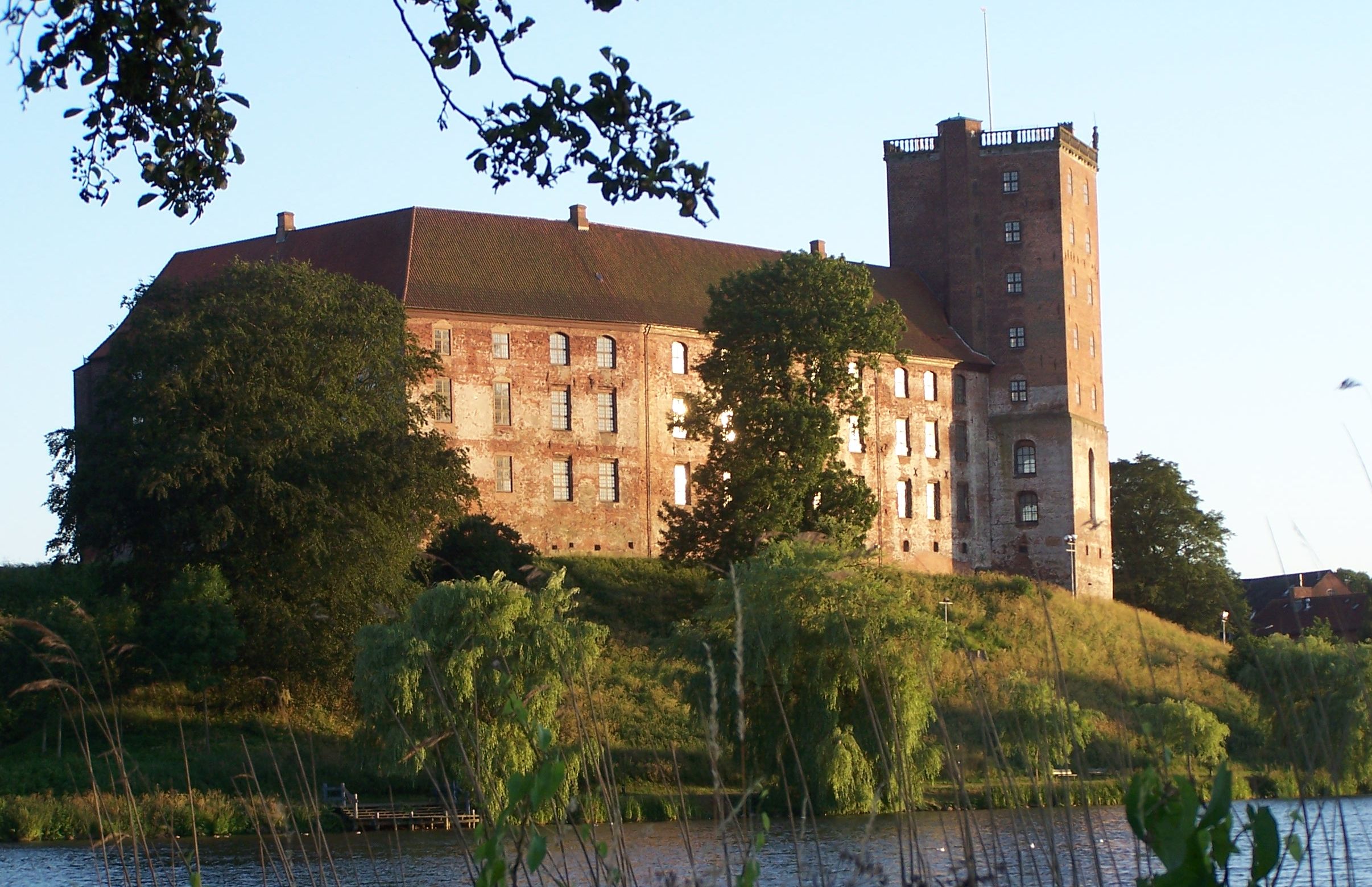 ✦ 77
✦ 77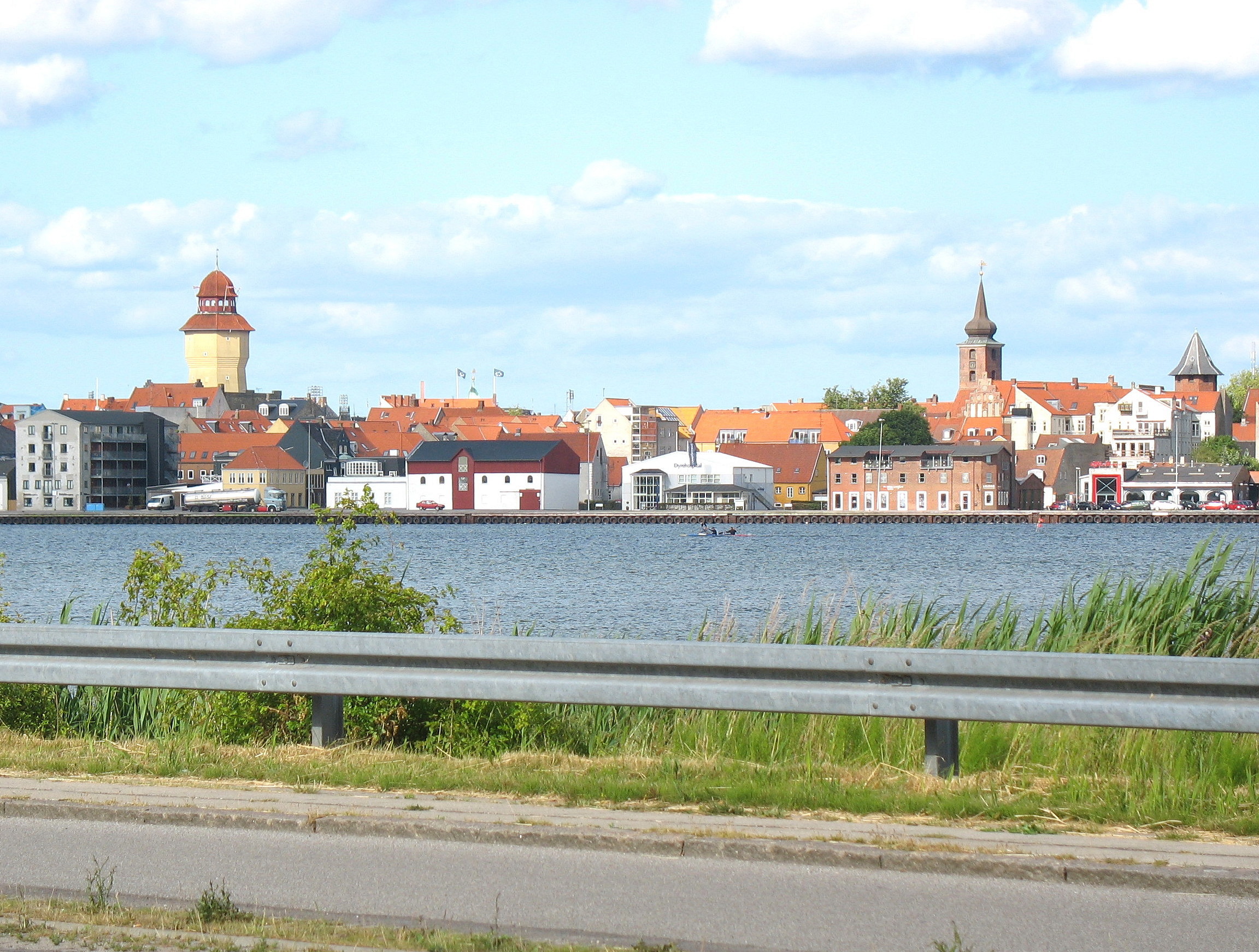 ✦ 78
✦ 78Getting the income story straight before you apply
The savings requirement here isn't about proving you can keep earning, it's about proving you can survive without earning much for a year while the business gets off the ground. That's a different document trail than a digital nomad visa asks for, and people coming from those visas often bring the wrong mindset into this one. Nobody at SIRI wants a year of invoices from US clients. They want bank statements showing you, and any family coming with you, have enough sitting in an account to cover roughly the first year of living costs, savings sitting still, not moving in and out in ways that look staged.
That last point trips people up more than the threshold itself. If you consolidate money from three accounts into one right before applying, or if a large transfer lands the same month you submit, expect a request for source-of-funds explanation. Reviewers have seen every version of last-minute balance inflation, and they read statement histories going back further than the single snapshot most applicants assume is enough. Three to six months of consistent, unremarkable statements beats one impressive one.
The other mistake is separating the savings proof from the business plan financials as if they're unrelated. If your business plan says you need six months of runway before revenue, and your personal bank statements show funds that would only cover four, that gap gets noticed and rarely explained away in your favor. Before you submit anything, sit down and reconcile the number your business plan implies you need against what your statements actually show. If a spouse or partner is coming too, their presence needs to show up in the funds calculation as well, not just get mentioned in a cover letter. Treat the financial story as one document, not two that happen to sit in the same application folder.
One more thing worth sorting out early: which entity or account the business itself will run on once you're operating. If you're planning to fund the company partly from personal savings, be explicit about which money is "mine to live on" and which is "the company's to spend." Evaluators on the business side and the immigration side are reading for different things, but they're reading the same numbers, and a plan that can't cleanly separate the two undermines both applications at once.
The housing question nobody asks you about until you're already there
Oddly, nothing in the required paperwork forces you to lock down a Danish address before your permit gets approved, and that's exactly the trap. You can get through both approval stages, business plan and residence permit, without ever having proven where you'll actually live. Then you land, and the next thing you need is a CPR number from the municipality, and the municipality wants a registered address to issue it. No CPR number means no tax card, no easy bank account setup, no straightforward path to the rest of the paperwork chain that everything else depends on.
This is where people who assumed Copenhagen would be like renting anywhere else in Europe run into friction. Long-term leases are frequently gatekept by having a Danish employment contract or a local guarantor, neither of which a freshly landed entrepreneur has. Short-term or furnished options exist but tend to be priced for that exact demand, and the good ones get taken fast, sometimes before someone's flight even lands. Booking a short-term place for the first two or three months while you sort out a permanent address is the sequencing move that saves the most stress, even though it costs more upfront than committing to a long lease sight unseen.
The other error is assuming you can register at a business address, a coworking space, or a friend's place informally. Municipalities check, and mismatches between registered address and actual residence can stall the CPR process or trigger follow-up questions you don't want early in your time there. If you're bringing family, factor in that whatever address you register becomes the one tied to school enrollment and any other municipal services they'll need, so picking a neighborhood on a whim because it was available isn't quite the same low-stakes decision it would be back home.
None of this shows up as a checklist item on the visa itself. It shows up as the thing that quietly delays everything downstream if you haven't planned for it before you land.
The gap between approval and actually operating
Getting your residence permit approved feels like the finish line, and then you land in Denmark and realize it's closer to the starting gun. The permit gets you legally resident. It does not, by itself, get you a functioning tax setup, a bank account, or a business that can invoice anyone. Those all happen after arrival, through registration with the tax authority and your municipality, and the order you do them in matters more than most applicants expect.
You need the municipal registration and CPR number before the tax authority will issue anything useful, and you need at least a provisional tax setup before a bank will seriously talk to you about opening an account, even though a local account isn't a formal precondition of the visa itself. Try to open a business bank account before you have a tax card, and you'll likely be sent away to come back later, having lost a week or more you didn't need to lose. The sequence is registration first, tax card second, banking third, and skipping ahead rarely works no matter how organized your paperwork is.
This is also the point where the business plan you got approved months earlier meets reality. The panel evaluated a document. Now you're the person actually incorporating, and Danish company formation has its own administrative rhythm that doesn't care that Startup Denmark already blessed your idea. Budget more calendar time than you think you need for this stretch, particularly if you're arriving without fluent Danish, since plenty of the practical back-and-forth with local offices still happens in Danish even when the formal application process itself doesn't require it.
None of this is as a separate step count anywhere in the visa's paperwork list, because it isn't really a visa step. It's the operational reality of turning permission to live somewhere into a functioning life and business there, and it takes longer than the four-to-six-week window that gets your permit approved in the first place.
What permanent residency and citizenship actually demand over time
On paper, the timeline looks generous: a path to permanent residency in four years, citizenship reachable at nine. What the paper version leaves out is that the four-year track is conditional on the business actually functioning as a business, not just existing on a company register somewhere. Immigration authorities revisit whether you're still running what you said you'd run, whether it's still employing you in a real sense, and whether you've maintained the presence in Denmark that the permit assumes. A business plan that impressed a panel once doesn't guarantee anything four years later if the company quietly stalled and you've mostly been living off savings.
The renewal built into this visa structure, permits issued in blocks rather than one long grant, means you're periodically re-proving viability rather than coasting on an initial approval. That's a different psychological posture than a passive-income retirement visa, where the main task after year one is staying out of trouble. Here, staying in good standing means the business still needs to look, on paper and in practice, like the one you pitched, or like a credible evolution of it. Pivoting is allowed and often necessary, but pivoting into something unrecognizable from what got approved invites exactly the kind of scrutiny you don't want at a renewal point.
Citizenship at nine years asks for something further still: sustained residence, language ability, and the kind of civic integration that doesn't happen by accident while you're heads-down building a company. Founders who treat the first four years as purely a grind toward PR sometimes find themselves behind on the language and integration expectations that citizenship adds on top. If citizenship is truly the end goal rather than just a nice-to-have, it's worth building Danish language study into your schedule from year one rather than year six, because catching up later competes directly with time you'd rather spend on the business.
Denmark against the obvious alternative
For a US-based entrepreneur weighing this against, say, Estonia's startup visa route, the honest framing is speed and friction versus market weight and a clearer long-term path. Estonia's process is generally lighter on documentation and faster to a decision, with a startup ecosystem built explicitly around welcoming exactly this kind of applicant with minimal bureaucratic drag. If your business is digital-first, doesn't need deep local hiring, and you mainly want an EU base with the least resistance possible, that lighter-touch environment is truly appealing, and plenty of remote founders choose it for exactly that reason.
Denmark asks for more upfront: a business plan that survives expert review rather than a lighter registration process, savings proof calibrated to a higher cost of living, and a two-stage application that takes real time to clear before you even reach the residence permit decision. What you get in exchange is access to a market with serious purchasing power, a regulatory environment that, once you're through it, treats you as a legitimate resident business owner rather than someone parked in the country administratively, and a permanent residency track that, while conditional on the business staying real, is faster than Denmark's general immigration timelines.
The decision point isn't really about which country has better weather or lower rent, it's about what your business needs to survive its first two years. If it needs almost nothing beyond an EU address and a laptop, the friction of the Danish process is hard to justify against a smoother option elsewhere. If it benefits from being embedded in a market with strong purchasing power, a functioning venture and grant ecosystem, and institutions that take the vetting seriously enough to mean something to future investors or partners, the extra six weeks and the tougher business plan review buy you something Estonia's lighter process doesn't: a start-up credential that Danish and broader Nordic institutions actually recognize as having passed a real bar.
Work Permissions
Application Steps
- 1
📋 Research eligibility and gather business plan requirements
1-2 weeks
- 2
📄 Develop and prepare your business plan
2-4 weeks
- 3
📬 Submit business plan to Startup Denmark for evaluation
Same day (submission)
- 4
⏳ Await expert panel evaluation of business plan
4-8 weeks
- 5
📄 Receive business plan approval and prepare visa application
1-2 weeks
- 6
📬 Apply for residence and work permit through SIRI
Same day (submission)
- 7
⏳ Await SIRI decision on residence and work permit
4-12 weeks
- 8
📋 Receive visa approval and travel to Denmark
1-2 weeks
- 9
🏛️ Register with Danish tax authority upon arrival
1-2 weeks after arrival
- 10
🏛️ Establish business registration and bank account
2-4 weeks after arrival
- 11
🏛️ Obtain Danish personal identification number (CPR)
1 week after arrival
Compare this visa
Curated comparisons that include this route.
Frequently Asked Questions
Click any question to expand the answer.
Ready to Apply?
Work with trusted visa specialists who handle the paperwork so you can focus on your move.
Get help with this visa →* We may earn a commission if you apply through our link
At a Glance
Last verified: May 13, 2026