The Real Cost of Keeping Your US Doctor While Living Abroad

When Gina first moved to Portugal in 2023, she had one non-negotiable: keeping her endocrinologist in Chicago. After five years of perfectly managed thyroid treatment, the thought of starting over with a new doctor in a foreign language felt overwhelming. "I'll just do virtual appointments," she thought. "How hard could it be?"
Eighteen months and $12,000 later, she learned exactly how hard—and expensive—it could be. 💸
The dream of seamlessly maintaining your US healthcare while living abroad is incredibly common among American expats. Whether you're a digital nomad exploring Slovenia's emerging tech scene, a retiree considering Croatia's stunning coastline, or a FIRE-seeker optimizing their early retirement strategy abroad, the idea of keeping your trusted doctors feels like the perfect safety net. But the reality involves a complex web of regulations, costs, and complications that most expats discover only after they're already abroad.
This guide breaks down the real financial and practical costs of maintaining US medical care from overseas, helping you make informed decisions before you move. We'll cover everything from telemedicine regulations and prescription logistics to insurance nightmares and specialist access—plus viable alternatives that might save you thousands. For those pursuing financial independence abroad, understanding these healthcare costs is crucial for accurate retirement planning and could significantly impact your FIRE timeline.
Why Expats Want to Keep Their US Doctors
The desire to maintain continuity with US healthcare providers runs deeper than convenience. For many expats, it represents security, familiarity, and trust in their medical care during an already significant life transition.
The Emotional Security Factor
Moving abroad involves countless unknowns, and healthcare often feels like the one area where you can't afford uncertainty. Kenzo, a software engineer who relocated to Thailand, put it perfectly: "I was already dealing with new taxes, visas, banking, and culture shock. The idea of also finding new doctors and explaining my medical history in broken Thai felt like too much."
This sentiment is particularly strong among expats with chronic conditions. Whether managing diabetes, heart conditions, mental health care, or complex medication regimens, the thought of disrupting established treatment relationships can feel risky.
Language and Cultural Barriers
Even in countries where English is widely spoken, medical terminology and healthcare culture can differ significantly. Many expats worry about miscommunication regarding symptoms, treatment options, or medication dosages—concerns that feel eliminated by maintaining US-based care.
Perceived Quality Concerns
While many countries offer excellent healthcare, American expats often harbor concerns about medical standards abroad. This perception (whether accurate or not) drives the desire to maintain access to "familiar" US medical care, even at significant cost.
The Hidden Costs of US Medical Care Abroad
What seems like a simple solution—virtual appointments with your existing doctors—quickly reveals itself as an expensive and complicated endeavor. Here's what maintaining US medical care actually costs when living abroad.
Direct Medical Costs
Cost Category | Budget Scenario | Comfortable Scenario | Premium Scenario |
|---|---|---|---|
Virtual Consultations (per visit) | $200-300 | $300-500 | $500-800 |
Prescription Management | $150-250/month | $300-400/month | $500-700/month |
Lab Work Coordination | $300-500/year | $800-1,200/year | $1,500-2,500/year |
Medical Record Management | $100-200/year | $300-500/year | $600-1,000/year |
Annual Healthcare Costs | $4,200-6,800 | $8,400-12,600 | $15,600-23,400 |
These figures represent the premium you'll pay above what you'd normally spend on US healthcare, reflecting the complications and inefficiencies of managing care across borders.
Insurance Complications and Double Coverage
Maintaining US health insurance while living abroad presents unique challenges. Most US insurance plans don't cover international care, forcing expats into complex scenarios:
Scenario 1: Maintaining US Insurance Only
- Pros: Covers US doctors and emergency visits home
- Cons: No coverage for local emergencies, expensive routine care abroad
- Annual Cost: $8,000-15,000+ for individual coverage
Scenario 2: Dual Coverage (US + International)
- Pros: Comprehensive coverage both locations
- Cons: Extremely expensive, coordination nightmares
- Annual Cost: $12,000-25,000+ combined premiums
Scenario 3: Drop US Insurance, Pay Cash
- Pros: Lower overall costs for healthy individuals
- Cons: Catastrophic risk for serious conditions
- Annual Cost: Variable, potentially ruinous for major health events
Technology and Communication Costs
Reliable telemedicine requires robust internet infrastructure and often specialized equipment:
- High-Speed Internet: $50-150/month premium for reliable video calls
- Medical Devices: $200-800 for blood pressure monitors, glucose meters, scales with data transmission
- VPN Services: $100-200/year for accessing US medical portals
- International Phone Plans: $50-100/month for reliable communication
- Time Zone Management Tools: Often missed appointments due to confusion

Telemedicine Regulations: The Legal Maze 🏥
The legal landscape governing telemedicine across international borders is complex and constantly evolving. What's legal today might change tomorrow, and what works in one state-country combination might be prohibited in another.
State-by-State Variations
US medical licenses are state-specific, and telemedicine regulations vary dramatically. Some key considerations:
Permissive States:
- Texas, Florida, and Arizona generally allow international telemedicine
- Requirements often include established doctor-patient relationships
- May require periodic in-person visits (problematic for expats)
Restrictive States:
- New York, California (surprisingly), and several others have strict limitations
- Often prohibit telemedicine to patients outside the US entirely
- Some require physical presence for initial consultations and prescription renewals
California Specific Analysis: California's telemedicine regulations are particularly complex for expats. The state requires established doctor-patient relationships for most telemedicine services and has strict interpretations of what constitutes "treatment within California." Many California-licensed physicians refuse international telemedicine entirely due to liability concerns and regulatory ambiguity. The California Medical Board has indicated that treating patients outside the US may require additional licensing in the patient's location—creating impossible compliance scenarios for most practitioners. This is particularly frustrating for expats leaving high-cost California cities who were hoping to maintain medical relationships while achieving geographic arbitrage.
Gray Area States:
- Many states have unclear or evolving regulations
- Enforcement varies widely
- Often depends on individual medical board interpretations
Prescription Regulations
Getting US prescriptions filled while abroad involves navigating multiple regulatory frameworks:
Controlled Substances: Nearly impossible to manage internationally. DEA regulations make it extremely difficult to obtain controlled medications (ADHD medications, anxiety treatments, pain management) through US doctors while living abroad.
Standard Prescriptions: Possible but complicated. Requires international pharmacies that accept US prescriptions or complex mail-forwarding arrangements.
Specialty Medications: Often impossible due to storage and shipping requirements.
Professional Liability Issues
Many US doctors are reluctant to provide telemedicine services to international patients due to liability concerns. Medical malpractice insurance often doesn't cover international telemedicine, leaving doctors exposed to legal risks.
Prescription Logistics: A $500/Month Headache 💊
Managing prescriptions internationally often becomes the most expensive and frustrating aspect of maintaining US medical care. The logistics involve multiple intermediaries, regulations, and potential failures.
Mail Forwarding Services
Most expats rely on mail forwarding services to receive prescriptions:
Typical Process:
- Doctor sends prescription to US pharmacy
- Pharmacy ships to mail forwarding service
- Service repackages and ships internationally
- Package navigates customs in destination country
- Local delivery (hopefully)
Cost Breakdown:
- Mail forwarding service: $15-30/month base fee
- Prescription shipping to forwarder: $10-25/shipment
- International shipping: $25-75/shipment
- Expedited shipping (often necessary for medications): +$50-150
- Customs and duties: $10-50/shipment
- Total per prescription shipment: $110-330
International Pharmacy Networks
Some services specialize in filling US prescriptions internationally:
- IVF Meds or similar services: Often focus on specialty medications
- Costs: 2-3x US pharmacy prices plus service fees
- Reliability: Mixed reviews, potential quality concerns
- Legality: Gray area in many countries
Local Prescription Alternatives
Working with local doctors to replace US prescriptions often proves more practical:
Advantages:
- Immediate access during emergencies
- Local pricing (often much cheaper)
- No shipping delays or customs issues
Challenges:
- Different medication formulations or brands
- Dosage adjustments may be needed
- Language barriers in medical consultations
Specialist Access: When Virtual Isn't Enough 🔬
Certain medical specialties are particularly challenging to manage through telemedicine, creating expensive complications for expats with complex health needs.
Mental Health Care
Therapy and psychiatric care face unique international challenges:
Regulatory Issues:
- Psychology licensing often stricter than general medicine
- Many therapists refuse international patients due to liability
- Crisis intervention virtually impossible across time zones
Practical Challenges:
- Cultural context matters significantly in mental health
- Emergency situations require local resources
- Medication management complicated by prescription logistics
Cost Reality:
- Premium rates for international telemedicine therapy: $150-300/session
- Often need local backup providers for emergencies
- Double coverage costs common
Specialist Procedures
Certain specialists require in-person examinations and procedures:
Dermatology: Skin cancer screening, mole mapping impossible via video Ophthalmology: Eye pressure, retinal exams require specialized equipment Cardiology: EKGs, stress tests, echocardiograms need local facilities Gynecology/Urology: Physical examinations essential for comprehensive care
These limitations often force expensive trips back to the US or duplicate care with local specialists.

Emergency Coordination
Medical emergencies highlight the limitations of US-based care:
- US doctors can't admit you to local hospitals
- Medical records may not transfer quickly in emergencies
- Treatment decisions often require local medical licenses
- Insurance coordination becomes nightmare during crises\
Insurance Nightmares: Double Coverage Disasters 🏥
Managing insurance across borders often creates more problems than it solves, with expats finding themselves paying twice for coverage while receiving limited benefits.
US Insurance Abroad: Limited Value
Most US health insurance plans provide minimal international coverage:
Emergency Coverage Only:
- Usually covers emergency room visits
- Often requires pre-authorization (impossible during real emergencies)
- May not cover follow-up care
- Reimbursement often delayed by months
Network Limitations:
- No contracted providers internationally
- Full payment upfront required
- Reimbursement at "usual and customary" rates (often lower than actual costs)
- Complex claims processes for international care
International Insurance Complications
Adding international insurance creates coordination nightmares:
Coordination of Benefits Issues:
- Which insurance pays first?
- Both insurers may deny claims, assuming the other will pay
- Claims processing can take months
- Often results in unexpected out-of-pocket expenses
Coverage Gaps:
- Some treatments covered by neither plan
- Pre-existing condition exclusions may apply differently
- Emergency evacuation coverage may have gaps
Real Cost Examples
Xiomara's Experience (Portugal):
- US Insurance: $14,000/year premium
- International Insurance: $3,200/year premium
- Out-of-pocket costs when both insurers denied claims: $4,800/year
- Total Annual Healthcare Costs: $22,000
Compare to Local Coverage:
- Portugal National Health Service registration: €0
- Private Portuguese insurance: €800/year
- Total Potential Savings: $21,200/year
This massive savings potential is why many couples pursuing FIRE abroad factor healthcare optimization into their early retirement strategy. The annual savings alone could accelerate your FIRE timeline by several years when invested properly.

Alternative Strategies That Actually Work ✨
After examining the costs and complications of maintaining US medical care abroad, many expats find alternative approaches that provide better care at lower costs.
Hybrid Approach
Many successful expats adopt a hybrid strategy:
Keep US Care For:
- Complex chronic conditions requiring specialized knowledge
- Mental health care where therapeutic relationship is crucial
- Annual comprehensive exams during US visits
Use Local Care For:
- Routine medical needs and prescriptions
- Emergency care and urgent situations
- Preventive care and screenings
This approach typically reduces costs by 60-70% while maintaining continuity for critical care.
Medical Tourism Integration
Some expats strategically choose locations with excellent healthcare, effectively turning their retirement destination into a medical tourism hub. This approach has become particularly popular among Americans retiring overseas who want world-class care without US prices:
Portugal: World-class healthcare system, English-speaking doctors, EU pharmaceutical access. Many expats find the quality matches or exceeds US care while comparing Portugal vs Spain for their retirement destination.
Thailand: Internationally accredited hospitals, medical tourism infrastructure. Popular among those comparing Vietnam vs Thailand for their expat base.
Mexico: Advanced medical facilities near US border, easy US access for complex care. Ideal for those maintaining some US connections while enjoying low-cost retirement destinations.
Technology-Enhanced Local Care
Modern expats increasingly use technology to bridge the gap:
Translation Apps: Real-time medical translation for consultations Medical Record Apps: Digitized health history accessible to any doctor Telemedicine Platforms: Local telemedicine often cheaper and more effective than international US care Health Monitoring: Wearables and home testing provide data to any doctor worldwide
Tools & Resources for Optimizing Your Healthcare Strategy
Before making decisions about maintaining US medical care abroad, these tools can help you evaluate your specific situation and explore alternatives:
Healthcare Planning:
- Country Search Tool: Filter destinations based on healthcare quality, cost, and English-language services to find locations where you might not need US care
- Geo-Arbitrage Savings Calculator: Calculate potential savings by switching to local healthcare in your target destination—these savings can accelerate your FIRE timeline significantly
Financial Impact Assessment:
- FIRE Calculator: Factor healthcare costs into your international retirement planning, especially crucial for those pursuing FIRE after 50
- FIRE Procrastination Calculator: See how healthcare cost optimization affects your financial independence timeline—often showing dramatic improvements to your retirement age
Destination Research:
- Country Directory: Compare healthcare systems, costs, and quality across potential destinations. Essential reading alongside our comprehensive overseas health coverage guide
- Visa Pathways: Understand how different visa types affect healthcare access in your chosen country, particularly relevant for digital nomad visa holders
Readiness Planning:
- Expat Readiness Quiz: Assess whether you're prepared for the healthcare transition challenges of living abroad. This is particularly important for those following our complete roadmap to thriving overseas
Country-Specific Healthcare Alternatives
Different destinations offer varying levels of healthcare that might eliminate your need for US-based care. For those considering multiple options, comprehensive comparisons like Italy vs Greece or France vs Germany can help evaluate healthcare quality alongside other lifestyle factors.
European Union Countries
Advantages:
- Pharmaceutical access through EU regulations
- High healthcare standards
- Often English-speaking medical professionals
- Reciprocal emergency care agreements
Portugal Example:
- National Health Service provides universal coverage
- Private care available at fraction of US costs
- Growing expat medical community
- Easy prescription access for common medications
Southeast Asia Medical Hubs
Thailand, Malaysia, Singapore:
- Medical tourism infrastructure
- International hospital accreditation
- Competitive pricing
- English-speaking medical staff
Latin American Options
Mexico, Costa Rica, Panama:
- Proximity to US for complex care
- Established expat medical communities
- Significantly lower costs
- Growing international healthcare standards
Emerging Alternatives: Countries like Argentina offer exceptional value with sophisticated healthcare systems, while Georgia (the country) provides European-standard care at fraction of Western costs. These hidden gem destinations often deliver surprising healthcare quality.

Making the Decision: A Cost-Benefit Framework
The decision to maintain US medical care while living abroad should be based on careful analysis of your specific situation:
When It Makes Financial Sense
Complex Chronic Conditions: If you have conditions requiring highly specialized care that would be expensive to replicate abroad, maintaining some US connections might be worth it.
Short-Term Expat Plans: If you're following a "slowmad" approach and plan to return to the US within 2-3 years, maintaining relationships might provide continuity benefits.
Proximity Advantage: If you're living somewhere with easy US access (Mexico, Canada), hybrid approaches become more practical.
When It Doesn't Make Sense
Routine Healthcare Needs: For general medical needs, local care is almost always more cost-effective and practical. This is especially true in tax-advantaged retirement destinations where quality healthcare comes at a fraction of US costs.
Long-Term Expats: If you're planning to live abroad permanently or long-term, the costs and complications rarely justify maintaining US care. Many expats discover that retiring early in Northern Cyprus or similar destinations provides better care than they had in the US.
Countries with Excellent Healthcare: In destinations with world-class healthcare systems, maintaining US care often provides little additional benefit. For those comparing healthcare abroad vs US, the quality gap has largely disappeared in many countries.
Financial Break-Even Analysis
Calculate Your Tipping Point:
- Annual cost of maintaining US care (including all hidden costs): $______
- Annual cost of equivalent local care: $______
- Quality difference factor (your personal assessment): ______%
- Break-even decision: Does the cost difference justify the quality/familiarity benefit?
Most expats find that local care provides 80-90% of the quality at 30-40% of the cost, making the switch financially obvious. For those pursuing FIRE, this cost optimization can literally shave years off your working timeline when the savings are properly invested.
Pros and Cons: The Reality Check
Getting Started: Your Action Plan
Phase 1: Assessment (3-6 months before moving)
- Inventory Your Medical Needs:
- List all current medications and their international availability
- Identify which specialists you truly need vs. prefer
- Assess which conditions require continuity vs. can transition
- Research Destination Healthcare:
- Use the Country Directory to compare healthcare quality
- Connect with expat communities for healthcare recommendations
- Research local insurance options and costs
- Consider destinations known for excellent healthcare like those featured in our 2025 retirement guide
- Calculate Real Costs:
- Price out telemedicine options with current doctors
- Factor in prescription logistics and shipping costs
- Compare with local healthcare costs using the Geo-Arbitrage Savings Calculator
- Consider the impact on your overall FIRE investment strategy
Ready to Rewire your Life?
Sign up to receive updates and insights.
By submitting your email address, you will receive a free subscription to RA Postcards and special offers from Rewire Abroad and our affiliates. You can unsubscribe at any time, and we encourage you to read more about our Privacy Policy.
Phase 2: Transition Planning (1-3 months before moving)
- Obtain Medical Records:
- Request comprehensive records from all specialists
- Get digital copies of recent test results and imaging
- Obtain medication history and dosage information
- Test Telemedicine Setup:
- Trial video calls with key doctors
- Verify prescription shipping logistics
- Set up international insurance if needed
- Establish Local Backup:
- Research emergency healthcare options at destination
- Identify English-speaking doctors for urgent needs
- Set up initial local medical appointments
Phase 3: Implementation (first 6 months abroad)
- Monitor and Adjust:
- Track actual costs vs. projections
- Evaluate effectiveness of telemedicine arrangements
- Address prescription logistics issues as they arise
- Gradual Transition:
- Start with routine care locally
- Maintain critical specialist relationships initially
- Gradually transition based on local care quality
- Build Local Relationships:
- Establish primary care doctor locally
- Find emergency contacts and protocols
- Join local expat health networks for recommendations
Final Thoughts: The $20,000 Question
The real cost of keeping your US doctor while living abroad extends far beyond the financial expense—though at $8,000-25,000 annually, that's certainly significant. The hidden costs include complexity, stress, compromised emergency care, and often inferior overall health outcomes compared to integrated local care.
Most successful expats eventually adopt a hybrid approach, maintaining critical specialist relationships while building local healthcare networks. The key is honest assessment of your actual needs versus your perceived comfort preferences. This decision becomes particularly crucial for those pursuing financial independence in their 40s, where healthcare optimization can dramatically accelerate retirement timelines.
The harsh reality? In most cases, the fantasy of seamlessly maintaining US healthcare abroad dissolves quickly when confronted with the practical realities of international living. The expats who thrive are those who embrace local healthcare systems while strategically maintaining US connections only where truly necessary—much like the approach many use for optimizing taxes abroad.
Your healthcare strategy abroad should optimize for health outcomes and cost-effectiveness, not just familiarity. Often, this means discovering that the world has excellent doctors outside the United States—many of whom trained at the same institutions as your current physicians.
The $20,000 question isn't whether you can afford to maintain US medical care abroad—it's whether you can afford not to explore the potentially superior and more affordable alternatives waiting in your new home country.
Ready to explore your options? Start by taking the Expat Readiness Quiz to assess your healthcare transition preparedness, then use the Country Search Tool to find destinations where you might not need to maintain US care at all. Your health—and your wallet—will thank you.

The Expat’s Health Insurance Handbook: Navigating Coverage Overseas
Master healthcare with this guide - compare insurance, get expert tips on choosing the right policy, and avoid common pitfalls on coverage abroad.
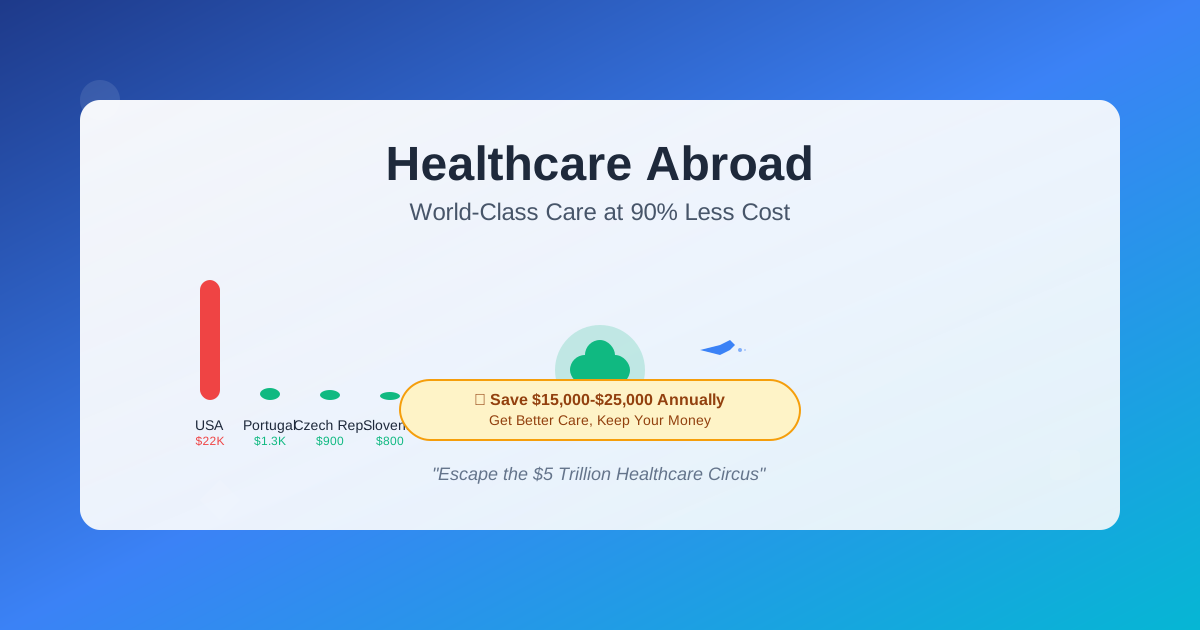
Healthcare Abroad: Your Escape Route from America's $5 Trillion Medical Circus
Worried about healthcare overseas? Discover countries with world-class, affordable healthcare—and why moving abroad is the smartest health decision.
Healthcare Independence: FIRE Without Employer Insurance
Mastering healthcare independence for FIRE with ACA marketplace strategies, HSA optimization, and alternative coverage options.
Medicare vs. International Health Insurance: The $50,000 Decision
Medicare doesn't work abroad. Discover how international health insurance could save you $50,000+ while overseas. Complete guide for expats 65+.