Snowbird Retirement Abroad: Split Your Time Between 2 Countries

Sell the big house. Buy a small condo. Retire quietly. That's the script most expect. Instead, the new playbook is a two-part retirement: summers back home, winters in Portugal. Why settle for one version of retirement when you can have two?
The traditional American snowbird lifestyle—escaping harsh winters for Florida or Arizona—is evolving into something far more sophisticated and globally minded. Today's retirees aren't just fleeing snow; they're strategically optimizing their retirement lifestyle, healthcare access, and cost of living by splitting time between their home country and carefully selected international destinations. This isn't about vacation homes anymore—it's about reimagining retirement as a global lifestyle strategy.
If you're contemplating how to retire abroad while maintaining ties to home, you're part of a growing movement of internationally minded retirees who refuse to accept geographic limitations on their golden years. This comprehensive guide will show you exactly how to structure a snowbird retirement abroad that optimizes your finances, lifestyle, and happiness across multiple countries.
Why Snowbird Retirement Abroad Is Revolutionary
Traditional retirement planning assumes you'll plant roots in one location and stay put. But why limit yourself to one country's healthcare system, tax structure, or cost of living when you can strategically leverage the best advantages of multiple destinations? Snowbird retirement abroad represents the ultimate geographic arbitrage strategy for retirees.
The numbers alone are compelling. While a comfortable retirement in many U.S. cities requires $4,000-6,000 monthly, that same lifestyle often costs $1,500-3,000 in top international retirement destinations. By spending your expensive months (summer in hot climates, winter in cold ones) in lower-cost countries, you can potentially reduce your annual retirement expenses by 25-50% while dramatically improving your quality of life.
But the benefits extend far beyond cost savings. International snowbird retirement offers access to world-class healthcare systems at fraction of U.S. costs, exposure to different cultures and languages that keep your mind sharp, and the flexibility to chase perfect weather year-round. You're not just retiring—you're creating a globally optimized lifestyle.
Consider David and Susan Chen, both 65, who split their time between Portugal and their home in Colorado. They spend October through April enjoying Portugal's mild winters, excellent healthcare, and €1,200 monthly living costs, then return to Colorado for summers with family. Their annual retirement spending dropped from $72,000 to $45,000 while their quality of life soared—a strategy that aligns with proven geographic arbitrage approaches used by early retirees worldwide.

Understanding the Legal Framework
The foundation of successful snowbird retirement abroad rests on navigating two critical legal considerations: visa requirements and tax obligations. Get these wrong, and your dream retirement becomes a bureaucratic nightmare.
Visa Strategies for Split-Time Retirement
Most countries offer several pathways for retirees wanting to spend substantial time abroad without permanent residency. The key is understanding which visa type aligns with your intended split-time schedule and financial situation.
Tourist Visas with Strategic Timing Many retirees successfully use tourist visas to spend 90 days within 180-day periods in Schengen Area countries, or 6-month periods in countries like the United Kingdom. While this requires periodic exits, it often works perfectly for snowbird schedules and requires no income proof or residency commitments.
Temporary Residency Visas Countries like Portugal's D7 visa (detailed on the SEF official website) allow you to spend unlimited time in-country but require minimal physical presence. Portugal's D7 visa requires passive income of at least €9,870 per year and some physical presence, making it ideal for snowbirds who want flexibility without tourist visa limitations.
Non-Lucrative/Retirement Visas Spain, Italy, and other European countries offer non-lucrative visas specifically designed for financially independent retirees. Spain's non-lucrative visa requirements are detailed on the Spanish Ministry of Foreign Affairs website. These typically require proof of €25,000-40,000 annual passive income but offer significant flexibility in actual residence requirements.
For those considering alternatives to European destinations, exploring no income proof retirement visas can open additional possibilities in countries with simpler documentation requirements.
Tax Residency Navigation
The biggest complexity in snowbird retirement abroad isn't visas—it's avoiding accidental tax residency in multiple countries. The 183-day rule is crucial for determining tax residency, but international snowbirds must navigate multiple countries' rules simultaneously.
Key Tax Residency Principles:
The 183-Day Rule Variations Most countries consider you a tax resident if you spend 183+ days there annually, but the calculation varies. Some use calendar years, others use rolling 365-day periods. Some countries like the U.S. use complex three-year weighted formulas for the substantial presence test, as detailed by the IRS in Publication 519.
Tie-Breaker Rules When you might qualify as tax resident in multiple countries, tie-breaker rules in tax treaties determine your primary residence. These typically consider your permanent home, center of vital interests, habitual abode, and nationality in that order.
Understanding these complexities is essential for tax optimization strategies that can save thousands annually while maintaining full legal compliance.
Strategic Planning Example Linda Rodriguez spends exactly 182 days in Portugal (avoiding tax residency) and 183 days in the U.S. (maintaining tax residency). She files Form 8840 to claim closer connection to the U.S. for any borderline situations and maintains her U.S. tax home through property ownership and voting registration.
Regional Deep-Dive: Top Snowbird Retirement Destinations
Europe: Culture, Healthcare & History
Europe offers the most sophisticated infrastructure and cultural experiences for snowbird retirees, with excellent healthcare systems and rich historical environments. However, visa complexity and higher costs in some regions require careful planning.

Portugal: The Snowbird Sweet Spot Portugal has emerged as the premier European destination for American retirees seeking snowbird lifestyles. The D7 visa provides flexibility, healthcare access rivals Northern Europe, and costs remain 40-60% below major U.S. cities. For those considering the broader Portugal vs Spain comparison, both countries offer compelling advantages for different retirement styles.
Best Regions for Snowbirds:
- Lisbon Area: Urban amenities, international airport access, established expat communities
- Algarve: Beach lifestyle, golf courses, warmer winters perfect for escaping cold climates
- Central Portugal: Lower costs, authentic culture, easy access to Spanish border for extended travel
Spain: Diverse Climates & Lifestyle Options Spain's non-lucrative visa and regional diversity make it perfect for retirees wanting varied experiences. You can chase warm weather from Andalusia to the Canary Islands while maintaining European residence.
Strategic Regions:
- Valencia: Mediterranean climate, lower costs than Madrid/Barcelona
- Andalusia: Year-round warmth, Moorish culture, established expat networks
- Canary Islands: Subtropical winter escape, tax advantages, direct flights to U.S.
For those considering alternative European destinations, Croatia's living costs and visa options and Slovenia's growing expat community present interesting possibilities with lower costs than traditional Western European choices.
Latin America: Cost Efficiency & Cultural Richness
Latin America provides the most dramatic cost savings for snowbird retirees while offering rich cultural experiences and improving healthcare systems. Visa requirements are generally more straightforward than Europe.
Mexico at a Glance
Mexico: The Original International Snowbird Haven Mexico remains the most accessible option for American snowbird retirees, with temporary resident visas lasting four years and straightforward renewal processes available through Mexico's immigration authority (INM). The proximity allows for easy travel adjustments and family visits.
Prime Snowbird Locations:
- Puerto Vallarta: Established expat infrastructure, direct flights, moderate costs
- San Miguel de Allende: Cultural richness, highland climate, strong expat community
- Yucatan Peninsula: Maya culture, cenotes, budget-friendly with good infrastructure
Costa Rica: Healthcare Excellence & Political Stability Costa Rica offers world-class healthcare, political stability, and diverse microclimates perfect for year-round comfort or seasonal preferences. The Costa Rican immigration website provides detailed information on residency options for retirees.
For budget-conscious retirees, exploring options in Guatemala, Belize, or Ecuador can provide even greater cost savings while maintaining reasonable infrastructure and safety standards.
Retirement Living Costs & Financial Optimization
Comparative Cost Analysis by Retirement Style
The financial advantages of snowbird retirement abroad become clear when you examine real-world cost comparisons across different retirement lifestyles. Here's how monthly expenses break down for a typical snowbird couple:
Retirement Lifestyle | U.S. Home Base (6 months) | International Base (6 months) | Annual Savings |
|---|---|---|---|
Budget Retirement | $3,200/month | $1,400/month | $10,800/year |
Comfortable Retirement | $5,500/month | $2,800/month | $16,200/year |
Luxury Retirement | $8,000/month | $4,500/month | $21,000/year |
These savings become even more dramatic when considering destinations like Argentina ($800-1,200/month) or Albania ($800/month in Europe), where comfortable living costs substantially less than traditional retirement destinations.
Strategic Financial Timing
Banking Optimization Successful snowbird retirees maintain accounts in both countries to minimize currency conversion fees and maximize interest opportunities. Portugal and Spain offer higher savings rates than U.S. banks, while some Latin American countries provide U.S. dollar accounts with competitive rates. However, Americans abroad face increasing banking restrictions that require proactive planning.
Healthcare Cost Arbitrage Many snowbirds time medical procedures for their international months. Dental work in Mexico costs 60-70% less than the U.S., while Portugal's private healthcare offers excellent value. Annual physicals, dental cleanings, and routine procedures during international stays can save thousands annually. This approach aligns with broader healthcare abroad vs U.S. strategies that many international retirees use successfully.
Currency Strategy Exchange rate fluctuations can significantly impact snowbird budgets. Many successful international snowbirds use forward contracts or maintain currency reserves to protect against unfavorable rate movements during their international months.

Snowbird Visa Strategies & Legal Navigation
Multi-Country Visa Coordination
The key to successful snowbird retirement abroad is creating visa strategies that provide maximum flexibility while maintaining legal compliance. Different approaches work for different retirement timelines and destinations.
The 90/90 Strategy (Schengen Countries) This approach uses the Schengen area's 90-day tourist allowance within 180-day periods. Retirees spend 90 days in Schengen countries (October-December), return home for 90+ days (January-March), then return for another 90 days (April-June). This works particularly well for retirees wanting to experience multiple European countries.
Temporary Residency with Minimal Presence Countries like Portugal, Spain, and Italy offer temporary residency options that require minimal actual presence. Northern Cyprus offers particularly attractive options with €9,568 annually in passive income for retirement residency, making it accessible for various retirement savings levels.
Serial Tourist Visa Strategy For Latin American destinations, many countries offer 90-180 day tourist entries with easy border runs or extensions. This approach works well for Mexico, Costa Rica, and Panama, though it requires more administrative attention.
However, retirees must be aware of visa violations and enforcement issues that can permanently affect future travel and residency options.
Advanced Legal Considerations
Tax Treaty Optimization Understanding tax treaties between your home country and destination country is crucial for avoiding double taxation. The U.S. has favorable tax treaties with most European countries that prevent retirement income from being taxed twice. The IRS Tax Treaty Table provides comprehensive information on specific treaty benefits.
Estate Planning Implications International snowbird retirement requires updating wills, trusts, and beneficiary designations to account for international assets and different legal systems. Some countries have forced heirship laws that can complicate estate planning. Understanding global retirement tax havens and estate planning strategies becomes crucial for protecting wealth across borders.
Healthcare Navigation for International Snowbirds
Dual Healthcare System Management
One of the most complex aspects of snowbird retirement abroad is managing healthcare across multiple systems while maintaining continuous coverage and access to quality care.
Public Healthcare Access Many countries offer public healthcare access to temporary residents or those with specific visa types. Portugal's SNS system becomes available to D7 visa holders, while Spain offers healthcare access to non-lucrative visa holders with proper documentation.
Private International Insurance Comprehensive international health insurance designed for retirees provides coverage across multiple countries. Companies like Cigna Global, Allianz Care, and IMG offer plans specifically designed for snowbird retirees with worldwide coverage. Understanding the Medicare vs international health insurance comparison helps retirees make informed coverage decisions.
Medicare and International Coverage Traditional Medicare doesn't cover services outside the U.S., creating coverage gaps for American snowbird retirees. Medicare Supplement plans may cover emergency services abroad, but comprehensive international coverage requires additional insurance. This complexity makes healthcare planning for early retirement essential even for traditional retirees going abroad.
Regional Healthcare Quality Assessment
Country/Region | Public Healthcare Quality | Private Healthcare Cost | Specialist Wait Times | Emergency Care Quality |
|---|---|---|---|---|
Portugal | Excellent | $80-150/visit | 2-4 weeks | Excellent |
Spain | Excellent | $100-200/visit | 3-6 weeks | Excellent |
Mexico | Good | $40-80/visit | 1-2 weeks | Good-Excellent |
Costa Rica | Very Good | $60-120/visit | 2-3 weeks | Very Good |
For budget-conscious retirees, understanding overseas health coverage options can provide quality care at substantial savings compared to U.S. healthcare costs.

Infrastructure & Connectivity Realities
Transportation Hub Analysis
Successful snowbird retirement abroad requires reliable transportation between your two countries and within your international destination. Airport proximity, flight frequency, and seasonal schedule variations significantly impact your lifestyle and costs.
Major International Gateway Assessment:
Gateway Hub | Flight Frequency to U.S. | Average Flight Cost | Seasonal Variations | Domestic Connectivity |
|---|---|---|---|---|
Lisbon (LIS) | Daily multiple carriers | $400-900 | Peak summer pricing | Excellent rail/bus |
Madrid (MAD) | Daily major routes | $450-1000 | Consistent pricing | Excellent domestic network |
Mexico City (MEX) | Hourly to major U.S. cities | $300-700 | Winter premium | Good domestic coverage |
San José, CR (SJO) | Daily to major hubs | $400-800 | Dry season premium | Limited domestic |
Digital Infrastructure for Remote Life Management
Modern snowbird retirement abroad requires robust digital infrastructure to manage finances, healthcare, and family connections across countries. Internet reliability, banking access, and communication capabilities vary significantly by destination and region.
Connectivity Requirements:
- High-speed internet for video calls with family and healthcare providers
- Reliable banking access for international transfers and account management
- Streaming capabilities for entertainment and news from home country
- VPN-friendly infrastructure for accessing geo-restricted content
However, digital nomad banking freeze issues affect retirees too, making proper banking preparation essential before departure.
Cultural Integration & Language Considerations
Balancing Integration with Temporary Status
Snowbird retirees face a unique challenge: building meaningful connections and cultural understanding while maintaining temporary status in their international destination. Unlike permanent expats, snowbirds must create sustainable relationships and community ties within limited timeframes.
Language Learning Strategy for Snowbirds Six months annually provides sufficient time to develop conversational skills with focused effort. Many successful snowbird retirees dedicate their first international month each year to intensive language learning, then maintain skills through daily conversation and local activities.
Community Integration Approaches
Traditional Expat Communities: Established expat networks provide immediate social connections but can limit authentic cultural integration. Most successful snowbirds balance expat friendships with local relationships through volunteer work, hobby groups, or religious organizations.
Local Community Engagement: Language exchange partnerships, local hobby clubs, and volunteer opportunities create meaningful connections while contributing to your temporary community. Many Portuguese towns actively welcome seasonal residents who contribute to local economy and culture.
Seasonal Community Building: Creating traditions and returning to the same neighborhoods annually allows snowbird retirees to build lasting relationships despite temporary status. Regulars at local cafes, markets, and community events often become like extended family.
This cultural integration is part of the broader roadmap for thriving overseas that successful international retirees follow.
Ready to Rewire your Life?
Sign up to receive updates and insights.
By submitting your email address, you will receive a free subscription to RA Postcards and special offers from Rewire Abroad and our affiliates. You can unsubscribe at any time, and we encourage you to read more about our Privacy Policy.
Housing Strategies for Dual-Country Living
Property vs. Rental Decision Framework
The housing decision significantly impacts your snowbird retirement abroad success, affecting everything from visa requirements to tax obligations and lifestyle flexibility.
Long-term Rental Strategy Many successful snowbird retirees establish relationships with property owners for consistent seasonal rentals. This approach offers flexibility without property management responsibilities while often securing better rates than short-term vacation rentals.
Advantages:
- Lower costs than vacation rentals
- Familiar returning environment annually
- No property taxes or maintenance responsibilities
- Flexibility to change destinations
Considerations:
- Limited control over property improvements
- Potential availability issues during peak seasons
- No equity building or investment potential
International Property Purchase Buying property in your international destination can provide visa pathway benefits, potential appreciation, and complete control over your seasonal home.
Financial Benefits:
- Potential rental income during your home country months
- Property appreciation in growing international markets
- Visa qualification in many countries
- Estate planning and inheritance advantages
Regional Property Considerations:
Property Strategy | Portugal | Spain | Mexico | Costa Rica |
|---|---|---|---|---|
Minimum Investment | None (rentals available) | €500,000+ (Golden Visa) | $200,000+ (practical) | $150,000+ (practical) |
Property Taxes | 0.3-0.8% annually | 0.4-1.1% annually | 0.2-0.5% annually | 0.25% annually |
Ownership Rights | Full ownership | Full ownership | Restricted zones | Full ownership |
Rental Potential | Excellent (tourism) | Excellent (tourism) | Good (expat demand) | Limited market |
Advanced Tax Optimization Strategies
Multi-Jurisdictional Tax Planning
International snowbird retirement requires sophisticated tax planning to avoid double taxation while optimizing your overall tax burden across jurisdictions.
U.S. Tax Considerations for International Snowbirds American snowbird retirees remain subject to U.S. tax on worldwide income regardless of where they live. However, strategic planning can minimize total tax burden through foreign tax credits, careful timing of income recognition, and optimal state residency establishment.
State Residency Optimization: Establishing residency in no-tax or low-tax states like Florida, Texas, or Nevada before beginning your snowbird retirement can provide significant savings. Spending less than 183 days in high-tax states helps avoid unwanted state tax residency.
Social Security and Medicare Coordination: Social Security payments continue internationally for most countries (details available on the Social Security Administration's international payments page), but Medicare coverage stops outside the U.S. Many snowbird retirees coordinate their U.S. months with annual Medicare-covered healthcare needs. Understanding Social Security WEP and GPO impacts is crucial for those with international income or pensions.
International Tax Treaty Benefits Tax treaties between your home country and international destination can eliminate double taxation on retirement income. The U.S.-Portugal tax treaty, for example, often allows retirement income to be taxed only in your country of residency.
For comprehensive tax planning, understanding the latest updated 4% rule research helps optimize withdrawal strategies across tax jurisdictions.
Banking and Financial Management Across Borders
Multi-Currency Account Strategy Successful international snowbirds maintain accounts in both countries to minimize conversion fees and maximize earning opportunities. Many European banks offer higher interest rates than U.S. banks, while maintaining U.S. accounts ensures seamless Social Security and pension deposits.
Investment Account Access U.S. citizens face restrictions accessing certain investments while abroad, and foreign residents may be limited in U.S. investment options. Planning investment account access before beginning your snowbird lifestyle prevents costly mistakes. Understanding common FIRE investment mistakes helps avoid costly errors.

Transportation & Logistics Mastery
Seasonal Travel Optimization
The logistics of moving between countries twice annually requires careful planning to minimize costs and maximize convenience. Successful snowbird retirees develop systematic approaches to seasonal transitions.
Flight Planning Strategy
- Advance Booking Timeline: Book international flights 6-8 months in advance for better pricing and preferred schedules. Many snowbird retirees book both directions simultaneously, often securing better deals through multi-city bookings.
- Baggage and Shipping Coordination: Rather than paying excess baggage fees, many snowbirds maintain seasonal wardrobes in both locations and ship only personal items. Sea freight for larger items typically costs less than airline excess baggage for bulk items.
- Loyalty Program Optimization: Consistent international travel makes airline loyalty programs valuable. Status benefits like free checked bags, priority boarding, and lounge access significantly improve the snowbird travel experience.
Infrastructure and Daily Living Management
Utility and Service Coordination
- International Location: Arrange seasonal utility connections/disconnections, establish relationships with reliable internet providers, and identify local service providers for maintenance and emergencies during your absence.
- Home Country Management: House sitting services, property management companies, or family oversight ensure your primary residence remains secure and maintained during international months.
Healthcare Provider Coordination Maintaining relationships with healthcare providers in both countries requires advance scheduling and medical record coordination. Many snowbird retirees schedule annual physicals and routine care for specific months in each location.
Community and Social Life Strategy
Building Dual Support Networks
The social aspects of snowbird retirement abroad require intentional community building in both locations to avoid isolation and ensure rich social lives year-round.
Expat Community Integration Most international retirement destinations have established expat communities with social groups, clubs, and support networks. However, relying solely on expat communities can limit cultural integration and language development.
Local Community Participation Volunteer work, hobby groups, language exchanges, and regular participation in local activities create meaningful connections with local residents. Many successful snowbirds become valued community members despite seasonal presence.
Maintaining Home Country Connections Balancing international adventures with family and friendship maintenance requires intentional effort. Many snowbird retirees host family and friends during their international months, creating shared experiences while maintaining important relationships.
Social Calendar Optimization
International Months Social Planning:
- Language classes and cultural workshops
- Local hiking, photography, or hobby groups
- Volunteer work with international organizations
- Regional travel and exploration activities
- Local festival and cultural event participation
Home Country Months Social Planning:
- Family gatherings and milestone celebrations
- Seasonal activities unique to home region
- Medical appointments and health maintenance
- Professional and business relationship maintenance
- Community leadership and volunteer commitments

Common Challenges & Proven Solutions
Infrastructure Limitations and Workarounds
International snowbird retirement isn't without challenges. Understanding common problems and proven solutions helps retirees prepare for and navigate inevitable difficulties.
Internet and Communication Challenges Rural areas in many international destinations struggle with reliable high-speed internet. Successful snowbirds research connectivity before choosing specific locations and often invest in backup connectivity solutions like mobile hotspots or satellite internet.
Seasonal Infrastructure Strain Popular snowbird destinations often experience infrastructure strain during peak seasons. Water pressure, electricity stability, and internet speeds may decline when expat populations peak. Planning for these realities and having backup solutions prevents frustration.
Banking and Financial Access International banking can be complex for temporary residents. Many countries require physical presence for account opening, while others restrict account access based on visa status. Establishing banking relationships early in your snowbird journey prevents future complications.
Bureaucratic Navigation Strategies
Documentation Organization International snowbird retirement requires meticulous documentation organization. Successful snowbirds maintain digital copies of all documents accessible from both countries, including visa paperwork, healthcare records, financial documents, and legal paperwork.
Legal Representation Having reliable legal counsel in your international destination helps navigate visa renewals, property issues, and regulatory changes. Many snowbird retirees establish relationships with bilingual lawyers familiar with expat issues.
Emergency Planning Medical emergencies or family crises may require sudden travel or extended stays beyond visa limitations.
Tools & Resources for Snowbird Retirement Planning
Before committing to any international snowbird retirement strategy, these specialized tools can help you evaluate destinations, optimize your timeline, and plan your finances effectively:
Destination Analysis & Comparison
- Country Search Tool - Compare healthcare quality, cost of living, visa requirements, and infrastructure across potential snowbird destinations based on your specific priorities
- Country Directory - Access detailed guides for each potential destination including seasonal considerations, expat communities, and regional variations
For comprehensive country comparisons, consider resources like best countries to retire abroad rankings and hidden gem countries comparison.
Financial Planning & Optimization
- Retirement Calculator - Model how international snowbird retirement affects your retirement timeline and required savings across different cost scenarios
- Geo-Arbitrage Savings Calculator - Calculate exact savings potential by comparing your current location costs with international snowbird destinations
- Dividend Portfolio Shield - Optimize investment income for international living while maintaining tax efficiency across jurisdictions
Readiness Assessment & Visa Planning
- Expat Readiness Quiz - Evaluate your preparation level for managing dual-country living and identify areas needing attention before starting your snowbird retirement
- Visa Pathways - Understand specific visa requirements and strategies for your target snowbird destinations
Timing and Procrastination Management
- FIRE Procrastination Calculator - Understand the cost of delaying your international retirement plans and create accountability for taking action
Additional essential resources include international health insurance brokers specializing in snowbird coverage, tax professionals experienced with international retirement planning, and legal counsel familiar with dual-residency visa strategies.

Real Snowbird Retirement Success Stories
Traditional Retirement Success: The Andersons' European Adventure
Tom and Barbara Anderson, both 66, transformed their fixed-income retirement anxiety into an internationally enriched lifestyle through strategic snowbird planning. After Tom's retirement from automotive engineering, their combined Social Security and modest 401k provided $4,200 monthly—comfortable for modest U.S. living but limiting for the active retirement they envisioned.
Their solution: spending October through April in central Portugal while maintaining their Michigan home base. Their Portuguese months cost $1,800 monthly total (including rent, food, healthcare, and entertainment), while their Michigan summers cost $2,800 monthly. Annual savings of $14,400 allowed them to fund international travel, better healthcare, and the active lifestyle they'd dreamed about.
Key Success Factors:
- Chose Portugal for its excellent healthcare and established expat infrastructure
- Maintained Michigan residency for favorable state tax treatment
- Built relationships with local Portuguese community through volunteer work
- Established reliable property management for Michigan home during absence
Early Retirement International: The Martinez Multi-Country Strategy
Carlos and Jennifer Martinez retired at 58 and 55 respectively using a sophisticated international snowbird strategy across three countries. Their software consulting savings allowed early retirement, but only through aggressive geographic arbitrage—a strategy similar to successful couples achieving FIRE abroad.
Their rotation: 4 months in Mexico (December-March), 4 months in Portugal (April-July), 4 months in Colorado (August-November). This strategy provides year-round perfect weather, cultural variety, and an average monthly cost of $2,400 for both—less than their previous single-location U.S. lifestyle.
Strategic Elements:
- Tourist visas in Mexico and Portugal avoid residency complications
- Colorado residency provides favorable tax treatment and family access
- Schengen visa timing allows Portugal plus travel throughout Europe
- Rental arrangements in all locations provide flexibility and lower costs
Budget Retirement International: Bob's Solo Adventure
Bob Chen, a 63-year-old retired teacher, proves that international snowbird retirement works on Social Security income levels. His $2,200 monthly Social Security provides comfortable snowbird living through careful destination selection and lifestyle optimization—demonstrating how retirees can live well on $2,000/month.
His strategy: 6 months in Guatemala (September-February) and 6 months in North Carolina (March-August). Guatemala costs him $800 monthly for comfortable living including healthcare, while North Carolina costs $1,800 monthly. His annual expenses total $15,600—well within his Social Security income while providing international adventure and excellent healthcare access.
Budget Optimization Elements:
- Chose Guatemala for exceptional healthcare value and low costs
- Maintains North Carolina residency for family access and affordable healthcare supplements
- Uses tourist visas in Guatemala with periodic border runs to Belize
- Built strong local relationships that reduce costs through local pricing and support

Planning Your Snowbird Retirement Abroad: Action Steps
Phase 1: Foundation Building (12-18 months before start)
Financial Preparation Calculate exact costs for your target destinations using real data rather than estimates. Account for visa fees, international health insurance, travel costs, and emergency funds. Many snowbird retirees underestimate the initial setup costs and ongoing administrative expenses.
Destination Research and Testing Visit potential international destinations during your intended seasonal months to experience actual conditions. Weather, expat community activity, infrastructure reliability, and cultural events vary significantly by season.
Legal and Tax Preparation Consult with tax professionals experienced in international retirement and estate planning attorneys familiar with international assets. Establish optimal state residency and update all legal documents for international living. Consider tax-free retirement havens for optimal tax planning.
Phase 2: Infrastructure Development (6-12 months before start)
Documentation Organization Create comprehensive digital document systems accessible from both countries. Include copies of all important documents, medical records, financial accounts, and emergency contact information.
Banking and Financial Setup Establish international banking relationships and optimize currency exchange strategies. Research investment account access restrictions and plan for any necessary account modifications. Understand how to maintain U.S. credit scores abroad for financial continuity.
Healthcare System Research Research international health insurance options and establish relationships with healthcare providers in your international destination. Understand exactly what medical services are available and how to access them.
Phase 3: Implementation and Optimization (ongoing)
Visa Application and Management Apply for appropriate visas with buffer time for processing delays. Understand renewal requirements and timing to avoid gaps in legal status.
Community Integration Planning Research social groups, volunteer opportunities, and community activities in your international destination. Plan integration activities for your first season to establish social connections quickly.
Emergency Preparedness Develop emergency plans for both medical emergencies and family crises that might require sudden schedule changes. Understand visa extension procedures and emergency travel document processes.

Country-Specific Snowbird Strategies
European Snowbird Retirement Hotspots
Portugal: The Balanced Choice Portugal offers the ideal balance of cost, culture, healthcare, and visa flexibility for American snowbird retirees. The D7 visa provides legal residency without excessive presence requirements, while the climate, culture, and cost structure appeal to diverse retirement styles.
Optimal Snowbird Timeline: October-April in Portugal captures mild winters and spring blooms while avoiding tourist crowds. May-September in home country provides family time, healthcare maintenance, and U.S. tax residency compliance.
Regional Considerations:
- Lisbon area: Urban amenities, international access, established expat services
- Central regions: Lower costs, authentic culture, less touristy
- Algarve: Beach lifestyle, golf communities, warmer winter climate
Spain: Regional Diversity for Varied Preferences Spain's diverse regions allow snowbird retirees to experience different Spanish cultures and climates within single visa frameworks. Non-lucrative visas provide excellent flexibility for financially independent retirees.
Strategic Regional Rotation: Many Spanish snowbirds spend different months in various regions—Andalusia for warmest winters, Valencia for mild spring weather, northern Spain for cooler summer months before returning home.
For those considering Mediterranean alternatives, comparing Italy vs Greece as Mediterranean paradises can help determine which culture and cost structure better fits your retirement vision.
Spain at a Glance
Latin American Snowbird Strategies
Mexico: Proximity and Convenience
Mexico remains the most accessible international snowbird destination for Americans, offering proximity for family emergencies, familiar products and services, and straightforward visa processes.
Visa Strategy: Mexican temporary resident visas allow up to 4 years of unlimited entries with stays up to 180 days each time. This flexibility perfectly supports snowbird schedules while providing legal certainty.
Cost Optimization: Regional cost variations in Mexico are dramatic. Popular expat areas cost 40-60% of U.S. equivalents, while off-the-beaten-path locations can cost 70-80% less. Snowbird retirees can choose regions matching their budget and lifestyle preferences.
Costa Rica: Healthcare and Political Stability Costa Rica appeals to health-conscious snowbird retirees seeking world-class healthcare, political stability, and environmental diversity within a compact country.
Seasonal Advantages: Costa Rica's dry season (December-April) perfectly aligns with North American winter months. Healthcare access rivals the U.S. at fraction of costs, while political stability provides security for longer-term planning.
For budget-focused retirees, exploring Philippine retirement options or Chilean living costs can provide additional alternatives with different climate and cultural advantages.

Your Action Plan for International Snowbird Success
Immediate Next Steps (Next 30 Days)
Destination Evaluation: Use research tools to identify 2-3 potential international destinations matching your budget, healthcare needs, and lifestyle preferences. Consider visa requirements, flight accessibility, and seasonal weather patterns.
Financial Analysis: Calculate exact costs for your snowbird scenario including housing, healthcare, travel, visa fees, and emergency funds. Include setup costs often overlooked by new snowbird retirees. For those starting later in life, understanding FIRE after 50 strategies can help accelerate retirement timelines.
Professional Consultation: Schedule consultations with tax professionals experienced in international retirement and estate planning attorneys familiar with international assets.
Medium-term Implementation (3-12 months)
Destination Testing: Plan extended trips (1-3 months) to top destination candidates during your intended seasonal months. Experience actual infrastructure, healthcare access, and community integration opportunities.
Legal Preparation: Apply for appropriate visas, optimize state residency, and update legal documents for international living. Allow extra time for bureaucratic delays. Understanding digital nomad tax trap countries helps avoid common pitfalls that affect retirees too.
Infrastructure Development: Establish international banking, research healthcare insurance, and create systems for managing life across multiple countries.
Long-term Optimization (Year 1 and beyond)
Community Building: Actively engage in community integration in both locations. Develop local relationships, language skills, and cultural understanding in your international destination. This aligns with slowmad approaches to long-term living abroad that many successful international retirees adopt.
Continuous Optimization: Regularly evaluate and adjust your snowbird strategy based on changing needs, family circumstances, and destination conditions. Stay flexible and willing to modify your approach.
Legacy Planning: Consider long-term implications of international snowbird retirement for estate planning, family relationships, and aging in place decisions.
Emergency Planning and Risk Management
Medical Emergency Protocols
International snowbird retirement requires comprehensive emergency planning for medical crises that could occur in either country. The key is ensuring seamless care coordination and evacuation coverage if needed.
Emergency Medical Insurance Standard travel insurance typically covers trips up to 90 days, inadequate for snowbird retirement abroad timelines. International health insurance designed for extended overseas living provides evacuation coverage, emergency family travel, and coordination between international and home country medical systems.
Medical Record Management Digital medical records accessible from both countries prevent dangerous delays during emergencies. Services like MyChart or patient portals allow healthcare providers in both locations to access critical information instantly.
Prescription Medication Coordination Many snowbird retirees maintain prescription supplies in both countries to avoid international shipping delays or availability issues. Work with physicians in both locations to ensure prescription compatibility and adequate supplies.
Family Emergency Protocols
Rapid Return Planning Family emergencies may require immediate return to home country, potentially exceeding visa limitations or disrupting planned timelines. Successful snowbird retirees maintain emergency funds specifically for unexpected travel and understand visa extension or emergency return procedures.
Communication Systems Reliable communication with family members requires backup systems beyond basic phone and internet. Many international snowbirds invest in satellite communicators for remote areas and establish check-in protocols with family members.
Advanced Destination Strategies
Climate Optimization for Health and Comfort
Strategic snowbird retirement abroad goes beyond escaping cold winters—it's about optimizing your environment for health, comfort, and energy throughout retirement.
Temperature and Humidity Considerations
Destination Strategy | Winter Base | Summer Base | Health Benefits | Considerations |
|---|---|---|---|---|
Mediterranean Model | Portugal/Spain | Northern U.S./Canada | Vitamin D, joint health | Summer heat in some regions |
Tropical Highlands | Costa Rica | Mountain U.S. | Year-round mild temps | Rainy seasons |
Desert Transition | Mexico | Northern climates | Dry heat benefits | Extreme summer heat |
Southern Hemisphere | Argentina/Chile | Northern hemisphere | Opposite seasons | Long flights, visa complexity |
Air Quality and Environmental Health Many international destinations offer superior air quality compared to major U.S. metropolitan areas. Portugal's coastal regions, Costa Rica's mountain areas, and rural Mexico provide cleaner air that particularly benefits retirees with respiratory concerns.
Cultural Immersion vs. Comfort Balance
Language Learning Investment Snowbird retirees have unique language learning advantages—6 months annually of immersion combined with 6 months of formal study or practice at home. This rhythm often produces faster language acquisition than traditional classroom-only approaches.
Proven Learning Strategies:
- Intensive courses during first month of international stay
- Daily conversation practice with local community members
- Home country months for formal grammar and vocabulary study
- Cultural immersion through local volunteer work and hobby groups
Cultural Adaptation Phases Most snowbird retirees experience predictable cultural adaptation phases. The first year involves logistics and basic navigation. Year two typically brings deeper cultural understanding and language development. By year three, many snowbirds report feeling genuinely at home in both cultures.

Health and Wellness Optimization
International Healthcare Navigation
Snowbird retirement abroad provides unique opportunities to access different healthcare philosophies and treatment approaches while maintaining continuity of care.
Preventive Care Coordination Many international destinations emphasize preventive healthcare more than the U.S. system. Portuguese and Spanish healthcare systems provide comprehensive annual physicals and preventive screenings often not covered by Medicare.
Specialized Treatment Access Different countries excel in different medical specialties. Germany leads in orthopedic care, Costa Rica excels in dental and cosmetic procedures, while Thailand provides world-class cardiac care. Snowbird retirees can time specific treatments for their international months.
Mental Health and Wellness Benefits The cognitive stimulation of learning new languages, navigating different cultures, and maintaining social connections across countries provides significant mental health benefits for aging retirees. Studies suggest that multicultural experiences may help prevent cognitive decline.
Physical Activity and Environmental Benefits
Climate-Based Activity Optimization Snowbird retirement abroad allows year-round outdoor activity by following optimal weather. Swimming and water sports during warm months, hiking and cultural exploration during mild seasons, and indoor cultural activities during less favorable periods.
Activity-Based Destination Selection
Activity Focus | Primary International Base | Seasonal Activities | Fitness Benefits |
|---|---|---|---|
Water Sports | Mediterranean/Caribbean | Swimming, sailing, diving | Cardiovascular, low-impact |
Hiking/Walking | Mountain regions | Trail hiking, city walking | Cardiovascular, strength |
Cultural Activities | Historic European cities | Museums, walking tours | Mental stimulation, moderate activity |
Golf/Tennis | Warm climate destinations | Year-round play | Coordination, moderate cardiovascular |
Technology and Digital Life Management
Cross-Border Digital Infrastructure
Modern snowbird retirement abroad requires sophisticated digital infrastructure to manage finances, healthcare, entertainment, and family connections across multiple countries and time zones.
VPN and Streaming Considerations Accessing home country streaming services, banking websites, and news sources often requires VPN services. Choose VPN providers with servers in both your home and destination countries to ensure reliable access to geo-restricted content.
Time Zone Management Living across multiple time zones requires careful scheduling for medical appointments, financial consultations, and family communications. Many successful snowbirds maintain dual time zone awareness and schedule important calls during overlap hours.
Digital Security Across Borders International internet usage increases cybersecurity risks. Public WiFi in international locations, different privacy laws, and increased online banking access require enhanced security measures including VPNs, two-factor authentication, and secure communication apps.
Communication and Family Connection
Video Calling Optimization Maintaining family relationships across countries requires reliable video calling capabilities. Many snowbird retirees invest in high-quality camera and microphone equipment to ensure clear family communications during their international months.
Social Media and Documentation Sharing your snowbird retirement adventures helps maintain connections with friends and family while creating valuable memories. Many retirees find that documenting their experiences helps with cultural adjustment and provides entertainment during challenging transition periods.
Economic Factors and Market Timing
Currency Risk Management
International snowbird retirement exposes retirees to currency fluctuation risks that can significantly impact purchasing power and overall retirement budgets.
Currency Hedging Strategies
- Forward Contracts: Lock in exchange rates for planned international expenses up to 12 months in advance
- Currency Diversification: Maintain portions of retirement savings in destination country currencies
- Natural Hedging: Choose destinations with currencies historically stable against your home currency
Economic Cycle Considerations Economic conditions in destination countries can dramatically affect costs and quality of life. Political stability, inflation rates, and economic growth all impact long-term snowbird retirement success.
Real Estate Market Timing
Property Investment Opportunities Snowbird retirement abroad often presents real estate investment opportunities unavailable to short-term visitors. Understanding local market cycles, foreign ownership laws, and rental potential helps optimize housing decisions.
Market Entry Strategies Many successful snowbird retirees rent for 2-3 years before purchasing property, allowing time to understand local markets, establish legal residency if needed, and identify optimal neighborhoods for their lifestyle.

Aging in Place Considerations
Long-term Planning for Changing Needs
Snowbird retirement abroad strategies must account for changing physical and cognitive needs as retirees age. What works at 65 may be impractical at 80.
Healthcare Access Evolution As medical needs increase with age, proximity to quality healthcare becomes more critical. Many snowbird retirees gradually shift their time allocation toward the country offering better healthcare access for their specific conditions.
Family Support Proximity Grandchildren, aging parents, and potential caregiving needs may require modifications to snowbird schedules. Successful long-term international snowbirds maintain flexibility to adjust their split-time ratios based on evolving family obligations.
Mobility and Independence Factors International travel becomes more challenging with reduced mobility. Planning for potential limitations includes choosing destinations with excellent accessibility, reliable transportation, and infrastructure supporting aging in place.
Estate Planning and Legacy Considerations
International Asset Management
Property and investments in multiple countries complicate estate planning and inheritance laws. Some countries have forced heirship laws that override wills, while international asset transfers can trigger complex tax implications for heirs.
End-of-Life Planning Deciding where you want to spend your final years requires considering healthcare quality, family proximity, cultural comfort, and legal complexity. Many snowbird retirees eventually transition to single-country living as health needs increase.
Pros and Cons Assessment
Infrastructure and Practical Challenges
Internet and Communication Limitations Rural areas in popular international retirement destinations often struggle with reliable high-speed internet. Seasonal population fluctuations can strain infrastructure during peak expat seasons.
Bureaucratic Complexities Managing legal requirements across multiple countries creates ongoing administrative burden. Visa renewals, tax filings, healthcare enrollment, and banking maintenance require careful timing and documentation.
Healthcare System Navigation While international healthcare often provides better value, navigating unfamiliar systems, language barriers, and different medical practices requires patience and preparation.
Lifestyle and Social Considerations
Cultural Adaptation Energy Constant cultural switching requires mental energy and emotional resilience. Some retirees find the ongoing adaptation exhausting rather than invigorating.
Relationship Maintenance Challenges Building deep relationships in both locations while managing time zone differences and seasonal schedules requires intentional effort. Some snowbird retirees report feeling perpetually like "visitors" rather than community members.
Logistical Complexity Coordinating housing, utilities, transportation, healthcare, and social commitments across multiple countries and time zones creates ongoing complexity that some retirees find overwhelming.
Advanced Financial Strategies
Tax Optimization Across Jurisdictions
Income Timing and Sourcing Strategic timing of income recognition, Roth conversions, and investment realizations can optimize tax burden across multiple jurisdictions. Some retirees time major financial decisions for months spent in lower-tax jurisdictions.
Social Security Optimization Social Security benefits continue in most countries, but Medicare stops outside the U.S. Some snowbird retirees delay Social Security to maximize benefits while living in lower-cost international destinations, then claim higher benefits when healthcare needs increase.
Investment Account Management U.S. citizens face restrictions on certain investments while abroad, and foreign residents may have limited access to U.S. investment products. Pre-planning investment account access prevents costly forced liquidations or restricted access.
Estate and Inheritance Planning
Multi-Jurisdictional Wills Having valid wills in multiple countries prevents inheritance complications, but requires careful coordination to avoid conflicts between legal systems with different inheritance laws.
Trust and Asset Protection International snowbird retirement may benefit from trust structures that protect assets, simplify inheritance, and optimize tax treatment across jurisdictions. However, trust taxation can be complex in international contexts.

Your Next Steps to Snowbird Retirement Success
The path to successful snowbird retirement abroad requires careful planning, legal compliance, and cultural sensitivity. But for retirees willing to embrace the complexity, the rewards—financial optimization, cultural enrichment, and lifestyle enhancement—can transform retirement from a period of limitation into decades of global adventure and growth.
Your retirement years don't have to be constrained by geography, weather, or single-country limitations. By strategically splitting time between your home base and carefully selected international destinations, you can create a retirement lifestyle that maximizes your financial resources while enriching your cultural experiences and optimizing your health and happiness.
The key to snowbird retirement abroad success lies in thorough preparation, realistic expectations, and flexibility to adapt your strategy as needs evolve. Start with careful destination research, comprehensive financial planning, and legal preparation, then gradually build your international lifestyle confidence through extended visits before committing to full snowbird implementation.
Whether you're seeking to escape harsh winters, stretch retirement dollars, access better healthcare, or simply add international adventure to your golden years, snowbird retirement abroad offers a proven pathway to retirement optimization that thousands of retirees are already successfully implementing.
For those concerned about climate migration impacts on retirement planning, snowbird retirement provides natural adaptation to changing environmental conditions while maintaining lifestyle flexibility.
Ready to start planning your snowbird retirement abroad? Begin with destination research and financial planning using the tools and resources outlined above, then take the first steps toward creating your own internationally optimized retirement lifestyle. Consider your specific situation—whether you're planning retirement abroad on $1,000/month or seeking more comfortable arrangements—and remember that even retiring abroad with pets is entirely possible with proper planning.
The world is waiting for your retirement adventure—and with proper planning and preparation, your golden years can truly be global.

Adonis Villanueva
Adonis Villanueva has visited over 56 countries and built Rewire Abroad to solve the problem he kept running into: most expat resources either cater to the already-wealthy or rely on outdated data that doesn't reflect what international living actually costs. Driven by the FIRE movement and a belief that geographic freedom shouldn't require a fortune, he combines firsthand experience with verified meteorological data, live infrastructure benchmarks, and expat-weighted cost-of-living models to give readers the honest numbers behind the dream.
Rewire Abroad
Why I Chose Cyprus Over Portugal, Dubai, and Estonia
One Spanish entrepreneur legally cut her tax bill from 45% to under 9% by moving to Cyprus in 60 days. Here are the exact steps and real numbers.
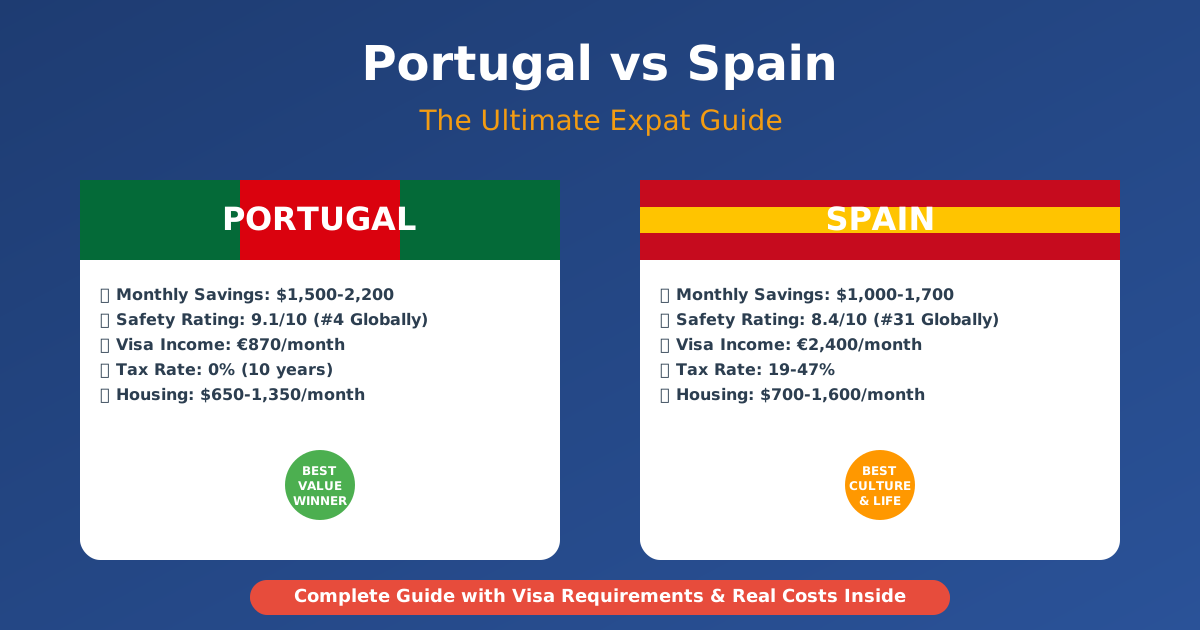
Portugal vs Spain: Which is Better for Expats & Remote Workers?
Choosing between Portugal and Spain? Complete 2026 comparison of costs, visas, lifestyle, and everything you need to make your international move.
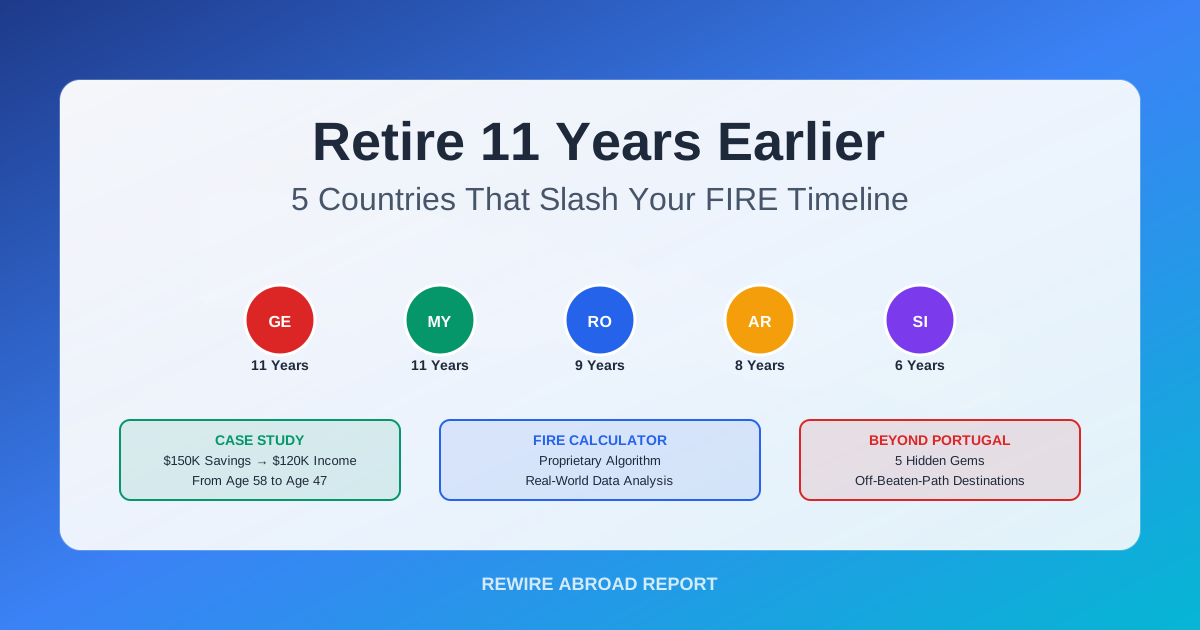
The Rewire Abroad Report: 5 Unexpected Countries to Achieve FIRE a Decade Faster
Stop retiring at 58. Our FIRE calculator reveals 5 countries where you can retire by 47. Real data on Georgia, Malaysia, Romania + tax strategies.

How to Move to Slovenia in 2026: Costs, Visas & What No One Tells You
Slovenia costs 40-50% less than Austria or Italy next door. Here's the actual route Americans use, what it costs, and where to live. Updated 2026.